The Optimal Glove Compartment: Statutory Compliance, Emergency Preparedness, and Traffic Stop Dynamics
Introduction
The automotive glove compartment started in the early twentieth century as a simple storage space for driving gloves. Today, it has evolved into one of the most important and misunderstood locations inside a vehicle. In the modern driving environment, this small compartment has become a key hub for state-mandated documents, legal liability, search-and-seizure issues, and basic emergency survival.
Far from being a junk drawer, the glovebox now acts as the main holder for regulatory paperwork, a secure place for post-collision response tools, and, in many cases, a focal point of tension and danger during interactions with law enforcement. Managing what you keep here is not just about tidiness. It is a core part of risk management on the road and during emergencies.
A poorly organized glovebox can quickly turn a routine traffic stop into a high-threat encounter, expose you to identity theft, make your home a target for burglary, or strip away your privacy protections during a vehicle search. On the other hand, a clean, well-planned glovebox reduces friction with officers, protects you from system and criminal risks, and gives you instant access to tools that matter most in the first minutes after a crash.
This analysis looks at legal requirements, law enforcement threat perception, Fourth Amendment protections, and real-world crash dynamics. It explains exactly what documents must live in the glovebox, what sensitive material should never be there, and how your physical setup can shape the outcome of routine traffic stops, serious collisions, and other roadway emergencies. If you want a broader, year-round view of roadside readiness and emergency tools beyond the glovebox alone, you can also review the modern driver’s guide to staying safe and road ready as a companion resource.
Statutory Mandates: The Mechanics of Compulsory Documentation
The core purpose of storing documents in your vehicle is to show legal authority to drive and proof that you meet state financial responsibility laws. Every U.S. state requires drivers to carry specific, standardized documents, and failing to show them when an officer asks can trigger fines, license problems, and even suspension.
Evidence of Financial Responsibility
The primary document required across all jurisdictions is proof of financial responsibility, usually called automobile liability insurance. In California, for example, the California Vehicle Code (CVC) spells this out in detail. CVC §16020 requires every driver and every owner of a motor vehicle to be able to show financial responsibility under CVC §16021 and to carry written evidence of this responsibility in the vehicle at all times.
Failing to provide proof of insurance when requested by law enforcement, during registration renewal, or after a traffic collision can lead to serious penalties. If the Department of Motor Vehicles (DMV) does not receive proof of insurance for a specific vehicle, the registration for that vehicle will be suspended. Once suspended, the vehicle cannot be legally driven or even parked on public roads until proof is submitted and accepted.
On top of that, under CVC §16070, if you cannot show that financial responsibility was in place during a reportable crash, your driver’s license can be suspended. CVC §16075(c) does require the DMV to hold a hearing before the suspension takes effect, but the burden still falls on the driver to prove coverage.
The financial penalties are intentionally harsh to encourage compliance. You must provide the officer with the insurer’s name and address and your policy number. Failing to do so can result in fines of up to $500 and loss of your driver’s license. If you falsify proof of insurance, the offense becomes even more serious, with potential fines up to $750, up to 30 days in jail, and an automatic one-year suspension of driving privileges.
Historically, paper insurance cards or binders were the norm. Today, almost every state (plus the District of Columbia) allows drivers to show digital proof of insurance on a smartphone. This shift is important. It cuts down on glovebox clutter and also lowers the risk that a break-in will expose sensitive personal information tied to your home or finances. Digital cards can live in mobile wallet apps or your insurer’s app, giving you a secure, legally recognized alternative that pairs well with broader guides on driving safely in extreme conditions and at dangerous intersections, where proof of coverage often becomes critical after an incident.
For commercial vehicles, the rules are slightly different. If a vehicle is covered by a commercial or fleet policy instead of a private passenger auto policy, the documents need to include the name and address of the owner or fleet operator, plus the name, National Association of Insurance Commissioners (NAIC) number, and address of the insurance or surety company providing coverage. In some cases, broad coverage requires a California Proof of Insurance Certificate (SR 22) or a DMV authorization letter if the driver is a cash depositor or is self-insured.
Vehicle Registration and the "Facsimile" Doctrine
The second must-have document kept in or near the glovebox is the vehicle registration card. Unlike insurance, digital registration cards are not widely accepted across the U.S. A few states, like New Jersey, have started allowing electronic formats, but physical documents remain the standard in most places when officers conduct traffic stops. In many cases, officers can use mobile data terminals to run your plate and verify registration, but the law still often requires a physical card to be present in the vehicle.
In California, CVC §4454(a) requires every owner, upon receiving a registration card, to keep the original card or a “facsimile copy” with the vehicle for which it was issued. The meaning of “facsimile copy” is important for security. DMV guidance says a legible photocopy of the last-issued registration is fine for almost all transactions except those dealing with unavailable records. Not having the original or a clear copy in the car is an infraction.
Registration violations are tightly enforced and can get expensive. Municipal fee schedules show how these fines stack up. For example, violating CVC §4000(a) (Registration Required) carries a baseline fine of $73 if not corrected. Violating CVC §4454(a) (Failure to Maintain Registration Card) usually leads to a baseline fine between $38 and $40, which can often be reduced to a $15–$35 administrative fee once you show proof of correction.
| Statutory Violation | California Vehicle Code | Description of Offense | Typical Baseline Fine | Fine with Proof of Correction |
|---|---|---|---|---|
| Registration Required | CVC §4000(a) | Operating an unregistered vehicle or without paid fees. | $73.00 | N/A |
| Failure to Apply | CVC §4152.5 | Failure to apply for registration within the mandated timeframe. | $38.00 | $35.00 |
| Registration Card Missing | CVC §4454(a) | Failure to maintain the original card or a facsimile in the vehicle. | 38.00 - 40.00 | 15.00 - 35.00 |
| Mutilated/Illegal Plate | CVC §4457 | Displaying damaged or illegal license plates. | 38.00 - 40.00 | 15.00 - 35.00 |
| Evidence of Reg - Wrong Vehicle | CVC §4462(b) | Presenting registration documents issued for another vehicle. | 38.00 - 40.00 | 15.00 - 35.00 |
| Display of License Plate | CVC §5200 | Failure to properly display license plates on the exterior. | 38.00 - 40.00 | 15.00 - 35.00 |
Table 1: California Vehicle Code infractions related to vehicle documentation and plate display, highlighting the real financial cost of poor glovebox and paperwork management.
Because CVC §4454 allows a facsimile, many security experts and law enforcement trainers recommend keeping only a photocopy of the registration in the glovebox. The original should be scanned, backed up to secure cloud storage as a PDF, and kept safely at home. If the original is lost, stolen, or damaged, replacing it involves filing an Application for Replacement or Transfer of Title (REG 227) or a REG 156 form, plus a $22 fee. Processing can take up to 30 days by mail. When a registration card lists a legal owner or lienholder, a notarized Legal Owner/Title Holder Release (REG 166) may also be needed.
On top of that, compliance is time-sensitive. In California, anyone who intends to live in the state beyond a temporary or short stay is considered a resident and has just 20 days to complete vehicle registration. The state actively hunts for out-of-state registration violators through the California Highway Patrol Registration Enforcement and Guidance (CHP REG) Program, because residents who avoid proper registration cost the state millions in lost fees and skirt emissions laws.

Criminal Vulnerability and Exploitative Targeting
Some of the worst glovebox mistakes involve storing documents that open the door to much larger crimes. Thieves know the glove compartment is a prime target during car break-ins. Fast “smash-and-grab” thefts often focus on this space first, looking for anything that can be turned into cash, identity theft, or access to your home.
The Certificate of Title Hazard
One of the most dangerous choices a vehicle owner can make is storing the Certificate of Title—often called the “Pink Slip”—in the glovebox. The title is the key legal document that proves ownership. While it might seem neat to keep “all the car paperwork with the car,” this creates massive risk. If your vehicle is stolen with the title inside, the thief now holds the basic paperwork needed to sell the car quickly on the black or gray market or to move it across borders with what appears to be legitimate documentation.
The title is never needed for a routine traffic stop. It should always be stored in a secure place: a fireproof safe, locked filing cabinet, or safety deposit box at home or at a bank. For drivers who have already been through a fender-bender or theft scare, pairing better title storage habits with a clear post-crash and fender-bender playbook makes it much easier to protect both your car and your legal rights after any incident.
Targeted Burglary and Address Exploitation
There is also a growing pattern of organized crime that uses the address printed on vehicle documents to set up home burglaries. When a car is parked for a long time at an airport lot, shopping mall, stadium, or similar location, thieves often assume the owner is away from home for hours or even days.
If they break into the car and grab the registration card or proof of insurance from the glovebox, they instantly gain the owner’s home address. If they also steal a garage door opener from the sun visor or center console, they now have both the target address and a remote key to the home’s main entry point.
With that combination, a thief can drive from the parking structure straight to the victim’s house, open the garage, and conduct a burglary with little resistance. To block this threat, you need to change how your address appears on documents and where you store garage remote controls.
Some states have already moved to fix this. Oregon, for example, allows drivers to blackout or obscure their physical home addresses on registration cards and proof of insurance to reduce the risk of this exact crime. Other states are exploring similar protections alongside broader reforms targeting dangerous drivers and high-risk intersections, where documentation and reporting also play a key safety role.
In California, drivers rely on administrative tools rather than simple redaction. Some people cut or black out their addresses on the card themselves, and some officers quietly approve of this to prevent secondary victimization. The more formal method is to use a Post Office (PO) Box or Private Mail Box (PMB) as the mailing address on file.
The California DMV lets a vehicle owner keep a confidential residential address while showing only a mailing address (like a PO Box) on the printed registration card. DMV procedures state that if a person’s residence is in one place but mail goes elsewhere, only the mailing address appears on certificates. To set this up, you complete a Change of Address form (DMV 14) and list both your physical and mailing addresses in the proper spaces. You must also follow character limits, such as using only the first 22 characters for the city field.
This split-address system protects you in two ways. Law enforcement can still see the true physical address through secure databases (as allowed under California Code 1808.21), but an auto burglar holding your registration card will see only a secure postal facility. For REAL ID, a PO Box can serve as your mailing address, but your residency document must show both the PO Box and the physical address. Certain people—such as judges, active law enforcement officers, and victims of specific crimes—can also qualify for full address confidentiality under specialized CVC rules.
Administrative Clutter and Identity Theft Vectors
Beyond registration and insurance, the glovebox should be cleared of anything that exposes your identity or finances. That includes bank receipts, utility bills, old maintenance invoices with full names and addresses, and, especially, spare driver’s licenses or passports.
In today’s world of cybercrime and identity theft, simple details—a name, phone number, and address on an old repair invoice—can be enough to open new accounts or launch social engineering attacks. Many receipts also carry partial credit card numbers and full names, making them extremely valuable to identity thieves.
Your driver’s license is one of the richest single sources of personal data you carry. It should never be left in the glovebox. It belongs on your person, not in a compartment that is easy to pry open with a screwdriver. If you want more structure around what to do in the split second after a close call or near crash—before you start sharing any personal details—consider following a near-miss action plan so you avoid oversharing on the roadside while still documenting what matters.
The Architecture of the Traffic Stop: Threat Perception and Driver Protocol
A traffic stop is shaped as much by psychology and risk perception as by the alleged violation. Officers pull drivers over to enforce laws, encourage compliance, reduce injuries, and identify uninsured motorists. But from the officer’s point of view, there is no such thing as a “routine” stop. It is one of the most dangerous parts of the job and regularly leads to serious injuries and fatalities.
Historically, more than half of all line-of-duty traffic-related officer deaths have involved weapons. During traffic stops, officers routinely discover uninsured drivers, suspended licenses, impaired drivers, illegal firearms, narcotics, and fugitives. Knowing this, it is easier to understand why officers approach each car cautiously and why your glovebox behavior matters.
Because the risks are so high, officers are trained to prioritize their own safety first. From the moment they flip on their emergency lights until the stop is resolved, they are on high alert. Understanding this mindset is crucial when deciding how and when to reach into your glovebox.
The Hazard of Premature Retrieval
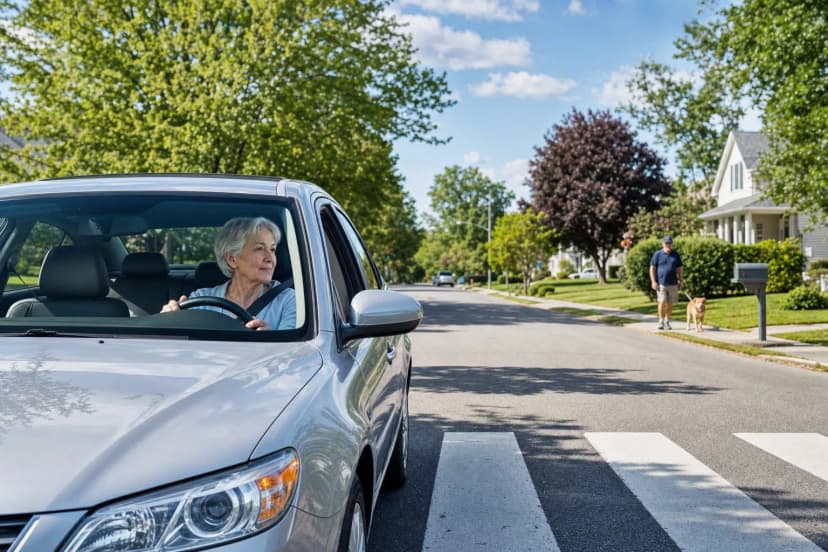
One of the most dangerous mistakes a driver can make during a traffic stop is reaching straight into the glove compartment, center console, or under the seat as the officer walks up. From the officer’s angle, a driver leaning forward and reaching into a hidden space looks exactly like someone going for a weapon or trying to stash drugs.
Sudden movements, ducking down toward the floorboard, or reaching across to the passenger side can instantly raise the officer’s threat level. This is how misunderstandings escalate. The safest, most effective approach is simple, calm stillness and clear communication—much like the calm, step-by-step response used in a safe crash bystander playbook when emotions are running high.
Best practice is to stay in your seat, keep your hands clearly visible on the steering wheel, and avoid any quick movements. If the officer returns to their vehicle to run your information, stay put and wait. That process can take 10–15 minutes, and moving around too much while the officer is watching from the rear-view mirror can raise unnecessary concerns.
You should only open the glovebox after the officer clearly asks for your license, registration, and proof of insurance. Before you move, say out loud what you are going to do and where the documents are, such as, “My registration and insurance are in the glovebox on the passenger side. Is it okay if I reach for them now?” Then move slowly and deliberately. Keeping your tone polite and avoiding hostile or sarcastic comments reduces tension and the chance of additional scrutiny.
Fourth Amendment Jurisprudence: The Locked Glovebox
Whether your glove compartment is locked or unlocked has real implications for your Fourth Amendment rights. The Fourth Amendment protects people against unreasonable searches and seizures of their persons, houses, papers, and effects, and courts have had to decide how that applies to modern cars.
During a normal traffic stop, an officer can look through your windows under the “Plain View” doctrine. If they see something clearly illegal—like drugs sticking out of an open glovebox—they may be allowed to search the vehicle without a warrant. If they develop probable cause to believe your vehicle contains evidence of a crime, they can also perform a broader warrantless search under the “Automobile Exception.” Probable cause may come from a mix of cues: extreme nervousness, conflicting answers, strong odors, or items commonly used to hide illegal drugs, such as large numbers of air fresheners.
However, both California courts and federal courts have generally recognized that a locked glovebox shows a stronger expectation of privacy. A locked compartment suggests that the owner believes its contents are private and protected. As a general rule, officers cannot open a locked glovebox or locked toolbox without a specific search warrant that clearly sets out probable cause that evidence of a crime is inside that particular container.
There are exceptions. A search of a locked compartment may be allowed if it is part of a lawful arrest, if there is an immediate threat to safety (exigent circumstances), or if you voluntarily and clearly consent. If an officer forces open a locked glovebox without legal justification, the search is usually considered unreasonable under the Fourth Amendment. Evidence obtained that way can be challenged with a motion to suppress, such as under California Penal Code 1538.5, and may be thrown out of court.
Keeping your glovebox locked when it is not in use is a simple, passive way to reinforce your privacy rights. It will not make you immune from all searches, but it can narrow what is open to inspection and give your attorney stronger grounds to challenge an improper search later, especially in complex cases involving advanced driver assistance systems and “smart” cars where legal responsibility is already blurred, as explored in more detail in the Invisible Co‑Pilot analysis of smart cars and street design.
Neurological Diversity and the Blue Envelope Paradigm
Traffic stops are stressful for almost everyone. Heart rate rises, adrenaline spikes, and the mind can race. For people with Autism Spectrum Disorder (ASD), Intellectual and Developmental Disabilities (I/DD), cerebral palsy, epilepsy, or major hearing impairments, that stress can be overwhelming and physically visible in ways that officers might misread as defiance or intoxication.
The environment itself is harsh: flashing emergency lights, loud radios, and firm commands can cause immediate sensory overload. This may lead to avoiding eye contact, repetitive movements (stimming), shaking, or delayed responses to questions. People with physical disabilities may also move slowly or have difficulty exiting the car on demand. In addition, some medical emergencies, like severe hypoglycemia in people with diabetes, can closely mimic the slurred speech, confusion, and unsteady movements associated with drunk or drugged driving.
To bridge this communication gap, the “Blue Envelope Program” has emerged as a powerful tool for glovebox management and safer traffic stops. The program began in Connecticut in 2020 to improve interactions between people with autism and law enforcement. It has since spread to states like New York, Massachusetts, Arizona, and Arkansas, and is heavily supported in California by regional centers such as the Inland Regional Center and Autism Society Inland Empire. Counties across California and New York have adopted the model and are training officers to recognize it.
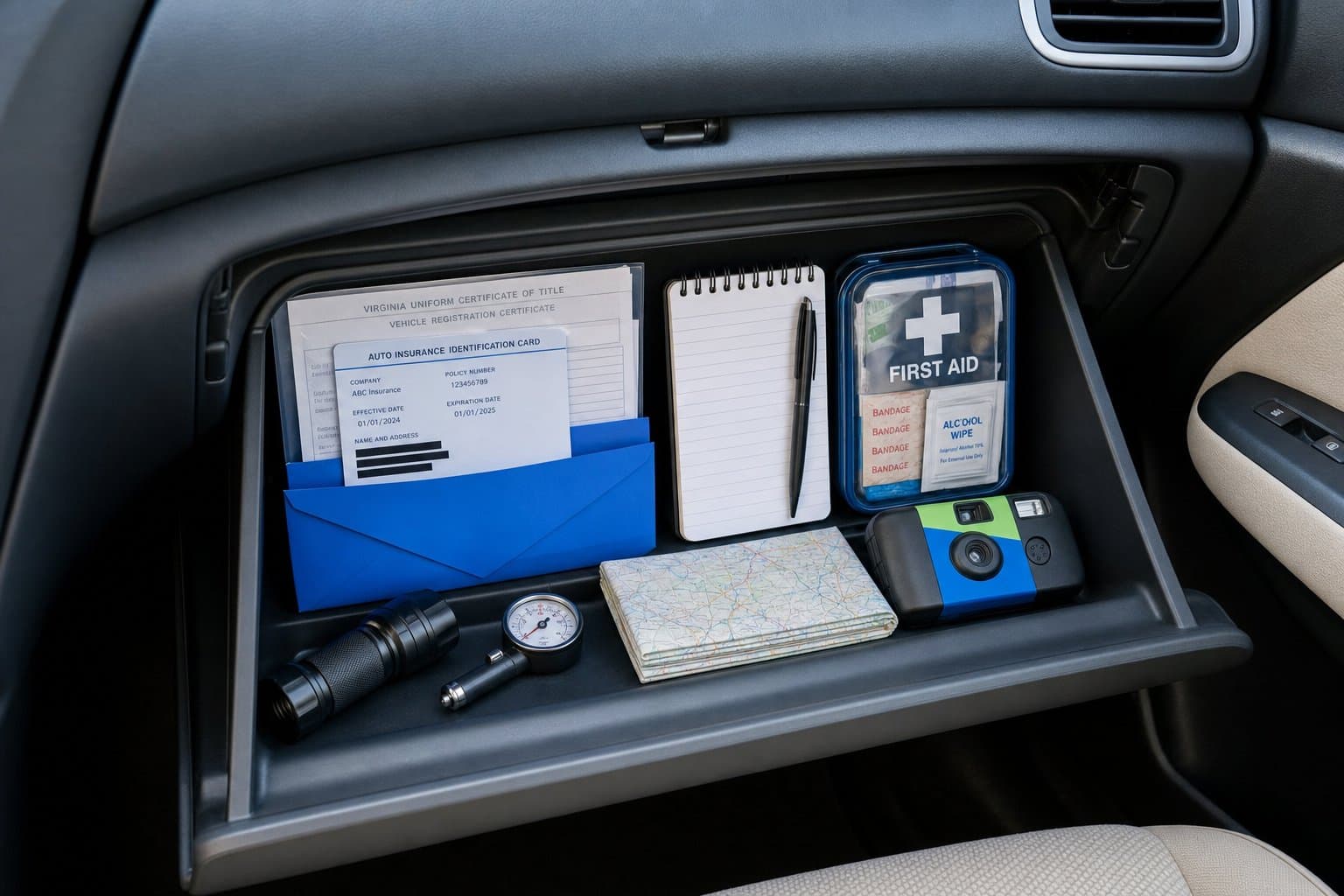
The core of the program is a highly visible blue envelope, stored in the glovebox and handed directly to the officer during a stop. The envelope holds the driver’s license, registration, insurance, emergency contacts, and space for written notes about the driver’s condition and communication needs. It offers a simple, visual signal that something about this interaction requires extra care and time.

When a driver hands over the Blue Envelope, it acts as a clear and immediate cue, prompting the officer to shift into a modified communication mode. Training materials often instruct officers to lower radio volume, shut off strobe lights if safe, give extra time for the driver to answer questions, and understand that unusual body language may be tied to a disability, not suspicious behavior. This kind of structured, human-centered approach fits well with wider efforts to protect vulnerable road users and reduce harm, like those discussed in human‑centric pedestrian and cyclist safety guides.
| Program Component | Functionality and Purpose within the Blue Envelope Framework |
|---|---|
| The Blue Envelope | A physical folder stored in the glovebox holding registration, insurance, license, and key medical data. Handed directly to the officer to instantly signal the need for modified communication protocols. |
| Wearable Identifiers | Items such as lanyards, wristbands, buttons, and keychains (for example, indicating diabetes or hearing loss) worn on the person to give context even before documents are exchanged. |
| Vehicle Decals | External stickers or internal seatbelt covers that alert approaching officers that a driver or passenger may need cognitive or sensory accommodations. |
| Interaction Guidelines | Printed instructions on the envelope that guide the officer (for example, “Allow extra time,” “Lower radio volume”) and offer calming tips for the driver to reduce anxiety during the stop. |
Table 2: Structural pieces of the Blue Envelope Program that support safe, clear interactions between officers and drivers with developmental or medical disabilities.
The program is built to respect privacy. It is voluntary, self-managed, free, and requires no official registration. Drivers are not added to any law enforcement or medical database. The Blue Envelope does not erase responsibility for traffic violations; speeding is still speeding. Instead, it changes the way the stop is handled so that everyone can stay safer. Federal proposals like the Supporting Blue Envelope Programs Act aim to fund and expand these initiatives nationwide, while state bills like California’s SB 664 have pushed for statewide adoption.
Emergency Preparedness: Practical Artifacts and Tactical Storage
Beyond legal paperwork and communication tools, your glovebox should function as a first line of support in case of breakdowns and collisions. After a crash, shock and stress can make even simple tasks hard. Memory, focus, and decision-making may all suffer. In that moment, the physical tools within arm’s reach can make a major difference.
Post-Collision Administrative Tools
After a collision, laws like CVC §16021 require drivers to exchange key information: names, addresses, phone numbers, driver’s license numbers, insurance details, and license plates. We usually rely on smartphones to handle all of this—taking photos, notes, and videos. But phones are fragile.
A hard impact can shatter the screen, eject the phone out of reach, or kill the battery. You may also crash in a remote area where the phone has no signal or was already nearly dead. That is why every glovebox should include a backup “analog” kit for documentation.
At minimum, keep a sturdy notepad and a reliable pen or pencil. Consider adding a single-use disposable camera so you can photograph vehicle positions, damage patterns, skid marks, and license plates even if your phone fails. A dedicated charging cable or small power adapter in the glovebox can also be a lifesaver if the car’s electrical system still works but your phone does not. A simple paper map gives you basic navigation if GPS fails completely—a situation that often arises in storms, wildfires, or flooded areas, where broader guidance from resources on hydroplaning and wet‑weather crashes becomes especially relevant.
Medical Intelligence and First Aid Responders
If you are trapped, unconscious, or too injured to speak after a crash, your glovebox becomes your voice. A clearly written sheet listing major medical conditions, allergies (especially to common drugs like penicillin or common pain relievers), and all current prescription medications should be easy to find. This helps emergency medical technicians (EMTs) avoid harmful treatments and choose the right care quickly.
Include a printed list of emergency contact numbers, too. If your phone is locked with a passcode, face ID, or fingerprint, responders may not be able to access your contacts. A physical list solves that problem instantly.
A compact, high-quality first-aid kit also belongs in the glovebox. Heavy-duty trauma gear—such as combat tourniquets and large hemostatic dressings—usually fits better in the trunk, but the glovebox kit should cover small cuts, scrapes, and glass injuries. Good basics include adhesive bandages, antiseptic wipes or ointment, sterile gauze, medical tape, tweezers, small scissors, and non-latex gloves. A small bottle of hand sanitizer, a few baby wipes, tissues, and over-the-counter pain relievers add simple comfort and hygiene after a crash.
Illumination, Diagnostics, and Visibility
Many breakdowns and crashes happen at night or in bad weather, when visibility is poor. A compact, high-lumen LED flashlight is essential. With it, you can check for injuries, examine vehicle damage, spot hazards on the road, and signal for help if your lights are out. It also helps officers or bystanders see you and your vehicle clearly, reducing the chance of a secondary collision.
Your owner’s manual and maintenance schedule should also live in the glovebox. Modern cars are full of sensors, and dashboard warning icons can be confusing. The manual helps you decide quickly whether a warning light is minor or a sign of serious danger that requires immediate stopping to avoid fire or major engine damage.
Store a simple pencil-style tire pressure gauge to check tire inflation and lower the risk of blowouts. A white microfiber towel can double as a cloth to clear fog from the inside of the windshield and as a visible distress flag if you hang it out a window. Small extras like nonperishable snacks, a couple of plastic bags for trash or waterproofing, and an ice scraper in cold climates complete a practical glovebox kit that keeps you safer between home, highway, and high‑risk locations such as icy winter intersections and slick local streets.
The Kinematic Paradox: Emergency Escape Tools
There is an ongoing debate about where to keep emergency escape tools—specifically, combination glass-breaker and seatbelt-cutter tools. These devices are designed to shatter tempered side windows with a focused steel point and to slice through jammed seatbelts with a built-in blade. They are critical in situations where the vehicle is sinking in water, crushed in a collision, or on fire. Regular kitchen knives or scissors cannot reliably cut a loaded seatbelt under tension.
Many generic safety lists say to keep this tool in the glove compartment. But when you consider how the human body moves during a crash and how modern seatbelts lock, that advice can be dangerous. During a serious collision, seatbelt pre-tensioners can fire like small explosives, snapping the belt tight to hold the occupant in place and prevent contact with the steering wheel or dashboard. If the car’s structure is damaged or the belt mechanism fails, you may be pinned in position.
If you cannot lean forward or sideways, you will not be able to reach across to the glovebox, open the latch, and dig through papers to find the tool. To be truly useful, the escape tool must be reachable even when you are strapped tightly in your seat.
The best locations are on the driver’s door pocket, zip-tied to the sun visor, clipped to a keychain (for cars that still use a physical key), or in a mount on the center console right by the driver’s hip. Placing your primary escape tool on the far side of the car misunderstands how crashes actually play out. When seconds matter—especially in high-speed highway incidents like those covered in highway breakdown and survival guides—reachability can be the difference between escape and entrapment.
Secondary Storage: Trunk vs. Glovebox Allocation
Glovebox space is limited. If you overload it with heavy gear, your important documents and emergency items will get buried and become hard to find when you are stressed. A smarter approach is to divide equipment between the glovebox and the trunk or cargo area based on how quickly each item is needed.
In simple terms, the glovebox should cover paperwork, communication, small medical items, and quick diagnostics. The trunk should store heavy mechanical tools and longer-term survival gear.
| Storage Location | Primary Function | Required Inventory |
|---|---|---|
| Glove Compartment | Legal compliance, communication, immediate medical intelligence, and quick diagnostics. | Registration facsimile, proof of insurance, owner’s manual, notepad and pen, disposable camera, phone charger, LED flashlight, small first-aid kit, medical info sheet, tire gauge, Blue Envelope (if applicable), and a simple paper map. |
| Vehicle Trunk / Cargo Area | Mechanical mitigation, long-term survival, hazard signaling, and heavy repair. | Jumper cables, 12-volt air compressor, hazard triangles, road flares, compact folding snow shovel, traction material (sand or cat litter), heavy work gloves, duct tape, multi-tool, spare tire with jack and lug wrench, thermal blankets, and extra drinking water. |
Table 3: How to split gear between glovebox and trunk so you can reach the right tool at the right time.
Keeping the glovebox reserved for only high-priority items makes everything faster in a crisis. You should be able to grab any needed document or tool in seconds, even if you are shaken, injured, or in the dark.
Tactical and Logistical Missteps: An Analysis of Common Errors
When people treat the glovebox like a junk drawer, problems follow. Disorganization slows you down, raises suspicion during stops, and destroys important documents over time. A few common errors show up again and again.
First, old paperwork. Letting expired insurance cards, outdated registrations, and piles of old invoices stack up creates chaos. If you get pulled over and then spend several minutes digging through a thick stack of loose papers, the officer standing on the roadside is exposed to traffic for longer and may start to wonder what you are hiding. A simple yearly cleanup—removing expired documents and confirming only current ones are present—is an easy, essential habit.
Second, storing valuables. Putting spare cash, designer sunglasses, jewelry, or small electronics in the glovebox turns your car into a target. The latch on most glove compartments is weak and easy to pry open with basic tools. Real security does not come from the latch itself; it comes from making sure there is nothing inside worth breaking in for.
Third, loose batteries. Leaving spare batteries rolling around in the glovebox risks acid leaks, especially with the huge temperature swings inside a parked car. Alkaline and lithium batteries can leak and destroy your registration, owner’s manual, and medical sheets, and can even create a small chemical hazard. Store batteries in a hard plastic case and check flashlight batteries regularly. If you will not use the flashlight for a while, store its batteries separately to prevent corrosion.
Finally, never leave a spare garage door opener in the glovebox. As noted earlier, combining a remote opener with a printed home address provides criminals with a direct path from your parked car to your front door. That risk is even higher near high-traffic, high-crash areas—such as complex intersections and school zones—where vehicles are often left unattended for hours and thieves know to look for patterns, a topic explored further in discussions on school zone vulnerabilities and timing “danger windows.”
Conclusion
The glove compartment may be small, but the stakes tied to it are huge. When you look at state vehicle codes, police training, crash physics, criminal patterns, and disability-informed communication tools, it becomes clear that this space needs planning, not guesswork.
At a minimum, you need current proof of insurance and a clear photocopy of your registration ready to show, while the original title and full home address stay protected from thieves. Failing to do this invites fines, license problems, and identity theft. The growth of Blue Envelope Programs also shows how a simple glovebox tool can change the tone of a traffic stop, especially for drivers with neurological or medical differences.
At the same time, your glovebox should function as a simple survival kit. A bright flashlight, medical information, a notepad, a pen, and a small first-aid kit give you control when your phone fails or your mind is foggy after impact. But emergency escape tools must live where you can actually reach them under stress—on the door, visor, keychain, or console—not buried on the far side of a locked compartment.
In the end, the “perfect” glovebox is not stuffed; it is selective. You remove unneeded personal data, use address-confidentiality options where available, keep the compartment locked when possible, and split heavier tools into the trunk. Combined with broader strategies for safer intersections, better driver habits, and community safety tech, this kind of quiet, thoughtful organization gives you a real edge when the road, or another driver, suddenly tests you.