Traffic Dynamics and Pedestrian Vulnerability in School Zones: An Exhaustive Analysis of Danger Windows, Behavioral Ecosystems, and Mitigation Strategies
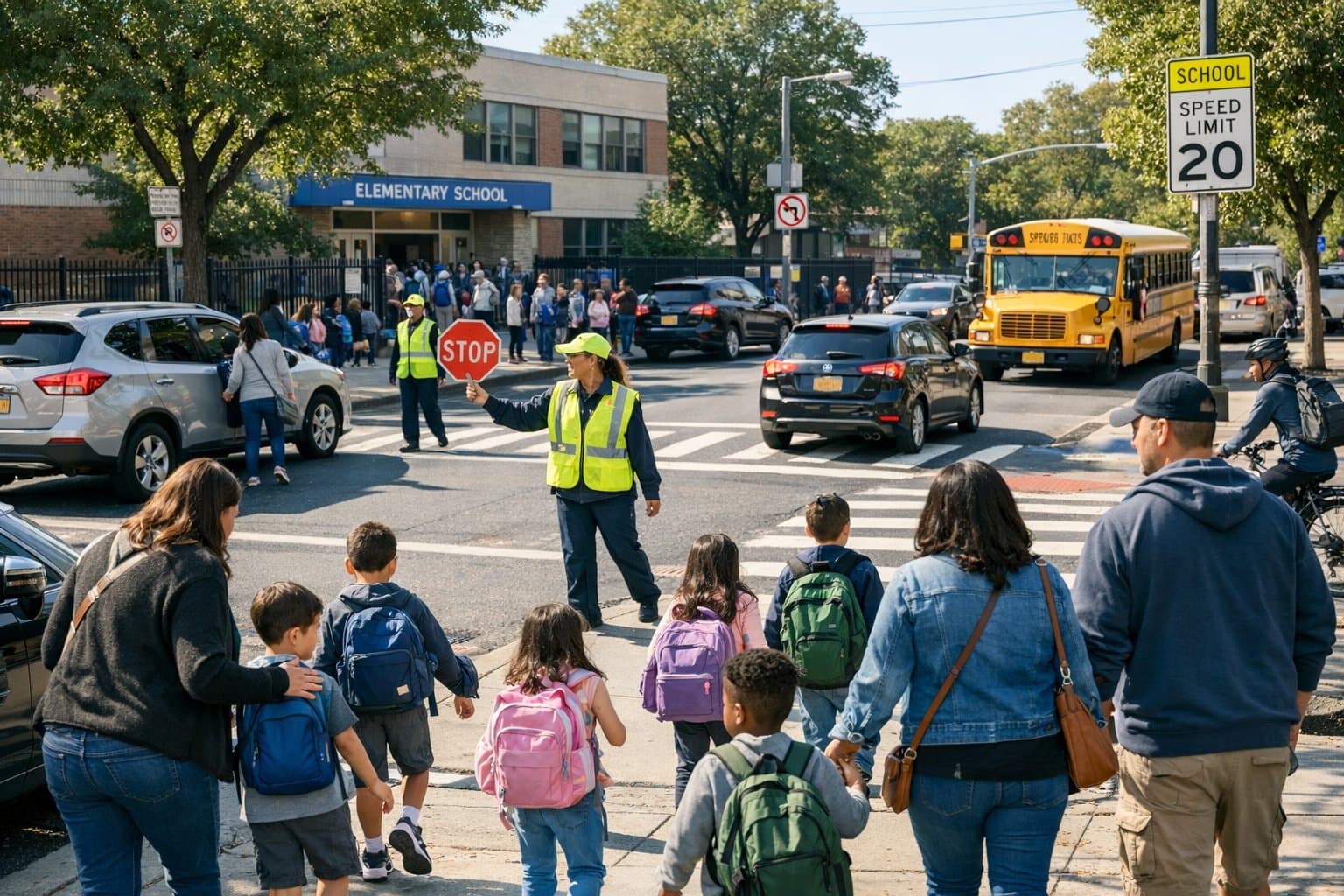
The urban school zone represents one of the most complex and paradoxical environments in modern traffic engineering. Designed with the explicit purpose of protecting the most vulnerable road users—children and adolescents—these highly localized precincts frequently become severe collision hotspots. The convergence of high-density pedestrian traffic, multimodal transportation (bicycles, passenger vehicles, commercial transit, and school buses), and intense time pressure during peak hours creates a volatile ecosystem.
The contradictions of a school zone are stark: it is meant to be a safe walking space, but it is dominated by multi-ton vehicles operated by rushed, distracted, or fatigued drivers. This mismatch between design intent and real-world behavior is at the heart of modern road safety debates.
Data aggregated from the Colorado State Patrol indicates that vehicular crashes are three times more common in school zones during specific drop-off and pick-up windows than at any other time of day. Understanding why these crashes happen means moving beyond simple explanations like “people drive too fast.” It requires a deep look at the structural, behavioral, and timing vulnerabilities built into the school zone environment.
This comprehensive report breaks down the exact “danger windows” when risk peaks, explores the shape and layout problems created by modern vehicle design, analyzes distracted driving and pedestrian behavior, and evaluates legislative and engineering fixes. It also connects these patterns to broader community-led road safety strategies that can turn local streets into safer places around schools. The goal is to turn this data into practical habits and planning tools for urban planners, policymakers, and everyday road users.

The Temporal Mechanics of School Zone Hazards
The risk profile of a school zone isn’t fixed; it swings sharply with the time of day. This swing tracks with the biological rhythms of drivers and students, traffic volume, and tightly packed bell schedules. Studies show that the periods just before and after the school day—roughly 6:00 AM to 9:00 AM and 3:00 PM to 6:00 PM—account for nearly 40% of all child pedestrian fatalities in traffic crashes.
However, the morning and afternoon windows look and feel very different, and they generate different kinds of danger. Understanding that difference is key if communities want to cut crashes, near-misses, and road rage in these zones instead of just reacting after the fact.
The Morning Rush: Time Compression and Sleep Inertia
The morning drop-off window is driven by a powerful “time compression” effect. A huge wave of vehicles all try to reach the same spot in a narrow 15-to-30-minute window dictated by the school bell. This artificial pressure creates instant gridlock, encourages shortcuts, and fuels the kinds of risky maneuvers that also show up in broader road-rage and reckless driving patterns.
Commuters, parents, and teen drivers are also fighting sleep inertia—a period right after waking when thinking, coordination, and reaction times are dulled. This slowed thinking, combined with the stress of trying to beat the bell, often spills over into aggressive driving: speeding, rolling stop signs, sudden lane changes to reach the curb, and illegal double-parking near crosswalks and corners.
The morning rush also overlaps with general commuter traffic. Many drivers in school zones at that time have no connection to the school at all; they’re just cutting through. These through-drivers are often frustrated by the sudden bottleneck and may make risky passes, blow past crosswalks, or fail to yield to kids in a hurry to cross.
Spatial patterns make things worse. Observational data shows that more than half of all drop-offs happen directly at the school gate, and about 15% happen on the sidewalk right in front of the school. This packs vehicle-to-pedestrian transitions into a tiny space and turns the curb into a chaotic mixing zone. At the same time, more than 20% of parents choose to park and walk their kids in because they fear the very chaos they’re helping create. This behavior increases the number of people walking across active lanes and weaving between reversing vehicles, raising the chances of both collisions and “almost” events that never get reported.
The Afternoon Peak: The Lethal Convergence
While the morning rush is about compressed time and slow brains waking up, the afternoon pick-up window and the hours that follow are statistically more deadly. A large telematics study of nearly four million drivers near 75,000 schools across the United States found that drivers were 40% more likely to be on their mobile devices between 2:00 PM and 5:00 PM than in the morning. That aligns closely with what other crash and collision studies show across dangerous corridors and intersections.
The afternoon risk comes from several forces all hitting at once:
- Driver fatigue and circadian dips: In the afternoon, many adults hit a natural low in alertness, often after a full workday. They may feel relaxed or “off duty,” but their attention is weaker than in the morning. This makes it harder to notice small, fast movements near the road, like a child suddenly stepping from behind a parked car.
- Traffic volume surges: From 3:00 PM to 6:00 PM, released students mix with evening commuters, delivery trucks finishing routes, and general civic activity. More vehicles plus more people walking and biking equals more possible conflict points and a higher raw chance of a collision.
- Adolescent sleep debt and risk-taking: Teens are wired to stay up later, yet are forced into early school start times. The result is chronic sleep debt. By afternoon, this often shows up as slower reactions, poorer judgment, and more risk-taking behind the wheel and on foot. This same pattern is behind many near-miss incidents that happen at busy intersections and school-adjacent arterials but never make it into official crash reports.
- Pedestrian distraction and peer interaction: After school, students are social, relaxed, and glued to their phones. They hang around, talk in groups, and coordinate plans. That social mindset and heavy device use reduce the attention they give to traffic, even when they’re stepping into the street or crossing driveways.
Data from Texas backs up the afternoon danger. Sixty percent of teen pedestrian crashes there happen in daylight, with a sharp peak from 4:00 PM to 6:00 PM. In 2021 alone, Texas recorded 404 pedestrian crashes involving teens aged 14 to 18, leading to 30 deaths, many in the late afternoon window.
| Risk Factor | Morning Window (6:00 AM - 9:00 AM) | Afternoon Window (2:00 PM - 6:00 PM) | Impact on Collision Probability |
|---|---|---|---|
| Driver Cognitive State | Sleep inertia, urgency/rushing | Cognitive fatigue, circadian dip, post-work distraction | Slower reactions, missed cues, and failure to see hazards in the periphery. |
| Traffic Composition | Parent drop-offs, morning commuters | Parent pick-ups, evening commuters, commercial traffic | More vehicles and more turning movements, especially in the afternoon. |
| Distraction Prevalence | Baseline (grooming, breakfast, transit prep) | Peak (40% higher mobile device usage recorded) | Longer stretches where drivers aren’t watching the road at all. |
| Pedestrian State | Goal-oriented, lower peer interaction | Leisure-oriented, heavily distracted by peers and devices | More unpredictable movements and crossings outside of marked crosswalks. |
| Teen Driver Risk | Drowsiness from early wake times | Fatigue, higher risk-taking, more teen passengers in the car | Greater odds of speeding, distraction, and failing to yield in live school zones. |
Geographical and Spatial Danger Hotspots
Time of day is only half the story. The shape of streets and the way schools are stitched into the road network strongly influence where crashes actually happen. Traffic violence is not spread evenly; it clusters in predictable patterns around schools and intersections, just as it does at the ten most dangerous intersection types and school-zone crossings highlighted in wider pedestrian safety research.
The 150-Meter Radius Phenomenon
A detailed spatial analysis of crashes involving children and vehicles found that risk spikes in the area closest to school grounds. Compared to zones 300 meters or more away, the 150-meter (about 500-foot) ring around a school has the highest share of child pedestrian-vehicle crashes—and the highest share of fatalities. In other words, the “last few hundred feet” of the commute are often the most dangerous.
In many of these zones, the infrastructure simply doesn’t match the volume of kids using it. Safe Kids Worldwide found that roughly three out of ten locations where students regularly cross within a school zone have no marked crosswalk at all. Only about four in ten school zones studied had a posted speed limit of 20 mph or lower, leaving many children exposed to vehicles moving at speeds that are consistently linked to severe injuries and death.
California Collision Hotspots
The scale of this problem explodes in dense cities. A joint study using more than 400,000 collision records from the California Highway Patrol’s SWITRS database looked at 6,000 charter and public elementary schools statewide. It identified 468 schools with especially high-risk routes for students.
Within just a half-mile of those 468 schools, there were 62,785 car crashes, 6,716 pedestrian crashes, and 5,114 bicycle crashes in a single year. That’s not random—it reflects how high-speed arterials, wide lanes, and unprotected crossings funnel danger right past school entrances. Mapping these “high-injury networks” mirrors similar findings in broader pedestrian and cyclist safety work across California’s urban cores.
Most of the worst school zones cluster in dense grid networks. Of the 468 highest-risk schools, 215 were in Los Angeles, 38 in Oakland, and 31 in San Francisco. These patterns show that school zone safety is, at its core, an urban planning problem. Many schools sit directly on or next to fast, multi-lane roads designed to move cars quickly, not protect children walking or biking.
The Danger Zone: School Bus Interactions and Legislative Ambiguity
Statistically, the yellow school bus remains the safest way for students to get to and from school. But the space right around the bus can be deadly. More than half of the students killed in school transportation-related crashes are hit by the bus itself, not by passing cars.
The 10-Foot Danger Perimeter
Safety experts call the 10-to-12-foot ring around a school bus the “Danger Zone.” Because buses are tall, long, and boxy, the driver’s direct line of sight is badly limited—especially immediately in front of the bumper and along the right rear side near the back wheels.
Standard safety rules tell kids to stand at least “10 giant steps” (about 10 feet) in front of the bus before crossing so they stay in the driver’s forward field of view. The biggest risk inside this zone comes when a child does something unexpected. If a child drops a paper, toy, or phone close to the bus and bends down to pick it up, they can drop below the dash line and disappear from view. If the driver moves forward believing the area is clear, the result can be a fatal frontover crash.
Legislative Loopholes: The Divided Highway Exemption
To protect kids getting on and off buses, nearly all state laws require drivers to stop when a bus uses its flashing red lights and stop arm. But there are exceptions, and they often trip drivers up, leading to high-speed passes in active loading zones.
Under California Vehicle Code (CVC) § 22454, drivers going in the same direction as a stopped bus must always stop. Drivers coming from the opposite direction on a two-lane or undivided roadway must stop as well. However, the law creates a crucial exemption: drivers going the opposite way do not have to stop if the bus is on the other side of a true “divided highway” or a multi-lane road with at least two lanes in each direction.
The problem is how drivers interpret “divided highway.” Legally, for the exemption to apply, the two directions of traffic must be physically separated by a barrier like a concrete median, metal guardrail, or unpaved strip that vehicles can’t easily cross.
A road split only by double yellow lines, a painted median, a continuous center turn lane, or just extra width is not a divided highway. In those common layouts, drivers in both directions must come to a full stop for the bus. Because many drivers never learned this nuance, they keep driving 40 mph or more just a few feet from unloading children, believing the law is on their side. Penalties reflect how serious this is: failing to stop for a school bus flashing red lights can bring a fine of up to $1,000 and a one-year license suspension.
Vehicle Geometry and the Blind Zone Crisis
The boom in large SUVs and pickup trucks has quietly reshaped risk in school zones, parking lots, and driveways. Many families buy these heavier vehicles for a feeling of personal safety, but their tall hoods, thick A-pillars, and high seating positions create huge areas the driver simply cannot see—even when they check mirrors and look carefully.
Every week in the United States, around 110 children are hit by vehicles in non-traffic areas such as driveways and parking lots. About 60 of these are “frontovers,” where a vehicle moves forward over a child, and about 50 are “backovers,” where the vehicle is reversing. These hidden blind-zone crashes echo the same visibility problems drivers face at complex intersections and merge points, where line-of-sight and driver workload collide.

The Frontover Hazard and Hood Kinematics
The flat, tall hoods of many modern SUVs and trucks can create a forward blind zone up to 15 feet in front of the bumper. A full line of preschoolers could stand in front of some vehicles and remain completely invisible to the driver.
As a driver pulls away from the curb, a small child walking too close to the front or darting between vehicles can be struck and dragged under the frame without the driver ever seeing them. More than 60% of these frontover incidents involve larger vehicles, clearly tying vehicle size and shape to injury severity and survival.
The Backover Hazard and the "Bye-Bye Syndrome"
The blind zone behind many vehicles is even larger. For a typical passenger car, the rear blind zone may stretch 10 to 15 feet. For larger SUVs, pickups, or shorter drivers, it can reach 50 feet or more. Backing out of a school parking spot or residential driveway is often done with serious visual gaps, even with backup cameras.
Toddlers between 12 and 23 months old are the most common backover victims. They can walk and run, but they do not understand driveways, property lines, or the danger of a slow-moving car. They simply assume that if they can see the car, the driver can see them.
“Bye-Bye Syndrome” makes this heartbreakingly common. When a parent, sibling, or caregiver pulls away—after a school drop-off or from a driveway—a young child may run after the vehicle to wave one last time. The driver believes the child is safely indoors or on the porch, shifts into reverse, and backs over the child. In more than 70% of backover deaths, the driver is a parent or close relative.
| Blind Zone Metric | Passenger Car (Sedan) | Large SUV / Pickup Truck | Hazard Implication in a School Zone |
|---|---|---|---|
| Front Blind Zone | ~3 to 5 feet | Up to 15 feet | Small children can stand directly in front of the grille and remain completely unseen as the vehicle moves forward. |
| Rear Blind Zone | ~10 to 15 feet | 15 to 50 feet | Backing out of angled or perpendicular school parking is done with major blind spots, endangering younger siblings and students. |
| Vehicle Mass | ~3,000 lbs | ~5,000 to 7,000+ lbs | More mass means longer stopping distance and far more force in a collision, sharply lowering survival odds. |
The Cognitive Ecosystem: Distraction and Human Error
School zones demand maximum attention from drivers and people walking or biking. In reality, many move through these areas mentally elsewhere, absorbed by their phones, conversations, or daily stress. This same pattern shows up in dashcam footage from crash and near-miss investigations, where split-second distractions regularly precede life-changing events.
Pedestrian Distraction and the "Ghost Pedestrian"
Even though drivers carry the greatest responsibility, the way pedestrians behave can add a lot of unpredictability to the mix. A Safe Kids Worldwide study of 39,000 middle and high school students found that distraction was routine: 17% of middle schoolers and 27% of high schoolers were using mobile devices while crossing streets in school zones.
Among those distracted teens, 44% wore headphones, 31% were texting, and 18% were talking on the phone. This dual visual and audio distraction cuts them off from traffic noise, horn blasts, and crossing guard instructions. In Texas data, failing to yield, mid-block crossings, and ignoring traffic signals explain most teen pedestrian crashes, which echoes patterns seen in unreported near-miss conflicts near schools and busy corridors.
Another side effect of unpredictable behavior is the rise of “ghost pedestrians” at signalized intersections. A ghost pedestrian presses the crosswalk button, then gets impatient and crosses before the signal changes. The signal still runs a full pedestrian cycle, stopping traffic even though nobody is crossing. Over time, these empty cycles frustrate drivers and can train them to treat flashing beacons as false alarms. That “boy who cried wolf” effect makes it more likely that a driver will roll a crosswalk or push a red light just when a real pedestrian steps out.
Driver Distraction and Processing Time Limits
The mental load on a driver in a school zone is intense. They must track kids darting near the curb, buses stopping and starting, crossing guards’ signals, bikes weaving around cars, and the sudden lane changes of other stressed parents.
Yet a national survey found that while driving in marked school zones, only 1.3% of drivers said they would never talk on a cell phone, and only 2.2% said they would never text or email. That gap between what’s needed and what people actually do is similar to the risky patterns seen in road rage and aggressive driving reports across the broader network.
The National Highway Traffic Safety Administration (NHTSA) defines three kinds of distraction:
- Visual: taking your eyes off the road.
- Manual: taking your hands off the wheel.
- Cognitive: taking your mind off driving.
Handheld phone use combines all three at once. The human brain cannot truly multitask; it only switches focus rapidly from one thing to another, which slows reaction times and weakens performance across the board.
Under ideal conditions, an alert driver needs about 0.25 seconds to notice a hazard, 0.25 seconds to process it and decide to brake, and another 0.25 seconds to move their foot to the pedal—about 0.75 seconds total before the brakes even begin to slow the car.
At 30 mph, a vehicle travels roughly 33 feet during those 0.75 seconds. If a driver looks down at a phone for just two seconds to read a text, the car travels nearly 90 feet without active control. In a school zone, that distance makes it mathematically impossible to avoid a child who suddenly steps into the lane. Surveys show that 75% of caregivers have seen distracted students in school zones, and 57% have seen speeding drivers—two dangerous patterns that, when combined, create a perfect storm.
Legislative Evolution and Speed Engineering Frameworks
Lawmakers have tried to respond to the deadly mix of speed, vehicle mass, and distraction by tightening speed rules around schools. The risk of death rises sharply with impact speed: a pedestrian hit at 20 mph has a much better chance of surviving than one hit at 30 or 40 mph. That same speed-risk curve also drives many of the urban design and tech interventions cities are now using far beyond school zones.
The Evolution of California's School Zone Speed Limits
For years, California Vehicle Code (CVC) § 22352 set a 25 mph prima facie speed limit in school zones—within 500 feet of a school when children are outside or crossing, as long as signs are posted. Because this is a prima facie (default) limit, it doesn’t require a formal Engineering and Traffic Survey to be enforced with radar, avoiding some “speed trap” restrictions.
As pedestrian deaths rose, lawmakers gave cities and counties more tools to reduce speeds based on local conditions:
- AB 321 (15 mph zones and extended buffers): Passed in 2008, AB 321 lets local agencies create highly restricted 15 mph school zones up to 500 feet from school grounds, if the road is in a residential district, has two or fewer travel lanes, and is framed by posted limits of 30 mph or less. It also allows extending the standard 25 mph zone to 1,000 feet, giving drivers more space to slow down.
- AB 43 and AB 1938 (taming “speed creep”): Traditionally, Engineering and Traffic Surveys required speed limits to be set at the 85th percentile of actual traffic speeds, which tends to push limits upward over time. AB 43 tackled this by letting cities round limits down to the nearest 5 mph, designate 20–25 mph “Business Activity Districts,” and label “Safety Corridors” or “High Pedestrian and Bicycle Activity Areas” for automatic 5 mph reductions. These tools, fully available by June 30, 2024, are especially useful on fast arterial roads bordering schools.
The 20 mph Paradigm: AB 382
The biggest long-term shift in California school zones is Assembly Bill 382 (Berman). It formally recognizes that 25 mph is still too fast for crowded school areas and lowers the default school zone speed limit to 20 mph statewide, effective January 1, 2031. Local governments don’t have to wait; they can adopt 20 mph limits earlier by ordinance or resolution.
AB 382 also clears up long-running confusion over when “children are present.” In the past, debates over whether a child was “visible” at a given moment often muddied enforcement. The updated definition includes times when kids are arriving, leaving, or using school grounds while warning signs are posted. It excludes situations where children are physically separated from the road by a solid fence, gate, or barrier. This clarity makes enforcement more consistent and helps judges, officers, and residents understand when citations are valid.
| Legislative Act | Core Provision | Implementation Timeline | Jurisdictional Authority |
|---|---|---|---|
| CVC § 22352 | 25 mph default prima facie school zone limit within 500 feet. | Currently active | Statewide default |
| AB 321 | Allows 15 mph zones within 500 feet and 25 mph zones extended to 1,000 feet. | Currently active | Local opt-in |
| AB 43 | Enables 5 mph reductions on “Safety Corridors” and in high pedestrian/bike areas. | By June 30, 2024 | Local opt-in |
| AB 382 | Lowers the baseline school zone speed from 25 mph to 20 mph. | Immediate local option / Jan 1, 2031 statewide | Statewide default |
Advanced Urban Planning and Infrastructural Countermeasures
While laws define what drivers should do, street design strongly shapes what they actually do. Modern Vision Zero approaches focus on building streets that make the safe choice the easy and obvious one. Many of the tools used around schools mirror those used on broader high-injury routes where “smart cars” still struggle on “dumb” streets lacking basic safety design.
Leading Pedestrian Intervals (LPI)
One low-cost but powerful signal upgrade is the Leading Pedestrian Interval (LPI). At a typical signal, pedestrians get a “Walk” sign at the same time that parallel car traffic gets a green light. That means people stepping into the crosswalk are competing with drivers trying to turn right or left through that same space, which often leads to “right hook” crashes when drivers don’t see someone in their A-pillar blind spot.
An LPI changes that timing. It gives pedestrians a 3-to-7-second head start while all vehicle lights stay red. That short head start lets kids and caregivers step fully into the crosswalk and become clearly visible in front of drivers before any cars start to turn. By the time drivers move, people are already in their direct line of sight, reinforcing the pedestrian’s right-of-way.
The "School Streets" Initiative: Eliminating the Conflict
One of the boldest and most promising ideas in North American planning is the “School Streets” model. Starting in Europe and now appearing in cities like Vancouver, Los Angeles, San Francisco, and communities across Ontario, a School Street is a block directly outside a school entrance that is closed to through-traffic during pick-up and drop-off. It is a targeted, time-limited solution similar in spirit to the community-led safety hubs some cities build using real-time reporting and quick-build projects.
With portable barricades, cones, and clear signs, the block around the school is kept car-free (except for residents and emergency vehicles) for 15 to 90 minutes during busy windows. Kids can walk, bike, and roll without weaving between idling cars or squeezing past double-parked SUVs.
Evidence from a four-community pilot in Ontario is strong. Those School Streets cut overall car trips to school by about 20% and boosted walking and rolling by about 5%. Air quality outside school entrances improved during peak times, and feared traffic chaos on nearby streets largely did not materialize.
By fully removing 5,000-pound vehicles from the space where 50-pound children cluster at the most crowded times, School Streets solve the geometric core of many drop-off crashes. Federal Safe Streets and Roads for All (SS4A) funding, which made $1 billion available in 2025 for quick-build safety strategies, is already helping cities expand School Streets, play streets, and creative calming treatments informed by bystander reports, crash documentation, and local advocacy.
Tactical Mitigation Habits for Risk Reduction
Even with better laws and better design, the day-to-day safety of school zones still depends heavily on driver and caregiver behavior. Safe school travel requires more than good intentions; it demands simple, repeatable habits that counteract blind zones, distraction, and unpredictable movements. Those same habits also play a key role in many broader near-miss prevention strategies beyond school areas.
1. Rigorous Drop-Off Protocol Adherence
The chaos of morning drop-off often stems from parents ignoring or bending the rules meant to keep kids safe. Schools typically design drop-off zones to control where and how kids exit cars. To keep those systems working, families should follow a few non-negotiable habits:
- Stay in the driver’s seat: Drop-off lanes are for quick unloads only. If a child needs help with a seat belt, booster, or heavy backpack, the parent should park in a designated lot and walk in. Getting out of the car in the active lane stalls the line and forces unsafe maneuvers by everyone behind.
- No double-parking: Letting kids in or out from a second row of traffic creates instant blind spots for other drivers. Those drivers may have to swerve around the stopped car into opposing traffic or crosswalks, where kids assume it is safe to walk.
- Limit idling: If you expect to wait more than 30 seconds, turn off the engine. This reduces exhaust near children, cuts noise, and encourages a calmer pace.
- Respect the queue: Cutting in line or making sudden lane changes to get ahead creates confusion and surprise for crossing guards and students who are watching traffic flow. A predictable, steady line is safer than a faster, jumpy one.
2. Automation of the "Do Not Disturb" Protocol
Mobile notifications are designed to grab attention. Expecting people to ignore them by willpower alone has failed in practice, especially in slow-moving, “boring” school-zone traffic. Safety groups like the National Safety Council (NSC) and Governors Highway Safety Association (GHSA) recommend using built-in “Do Not Disturb While Driving” features on smartphones so that distractions are blocked automatically whenever the car is moving.
Even so, surveys show only about one in five iPhone owners has this feature set to turn on automatically when the phone connects to the car’s Bluetooth. Turning it on—and then putting the phone physically out of reach in the glovebox, center console, or back seat—greatly lowers the odds of a temptation-fueled glance down at the worst possible moment.
Trip setup should happen before shifting into drive. That includes entering GPS destinations, adjusting mirrors and seats, choosing music or podcasts, and sending final messages. Once the car is in gear, the driver’s full attention belongs to the road and the people on it.
3. The "Dutch Reach" for Dooring Prevention
As more students walk, bike, and scooter to school, “dooring” has become a real concern. This is when someone inside a parked car swings a door open into the path of an oncoming cyclist, causing a crash. In school zones, this often happens when a child flings open the rear door without checking the bike lane or sidewalk.
The “Dutch Reach” is a simple habit that almost guarantees a safer look before opening a door. Instead of using the hand closest to the door (the driver’s left or the passenger’s right), everyone in the car is taught to use the far hand. This forces their body to twist, naturally turning their head and shoulders toward the side mirror and over their shoulder. That motion makes it easy to spot a cyclist or pedestrian approaching from behind before the door moves into their path.
Advocates, including groups like the California Bicycle Coalition, are working to get the Dutch Reach into driver education manuals and licensing tests so it becomes automatic, especially in busy school corridors.
4. Advanced Visual Scanning Over Focal Fixation
New drivers, tired drivers, and distracted drivers often fall into “focal fixation”—staring at the bumper ahead instead of scanning the full scene. In school zones, the most serious threats usually don’t come from straight ahead. They come from the sides: a child hidden between parked cars, a biker emerging from a driveway, or a running student crossing mid-block.
Advanced defensive driving programs like the Smith5Keys system teach “Aim High in Steering” and constant scanning. In practice, that means looking 12 to 15 seconds ahead—about a block or a quarter-mile in city driving—while still checking near space. Drivers should move their eyes every two seconds and check a mirror every five to eight seconds to maintain a 360-degree picture of what’s happening around them.
This habit prevents tunnel vision and keeps peripheral awareness sharp. It lets drivers spot early signs of danger, like a child playing close to the curb or a teen on a phone angling toward a crosswalk without looking up.
5. Backover Neutralization Protocols
Backup cameras, parking sensors, and alarms help, but they are not enough on their own. They can miss small, fast-moving children, be blocked by dirt or fog, or fail without warning. Physical routines are still essential to prevent backover tragedies at homes, schools, and daycare centers.
Before getting into a parked car in a school lot or driveway, drivers should take a quick walk around the vehicle to visually clear the rear blind zone. Once inside, they should tell any kids who are staying outside exactly where to stand—somewhere they can be seen clearly from the driver’s seat, like a particular porch step or sidewalk square—before the car goes into reverse.
Drivers should also roll down their windows while backing up. Hearing is a key safety sense when visual information is blocked by parked cars or sun glare. With windows down, drivers are far more likely to hear someone shout, a bike’s brakes screeching, or the sound of children playing where they shouldn’t be.
Conclusion
School zones are not dangerous by accident. Their risk comes from a predictable mix of tight timing, heavy vehicles, imperfect street design, and human limits. The data is clear: while the morning rush is chaotic and stressful, the late afternoon window from 3:00 PM to 6:00 PM is when kids are most vulnerable. Fatigued adults, sleep-deprived teens, social and distracted students, and the massive blind zones of modern SUVs and trucks all converge at once.
Signs, paint, and occasional enforcement alone can’t overcome the physics of speed and mass or the hard limits of human reaction time. Real safety in school zones requires a layered defense. On the legal side, measures like California’s AB 382, and the broader suite of speed management tools, push everyday speeds downward and increase the odds that a mistake won’t be fatal. On the design side, Leading Pedestrian Intervals and car-free School Streets remove direct conflict between fast vehicles and fragile bodies at the worst hot spots, building on the same principles that guide citywide high-risk intersection and corridor treatments.
Until those upgrades are universal, though, the last and most powerful layer of protection is the individual driver. Protecting children in and around school zones means making distraction-blocking tools automatic, practicing broad visual scanning instead of narrow staring, using habits like the Dutch Reach, respecting drop-off rules, and physically checking blind zones before moving. Every one of those habits can turn a potential tragedy into a quiet, uneventful trip to school—and help build a street culture where safety is a shared, everyday practice.