Intersections of Tomorrow: Mastering Roundabouts, Identifying Danger Zones, and Mobilizing Communities for Safer Roads
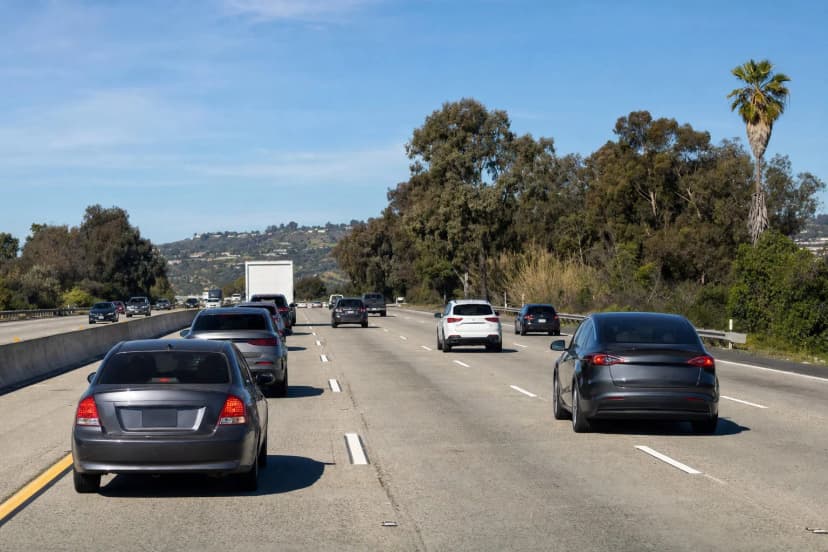
The daily commute is no longer just a transit routine; for many, it is an exercise in hyper-vigilance. Whether you are a protective parent managing the chaotic morning school drop-off, a daily commuter navigating high-volume arterial highways, or a neighborhood watch leader observing a rising tide of reckless driving on residential streets, the roadway often feels like a gauntlet. At the heart of this vehicular anxiety lies the intersection—the critical juncture where crossing paths, high speeds, and human error collide with devastating frequency. Annually, roughly one-quarter of all traffic fatalities and nearly one-half of all traffic injuries in the United States occur at intersections.
The modern roadway, however, is undergoing a profound transformation. Civil engineers are increasingly replacing traditional, conflict-heavy intersections with innovative designs like multi-lane roundabouts. Yet, these new designs frequently induce panic in drivers unaccustomed to continuous-flow mechanics. Simultaneously, communities are realizing that infrastructure alone cannot solve the crisis of traffic violence. It requires grassroots advocacy for low-cost, quick-build countermeasures, and the integration of modern, driver-to-driver technology to hold motorists accountable.
This comprehensive report explores the complex psychology of intersection navigation, provides a beginner-friendly masterclass on conquering the multi-lane roundabout, identifies the ten most dangerous intersection patterns plaguing our cities, outlines actionable, low-cost fixes, and highlights how real-time community mobilization is transforming road safety accountability.
The Psychology of Intersection Anxiety and Roundabout Phobia
Before dissecting the physical mechanics of lane choice and yielding, it is essential to understand the psychological barriers that everyday drivers face. The modern roadway is a cognitively demanding environment. Driver behavior at complex intersections, especially under heterogeneous and disorderly traffic conditions, involves split-second decision-making that extends far beyond simple geometric awareness.
Research indicates that a primary factor contributing to intersection anxiety is "psychological fear," a behaviorally inferred parameter representing the tendency of drivers to reject otherwise acceptable gaps in traffic, particularly when large-size vehicles or aggressive drivers are present in the circulating flow. Emotional states, such as anxiety, stress, or frustration, directly influence driving decisions, potentially leading to risky behaviors like speeding, abrupt lane changes, or violating yield rules. A comprehensive review of driving psychology demonstrates that emotional symptoms do not directly cause crashes but increase crash risk by disrupting the cognitive functions essential for driving, such as spatial awareness and risk perception. Resources that teach you to spot danger early and stay calm, like guides to understanding road rage, recklessness, and insurance risks, can help drivers manage these emotions before they spiral on busy corridors and at crowded junctions.
For many motorists, the multi-lane roundabout represents a dramatic, intimidating shift from the standard right-angle intersections they learned to navigate during early driver education. The initial skepticism surrounding roundabouts is well documented; in multiple communities across the United States, public support for roundabouts prior to their construction often hovers between a mere 31% and 36%.
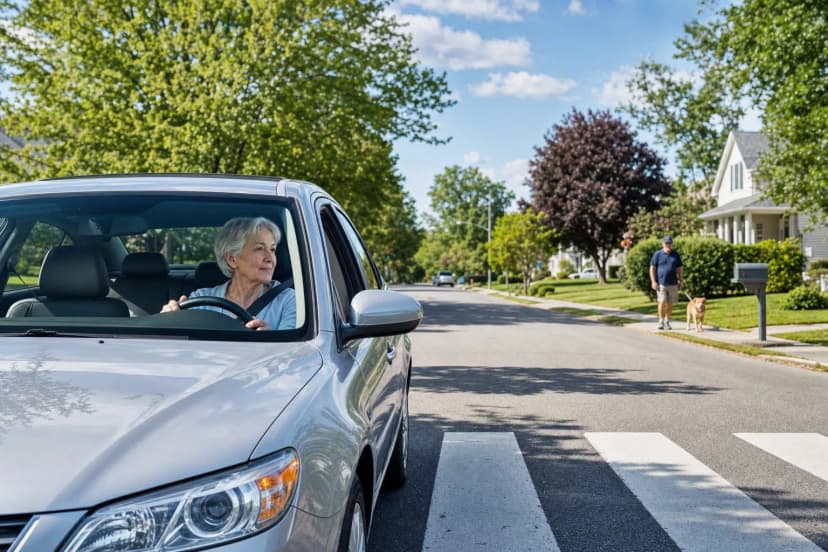
Older drivers, in particular, express wariness, often stemming from concerns over failing to correctly judge the right-of-way—a common factor in senior driver intersection crashes. The "perception of safety," comfort, and confidence of older drivers are significantly impacted by how well the path and operational guidance are communicated through signage and road markings.
However, studies also demonstrate that familiarity breeds comfort. The most significant way skepticism is overcome is through direct exposure and experience. Once drivers become accustomed to the continuous flow and yielding mechanics, opinions change rapidly. Public support typically surges to an average of 70% after a roundabout has been operational for more than one year. Overcoming this initial panic requires a combination of clear operational guidance, advanced warning signage, and a firm, practiced grasp of the fundamental rules of the modern circular intersection.
A Beginner-Friendly Guide to Navigating Multi-Lane Roundabouts Without Panic
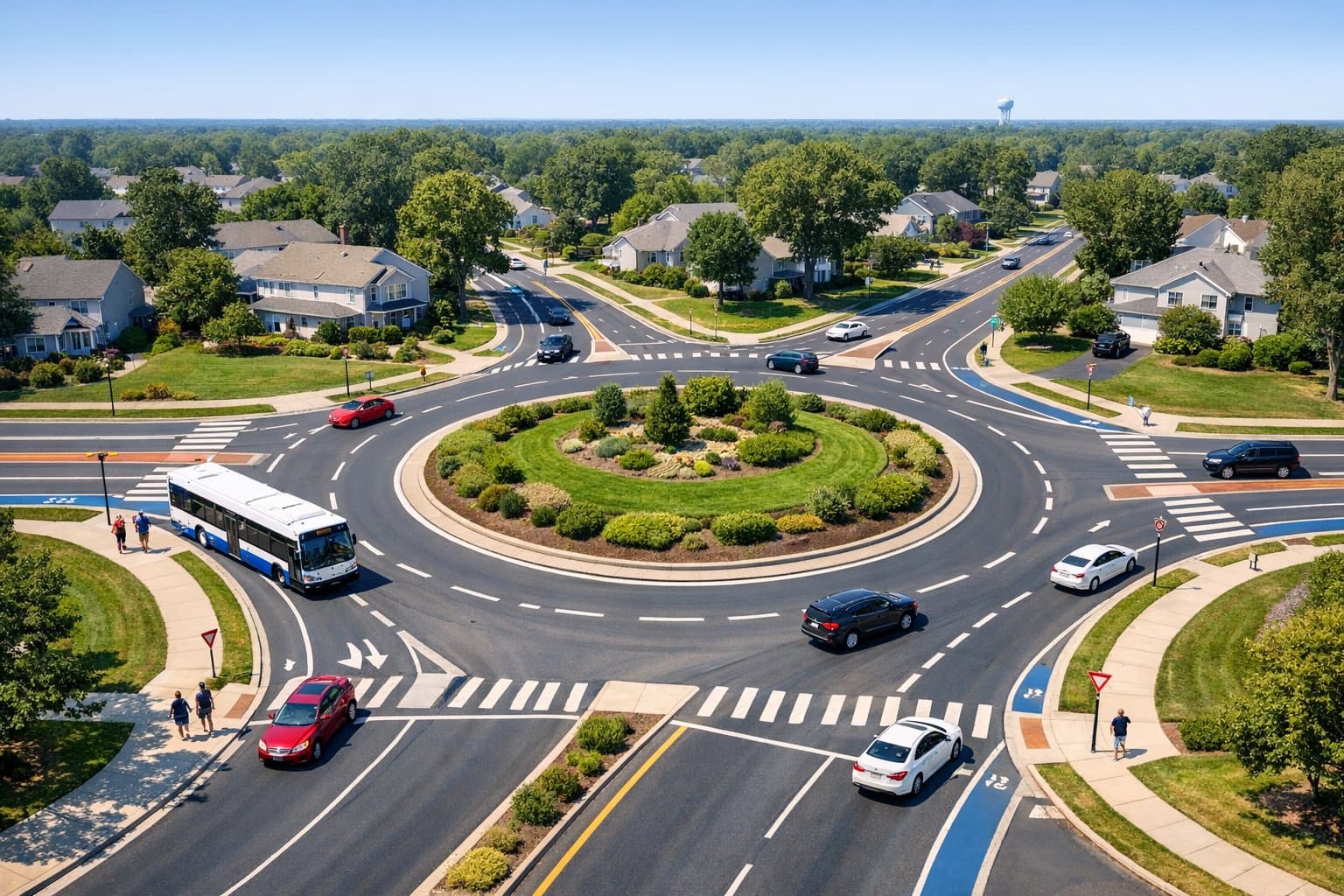
The fundamental premise of a roundabout is elegant in its simplicity: traffic travels in one direction (counter-clockwise in the United States) around a central island. This physical design forces drivers to reduce their speed and drastically reduces the angle of potential collisions, essentially eliminating the devastating right-angle "T-bone" crash. Yet, the introduction of multiple lanes often triggers profound confusion. Navigating these structures safely and confidently requires mastering four distinct phases: the approach, the entry, the circulation, and the exit.
Phase 1: The Approach and Strategic Lane Choice
The most critical decision in navigating a multi-lane roundabout occurs long before the vehicle reaches the yield line. A driver must safely maneuver into the appropriate lane well in advance of the intersection based on their intended destination, treating the approach exactly as they would a traditional multi-lane traffic light. Practicing this mindset as part of a broader safe-driving routine—like building a year-round emergency kit and learning how to handle dangerous junctions covered in modern driver safety guides—can make the approach feel much less overwhelming.
According to guidelines established by various departments of motor vehicles, including the California DMV, the rules for lane selection are rigid and predictable:
- To Turn Right: The driver must choose the far-right lane on approach and prepare to exit in the right-hand lane.
- To Go Straight: Depending on the specific pavement markings (which must always be observed), the driver may typically choose either the left or the right lane, but must exit in the same lane they entered.
- To Turn Left or Make a U-Turn: The driver must choose the far-left lane, circulate around the central island, and exit from the left lane.
During the approach phase, the driver must reduce speed to the posted advisory limit (often 15 to 20 mph) and scan the immediate environment for pedestrians and bicyclists waiting at the crosswalk. Because pedestrians have the right-of-way at these initial crossings, drivers must be prepared to stop before ever reaching the roundabout's entry point.
Phase 2: Yielding Properly (The Gap Acceptance Protocol)
The most common error—and the one most likely to induce driver panic or cause a rear-end collision—is a fundamental misunderstanding of the yield sign. At a roundabout, the driver must yield to all traffic already circulating within the intersection.
When a driver reaches the dashed yield line, they must look left. They should not proceed beyond the yield sign until there is a safe gap in circulating traffic approaching from the left. Crucially, if the intersection is clear, the driver is not required to stop. Stopping unnecessarily inside an empty roundabout or abruptly halting at the yield line when a perfectly safe gap exists creates a highly unpredictable situation for trailing vehicles and disrupts the continuous flow that the design is intended to facilitate. If you’ve ever been in a minor collision or “almost crash” at this stage, pairing these rules with a calm, step-by-step fender-bender survival checklist can help you protect yourself legally and emotionally when something does go wrong.
In a multi-lane roundabout, gap acceptance becomes slightly more complex. A driver entering the right lane must ensure that both the circulating right lane is clear and that a vehicle in the inner left lane is not actively attempting to exit across their path.
Phase 3: Circulation and the Absolute "No Lane Change" Rule
Once a vehicle has safely entered the roundabout, the driver establishes the right-of-way over other vehicles attempting to enter from subsequent approaches. The golden rule of circulating within a multi-lane roundabout is absolute lane discipline: a driver must never change lanes within the roundabout.
If a driver inadvertently enters the left lane but intended to make an immediate right turn, the safest and only legal course of action is to continue circulating around the central island until they can safely return to their desired exit, rather than attempting a dangerous, panicked lane change that cuts across the path of other vehicles.
Furthermore, everyday drivers must give large trucks, buses, and emergency vehicles ample space. Because of their wide turning radii, these large vehicles frequently utilize the raised "truck apron" surrounding the central island. The truck apron is a slightly raised area of pavement designated by a different color or texture. Everyday passenger vehicles should never drive on the truck apron, but must anticipate that commercial vehicles will use it to safely navigate the intersection.
Phase 4: Signaling Intent and Exiting Safely
The rules surrounding turn signals in roundabouts have historically been a source of debate, leading to driver hesitation and miscommunication. However, modern guidance prioritizes clear communication to trailing vehicles and those waiting to enter the circle.
A driver must use their right turn signal immediately before exiting the roundabout. If navigating a multi-lane roundabout and intending to leave at the second or subsequent exits, the driver should activate the right turn signal exactly after passing the exit immediately preceding their intended departure point.
When exiting from the inside (left) lane, the driver must exercise extreme caution. They must check their blind spots for traffic in the right lane that may be legally continuing around the circle, activate the right turn signal, and ensure the exit crosswalk is clear of pedestrians and cyclists before smoothly exiting the roundabout.
| Common Roundabout Error | Driver Correction | Safety Implication |
|---|---|---|
| Stopping inside the roundabout | Maintain a steady speed and flow; never stop unless avoiding a collision. | Prevents unpredictable rear-end collisions and severe traffic backups. |
| Changing lanes in the circle | Choose the correct lane well in advance; travel full circle if an exit is missed. | Eliminates sideswipe crashes and lateral right-of-way conflicts. |
| Failing to yield to all lanes | Wait for a safe gap in all lanes of circulating traffic before entering. | Prevents severe angle crashes at the yield line. |
| Neglecting to signal on exit | Activate the right turn signal just after the preceding exit. | Communicates intent to vehicles waiting to enter, improving overall intersection flow and reducing hesitation. |
The Cold Hard Data: Why Roundabouts Save Lives
While psychological barriers and initial community skepticism persist, the empirical data strongly supports the proliferation of roundabouts as a vastly superior safety alternative to traditional signalized or stop-controlled intersections. The fundamental geometry of the roundabout forces a reduction in speed and practically eliminates the most severe types of intersection crashes—specifically right-angle (T-bone), left-turn, and head-on collisions—by replacing them with low-speed merging conflicts.
Extensive studies of conventional intersections converted to roundabouts in the United States and abroad have consistently demonstrated massive, systemic reductions in traffic trauma.
| Safety Metric | Statistical Improvement After Roundabout Conversion |
|---|---|
| Overall Injury Crashes | 72% – 80% reduction |
| Total Crashes (All Severities) | 35% – 47% reduction |
| High-Speed Rural Intersections | 62% reduction in total crashes; 85% reduction in injury crashes |
| Pedestrian Crashes | Approximately 75% reduction (particularly at single-lane roundabouts) |
Based on analytical modeling from a landmark 2004 study, the conversion of just 10% of the signalized intersections in the United States to roundabouts would theoretically have prevented approximately 50,000 crashes in 2023 alone. This includes the prevention of nearly 290 fatal crashes and more than 32,000 crashes involving severe injuries.
Beyond the undeniable safety benefits, roundabouts also offer significant operational and environmental advantages. A study of three locations in New Hampshire, New York, and Washington state where roundabouts replaced traffic signals found an 89% average reduction in vehicle delays and a 56% average reduction in the proportion of vehicles forced to come to a complete stop. This continuous flow drastically reduces engine idling, which in turn reduces vehicle emissions and overall fuel consumption for the community.
While multi-lane roundabouts can initially be associated with smaller crash reductions or even temporary increases in non-injury fender-benders due to driver confusion, longitudinal studies show that safety improves dramatically as drivers become familiar with them. In Washington state, crashes at two-lane roundabouts decreased by an average of 9% per year as the driving population adapted, and the odds of a crash involving an evident or incapacitating injury decreased by nearly one-third annually.
The 10 Most Dangerous Intersection Patterns in America
While roundabouts represent the gold standard for the future of civil engineering, the stark reality is that the vast majority of the nearly 16 million intersections in the continental United States rely on traditional traffic signals, outdated stop signs, or remain completely uncontrolled. Unfortunately, the combination of legacy design, high vehicle speeds, and the inherent conflict points of crossing paths creates distinct, identifiable danger zones in our communities.
A deeper analysis of the Fatality Analysis Reporting System (FARS) reveals a disturbing concentration of trauma. A "deadly intersection" is formally defined by accident attorneys and data analysts as one experiencing three or more fatal crashes over a given evaluation period. Strikingly, fewer than 0.01% of all intersections in the United States meet this grim criterion. This means that traffic violence is not randomly distributed; it is highly concentrated in areas where poor design meets human vulnerability.
By analyzing crash data, transportation officials, the Federal Highway Administration (FHWA), and safety advocates have identified the ten most dangerous intersection patterns that consistently produce high rates of severe collisions. Recognizing these patterns is the first step for any neighborhood watch lead or concerned commuter looking to advocate for change.

1. High-Speed Secondary Arterials Intersecting Local Roads
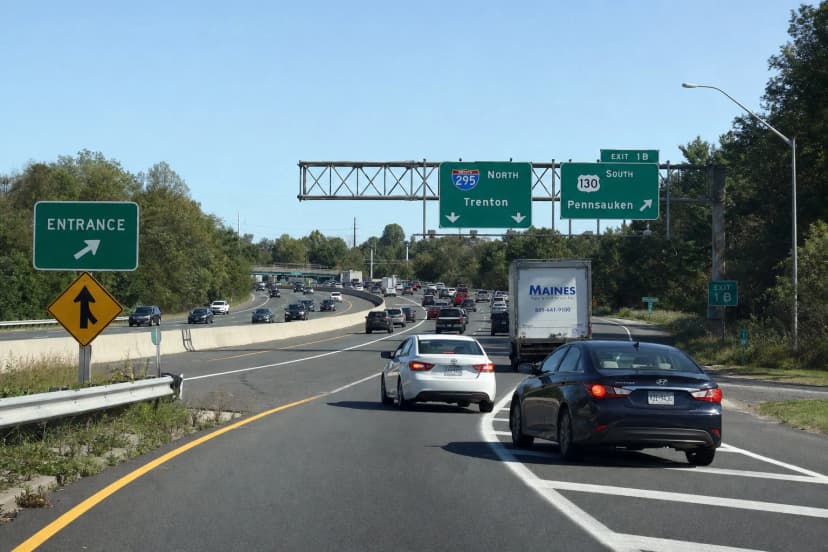
Data indicates that a staggering 82% of crashes at deadly intersections involve at least one main arterial road. Half of all deadly intersections occur precisely where a high-speed secondary road (such as a multi-lane U.S. or state highway) crosses a slower, single-lane local residential road. The immense speed differential, combined with the difficulty local drivers have in judging the gap of approaching highway traffic, leads to catastrophic right-angle collisions. These legacy highways were often built for through-traffic but now act as deadly main streets running directly through heavily populated communities.
2. The Pedestrian Gauntlet: Five or More Lanes to Cross
Pedestrian fatality hotspots are overwhelmingly characterized by massive, unforgiving physical footprints. Intersections requiring pedestrians to cross five or more lanes of traffic account for 70% of high-risk pedestrian zones. When older adults, young children, or individuals with mobility constraints attempt to cross these wide thoroughfares without a protected median refuge island, their exposure time to moving traffic is drastically increased. The sheer width of the road practically guarantees that slower-moving pedestrians will be caught in the intersection when the light turns green for cross traffic. For families navigating school zones or busy bus routes, pairing this awareness with a deep dive into school zone danger windows and child pedestrian risks can help shape safer daily routines.
3. Poorly Lit and Dark Condition Junctions
Visibility remains a paramount, yet frequently overlooked, concern in intersection design. An alarming 76% of pedestrian fatalities in collisions occur when it is dark, with another 4% occurring during dusk or dawn. Furthermore, over the last decade, pedestrian fatalities occurring in the dark increased by 58%, compared to a 16% increase during daylight hours. Intersections lacking adequate overhead lighting entirely mask the presence of vulnerable road users and obscure critical pavement markings, giving drivers virtually zero reaction time when a hazard emerges. Improving your own night-driving habits—using proper lighting, mirror setup, and fatigue management—alongside pushing for better street lighting, as outlined in night driving safety playbooks, can dramatically cut risk at these dark junctions.
4. Hit-and-Run Hotspots (Weekend and Early Morning Factors)
Certain temporal and environmental patterns breed highly dangerous, unaccountable behavior. Nearly 23% of all pedestrian fatalities involve hit-and-run drivers. These tragic intersection events share common, predictable factors: poor lighting conditions, early morning time frames, occurrences on the weekend, and locations frequently near nightlife or high-alcohol consumption zones. The isolation of these intersections severely limits traditional law enforcement's ability to identify perpetrators, leaving communities devastated and without closure.
5. High Pedestrian Traffic Overlapping "Free Right Turns"
Intersections that permit "Right Turn on Red" (RTOR) in areas with dense pedestrian foot traffic create a persistent, deadly conflict point. Drivers attempting an RTOR routinely suffer from target fixation; they focus entirely on the oncoming traffic approaching from their left to find a gap, completely neglecting to scan the crosswalk immediately to their right. When they suddenly accelerate into what they believe is a clear lane, they strike pedestrians stepping off the curb, resulting in low-speed but highly damaging impacts. These conflicts are especially dangerous for people walking or biking; pairing design fixes with driver education from human-centered pedestrian and cyclist safety guides can help both road users and planners see where blind spots hide.
6. Outdated Rural Junctions
While urban environments see a higher absolute volume of crashes, rural intersections are disproportionately deadly. The layout of older, outdated rural roads, combined with exceedingly high speed limits and a severe lack of modern traffic control devices, results in catastrophic angle crashes. Because these roads lack the congestion that naturally slows urban traffic, collisions occur at maximum velocity. Furthermore, these junctions frequently see a high volume of large commercial vehicles, resulting in devastating rollover events during abrupt evasive maneuvers.
7. Wide Throat Intersections
Intersections designed with exceedingly wide approaches (often referred to as "wide throats") make it incredibly difficult for stopped drivers to determine the correct, safe location to halt their vehicles. These sprawling designs increase the physical distance a vehicle or pedestrian must travel to clear the conflict zone. More dangerously, wide throats encourage higher turning speeds, as the sweeping curve does not require a driver to slow down to navigate the corner, directly correlating with an increased risk of severe pedestrian strikes.
8. Complex Skew Angles
Traditional, safe intersections are ideally designed to meet at perpendicular, 90-degree angles. Intersections built with severe skew angles force drivers to look over their shoulders at awkward, physically demanding angles to spot oncoming traffic. This severely restricts the line of sight. For older drivers suffering from naturally reduced neck mobility, this physical limitation leads directly to fatal gap acceptance errors and severe T-bone crashes, as they simply cannot physically turn their heads far enough to see approaching danger.
9. Unsignalized Multi-Lane Divided Highways
Unsignalized intersections on multi-lane divided highways present a unique, terrifying hazard. Drivers attempting to cross the highway or turn left must navigate multiple, independent streams of high-speed traffic sequentially without the aid of a traffic light. Misjudging the speed of a vehicle in the far lane—or having their line of sight blocked by a vehicle in the near lane—often results in opposite-direction sideswipes or high-speed head-on collisions.
10. Red-Light Running Signalized Junctions
Finally, while traffic signals are chosen to manage mobility, they inherently create a specific type of danger: the red-light runner. Signalized intersections represent approximately one-third of all intersection fatalities, and a significant proportion of these fatalities involve drivers intentionally running red lights to beat the cycle. Between 2018 and 2022, traffic fatalities involving red-light running at signalized intersections steadily increased, reaching over 1,270 annual deaths. The sheer kinetic energy involved when a vehicle runs a red light at full speed into crossing traffic makes these some of the most unsurvivable crashes on the road.
An infamous real-world example embodying these compounding dangers is the intersection of Lalor Street and Route 129 in Trenton, New Jersey. This specific junction combines a high-speed multi-lane state route with local cross traffic, severe skew angles, and high pedestrian volumes. The result has been multiple fatalities over a short span, including the tragic death of a school crossing guard. Between 2024 and 2025 alone, accidents at this specific location increased by 16.7%. It serves as a stark, empirical reminder of the human cost of dangerous infrastructure.
| Dangerous Intersection Example | Accidents (2024) | Accidents (2025) | % Change |
|---|---|---|---|
| Lalor Street & SR-129 (NJ) | 6 | 7 | +16.7% |
| Route 7 & Hickory Road | 4 | 5 | +25.0% |
| Roosevelt Boulevard | 70 | 75 | +7.1% |
| Flamingo & S. Decatur | 3 | 4 | +33.3% |
Low-Cost Fixes and the Vision Zero Safe System Approach
While completely rebuilding a dangerous intersection into a multi-lane roundabout requires significant capital investment, property acquisition, and years of engineering studies, communities do not have to wait for multi-million-dollar federal grants to save lives today. The Federal Highway Administration (FHWA) and international safety organizations advocate for the systemic application of low-cost safety countermeasures.
These are vital interventions with implementation costs typically ranging from 1,000 to 50,000 per intersection. They provide immediate safety benefits through quick-build materials and software adjustments. Neighborhood watch leaders, protective parents, and local advocates can—and should—petition their city councils for the following evidence-based enhancements:

The Leading Pedestrian Interval (LPI)
One of the most cost-effective and immediate upgrades an agency can make to a signalized intersection is the implementation of a Leading Pedestrian Interval (LPI). An LPI simply adjusts the traffic signal software timing to give pedestrians a 3 to 7-second head start to enter the crosswalk before vehicles in the parallel direction are given a green light to turn.
This relatively simple software adjustment places the pedestrian physically inside the crosswalk and directly in the driver's line of sight before the driver begins their turning maneuver, drastically reducing the "element of surprise." Studies show that LPI implementations result in an impressive 58.7% reduction in pedestrian-vehicle crashes at treated intersections. Given the exceptionally low cost of reprogramming a traffic signal—resulting in annual safety benefits estimated at nearly $41,700 per intersection in avoided crash costs—advocating for widespread LPI installation is a highly effective, low-friction community strategy.
Signing and Pavement Marking Enhancements
For stop-controlled intersections plagued by poor driver compliance, high speeds, or low visibility, basic physical enhancements yield massive returns. Advocates can push local public works departments for:
- Doubled-up, oversized advance warning signs: Placing "Intersection Ahead" or "Stop Ahead" signs on both the left and right sides of the roadway to ensure they are not missed by distracted drivers.
- Reflective tape on signposts: Applying retroreflective sheeting directly to the vertical posts of STOP signs dramatically increases their conspicuity, specifically addressing the extreme danger of dark-condition crashes.
- Quick-Build Curb Extensions (Bulb-outs): Using low-cost thermoplastic paint and flexible plastic bollards to create "bulb-outs" visually narrows the roadway. This psychological narrowing forces drivers to take turns at slower speeds and physically shortens the distance pedestrians must cross, limiting their exposure time to moving traffic.
Intelligent Speed Assistance (ISA) and Fleet Safety
Because unsafe speeds contribute to one-third of all traffic deaths, advocates must demand proactive speed management. The installation of peripheral transverse pavement markings (optical speed bars) gives drivers the illusion of acceleration, prompting them to instinctively slow down as they approach a dangerous junction.
Furthermore, forward-thinking communities are looking inward, integrating Intelligent Speed Assistance (ISA) technology into their own municipal fleets. ISA dynamically limits a vehicle's throttle to prevent it from accelerating past the posted speed limit. In a massive pilot program in New York City covering 500 municipal vehicles, those equipped with ISA saw a 64% decrease in speeding and an astounding 95% improvement in safety performance among the highest-risk drivers. Advocates can lobby their city councils to require ISA on all newly purchased city vehicles and waste management trucks, leading by example.
The Safe System Approach to Advocacy
At the core of modern traffic advocacy is the "Safe System Approach," heavily championed by the Vision Zero Network, a movement celebrating a decade of pushing for zero traffic fatalities. This philosophy fundamentally accepts that human beings will inevitably make mistakes, but insists that the road system must be designed so that those predictable errors do not result in death or severe injury.
Advocating for roadway safety requires persistent, data-driven engagement. Residents can request that their local governments perform safety audits utilizing the FHWA's "Road Safety Audit Prompt List," participate in pilot "quick-build" projects using temporary materials, and integrate land-use strategies that prioritize walkable, transit-oriented neighborhoods. Furthermore, measuring success must go beyond simple crash counts; communities must track equity-focused metrics, ensuring that safety infrastructure is equitably distributed to historically underinvested neighborhoods, which often suffer disproportionately from traffic violence. When those neighborhoods also face extreme heat, flooding, smoke, or winter storms, combining this advocacy with practical guidance on driving safely through dangerous weather and risky intersections can save lives in the near term while bigger projects are still on the drawing board.
The Hawthorne Effect and the Contagion of Road Rage
While infrastructure upgrades and legislative advocacy are fundamental pillars of road safety, there exists a critical, chaotic gap between the built environment and immediate human behavior. Even the most meticulously engineered multi-lane roundabout or perfectly timed signalized intersection cannot entirely eradicate the danger posed by a distracted, aggressive, or impaired driver. This is where the intersection of human psychology, law enforcement limitations, and innovative technology becomes vital.
The modern driving experience is increasingly characterized by hostility. A staggering 96% of drivers admit to engaging in aggressive driving behaviors, and up to one-third report acting as perpetrators of road rage. Even more concerning, a recent AAA Foundation study revealed that 11% of drivers admitted to violent actions such as intentionally bumping another car or confronting another driver outside their vehicle.
Psychologists note that road rage is highly contagious; the study found that the more drivers are exposed to aggressive behavior on the road, the more likely they are to drive aggressively themselves, creating a self-fulfilling cycle of hostility. This behavior is frequently fueled by the perceived anonymity of the automobile. Enclosed in metal and glass, drivers feel disconnected from the societal norms that govern face-to-face human interaction. For bystanders who witness these explosive moments at intersections, knowing how to step in safely and document what happened—using advice from a bystander crash-response playbook—can turn a chaotic scene into usable evidence and faster help.
The Response Time Dilemma
When a critical incident occurs on the road—whether it is a severe collision, a hit-and-run, or an escalating road rage encounter—time is the ultimate currency. Unfortunately, traditional enforcement mechanisms are struggling to keep pace. According to recent data, the average police response time to an emergency call in the United States is approximately 10 minutes. In rural areas or during peak rush hours, this delay can stretch considerably longer, with EMS travel times ranging between 9 and 18 minutes strongly associated with a 34% increase in the odds of a victim dying directly at the crash scene.
Lengthy response times pose a twofold problem: they reduce the likelihood of apprehending a fleeing perpetrator and significantly diminish the public's perception of safety. By the time authorities arrive at the scene of a reckless driving incident, the perpetrator has often vanished into the surrounding traffic network, leaving victims feeling helpless and reinforcing the aggressive driver's belief that their actions carry no consequences.
Behavioral Science: The Hawthorne Effect
To bridge this enforcement gap, behavioral science points to a powerful psychological phenomenon known as the Hawthorne Effect. The Hawthorne Effect occurs when individuals alter or significantly improve their behavior simply because they are aware they are being observed or evaluated.
In the context of road safety, when drivers realize that their actions are visible and can be easily reported by the surrounding community, the dangerous veil of vehicular anonymity is pierced. Studies in commercial fleet management have definitively proven that when drivers know their performance is being monitored by safety technology, compliance with safety protocols skyrockets, and aggressive driving behaviors rapidly decline. The challenge for communities is figuring out how to apply the Hawthorne Effect to everyday, private drivers. One powerful way to do this is by equipping ordinary cars with smart cameras and connected tools, as explored in analyses of dashcams as “silent witnesses” for safer streets, which turn vehicles into rolling accountability partners.
Human Media™ and the Tech-Powered Community Watch
This is where modern, community-driven technology steps in to fill the void. Innovative platforms have emerged to harness the Hawthorne Effect at scale, transforming passive, frustrated bystanders into an active, connected network of accountability. A prominent example of this paradigm shift is Carszy, a privacy-focused driver-to-driver communication and community safety platform.
Instead of relying on the toxic, polarizing algorithms typical of traditional social networking, platforms like this pioneer the concept of Human Media™—a deliberate shift away from digital vanity metrics toward leveraging real-world connections to generate tangible, life-saving impacts. By utilizing license plates as unique, universally visible identifiers, the technology allows everyday drivers, commuters, and neighborhood watch advocates to communicate securely with one another on the road.
License Plate Messaging for Real-Time Safety
The utility of License Plate Messaging extends far beyond simply reporting aggressive driving. It provides a vital, immediate communication link for everyday hazards that law enforcement simply cannot address in real-time. For instance, if a tech-savvy driver notices a vehicle traveling at dusk with its headlights off, or a protective parent spots a dog left in a sweltering hot car in a retail parking lot, they can instantly send a secure text or call to the owner using just the license plate number. This peer-to-peer notification system addresses critical safety oversights instantly, entirely bypassing the bottleneck of the 911 dispatch queue and potentially saving lives in the process. It works hand in hand with other community alert tools that help people survive highway breakdowns, late-night hazards, and other “highway horror” scenarios while help is still on the way.
VOIS™ and the Deterrence of Hit-and-Runs
Perhaps the most potent application of this community-mobilized technology is in combating the epidemic of hit-and-run crashes, which, as noted earlier, account for nearly a quarter of all pedestrian fatalities. Traditional Automated License Plate Recognition (ALPR) systems are often siloed within law enforcement agencies, meaning the data cannot be quickly accessed by the public during an unfolding emergency.
Through community-driven systems like the Vehicle of Interest Search (VOIS™), the public can actively participate in locating vehicles involved in critical incidents such as abductions, trafficking, or severe hit-and-run collisions. When a vast network of commuters and neighborhood watch leads is equipped with the ability to instantly flag and look up a fleeing license plate, the likelihood of a perpetrator escaping unnoticed drops precipitously.
The mere presence of a digitally connected, observant community serves as a massive psychological deterrent. It effectively scales the Hawthorne Effect across an entire city, inherently calming traffic and promoting a culture of accountability. Because platforms like Carszy are built on US-based servers with a strict focus on privacy, the technology empowers citizens to take immediate, non-confrontational action without turning the community into a surveillance state. This approach reduces the massive burden on overextended law enforcement agencies and fundamentally shifts the culture of the roadway from isolated hostility to collective security. Over time, these same tools, combined with near-miss reporting and heatmaps described in work on community-led road safety interventions, can flag dangerous intersections long before a fatal crash happens.
Conclusion
The evolution of road safety is a complex, multi-faceted endeavor that demands a synergy of advanced engineering, grassroots advocacy, and modern technological integration. Mastering the physical environment—such as learning to navigate the multi-lane roundabout—requires drivers to overcome deep-seated psychological hesitation through continuous education, strict lane discipline, and precise, predictable signaling.
Meanwhile, mitigating the persistent dangers of the nation's deadliest intersection patterns requires communities to stop accepting traffic violence as an inevitable byproduct of modern life. Protective parents, commuters, and local leaders must fiercely advocate for proven, low-cost countermeasures such as Leading Pedestrian Intervals, high-visibility signage, quick-build curb extensions, and intelligent speed management policies grounded in the Safe System Approach.
Ultimately, however, physical infrastructure alone cannot fully protect a community without the active, observant participation of its members. The integration of real-time communication tools strips away the dangerous anonymity of the automobile, replacing contagious road rage with community accountability, and isolation with peer-to-peer support. By actively observing, safely reporting, and communicating with fellow motorists, every individual possesses the power to drastically alter the safety landscape of their local streets.
To transform the daily commute from a source of anxiety into a shared responsibility, technological adoption is key. Download the app to stay connected, alert fellow drivers to immediate hazards, and actively participate in the protection of the community at carszy.com.