Rage vs. Recklessness vs. Mistake: A Calm Framework for Deciding What Happened
Introduction: The Anatomy of a Highway Encounter
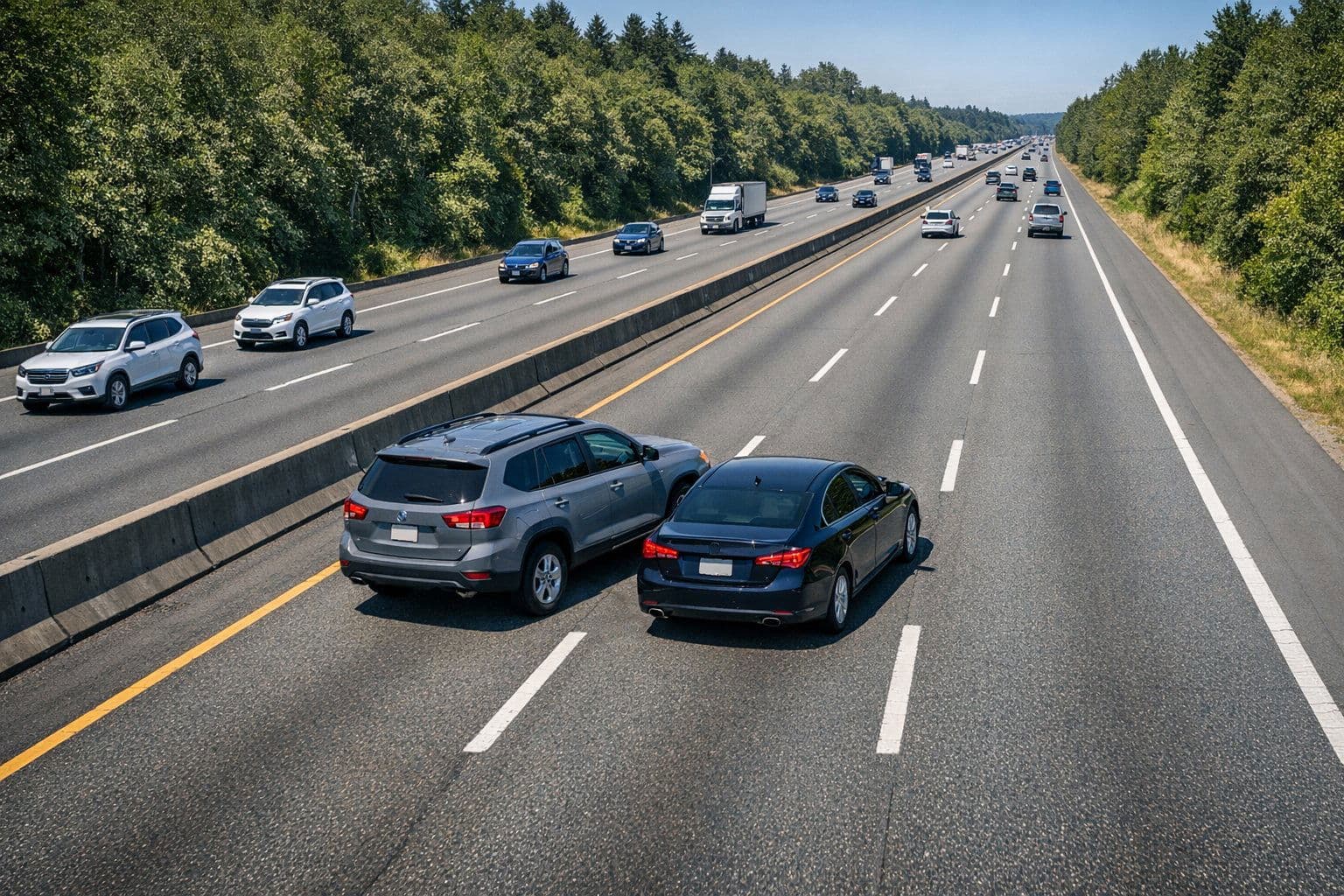
It begins with a disruption in the flow. You are cruising at the speed limit on a typical Tuesday morning, your mind occupied with the day’s agenda—a meeting at 9:00 AM, a grocery list for dinner, the podcast playing through your speakers. The rhythm of the road is predictable, almost hypnotic. Then, without warning, the pattern breaks. A grey SUV merges aggressively into your lane, forcing you to tap your brakes. The gap between your bumpers shrinks to a terrifying few feet. Your pulse spikes. Your hands tighten on the leather of the steering wheel.
In that split second, a narrative forms in your mind. The driver of the SUV is not just a person in a car; they become an antagonist in your life’s story. Are they a distracted parent who didn’t check their blind spot? Are they a reckless commuter running late who decided their time was more valuable than your safety? Or are they a predator, weaponizing their vehicle to intimidate you?
This distinction—between an honest mistake, a reckless choice, and a malicious act of rage—is the most critical calculation a driver can make. It determines not only your immediate physical safety but also the legal and financial aftermath should metal meet metal. At Carszy, we believe in the philosophy of "They Ask, You Answer." We know that our users are asking difficult, often uncomfortable questions about safety, liability, and human behavior. We also know that the automotive industry often glosses over the ugly truths of driving—the anger, the financial ruin of denied insurance claims, and the psychological toll of navigating a hostile road network. Articles like how to report road rage safely and effectively show just how high the stakes can be when an encounter on the highway goes wrong.
This report is designed to answer those questions with unflinching transparency. We will dismantle the legal definitions that separate a traffic ticket from a felony charge. We will explore the "Intentional Act Exclusion"—the insurance clause that could leave you bankrupt if you are the victim of road rage. We will analyze the psychology of anger, using frameworks like the Fundamental Attribution Error and Hanlon's Razor to explain why good people turn into monsters behind the wheel. And we will provide a calm, evidence-based framework for identifying the threat profile of other drivers—the Drifter, the Weaver, and the Hunter—so you can make the safest decision in the heat of the moment.


Part I: The Legal and Behavioral Framework
To navigate the chaos of the road, we must first establish a shared vocabulary. In casual conversation, we might describe a speeding driver as "aggressive" or a distracted one as "reckless." However, in the precise worlds of law enforcement and insurance adjustment, these terms have specific, distinct meanings that carry vastly different consequences. The difference between "negligence" and "recklessness" can be the difference between a slightly higher insurance premium and a suspended license. The difference between "recklessness" and "road rage" can be the difference between a fine and a prison sentence. Understanding these categories is also essential if you ever want to challenge a ticket or support a community program like the ones described in the OC Road Safety Hub community playbook.
1. Negligence: The Unintentional Error
Negligence is the baseline of traffic liability. It is the failure to exercise the level of care that a reasonable person would exercise in similar circumstances. It is characterized fundamentally by a lack of intent. The negligent driver does not want to crash. They do not want to scare you. They simply failed to pay attention or made a poor judgment call.
In states like Pennsylvania, negligent driving is defined by "careless mistakes or a lack of attention". It is an act of omission—failing to look, failing to signal, failing to brake in time—rather than an act of commission. The driver’s mental state is one of oblivion, not malice.
The Markers of Negligence:
- Distraction: This is the most common form of negligence. A driver looking at a text message, fiddling with the radio, or turning to discipline children in the back seat is negligent. They have voluntarily engaged in a distracting activity, but they have not actively chosen to harm others.
- Error in Judgment: Misjudging the speed of an oncoming car when making a left turn, or underestimating the braking distance required on a wet road, falls under negligence. These are cognitive failures, not moral ones.
- Legal Consequences: Negligence is generally treated as a civil matter or a minor traffic infraction. The penalty is financial—a ticket, points on a license, or higher insurance premiums. It rarely results in a criminal record unless the negligence was so profound that it resulted in death (e.g., vehicular manslaughter due to negligence).
The Insurance Implication: Crucially, negligence is exactly what auto insurance is designed to cover. When you pay your premiums, you are essentially paying for protection against your own future stupidity. If you accidentally rear-end a sedan because you were looking at a billboard, your liability coverage will pay for the damage. The system functions because the act was accidental. Dashcam footage and even advanced AI dashcams that act like co-pilots and legal witnesses can make it much easier to show that a collision was truly negligent, not malicious.
2. Recklessness: The Willful Disregard
Recklessness represents a significant escalation in severity and culpability. Legally, reckless driving involves a "willful and wanton disregard" for the safety of persons or property. The critical distinction here is knowledge. The reckless driver is not oblivious; they are aware of the risk they are creating and they choose to create it anyway.
In Washington state, reckless driving is a criminal offense, distinct from the infraction of negligent driving. In Virginia, reckless driving is a Class 1 misdemeanor, carrying penalties that can include up to a year in jail and a $2,500 fine. This is not a "traffic ticket"; it is a criminal charge that stays on a permanent record.
The Markers of Recklessness:
- Excessive Speed: Driving significantly over the limit—often defined as 20 mph or more over the posted speed, or driving over 80 mph regardless of the limit—is inherently reckless because the driver knows that stopping distances are compromised and reaction times are reduced.
- Aggressive Maneuvering: Weaving through traffic, cutting across multiple lanes without signaling, or passing on the shoulder are conscious decisions to prioritize speed over safety.
- Street Racing: Participating in an unauthorized speed contest is a quintessential reckless act. It converts a public utility (the road) into a private playground, imposing extreme risk on non-consenting participants.
The "Choice" Factor:
The defining feature of recklessness is the conscious choice. A driver who drives 90 mph in a 55 mph zone is making a continuous series of choices to maintain that speed. They are assessing the risk (getting caught, crashing) and deciding it is acceptable. This "willful" nature pushes the behavior out of the realm of simple accidents and into the realm of criminal liability.
3. Road Rage: The Malicious Intent
Road rage is not a traffic offense. It is a crime against a person, committed using a vehicle. While "aggressive driving" refers to the operation of the car (speeding, tailgating), "road rage" refers to the emotional state and intent of the driver—specifically, the intent to harm, intimidate, or punish.
The National Highway Traffic Safety Administration (NHTSA) draws a clear line: aggressive driving is a traffic violation; road rage is a criminal offense. It involves assault, battery, and in extreme cases, homicide.
The Markers of Road Rage:
- Weaponization of the Vehicle: Using the car to ram another vehicle, run someone off the road, or block their path is assault with a deadly weapon.
- Physical Confrontation: Exiting the vehicle to threaten or attack another driver is a hallmark of road rage. This transforms a traffic dispute into a physical altercation.
- Punitive Driving: "Brake checking" (slamming on brakes in front of a tailgater) is a malicious act intended to cause a collision or terrorize the other driver. It is not a defensive maneuver; it is an offensive one.
- Firearms: The involvement of guns in road rage incidents is rising. Statistics indicate that road rage incidents involving firearms result in hundreds of deaths or injuries annually.
The Legal & Financial Abyss: Road rage carries the most severe penalties, including felony charges and prison time. But the financial consequences are equally devastating. As we will explore in the "Cost" section, insurance policies almost universally exclude coverage for "intentional acts." If a driver intentionally rams you, their insurance company may deny the claim, leaving both the victim and the perpetrator in a financial nightmare. In a world where vehicles are becoming smarter and more connected, as explored in our guide on how software-defined vehicles transform road safety, intent will only become easier to prove with data.

Part II: The Psychology of the "Other" Driver
Why do we assume the worst? When another driver cuts us off, why is our immediate reaction often anger rather than concern? Why do we perceive incompetence as malice? To truly understand road safety, we must look beyond the mechanics of the car and into the mechanics of the human mind. The psychology of driving is a study in bias, stress, and territoriality.
The Fundamental Attribution Error: The Bias of the Road
The most powerful psychological force on the road is the Fundamental Attribution Error. This is the cognitive bias where we attribute other people's actions to their character (internal disposition) while attributing our own actions to circumstance (external situation).
Consider a scenario where a car speeds past you on the highway, weaving between lanes.
- Your Immediate Thought: "What a maniac. That person is reckless, selfish, and dangerous. They are a bad person." (Attribution to Character).
- The Reality: Perhaps that driver is rushing to the hospital because their child has been injured.
Now consider the reverse. You are the one speeding and weaving.
- Your Internal Monologue: "I am usually a safe driver, but I am late for a critical job interview and traffic was unexpectedly backed up. I have to do this just this once." (Attribution to Circumstance).
On the road, we are anonymous. We cannot communicate our circumstances to other drivers. All they see is our behavior. This lack of context, combined with the attribution error, primes us for conflict. We assume every slight is a personal insult delivered by a morally deficient person. This dehumanization is the fuel for road rage. It is easier to attack a "monster" than a stressed parent.
Hanlon's Razor: The Mental Shield
To combat this bias, we must actively employ a different mental model: Hanlon's Razor. This philosophical rule of thumb states: "Never attribute to malice that which is adequately explained by stupidity".
In the context of traffic, "stupidity" is a broad category that includes distraction, fatigue, poor visibility, confusion, and incompetence.
- The driver who drifts into your lane isn't trying to run you off the road (malice); they are likely changing the radio station or looking at a GPS (stupidity/distraction).
- The driver moving slowly in the fast lane isn't trying to block you (malice); they may be lost, elderly, or oblivious to the passing lane etiquette (incompetence).
Applying Hanlon's Razor is a defensive driving tactic. If you perceive malice, your body prepares for a fight—adrenaline surges, muscles tense, and you may be tempted to retaliate (road rage). If you perceive stupidity, your body prepares for caution—you back off, give the "confused" driver more space, and stay safe. It shifts the narrative from "I am under attack" to "I am navigating a hazard."
The Physiology of Rage: The Amygdala Hijack
What happens physiologically when we give in to the attribution error? When we perceive a threat or an insult on the road, the amygdala—the brain's emotional processing center—triggers a "fight or flight" response. This is often called an "amygdala hijack" because it bypasses the prefrontal cortex, the part of the brain responsible for logic, reasoning, and impulse control.
The body is flooded with cortisol and adrenaline. Heart rate increases. Vision narrows (tunnel vision). In a primitive environment, this would prepare us to fight a predator. In a car, however, we are strapped into a seat, unable to run or physically fight. The energy has nowhere to go. It manifests as gripping the wheel until knuckles turn white, screaming, or using the car itself as a weapon to express dominance.
Research indicates that drivers prone to road rage often have lower "distress tolerance"—the ability to withstand negative emotional states without acting out. For these individuals, the frustration of traffic is not just an annoyance; it is a psychological crisis that demands a release. Environmental factors like heat, congestion, and noise exacerbate this state, lowering the threshold for aggression.
Profiling the Threat: The Drifter, The Weaver, and The Hunter
Not all dangerous drivers are the same. Recognizing the specific behavioral profile of a vehicle can help you predict what will happen next and how to respond. Based on behavioral cues, we can categorize threats into three primary profiles.

1. The Drifter (The Distracted)
The Drifter is the most common threat on the modern road, often a result of smartphone usage.
- Visual Cues: The vehicle drifts slowly towards the lane marker, then jerks abruptly back to the center (the "texting correction"). Their speed is inconsistent—slowing down while reading, speeding up when they look up.
- Head Position: If visible, the driver’s head is tilted down or turned towards a passenger.
- Psychology: They are oblivious. They believe they are multitasking effectively (a myth). They have no intent to harm.
- Defensive Response: Give them space. A light, polite tap on the horn can alert them to their drift. Do not pass them closely, as they may drift again.
2. The Weaver (The Impaired)
The Weaver is likely under the influence of alcohol, drugs, or extreme fatigue.
- Visual Cues: Unlike the jerky corrections of the Drifter, the Weaver’s path is often a wider, smoother sine wave across the lane. They may hug the center line or the shoulder line to maintain orientation. They may drive without headlights at night or respond extremely slowly to traffic signals.
- Psychology: Their cognitive functions are depressed. They are not processing visual information or spatial relations correctly.
- Defensive Response: Do not engage. Do not honk aggressively, as this may startle them into a panic. Stay far behind them. Call 911 and report the vehicle description and location. They are a ticking time bomb.
3. The Hunter (The Aggressive/Raging)
The Hunter is the driver exhibiting recklessness or road rage. They are actively targeting other vehicles or the road itself. Hunters show up everywhere—from quiet neighborhoods to crowded freeways—and they are exactly the kind of pattern that near-miss reporting and Sentiment Heatmaps built from “almost collided” incidents are designed to uncover before a serious crash happens.
- Visual Cues: Tailgating is the primary indicator—driving aggressively close to the bumper of the car in front to intimidate them into moving. They change lanes rapidly and without signaling (weaving to advance, not drifting). They may flash headlights or use their brakes to "check" other drivers.
- Psychology: They are in a state of high arousal and hostility. They view other drivers as obstacles or enemies. They are likely operating under the belief that their time is more important than others' safety.
- Defensive Response: Yield immediately. Do not block their path. Do not "police" their speed by driving slowly in the left lane. Let them pass. Avoid eye contact, which can be perceived as a challenge. If they target you, drive to a safe public location (police station, hospital).

Part III: The Financial Reality – Who Pays?
In the TAYA framework, we must address the question that hits the wallet: What does this cost? The financial implications of a traffic incident are massive, and they vary wildly depending on whether the act was negligent, reckless, or intentional. For the victim of a crash, the classification of the other driver's behavior can be the difference between a fully paid claim and financial ruin.
The Logic of Liability Insurance
Auto liability insurance is built on a fundamental premise: it covers accidents. It protects the insured driver against the financial consequences of their own negligence. If you run a red light because you were distracted and hit another car, your insurance pays for the other driver's repairs and medical bills. This system works because the crash was an unintended consequence of a mistake.
Negligence Claims:
- Process: Standard claim process. The at-fault driver's insurance accepts liability.
- Outcome: The victim is compensated for property damage, medical expenses, and potentially pain and suffering. The at-fault driver faces increased premiums but is protected from personal bankruptcy by their policy limits.
The Recklessness Grey Zone
Reckless driving complicates the picture. Since recklessness involves a "willful disregard" for safety, insurance companies could theoretically argue that the driver intended to take the risk. However, courts and insurers generally hold that while the conduct was intentional (speeding), the result (the crash) was not. Therefore, liability coverage usually applies.
- The "High Risk" Consequence: While the claim may be paid, the reckless driver will face severe consequences from their insurer. They may be dropped from their policy entirely or forced into a "high-risk" insurance pool where premiums can be 2-3 times higher than standard rates.
- Punitive Damages Gap: In many jurisdictions, if a driver's conduct is found to be reckless or wanton, a jury may award "punitive damages" to the victim—money specifically intended to punish the wrongdoer. Crucially, many standard auto insurance policies exclude coverage for punitive damages. This means the reckless driver would be personally liable for this portion of the judgment, potentially leading to wage garnishment or asset seizure.
The "Intentional Act" Exclusion: The Road Rage Trap
This is the most dangerous financial reality of the road, and one that few drivers understand until it is too late. Almost every auto insurance policy contains an Intentional Act Exclusion. This clause states that the insurer will not pay for bodily injury or property damage caused by an act that was expected or intended by the insured.
If a driver succumbs to road rage and intentionally rams your vehicle, or runs you off the road, the act is no longer an accident. It is an assault. The insurance company can—and often will—deny coverage completely. They argue: "We insure against negligence, not crime. We will not indemnify our client for their decision to commit violence."
The Consequence for the Victim:
If you are the victim of a road rage attack and the aggressor's insurance denies the claim based on the intentional act exclusion, you are in a precarious position.
- No Liability Payout: The aggressor's insurance pays nothing.
- Personal Judgment: You can sue the aggressor personally, but people who commit road rage often do not have significant assets to seize. You cannot get blood from a stone.
- The Safety Net: Uninsured Motorist (UM) Coverage: This is where your own insurance choices become life-saving. If the other driver's coverage is denied, they are effectively "uninsured." If you carry Uninsured Motorist Bodily Injury (UMBI) and Property Damage (UMPD) coverage, your own policy should step in to pay for your losses.
- Carszy Recommendation: In an era of increasing road rage, high-limit UM/UIM coverage is not optional; it is essential financial self-defense.
As cars gain more sensors and data connections, they can also protect you on the financial side. The same vehicle-to-everything tools described in our look at community-led tech interventions for road safety can supply hard evidence about speed, braking, and intent when an insurer tries to deny your claim.

Part IV: Technology, Surveillance, and the New "Neighborhood Watch"
We live in the age of the "Smart Road." Every mile we drive is increasingly monitored, recorded, and analyzed—not just by law enforcement, but by our fellow citizens. Technology has become a central player in the drama of road rage and recklessness, offering both new solutions and new anxieties.
The Dash Cam: The Objective Witness
If the Fundamental Attribution Error clouds our judgment, the dash cam clears it. The single most effective tool for protecting yourself from the financial fallout of a road rage incident is a high-quality dashboard camera. In a "he said, she said" dispute, video evidence is the ultimate arbiter.
- Legal Value: Video can prove that a driver swerved into you (road rage/recklessness) rather than you drifting into them. It can capture license plates of hit-and-run drivers.
- Insurance Value: It expedites claims and prevents fraud (e.g., "swoop and squat" scams where a driver intentionally causes a rear-end collision).
- Psychological Value: Knowing you are recording can help you stay calm. You don't need to "win" the argument on the road; you just need to capture the evidence and let the authorities handle it.
Today’s dashcams are evolving fast. Many now use AI to detect near-misses, risky maneuvers, or even drowsy driving, turning your car into a kind of real-time safety partner. If you want to understand where this is heading, explore our deep dive into the future of AI dashcams and Human Media sharing.
The Double-Edged Sword of Reporting Apps
Applications like Waze, Citizen, and Nextdoor have created a crowdsourced surveillance network. Users report accidents, police presence, and "dangerous driving" in real-time.
- The Benefit: Awareness. Knowing that there is a reported hazard or a reckless driver ahead allows you to drive more defensively.
- The "Paranoia Effect": However, these apps can also fuel anxiety. Constant notifications about crime and danger can create a perception that the world is far more hostile than it actually is. This heightened state of alertness can make drivers more reactive and aggressive—the very problem we are trying to solve.
- Vigilantism Risks: There is a fine line between reporting safety hazards and harassment. Apps that allow users to post videos or license plates of "bad drivers" can lead to doxxing and vigilante justice, often without context or due process.
ALPR: The End of Anonymity?
Automated License Plate Readers (ALPR) are no longer just for police cars. They are being deployed in neighborhoods by HOAs and private businesses.
- Pros: They are highly effective at recovering stolen vehicles and identifying drivers involved in crimes.
- Cons: They represent a massive loss of privacy. The movement of innocent drivers is tracked and stored, creating a digital dragnet that treats everyone as a potential suspect.
The Carszy Context: Can We Talk?
This brings us to the potential of platforms like Carszy. One of the core psychological triggers of road rage is the inability to communicate. If you accidentally cut someone off, you cannot say "Sorry." If someone's brake light is out, you cannot tell them. The isolation of the vehicle breeds conflict.
- The Vision: A platform that links license plates to a communication channel could humanize the road. A simple message—"My apologies, I didn't see you"—could diffuse a rage incident instantly.
- The Challenge: Moderation. Such a system must be rigorously designed to prevent it from becoming a tool for harassment. The goal must be empathy, not engagement in conflict.
In some cities, this kind of human-centered communication is already starting to show up inside broader safety programs. The Orange County road safety hub playbook, for example, uses reporting tools, ambassadors, and agency partners to turn one-off complaints into coordinated, calm responses that actually fix dangerous spots.
Part V: The Action Plan – A Calm Framework
We have defined the threats, analyzed the psychology, and counted the costs. Now, we must answer the final, most practical question: What do I do?
When you are on the road and a situation escalates, you need a pre-programmed response protocol. You cannot rely on your instincts in the moment, because your instincts will likely be hijacked by your amygdala. You need a plan.
1. The Universal Apology: The Power of "I'm Sorry"
If you commit a negligent act—you drift, you cut someone off, you forget to move at a green light—your first priority is to de-escalate the other driver's potential anger. You must break their Fundamental Attribution Error loop ("He's a jerk") and replace it with a new narrative ("He made a mistake and he knows it").
- The Gesture: The most universally recognized sign of apology is raising a hand (palm open or two fingers in a peace sign) and mouthing the word "Sorry".
- Body Language: A sheepish expression or a bow of the head reinforces the message. Avoid aggressive gestures or staring.
- The Impact: This simple act validates the other driver's grievance. It signals that you are not a threat and not an enemy. It is disarming.
2. Defensive Maneuvers: Fade, Don't Swerve
If you encounter a reckless or drifting driver, your physical reaction must be controlled.
- The Scenario: A car in the adjacent lane begins to drift into your space.
- The Wrong Move (Swerving): Jerking the wheel away from the threat is a common panic reaction. At highway speeds, this can cause you to lose control, spin, or slam into a car in the other lane or a median barrier.
- The Right Move (Fading): Gently "fade" within your lane away from the intruder. If necessary and safe, move to the shoulder. Simultaneously, apply the brakes firmly and smoothly. It is almost always better to brake in a straight line than to swerve at high speed. Reducing speed gives you more time to react and reduces the energy of any potential impact.
3. The "Hanlon's Razor" Mental Reset
When you feel your own anger rising—when someone cuts you off or drives slowly—you must actively intervene in your own thought process.
- The Trigger: You are cut off. Your heart races. You think, "How dare they!"
- The Intervention: Repeat the mantra: "It's not malice, it's a mistake."
- The Reframing: Visualize the other driver not as a villain, but as a distracted teenager, a tired nurse, or a lost tourist. This reframing lowers your physiological arousal. It keeps you out of the "Red Zone" of road rage and keeps you in the "Yellow Zone" of defensive driving.
4. The Escape Protocol
If you identify a driver as a Hunter (aggressive/raging profile)—they are tailgating, gesturing, or following you—you must shift from driving to escaping.
- Yield: Give them what they want. If they want to pass, slow down and move over. If they want to merge, let them in. Being "right" is not worth the risk.
- Disconnect: Lock your doors. Roll up your windows. Avoid all eye contact. Look straight ahead or at your mirrors.
- Detour: Do not drive home. Do not drive to work. You do not want them to know where you live or where you are going.
- Seek Safety: Drive to a police station, a fire station, or a busy, well-lit public space (like a gas station or hospital entrance).
- Call for Help: If they continue to follow you, call 911. State clearly: "I am being followed by an aggressive driver. I am afraid for my safety." Give your location and the description of the other vehicle. Stay on the line until police arrive.
After the incident, your job shifts from physical safety to documentation and recovery. That’s where guides like our step-by-step walkthrough on reporting road rage to police and protecting yourself become invaluable, especially if you need to file a report or an insurance claim.

Conclusion: The Choice is Yours
The road is an imperfect system. It is a network of asphalt shared by millions of people, each with their own stresses, distractions, and flaws. We cannot control the behavior of others. We cannot force the Drifter to put down their phone, or the Weaver to sober up, or the Hunter to find peace.
But we can control our response.
Every time we get behind the wheel, we are faced with a choice. We can choose to interpret every error as an insult, fueling a cycle of anger that endangers our lives and our financial future. Or we can choose the path of the Calm Framework. We can choose to view negligence as a mistake to be forgiven. We can choose to view recklessness as a hazard to be avoided. And we can choose to view rage as a trap to be escaped.
By understanding the legal distinctions, acknowledging our own psychological biases, and preparing for the financial realities, we empower ourselves. We stop being victims of the road's chaos and become masters of our own journey.
Drive safe. Drive calm. And when in doubt—assume they just didn't see you. And remember: the same connected tools that help prevent child and pet tragedies in hot cars, like those described in our piece on preventing heatstroke in parked vehicles, can also help make everyday driving encounters a little more forgiving and a lot more humane.