The All-Seeing Eye: Why AI Dashcams in 2026 Are Your Co-Pilot, Lawyer, and Social Network
Remember the old days—way back in 2023—when a dashcam was just a passive, grainy witness? You’d stick it to your windshield, forget about it, and only pray the SD card wasn’t corrupted when someone backed into you.
Welcome to 2026. That passive observer has graduated.
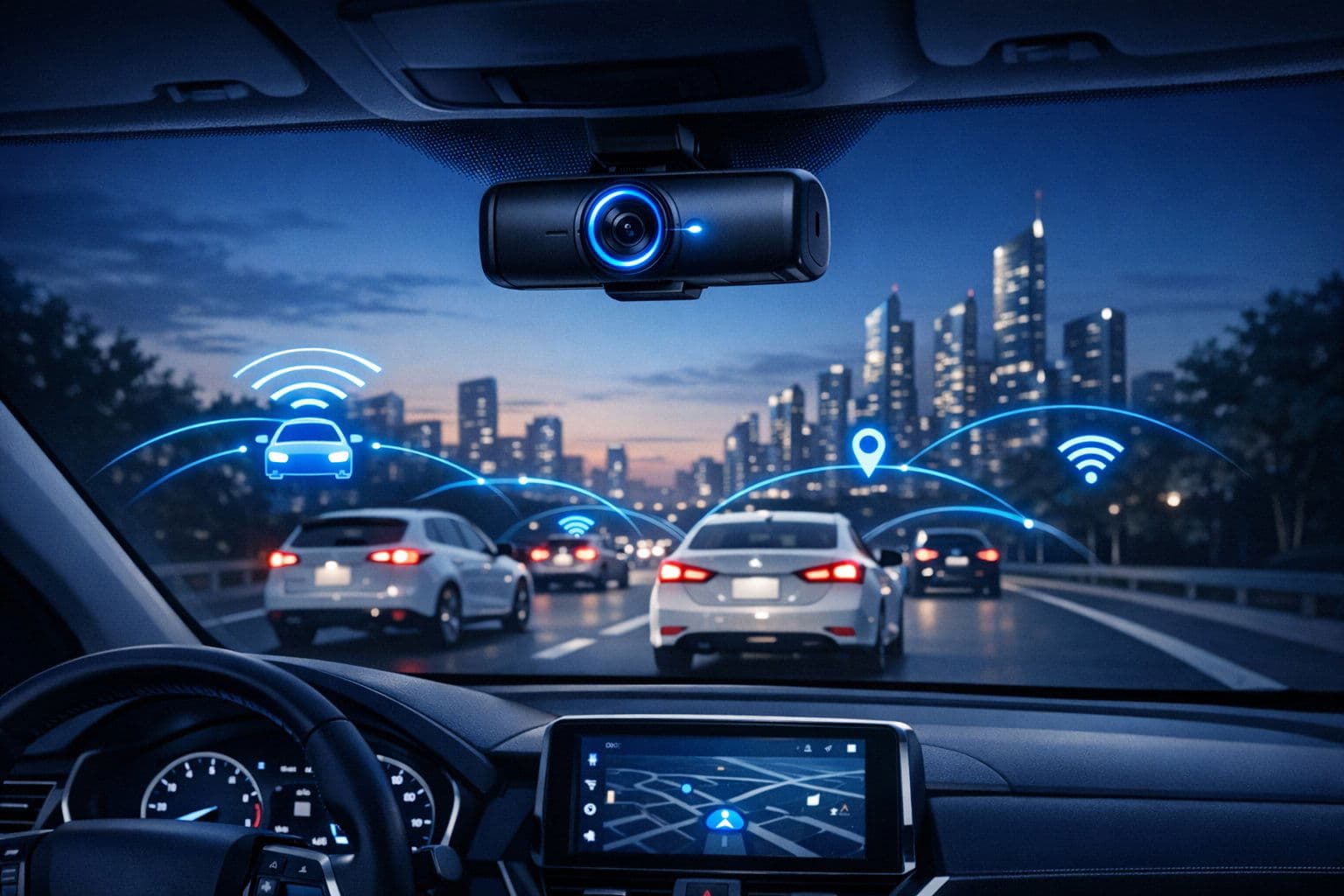
Today’s automotive landscape is defined by the convergence of safety assistance, legal evidence, and social content. The modern dashcam isn't just recording; it’s thinking. It’s an AI-powered node in a massive, community-driven safety network, similar to the neighborhood-focused civic tech tools we explore in our 2026 community-led road safety guide. For the protective parent, the tech-savvy commuter, and the neighborhood watch lead, this technology is no longer optional—it’s the backbone of modern road responsibility.
Here is how AI sensors and "evidence-to-content" loops are changing how we drive, report, and protect our communities.
1. The Convergence: Safety, Evidence, and Storytelling
We used to treat road safety, legal protection, and social media as three different worlds. Now, they are a single ecosystem that blends personal protection with broader community road safety interventions.
In 2026, high-end dashcams are running "Edge AI" (processing data right on the device). They are doing three things simultaneously:
- Safety Assistance: Acting as a third eye, scanning for lane departures or sudden braking ahead, giving drivers more time to react and helping to prevent the kinds of dangerous encounters that can escalate into serious road rage incidents.
- Legal Evidence: Automatically locking footage and uploading it to the cloud when G-sensors detect an impact so you have clear, timestamped proof if you ever need to file a report or insurance claim.
- Social Content: Recognizing "high-signal" moments—like a meteor, a hilarious bumper sticker, or a dangerous road rage incident—and prepping them for sharing in a way that supports safer driving culture instead of just chasing clicks.
The Rise of Human Media™
This convergence has given birth to what we at Carszy call Human Media™. Unlike traditional social media, which is often about vanity, Human Media is about impact. When your AI dashcam captures a hit-and-run or aggressive driving, it’s not just "content"—it’s actionable community data that can plug into wider civic tech safety networks to help city teams and neighbors respond faster and smarter.
2. Near-Miss Detection: The New Safety Dataset
For decades, safety data was built on crashes. If an intersection didn't have accidents, city planners assumed it was safe. They were wrong.
AI cams now track Near-Miss Events.
- How it works: Computer vision identifies when you slam on the brakes because a car pulled out, or when a pedestrian almost steps into traffic. These near-misses, which used to vanish into memory, now become signals that feed into live neighborhood risk maps.
- The Value: We can now map "high-risk" zones before a tragedy occurs, helping communities and city planners prioritize which streets, school zones, and crossings need attention first.
- Tagging & Verifying: These moments are auto-tagged by the AI. Instead of sifting through hours of footage, you get a highlight reel of safety hazards that can be shared with your local precinct or community group in just a few taps.

| Metric | Traditional Reporting | AI "Near-Miss" Reporting |
|---|---|---|
| Trigger | Physical Impact / Crash | Hard Braking / Swerving / Proximity |
| Data Volume | Low (Rare events) | High (Daily occurrences) |
| Outcome | Reactive (Cleanup & Insurance) | Proactive (Hazard Prevention) |
| Community Use | Accident Statistics | Live Risk Maps |
3. Reducing Alert Fatigue: The "Risk-Aware" Approach
Early ADAS (Advanced Driver Assistance Systems) systems were annoying. They beeped if a leaf blew across the sensor.
The lesson for 2026 product teams? Context is King.
Modern "risk-aware" computer vision creates a hierarchy of alerts. It monitors the driver (internal cam) and the road (external cam) simultaneously.
- Scenario A: You are looking at the road, and a car brakes ahead. The system stays silent because it sees you are attentive.
- Scenario B: You are looking at the radio, and a car brakes ahead. The system screams at you.
This reduction in false positives builds trust. When the car beeps, you know it’s real, which is crucial when you’re trying to stay calm and avoid the kind of escalation that turns a close call into a full-blown road rage situation.
4. From Fisheye to VR: Changing Automotive Storytelling
Dashcam footage used to be boring and distorted. Now, apps are integrating Social Templates that transform raw data into compelling narratives.
- AI Editing: The software automatically zooms, stabilizes, and tracks the subject (e.g., the erratic driver) so that if you do need to share a clip with police or submit it alongside a road rage report, the important details are front and center.
- Privacy Filters: Before you share that clip of a bad driver to a community app, the AI automatically blurs the faces of innocent bystanders and unrelated license plates. This is critical for ethical reporting and helps you stay on the right side of privacy and defamation laws.
- Immersive Formats: We are seeing a shift toward 360-degree and VR-compatible footage, allowing viewers to "step into" the driver's seat to understand exactly how an incident unfolded.
5. Fleet Adoption: What Families Can Learn from Truckers
Commercial fleets have been using "Video Telematics" for years to coach drivers. Now, that tech is filtering down to the consumer level—specifically for the Protective Parent.
- Gamification: Just as fleets score truck drivers on safety to give bonuses, consumer apps now give "Safety Scores" to teen drivers, turning good habits into a challenge instead of a chore.
- Coaching, Not Spying: The best systems frame this as skill-building. It’s not about "I saw you speeding"; it’s about "The AI noticed you brake late at intersections—let's work on that." This kind of framing makes it easier to talk about risky moments, including ones that could have turned into aggressive driving incidents.
- The Network Effect: Fleets share data on road hazards. Consumers are starting to do the same via platforms like Carszy, where a hazard spotted by one parent is broadcast to others in the neighborhood, feeding into richer community safety dashboards.
6. The Evidence-to-Action Loop: Distribution Mechanics
The most advanced camera is useless if the footage stays on an SD card. The future is about Distribution Mechanics—how quickly and safely information moves from your dashcam to the people who can act on it.
Imagine this workflow:
- Detection: Your AI cam spots a vehicle matching a VOIS™ (Vehicle of Interest Search) alert (e.g., an Amber Alert), a pattern of reckless speeding, or repeat aggressive behavior across multiple drives.
- Verification: The system highlights the plate and clips the video so you can double-check what happened and decide if it rises to the level of a police report or a formal road rage complaint.
- Action: You confirm the match and securely broadcast the location to the community and authorities via a dedicated safety platform.
This is the "evidence-to-content" loop in its purest form. It turns a passive recording into a tool that recovers stolen vehicles, calms hot spots, and in some cases, saves lives.

Conclusion: The Camera Does Not Blink
We have moved past the era of the dashcam as a novelty gadget. In 2026, it is a vital instrument for community accountability. By leveraging AI to filter the noise and highlight the risks, we are building a road network that is smarter, safer, and more connected.
Whether you are capturing a breathtaking sunset or reporting a dangerous driver, the technology is now in your hands to make that data count within broader community-led safety systems.
Ready to turn your drive into a force for good?
Don't just record the road—connect with it. Download Carszy today to join the community of drivers using real-time alerts and license plate messaging to keep our neighborhoods safe.
Frequently Asked Question
Q: If I share dashcam footage of a bad driver, can I get sued for defamation or privacy violations?
A: This is the #1 question we get. In the US, there is generally no expectation of privacy on a public road, so filming is legal. However, how you share it matters.
- Stick to Facts: Post the video with a factual description ("Vehicle ran red light"), not character attacks ("Driver is a drunken maniac"). Sticking to what you actually saw and recorded also makes it easier for police to use your clip in a formal road rage or reckless driving report.
- Blur Bystanders: Use apps that offer AI-powered blurring for faces and license plates of people not involved in the incident. That way, your contribution helps build a safer, more transparent road network without exposing uninvolved neighbors.
- Use Dedicated Platforms: Sharing on broad social media can invite toxicity. Using purpose-built safety platforms (like Carszy) keeps the focus on community safety and accountability rather than public shaming or viral "clout." It also helps your footage flow into structured community safety programs instead of getting lost in a comment thread.