The Invisible Guardian: Harnessing Rich SMS, Geofencing, and Community Intelligence to Combat Vehicular Heatstroke
The intersection of extreme climate variability and automotive safety has birthed a silent but lethal crisis: pediatric and animal vehicular heatstroke. As global temperatures continue to fluctuate and urban heat islands intensify, the interior of a parked vehicle has transitioned from a mere convenience to a potential hyperthermic chamber. Each year, the statistics serve as a grim reminder of human fallibility and the unforgiving nature of thermodynamics. On average, 38 children succumb to heatstroke in vehicles annually in the United States, a figure that remains stubbornly consistent despite decades of awareness campaigns.
This crisis is not merely a failure of individual supervision but a systemic challenge that requires a sophisticated integration of next-generation communication protocols, precise geolocation technologies, and the mobilization of community-driven intervention platforms. By examining the synergy between Rich Communication Services (RCS), geofencing, and the "Human Media" movement, a framework emerges that can bridge the critical gap between the detection of a life-threatening event and the arrival of life-saving assistance.
The Physics of a Greenhouse: Why Minutes Matter
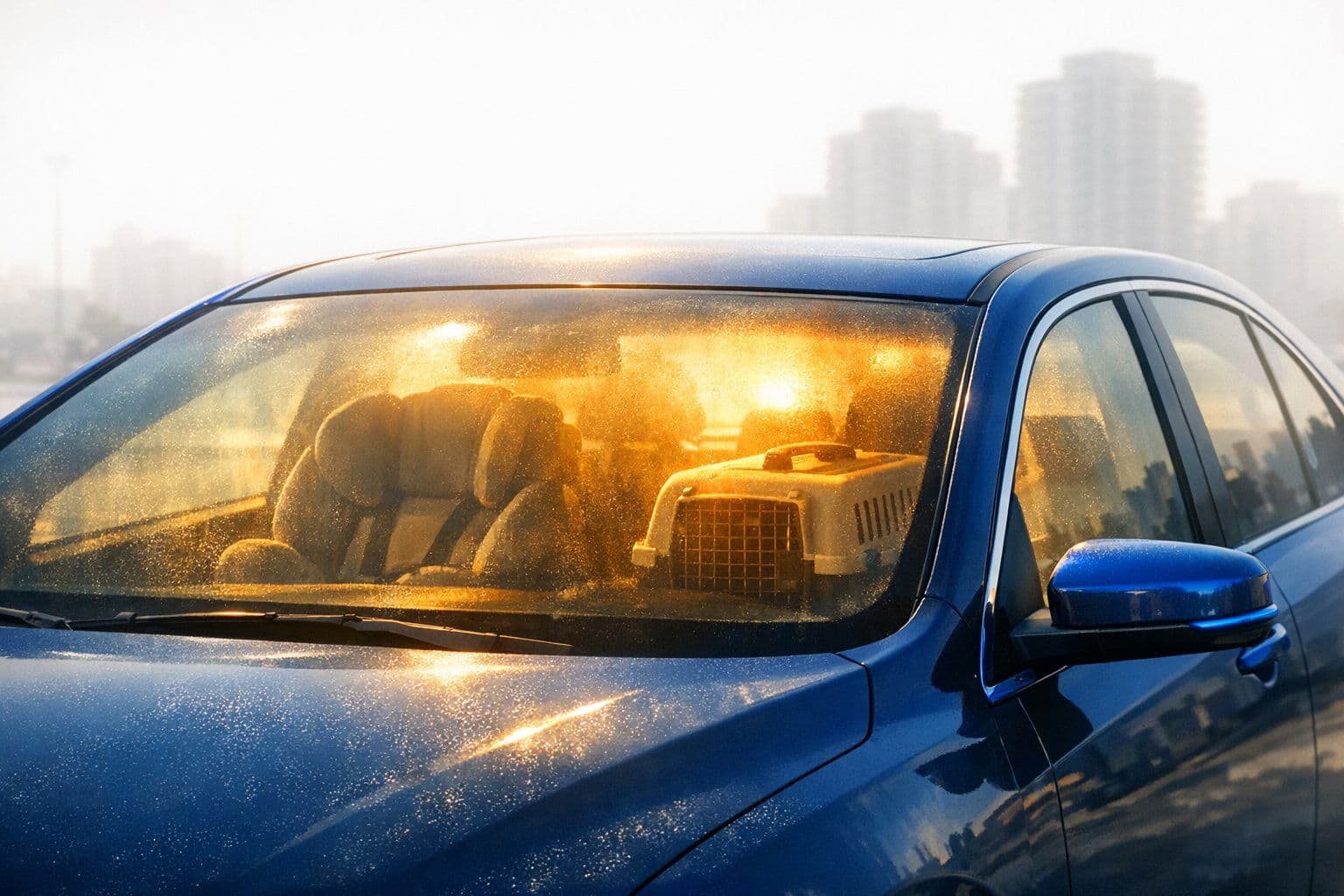
Understanding the urgency of vehicular heatstroke requires a clear appreciation of the car as a solar collector. Short-wave solar radiation easily penetrates vehicle glass, striking dark interior surfaces such as dashboards, upholstery, and steering wheels. These materials absorb the energy and re-radiate it as long-wave infrared radiation. Because glass is largely opaque to these longer wavelengths, the energy becomes trapped—a process identical to the greenhouse effect that sustains global climates, albeit on a lethal, localized scale.

The thermal escalation inside an enclosed vehicle is remarkably rapid. Research indicates that the internal temperature can rise by approximately 20 degrees Fahrenheit in a mere 10 minutes. Within 20 minutes, the interior can reach 109 degrees on an 80-degree day, a threshold that borders on the limits of human physiological tolerance. The most critical finding in recent thermal studies is that roughly 80% of the total temperature increase occurs within the first 30 minutes. This front-loaded heating profile means that the "quick errand" often cited by caregivers is the most dangerous window of time. Furthermore, ambient temperature is a poor predictor of safety; fatalities have been recorded on days where the outside temperature was as low as 68 degrees Fahrenheit.
| Duration (Minutes) | 70°F Ambient | 80°F Ambient | 90°F Ambient | 100°F Ambient |
|---|---|---|---|---|
| 10 | 89°F | 99°F | 109°F | 119°F |
| 20 | 99°F | 109°F | 119°F | 129°F |
| 30 | 104°F | 114°F | 124°F | 134°F |
| 60 | 113°F | 123°F | 133°F | 143°F |
The data presented above demonstrates that even in moderate conditions, the 104-degree threshold for heatstroke onset is breached in less than half an hour. This reality renders the traditional practice of "cracking" windows entirely ineffective, as the rate of solar gain vastly outpaces the limited convective cooling provided by a small gap in the glass.
The Biological Vulnerability: Children, Pets, and the Metabolic Clock
The reason these thermal dynamics are so catastrophic for children and pets lies in their fundamental biological differences from adults. A child’s body temperature rises three to five times faster than an adult’s. This is driven by several physiological factors: a higher surface area-to-body mass ratio, which facilitates rapid heat absorption from the environment; a higher metabolic rate, which generates significant internal heat; and a less developed thermoregulatory system that cannot produce sweat as efficiently as an adult's.
When a child’s core temperature reaches 104 degrees Fahrenheit, the body enters a state of hyperthermia. At this stage, the thermoregulatory mechanisms fail, and the body’s proteins begin to denature, leading to widespread cellular death and organ dysfunction. Once the temperature reaches 107 to 108 degrees, the condition becomes fatal, often characterized by irreversible brain damage and cardiac arrhythmia.
Pets, specifically canines, face a similarly truncated timeline. Dogs lack the dermal sweat glands found in humans and rely almost exclusively on panting and the evaporation of moisture from their paw pads to dissipate heat. In an enclosed vehicle where the ambient air temperature exceeds the dog’s core temperature, panting becomes a source of heat gain rather than a cooling mechanism. Heatstroke in dogs can occur in as little as 15 minutes, leading to rapid disorientation, seizures, and organ failure.
| Physiological Marker | Pediatric (Human) | Canine (Dog) | Adult (Human) |
|---|---|---|---|
| Core Temp Rise Rate | 3–5x Faster | Accelerated | Baseline |
| Heatstroke Threshold | 104°F | 105°F | 104°F |
| Critical/Fatal Threshold | 107°F | 108°F | 108°F |
| Primary Cooling | Respiration/Sweat | Panting/Paw Pads | Evaporative Sweat |
This metabolic vulnerability creates a "dead zone" in vehicular safety. The time it takes for a distracted parent to realize a child has been left behind often exceeds the biological limit of the child's endurance. This gap is the specific target for community-led technological intervention and aligns with the broader push toward community-led road safety technology in 2026.
Statistical Realities and the Psychology of the "Forgotten Child"
Analysis of the 1,041 pediatric vehicular heatstroke deaths recorded between 1998 and 2025 reveals a heartbreaking pattern of human error rather than deliberate neglect. Over 52% of these cases involved a caregiver unintentionally forgetting the child in the vehicle. Research into "Working Memory" (WM) suggests that high-stress environments or significant changes in daily routines can create cognitive interference, causing the brain to default to "auto-pilot" and overlook the presence of a quiet, sleeping child in the rear seat.
| Incident Circumstance | Percentage of Cases | Primary Driver |
|---|---|---|
| Forgotten by Caregiver | 52.9% | Routine change / Memory lapse |
| Gained Access Independently | 23.8% | Unlocked vehicles / Play |
| Knowingly/Intentionally Left | 21.9% | Misjudged risk / "Quick" errand |
| Unknown/Other | 1.4% | Miscellaneous |
Geographic trends show that while the risk is universal, states with prolonged high-temperature seasons, such as Texas (155 deaths), Florida (115 deaths), and California (65 deaths), face the most significant burden. However, per-capita data indicates that states like Mississippi and Louisiana also rank highly, suggesting that humidity and regional climate play significant roles in the lethality of these incidents.
A critical sub-category of these statistics is the 23.8% of children who gained access to a vehicle on their own. These cases often involve children playing hide-and-seek or attempting to retrieve a toy, only to find themselves unable to exit once the doors or trunk close. This segment of the problem cannot be solved by simple "check the back seat" reminders; it requires a system capable of detecting occupancy in an empty, parked car regardless of whether a trip just occurred, and it benefits from clear guidance on when and how to safely report dangerous behavior on the road or in parking lots.
The Technological Frontier: Sensors, IoT, and AI Detection
To move beyond the limitations of human memory, the automotive safety sector is pivoting toward integrated sensing technologies. The Federal Communications Commission (FCC) recently expanded the use of the 60 GHz spectrum to allow for higher-powered mobile radar operations inside vehicles. This technology is a game-changer for child presence detection (CPD) because it can sense the minute movements of an infant's chest while breathing, even through heavy blankets or rear-facing car seats.
Sensing Modalities and Their Efficacy
- Radar-Based Sensing (mm-Wave): Operates with high accuracy in detecting life by monitoring respiratory patterns. Unlike cameras, it preserves privacy and does not have blind spots created by seat structures.
- Carbon Dioxide (CO2) Monitoring: Systems developed at institutions like the University of Alabama monitor CO2 spikes from breath. This is particularly effective for detecting both children and pets, as all living beings emit CO2, regardless of their position in the vehicle.
- Visual/Deep Learning Systems: Utilizing NanoDet or YOLOv7 frameworks, these systems use interior cameras to identify occupants. While effective, they can be hampered by low light or obscured views.
- Weight and Proximity (BLE) Clips: Products like the Cybex SensorSafe and Evenflo’s smart car seats utilize Bluetooth Low Energy (BLE) to alert a parent’s phone if they walk too far from a buckled child.
The limitation of many "add-on" or factory systems is their insular nature; they notify the driver but often fail to mobilize help if the driver is incapacitated, far from their phone, or simply unaware of the notification. This is where the integration of community-driven platforms like Carszy becomes essential. By connecting these sensors to a license-plate-based messaging system, the vehicle itself can "ask for help" from the surrounding community, much like other emerging software-defined vehicle safety systems that turn cars into real-time neighborhood guardians.
Rich SMS and RCS: The New Language of Emergency Alerts
The most critical value proposition for a reporting app is the speed and clarity of its alerts. For years, Short Message Service (SMS) was the gold standard for mass notifications due to its near-universal reach. However, SMS is limited to 160 plain-text characters, which is insufficient for conveying the complex, high-stakes information required in a hot car emergency.
Rich Communication Services (RCS) is the "Rich SMS" alternative that transforms a simple text into an interactive safety dashboard. When a vehicle-of-interest triggers a heat sensor alert, an RCS notification can deliver:
- High-Resolution Visuals: An image of the vehicle’s location and even a filtered camera view of the interior.
- Interactive Response Buttons: Nearby users receive buttons to "Call 911," "Directly Alert Owner," or "Confirm On-Site Assistance".
- Dynamic Mapping: A live, interactive map showing the vehicle’s exact GPS coordinates relative to the user's current location.
- Verified Branding: RCS allows for "Verified Sender" status, which builds immediate trust and ensures that the alert is not dismissed as spam.
| Communication Protocol | SMS (Legacy) | RCS (Rich SMS) |
|---|---|---|
| Character Limit | 160 | Unlimited |
| Encryption | Minimal | End-to-End |
| Multimedia | No | High-Res Video/Photos |
| Interactivity | Static Text | Actionable Buttons |
| Delivery Method | Cellular Signaling | Mobile Data / Wi-Fi |
RCS leverages data rather than traditional cellular signaling, making it more resilient during large-scale emergencies when cellular networks might be congested. For a safety-conscious community, this means that an alert is not just a message—it is an actionable tool and a key building block in the broader AI-powered dashcam and alert ecosystem that supports community safety.
Geofencing and the Precision of "Device-Based Geo-Fencing" (DBGF)
The efficacy of a community alert depends on its relevance. If an alert is broadcast too widely, it creates "alert fatigue," leading users to ignore critical notifications. Geofencing solves this by creating a virtual boundary around a vehicle in distress.
The latest evolution, Wireless Emergency Alert (WEA) 3.0, utilizes Device-Based Geo-Fencing (DBGF). Instead of the network deciding who gets an alert, the alert is broadcast to all phones in a wide area, but only the phones that calculate their own GPS position as being within the specific "hazard zone" will display the notification.
Geofencing Scenarios in Vehicular Safety
- Approach Alerts: As a user walks toward a parking lot where a heat sensor has been triggered, their phone activates the alert based on their proximity to the "hot car".
- Zone Alerts: All users within a 500-meter radius receive a high-priority notification to investigate a specific license plate.
- Activity-Based Triggering: If a vehicle moves while a child is detected inside but the primary caregiver's phone is not in the car, a geofence breach alert is sent to the community to prevent potential abductions or rollaway accidents.
This precision ensures that "human sensors"—the people closest to the scene—are mobilized within seconds, potentially shaving minutes off a response time that, in a heatstroke scenario, determines the difference between a recovery and a fatality. It builds on the same thinking that powers hyper-local, community alert hubs like the OC Road Safety Hub, where only the right people in the right place are pinged to help.
Carszy and the "Human Media" Revolution
Traditional social media has often been criticized for prioritizing engagement over impact, frequently leading to misinformation or passive "bystanderism". Carszy represents a shift toward "Human Media," where the digital platform exists solely to facilitate real-world safety and accountability.

The License Plate as a Secure Bridge
The primary differentiator of the Carszy platform is its use of the license plate as a unique, publicly visible identifier for secure communication. In a hot car emergency, a bystander does not have the time to find a phone number or wait for a dispatcher to run a plate. Carszy allows any user to:
- License Plate Lookup: Instantly verify if the vehicle owner is on the platform.
- Anonymous Driver Alerts: Send a secure message or call the owner using only the plate number, protecting the privacy of both parties.
- VOIS™ (Vehicle of Interest Search): Trigger a community-wide alert if a child or pet is seen in a hot car. This mobilizes nearby users who can provide immediate eyes on the scene while 911 is being contacted.
By focusing on US-based servers and strict privacy protocols, Carszy ensures that this "human sensor" network is used for safety rather than surveillance. This democratization of safety information reduces the "information gap" that often occurs in the first five minutes of an emergency, when bystanders may be unsure if a child is truly alone or if an owner is nearby, and it reflects the wider Driven-style shift in car culture toward safety-first, community-led responsibility.
Aligning with Advocacy: The "ACT" Campaign and the "Take Action" Mandate
To be effective, technology must be integrated into established safety protocols. Safe Kids Worldwide and the NHTSA promote the "ACT" campaign as the gold standard for preventing vehicular heatstroke.
A: Avoid
Technology supports this by ensuring vehicles remain locked. Apps can send a reminder to a user's phone if a geofence is breached and the car is left unlocked.
C: Create Reminders
Smart car seats and in-vehicle radar systems act as the ultimate "reminders," providing a digital safety net when human memory fails.
T: Take Action
This is the core value of the Carszy platform. Advocacy groups emphasize that protecting children is everyone’s business. If you see a child alone in a car, the mandate is to "Take Action." This involves:
- Direct Communication: Using license plate messaging to reach the owner instantly.
- Community Mobilization: Using VOIS™ to alert others who may have tools (like a glass breaker) or medical training.
- Contacting Authorities: Streamlining the 911 call with exact GPS and vehicle data provided by the app.
The "Take Action" phase is where the community moves from observation to intervention. Research shows that if the response time of emergency teams or trained bystanders decreases by just one minute, the survival rate increases significantly. This same mindset powers neighborhood programs where local drivers, parents, and officials work together to respond faster to every kind of road risk, from speeding to hot cars.
Legal Guardrails: Good Samaritan Laws and the Right to Rescue
A major hurdle to community intervention is the fear of litigation or criminal charges for property damage. However, the legal landscape is rapidly shifting to favor the "Right to Rescue." As of 2025, over 30 states have enacted specific "Hot Car" or Good Samaritan laws.
| State Example | Legal Statute | Immunity Type | Specific Requirements |
|---|---|---|---|
| California | AB 2717 / PC 597.7 | Civil & Criminal | Must call 911 first; use minimal force |
| Florida | FL Stat. 768.139 | Civil | Must check for locks; wait "reasonable time" if no distress |
| Kansas | KS HB 2516 | Civil & Criminal | Focus on imminent danger; stay with victim |
| Tennessee | TN Good Sam Law | Civil | First in nation to protect civilian rescue |
| Massachusetts | MA Gen. Laws 140 | Civil & Criminal | Requires attempt to find owner first |
These laws are designed to cut through the hesitation of a bystander. For instance, California's AB 2717 protects any person from civil and criminal liability for property damage or trespassing if they are rescuing a child 6 years old or younger from a hot or cold vehicle. Similarly, Kansas law underscores that lives are more important than property, giving rescuers immunity when they believe a person or pet is in imminent danger.
By incorporating these legal guidelines into the app's interface, community members can be empowered with the knowledge that their actions are protected by law, provided they follow the necessary steps: checking locks, calling 911, and remaining on the scene.
Case Studies: The Efficacy of Community-Led Alerts
The success of community-driven license plate alert systems is well-documented in other areas of public safety, providing a roadmap for heatstroke prevention.
- The 400 Boys Case: In Doral, Florida, police used Automated License Plate Recognition (ALPR) to identify vehicles linked to a gang, leading to the dismantling of a major crime ring through community data.
- The Silver Alert Rescue: In 2022, an officer utilized a community LPR network to locate a missing elderly woman's vehicle within 30 minutes, reuniting her with her family and avoiding a widespread emergency broadcast.
- The Miami Missing Child Recovery: ALPR technology was used to flag a suspect's van after a child was seen entering it with a stranger. The real-time data allowed for a swift and safe recovery that likely saved the child’s life.
These cases demonstrate that when a community has access to a vehicle’s plate and its real-time location, the "unblinking eye" of the collective can solve crises faster than centralized authorities alone. Applying this to hot car scenarios, a "VOIS™ Heat Alert" could be the most powerful tool in a neighborhood watch’s arsenal and dovetails with the way modern car culture is embracing drivers as on-the-ground guardians of public safety.
Future Outlook: Autonomous Vehicles and Integrated Safety Stacks
The future of vehicular heatstroke prevention lies in the "safety stack"—an integrated system where the vehicle, the cloud, and the community interact seamlessly. Researchers at the Children’s Hospital of Philadelphia (CHOP) argue that no single technology is sufficient; instead, multiple systems must work in tandem.
In the era of autonomous vehicles (AVs) and connected cars, we can expect:
- Automated Environmental Control: If a child is detected, the car could automatically activate the HVAC system or lower windows while notifying the owner and community.
- Vitals Monitoring: 60 GHz radar will not just detect presence but also monitor heart rates and breathing patterns for signs of distress, escalating the alert if the occupant’s condition deteriorates.
- API Interoperability: Standardized APIs will allow car seat manufacturers (like Evenflo and Cybex) to feed data directly into community safety apps, ensuring that the alert reaches the widest possible audience of "human sensors".
This proactive approach moves from "Reminding" to "Intervening." It treats the interior of the car as a monitored medical environment rather than a passive storage space. It’s part of the same arc that is turning connected cars, dashcams, and phones into a shared AI-assisted safety network on everyday streets.
Conclusion: Empowering the Community Sensor
Vehicular heatstroke is a tragedy of timing. The physics of thermal dynamics and the biology of heat absorption provide a very small window for intervention—often less than 30 minutes. While individual caregivers can and should adopt habits like "Look Before You Lock," the statistical reality is that human memory is fallible.
The integration of Rich SMS (RCS) and geofencing provides the technological infrastructure to bridge this gap. By utilizing Carszy’s license-plate-based messaging and VOIS™ alerting, we can transform every bystander into a potentially life-saving "human sensor." When a community is connected, a car is never truly "alone." It is surrounded by neighbors, commuters, and parents who are empowered by technology and protected by law to "Take Action." This vision is shared by emerging initiatives that see the neighborhood itself as the new department of transportation, where everyday people and smart vehicles work together to prevent harm.
Preventing hot car deaths is a collaborative effort. It requires the transparency of a "They Ask, You Answer" approach—being honest about the risks, the technological limitations, and the legal requirements. By building this digital safety net, we ensure that a simple memory lapse does not result in an unimaginable tragedy.
Frequently Asked Questions
Is it legal to break a car window to save a child or pet in my state? As of 2025, 32 states have "Hot Car" or Good Samaritan laws that provide some level of immunity for rescuers. In states like California, Florida, Tennessee, and Kansas, you are protected from both civil and criminal liability if you have a "good-faith belief" that the child or pet is in imminent danger. However, you must typically follow a protocol: check if the doors are unlocked first, call 911 or law enforcement before entering, and remain on the scene until authorities arrive. Always check your specific state's statute, as requirements (such as the definition of "imminent danger") can vary.
How can I make sure I never forget my child in the car? The NHTSA and Safe Kids Worldwide recommend the "ACT" framework. This includes making a habit of looking in the back seat every time you lock your car (Avoid), placing an essential item like your left shoe, phone, or purse in the back seat (Create reminders), and calling 911 if you see a child alone (Take Action). Using a community safety app that utilizes Bluetooth-connected car seat sensors or license plate messaging adds an extra layer of digital protection and connects you into wider community alert networks already being piloted in cities like Orange County.
What are the first signs of heatstroke in a child or pet? In children, look for red, hot, and dry skin (no sweating), a rapid pulse, dizziness, nausea, and confusion. In dogs, signs include excessive or rapid panting, bright pink gums, decreased energy, and crying or barking for help. If you notice these symptoms in an unattended vehicle, it is a medical emergency—call 911 immediately and prepare to take action.
Does cracking the window help keep the car cool? No. Numerous studies have shown that cracking a window has virtually no effect on the rate of temperature rise inside a vehicle. The greenhouse effect continues to heat the interior surfaces, and the small amount of air exchange is insufficient to cool the cabin. Never rely on cracked windows as a safety measure for children or pets.
Can technology actually replace parental supervision? No. While technology like 60 GHz radar and RCS alerts provide a critical safety net, they are not a substitute for active supervision. The NHTSA and safety advocates recommend using these tools as a "defense-in-depth" strategy—combining vigilant parenting practices with the best available technological safeguards to ensure a 100% prevention rate. In the same way that the Driven model re-centers drivers as active protectors of their streets, these tools are there to support, not replace, human care.
Take the Next Step for Safety The best way to protect your community is to stay connected. By utilizing license plate messaging and the VOIS™ system, you can ensure that you are always in the loop when it matters most. Download the app at carszy.com to join the Human Media movement and keep our roads safe.