Near-Miss Reporting: How to Capture the Incidents That Don’t Show Up in Crash Data
1. Introduction: The Invisible Iceberg of Road Safety
1.1 The Ghost in the Machine
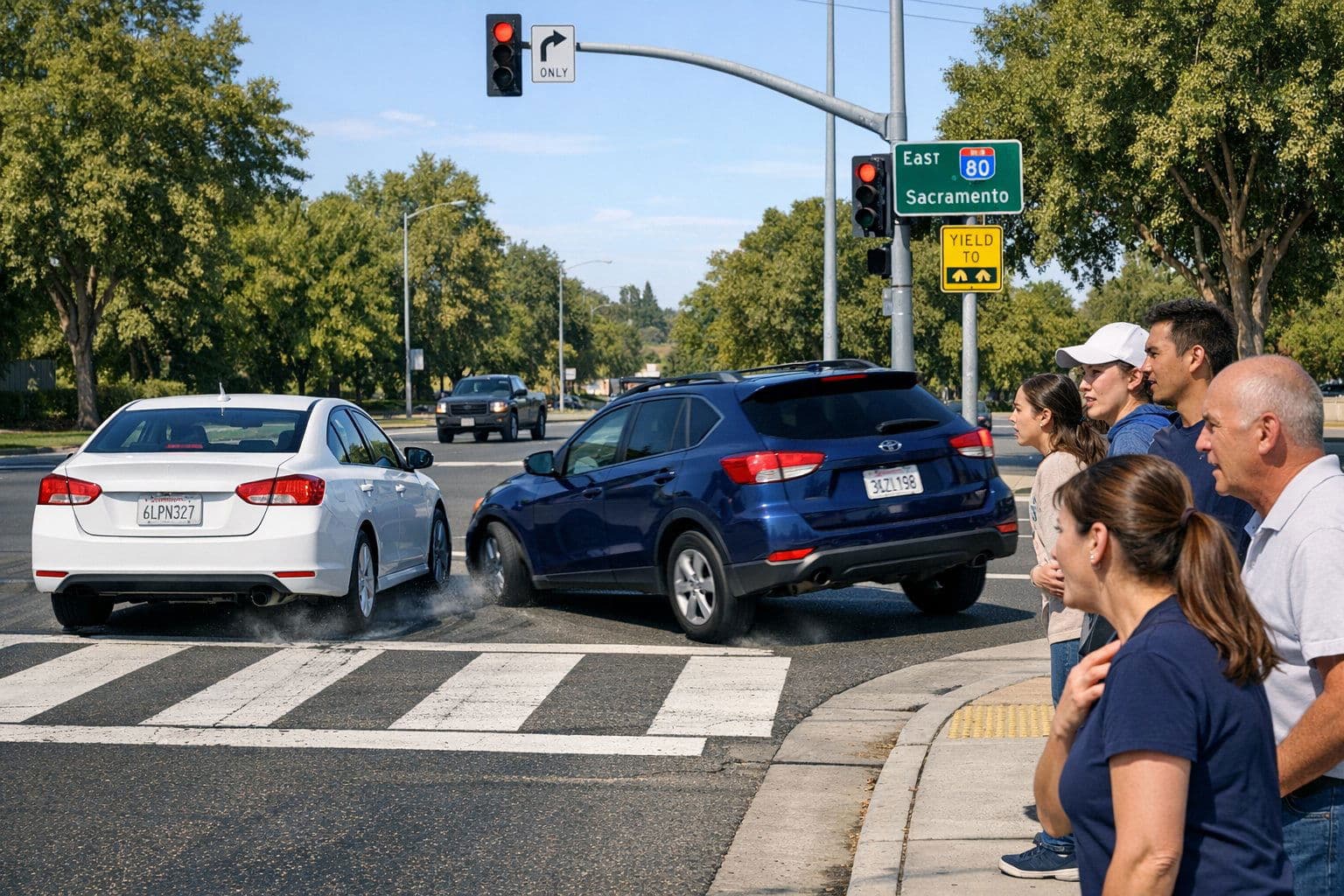
The modern automobile is a miracle of engineering, a cocoon of steel, glass, and sensors designed to propel us at superhuman speeds while keeping us isolated from the physical consequences of those speeds. Yet, every driver knows the feeling that shatters this illusion. It is the sharp intake of breath, the sudden spike in cortisol, the involuntary clench of the jaw. It is the moment when the laws of physics and the unpredictability of human error converge, leaving you inches from disaster. You slam on the brakes. You swerve into the shoulder. You watch, heart hammering against your ribs, as a distracted driver drifts into your lane and then jerks back at the last possible millisecond.
You exhale. You shake your head. You drive on.
In the official ledger of roadway safety, that event never happened. It generated no police report. It triggered no insurance claim. It appears nowhere in the federal Fatality Analysis Reporting System (FARS). To the Department of Transportation, to the city planners, and to the algorithms that determine your insurance premiums, that stretch of road is perfectly safe. But you know better. You felt the danger. You experienced a "near-miss"—a ghost event that haunts our roadways, invisible to the "tombstone technology" of traditional safety metrics but all too real to the human beings behind the wheel.
This report is about making the invisible visible. It is about a fundamental paradigm shift in automotive safety, moving from a reactive model based on tragedy—waiting for blood on the pavement—to a proactive model based on community intelligence and "Subjective Safety." We are exploring the concept of "Sentiment Heatmaps," a revolutionary approach that translates the collective anxiety, stress, and observations of everyday drivers into actionable data. In an era where every car is a potential sensor and every driver a potential safety steward, we have the capacity to capture not just the accidents that happen, but the thousands of accidents that almost happen.
Through platforms like Carszy, which facilitate driver-to-driver communication and community reporting, we are witnessing the birth of a new safety ecosystem. By leveraging tools like License Plate Messaging, Vehicle of Interest Search (VOIS™), and Human Media™, we can finally illuminate the dark matter of the traffic universe. This is the comprehensive story of how your daily commute observations—those fleeting moments of fear and frustration—can be harvested, analyzed, and used to save lives.
1.2 The Failure of Reactive Metrics
For nearly a century, the primary metric for road safety has been the crash. We count the bodies. We count the crumpled fenders. We measure skid marks and aggregate data points into spreadsheets that tell us, with grim precision, where people have died. The National Highway Traffic Safety Administration (NHTSA) does heroic work with this data, recently projecting an encouraging 8.2% decline in fatalities for the first half of 2025. Yet, reliance on crash data alone is a moral and structural failure. It requires human sacrifice to generate the signal for change.
This "lagging indicator" approach is akin to managing your health solely by counting heart attacks. By the time the event is recorded, the systemic failure has already occurred. The "near-miss," conversely, is a "leading indicator." It is the high blood pressure, the poor diet, the lack of sleep that precedes the cardiac event. In the context of traffic, a near-miss is a scream from the system that something is wrong—a blind corner, a confusing merge, a habitually reckless driver—long before the ambulance needs to be called.
The magnitude of this missing data is staggering. Industrial safety theorists have long posited that for every major accident, there are hundreds of near-misses. In the automotive world, where millions of vehicles interact daily, this suggests that our official safety data represents perhaps less than 1% of the actual risk events occurring on our roads. We are navigating by looking at the tip of the iceberg, willfully ignoring the massive, jagged base beneath the surface that is waiting to sink us.
1.3 The Rise of the Community Sensor
We are no longer limited to the clipboard and the police scanner. The ubiquity of the smartphone and the connected vehicle has transformed the potential for data collection. We have seen the first wave of this revolution with apps like Waze, which proved that drivers are willing—even eager—to act as sensors for the collective good. Drivers tap screens to report potholes, cars on the shoulder, and police presence, creating a dynamic, living map of road conditions.
However, the next frontier goes beyond static road hazards. It involves tracking the dynamic, behavioral risks that constitute the true danger of modern driving. It involves tracking the who and the how, not just the where. This is where platforms like Carszy enter the narrative, utilizing the license plate as a unique digital identifier to link transient behaviors to a persistent reputation. If you want to see how this plays out in a real community, the OC Road Safety Hub playbook shows how local drivers and agencies are already using community reports to transform everyday streets.
By empowering everyday drivers—parents, commuters, road-trippers—to log the "almosts," we can build a "Sentiment Heatmap." This is not just a map of physical danger, but a map of perceived danger, a visualization of the stress and anxiety that permeates our road network. As we will explore, this subjective data is often a more accurate predictor of future crashes than the objective data of the past.
2. The Science of "Almost": Decoding the Safety Pyramid
To understand why reporting a car that cuts you off is an act of civic duty rather than petty complaint, we must delve into the foundational theories of industrial safety. The intellectual framework for near-miss reporting is rooted in the "Safety Triangle" or "Accident Pyramid," a concept that transformed how we think about risk in the workplace and is now transforming how we think about risk on the road.
2.1 Heinrich’s Law and the Ratios of Risk
In 1931, Herbert William Heinrich published Industrial Accident Prevention: A Scientific Approach, a seminal text that introduced the world to the mathematical relationship between minor incidents and major tragedies. Heinrich analyzed over 75,000 accident reports from insurance files and industrial sites, looking for patterns in the chaos of workplace injuries.
His findings proposed a fixed ratio that became legendary in safety circles: 1-29-300. Heinrich argued that for every 1 major injury accident (a fatality or disabling event), there were 29 minor injury accidents, and 300 no-injury accidents (near-misses).
This was a radical insight. It suggested that major accidents were not random acts of God, but statistical inevitabilities born from a foundation of minor failures. The 300 near-misses were the soil in which the 1 fatality grew.

2.2 The Bird Triangle and Modern Expansion
Decades later, in 1966, Frank E. Bird Jr. revisited Heinrich's work with a vastly larger dataset. Analyzing 1.7 million accident reports from nearly 300 companies, Bird expanded and refined the pyramid to reflect a more nuanced reality. His ratio, often cited in modern safety management systems (SMS), is 1:10:30:600.
The breakdown of Bird's Triangle provides a compelling roadmap for traffic safety:
- 1 Serious/Major Injury: The tip of the iceberg. The fatal crash that makes the evening news.
- 10 Minor Injuries: The fender-benders with whiplash, the events requiring an ER visit but resulting in discharge.
- 30 Property Damage Accidents: The "metal-on-metal" incidents. Crushed bumpers, broken mirrors, scraped paint. No blood, but significant cost.
- 600 Near-Miss Incidents: The base of the pyramid. The "unsafe acts or conditions." The car that drifted into your lane. The pedestrian you almost didn't see. The red light runner who cleared the intersection by a fraction of a second.
This pyramid tells us that if a specific intersection or a specific driver generates 600 near-miss reports, a fatality is not just possible; it is statistically probable.
| Pyramid Layer | Type of Incident | Frequency (Bird's Ratio) | Visibility in Current Data |
|---|---|---|---|
| Top | Fatality / Major Injury | 1 | 100% (FARS, Police Reports) |
| Upper Middle | Minor Injury | 10 | ~50-70% (Police/Insurance) |
| Lower Middle | Property Damage | 30 | ~30-50% (Insurance/Unreported) |
| Base | Near Miss / Unsafe Act | 600 | ~0% (The "Invisible" Layer) |
2.3 Validation from the SHRP2 Naturalistic Driving Study
Critics of the Safety Triangle have argued that Heinrich's 1930s industrial data cannot simply be copy-pasted onto the dynamic chaos of modern highways. However, recent high-tech studies have provided stunning validation of the near-miss phenomenon in automotive contexts.
The Strategic Highway Research Program 2 (SHRP2) conducted the largest naturalistic driving study in history. Instead of relying on post-crash interviews, researchers instrumented over 3,000 vehicles with a suite of cameras, radar, accelerometers, and GPS units. They recorded over 35 million vehicle miles of continuous, real-world driving. They watched drivers when they thought no one was watching.
The results illuminate the "Dark Matter" of crash statistics:
- The study captured 1,541 actual crashes.
- Crucially, it captured 2,705 near-crashes.
- Beyond that, it recorded tens of thousands of "crash-relevant conflicts"—unsafe maneuvers that didn't quite reach the threshold of a near-crash but indicated poor judgment or loss of control.
The SHRP2 data revealed that certain groups, particularly teen drivers, experience near-crashes at rates significantly higher than their actual crash rates would suggest. Police data portrays teen drivers as risky, but the naturalistic data reveals they are exponentially riskier than official records show. Their "pyramid base" is enormous.
This study fundamentally validated the concept that "unsafe acts" are ubiquitous. It proved that for every time metal bends, there are two or three times where tires screeched and hearts stopped.
2.4 The Traffic Conflict Technique (TCT)
The engineering world has operationalized this concept through the "Traffic Conflict Technique" (TCT). Developed originally by General Motors research in 1967 and adopted by traffic engineers globally, TCT involves observing an intersection to count "conflicts" rather than waiting for crashes.
A "conflict" is defined rigorously as an observable situation where two or more road users approach each other in space and time to such an extent that there is a risk of collision if their movements remain unchanged. TCT observers measure two critical variables:
- Time to Collision (TTC): The time, in seconds, remaining before a crash would occur if speeds and trajectories were maintained. A TTC of less than 1.5 seconds is often considered critical.
- Severity of Evasive Action: Did the driver merely lift off the gas? Did they tap the brake? Did they slam the brake? Did they swerve violently?
When we ask everyday drivers to use an app like Carszy to report a "Near Miss," we are effectively democratizing the Traffic Conflict Technique. We are deputizing millions of drivers to act as TCT observers. When you report a "Hard Brake" event, you are providing a data point that says, "The TTC at this location dropped to a critical level." You are providing the engineering data necessary to fix the road, without the engineering degree.
3. The Data Gap: Subjective vs. Objective Safety
Why do we need drivers to do this? Don't we have sophisticated police departments and algorithm-driven insurance companies? We do, but they are measuring only one half of the equation: "Objective Safety." We are missing the equally critical half: "Subjective Safety."
3.1 Defining the Divide
- Objective Safety: This is the actuarial reality. It is the number of crashes divided by the number of miles driven. It is the raw probability of physical harm. A highway might be objectively safe because it has wide lanes and median barriers, resulting in very few fatalities per million miles.
- Subjective Safety: This is the perception of safety. It is the feeling in the pit of your stomach. It is the "scary" factor. A road might have zero fatalities in the last five years but feel absolutely terrifying to a pedestrian or a novice driver because vehicles are speeding, lighting is poor, and aggression is palpable.
There is often a profound disconnect between the two. Research shows that "Objective Safety" (crash counts) and "Subjective Safety" (fear levels) are weakly linked. A chaotic urban intersection in Mumbai or Rome might feel incredibly dangerous (low Subjective Safety) but have surprisingly few fatal crashes because everyone is hyper-alert and driving slowly (high Objective Safety). Conversely, a rural American highway might feel relaxing and open (high Subjective Safety) until a single moment of inattention at 65mph leads to a fatality (low Objective Safety).
3.2 Why Subjective Data Matters
You might ask: "If the road is objectively safe—if the statistics say I won't die—why does it matter if I feel scared?"
It matters because Subjective Safety drives human behavior.
1. The Avoidance Effect: If a route feels unsafe, people avoid it. Parents stop letting their children walk to school. Cyclists retreat to their cars. This behavior shift increases vehicular traffic, congestion, and emissions, creating a feedback loop that degrades the community environment. The fear of the road actually makes the road worse.
2. The Aggression Cycle: High-stress environments trigger the primal "fight or flight" response. A driver who feels threatened by aggressive traffic—tailgaters, weavers, honkers—experiences a drop in subjective safety. This stress often manifests as defensive or retaliatory aggression. They might speed up to close a gap, block a merge, or drive erratically. The perception of danger creates actual danger. This is especially true in situations like road rage encounters, where emotions can escalate from stress to violence in seconds.
3. The Canary in the Coal Mine:
Most importantly, Subjective Safety is a predictive tool. Often, a drop in subjective safety precedes a drop in objective safety. If drivers start reporting that an intersection "feels confusing" or that a new lane merge is "scary," they are identifying a design flaw that has not yet resulted in a crash count. They are the canaries in the coal mine. By the time the Objective Safety metrics turn red (i.e., people die), the Subjective Safety metrics have likely been flashing red for months.
3.3 The "Stress Map" Analogy: Lessons from Cycling
The cycling community has been a pioneer in mapping subjective safety. Because cyclists are vulnerable road users (VRUs), their margin for error is non-existent. They cannot afford to wait for crash data. City planners use "Bike Stress Maps" or "Level of Traffic Stress" (LTS) maps to rate streets not by speed limit, but by how much mental load and fear they induce.
- LTS 1: A quiet residential street or separated path suitable for children.
- LTS 2: A street with a bike lane but some traffic interaction.
- LTS 4: A busy arterial road with high speeds and no protection—a "high stress" environment.
These maps are often crowdsourced. Cyclists define the map. When a city planner sees a map covered in "High Stress" red zones, they know exactly where to prioritize infrastructure investment, even if the police reports for those streets are empty.
We need to apply this same logic to the automotive world. We need Automotive Stress Maps. We need to know which highways, which on-ramps, and which neighborhoods are inducing "LTS 4" levels of stress in drivers, because that stress is the precursor to the crash. For a broader view of how communities are already doing this with modern tools, see how the 2026 road safety shift is making the neighborhood, not just the DOT, the center of action.
4. Enter the Sentiment Heatmap: Mapping the "Vibe" of the Road
In the high-stakes world of financial trading, analysts use "heatmaps" to visualize the mood of the market. A sea of green indicates bullish optimism; a sea of red indicates bearish fear. These visual tools allow a human brain to instantly synthesize millions of data points into a single intuitive understanding of "sentiment."
In transportation, a Sentiment Heatmap applies this visualization to perceived risk. It creates a geographic layer that represents the collective "vibe" of the road network.

4.1 How It Works: The Layers of Intelligence
Imagine looking at a digital map of your city.
- Layer 1 (The Infrastructure): The base map showing roads, intersections, bridges, and traffic signals.
- Layer 2 (The Hard Data): The traditional red dots indicating police-reported crashes over the last year. This layer is sparse and historical.
- Layer 3 (The Sentiment Overlay): A glowing, dynamic overlay derived from thousands of community micro-interactions.
This third layer is built from the aggregation of user reports.
- Dark Green Zones: Areas where drivers report "smooth sailing," "polite merging," "clear visibility," or "good lighting." These are high-subjective-safety corridors.
- Yellow Zones: Areas of caution. Drivers here are reporting "confusing signage," "sudden slow-downs," "minor potholes," or "glare."
- Glowing Red Zones: The danger corridors. This is where users have logged "Road Rage," "Near Miss," "Aggressive Driver," "Hard Braking," or "Cut Off."
4.2 From "Road Rage" to Data Point
The brilliance of the sentiment heatmap is that it sanitizes and utilizes raw human emotion. When a driver screams in frustration because someone cut them off at a merge, that energy is usually lost to the ether. It is a moment of private rage. However, when that same driver taps a button on an app like Carszy to report "Aggressive Driving" associated with that location, that rage becomes a data point.
If one person reports it, it might be an outlier—a bad day, a misunderstanding.
But if 50 people report "Aggressive Driving" or "Confusing Merge" at the same on-ramp every Tuesday at 8:00 AM, the heatmap turns red.
This tells city engineers something profound. It suggests that the aggression is not a moral failing of the drivers, but a structural failing of the road. Is the merge lane too short? Is the sun blinding drivers at that specific angle? Is the signage appearing too late?
The heatmap doesn't just say "people are angry here." It begs the question: "What is the infrastructure failure causing this anger?"
4.3 Sentiment Analysis in Text: NLP for Roads
The technology behind this goes beyond simple button presses. Advanced platforms utilize Natural Language Processing (NLP) to analyze unstructured text and voice reports. If users leave comments like "Scary merge!" or "People drive like maniacs here" or "I almost died," sentiment analysis algorithms score these words based on emotional intensity.
- Neutral (0.0): "Traffic is slow." "Construction ahead."
- Positive (+0.6): "Great new lane markings." "Pothole fixed."
- Negative (-0.5): "Confusing intersection." "Blind spot."
- Highly Negative (-0.9): "Almost hit by truck." "Road rage incident."
These scores are averaged geographically. If a street has a high volume of negative sentiment keywords, it gets a "High Risk" sentiment score, alerting other drivers to be hyper-vigilant before they even arrive. This is Human Media™ in action—using the collective human voice as a highly sensitive sensor array.
5. What Counts? A Driver’s Guide to Logging
For this system to work, everyday drivers need to be educated. We need to move beyond the mindset of "I saw a crash" to "I saw a precursor."
Many drivers hesitate to report near-misses. They think, "Well, nothing actually hit me, so why bother?" Or they worry about being a "tattletale." We need to reframe this narrative: You aren't snitching; you are flagging a hazard. You are a Community Safety Steward.
Here is a definitive, simplified guide to the incidents that don't show up in crash data but should show up in your app logs.
5.1 The "Big Three" Near-Miss Categories
Based on safety literature and statistics on aggressive driving, we can categorize reportable events into three buckets:
A. The Evasive Maneuver (The "Whoa!" Moment)
These are the classic near-misses where physics almost won. They represent "Objective Risk" peaking.
- Hard Braking: You or the car ahead had to slam on the brakes to avoid a collision. This is the single most predictive signal of crash risk.
- Swerving: A sudden lane change to avoid an obstacle, a pedestrian, or another vehicle encroaching on your lane.
- The "Inch-Miss": A car pulling out of a driveway or intersection that misses you by inches.
- Hydroplaning: Losing traction due to standing water or ice, even if you recover. (This flags a maintenance issue for the city).
Why Log It: These incidents prove that the margin for error at this location was zero.
B. The Aggressive Violation (The "Jerk" Moment)
These are intentional acts that create danger. They track "Subjective Safety" and identify high-stress environments.
- Tailgating: A vehicle following at an unsafe distance (less than 2 seconds). This eliminates reaction time and is a primary cause of rear-end collisions.
- Cut-Offs: Changing lanes into your path without signaling or leaving safe space, forcing you to brake.
- Brake Checking: Intentionally slamming brakes to threaten the car behind. This is a form of assault using a vehicle.
- Running Red Lights/Stop Signs: Blowing through a control device.
- Road Rage: Screaming, gesturing, throwing objects, or using the vehicle as a weapon.
Why Log It: Aggressive driving is involved in over 50% of fatal crashes, yet it is rarely tracked unless a police officer witnesses it directly. Community reporting fills this enforcement gap and supports safer responses when you later choose to report serious road rage through official channels.
C. The Distracted/Impaired Indicator (The "Drift" Moment)
These are subtle but deadly indicators of potential risk.
- Lane Drifting: A car weaving within its lane or crossing the line repeatedly.
- Variable Speed: Driving significantly under the limit, then speeding up, then slowing down—a classic sign of phone use or fatigue.
- Phone Visible: Clearly seeing a driver holding a device, texting, or watching video while moving.
- Delayed Reaction: Sitting at a green light for 5+ seconds (the "texting pause").
Why Log It: A drifting driver is a crash waiting to happen. Reporting them helps build a profile of distracted behavior associated with that vehicle or location.
5.2 The Decision Guide: To Report or Not to Report?
To simplify this for the everyday driver, we have created a decision matrix. You don't need to report every minor annoyance. Focus on the events that trigger a physical or emotional response.

5.3 What NOT to Report (The "Karen" Filter)
To maintain data integrity and community trust, it is vital to filter out "noise" and avoid what is colloquially known as "Karen" behavior—reporting based on entitlement rather than safety.
- Honest Mistakes: Someone forgetting a turn signal once (but doing so safely). We all make mistakes.
- Driving Slowly (within reason): A student driver, a lost tourist, or an elderly person driving cautiously at the speed limit is not a "hazard" just because you want to drive 10mph over. Patience is part of driving.
- Subjective Annoyances: "I don't like that bumper sticker." "Their car is dirty." "They didn't wave thanks."
- Protected Activities: Reporting someone for "looking suspicious" based on race or vehicle type is discriminatory and violates the terms of service of any reputable safety platform.
Reporting is for Safety, not Judgment. If the behavior didn't increase the risk of a crash (Objective Safety) or create legitimate fear (Subjective Safety), it does not belong on the heatmap.
6. The Technology of Community Reporting: Carszy & The Ecosystem
How do we take these observations—the swerves, the drifts, the road rage—and get them onto the map? This is where the technology of platforms like Carszy, Waze, and Nextdoor comes into play. While Waze revolutionized location-based reporting, Carszy is pioneering identity-based reporting.
6.1 The License Plate as the Digital Fingerprint
The core differentiator for Carszy is the use of the License Plate as a unique identifier. In a standard map app (like Waze), you report a "hazard on road." That hazard is tied to a location (GPS coordinates). This is perfect for potholes, because potholes don't move. But dangerous drivers do move. In Carszy, you can tie the report to a vehicle.
Why this matters:
- Persistence of Data: A drunk driver reported at Mile Marker 10 is still a danger at Mile Marker 50. Reporting the location becomes obsolete the moment the car drives away. Reporting the vehicle attaches the risk profile to the moving object.
- Accountability & Patterns: It creates a reputation system. If a specific license plate has 50 reports of "Texting while Driving" over a month, that is a pattern. It moves from anecdotal evidence ("I saw him text") to statistical probability ("This driver texts 80% of the time").
- VOIS™ (Vehicle of Interest Search): This feature essentially democratizes the "Amber Alert" or "BOLO" (Be On the Look Out) concept. If a car is involved in a hit-and-run, a kidnapping, or a dog theft, the license plate becomes the search key. The community becomes a distributed sensor network, scanning for that specific identifier to aid law enforcement. The same network can also help in critical situations like children or pets left in hot cars, where minutes truly matter.
6.2 Human Media™: The Evidence Layer
Most traffic data is quantitative (numbers in a database). Human Media™ is Carszy’s term for qualitative data—the stories, photos, and videos that give context to the numbers.
- The Problem with Text: A report saying "Bad Driver" is vague. It could mean anything.
- The Solution: A dashcam clip showing the driver crossing double yellow lines on a blind curve is definitive. A photo of a car parked across a wheelchair ramp is undeniable.
- Heatmap Effect: This adds a "Yellow" caution zone to the heatmap for specific user groups. A series of photos showing blocked sidewalks alerts the community to a specific type of incivility that creates risk for pedestrians, even if it doesn't threaten other cars.
6.3 Messaging: The Controversial Layer
Carszy allows messaging by license plate. This functionality is naturally controversial—could it be used for harassment? Yes, which is why strict safeguards are required (see Section 7). However, the intent is de-escalation and utility.
- Utility: "Hey, your brake lights are out." "You left your coffee cup on the roof." "Your dog looks hot in the car."
- De-escalation: "Sorry I cut you off, didn't see you in the blind spot." "My bad, was rushing to the hospital."
If used correctly, this communication layer reduces "Subjective Risk." Knowing the person who cut you off is just a distracted parent, not a maniacal aggressor, lowers your stress level. It humanizes the other metal boxes on the road, breaking the anonymity that fuels road rage.
6.4 Frictionless Reporting: Safety First
The biggest challenge in near-miss reporting is the "Cognitive Load" problem. How do you report a distracted driver without becoming one yourself? Distracted driving is a major killer, with 97% of drivers acknowledging the danger of phone use. We cannot ask drivers to fiddle with an app while navigating a crisis.
Best Practices for Safe Reporting:
- Voice UI: "Hey App, report aggressive driver." Modern safety apps must prioritize voice-first user interfaces. You should never have to look at the screen to log a near-miss.
- The Passenger Co-Pilot: The safest and most effective method. The driver focuses on the road; the passenger handles the "Human Media" capture and detailed logging. This turns the passenger from a passive rider into an active Safety Officer.
- Dashcam Sync: The gold standard of the future. You press a physical button on your dashcam to "save event." Later, when parked, the camera syncs with the app to upload the clip. This requires zero cognitive load during the event. As AI dashcams evolve into true co-pilots, like those described in the future of dashcams guide, this workflow will only get smoother.
- The "Post-Drive" Log: Make a mental note of the incident (e.g., "Blue Sedan, Plate XYZ"). When you arrive safely at your destination, open the app and log it retroactively. "At 8:15 AM on I-95 South, Blue Sedan cut me off."
7. Case Studies: The Power of Crowd Data
Does this actually work? Can the chaotic, noisy data of "the crowd" really improve safety in a way that professional engineering cannot? The evidence suggests that not only does it work, but it is also often faster and more predictive than official channels.
7.1 Waze and the "Time to Ambulance"
Studies have consistently shown that crowdsourced data (like Waze alerts) detects crashes faster than police reporting systems.
- California Study: Researchers at UCLA found that Waze data could detect crashes minutes before 911 calls were dispatched. The "wisdom of the crowd" reacts instantly to the blockage.
- European Studies: A study in Europe showed that Waze incidents were reported 4.5 times more frequently than official authority registers. This means for every 1 crash the government knew about, the crowd knew about 4.5 incidents (crashes, stalls, hazards).
- Implication: If crowdsourcing works for crashes, it works for near-misses. The user base is active, observant, and willing to share.
7.2 The City of Bellevue: Predicting the Future
Bellevue, Washington, launched a visionary "Vision Zero" project using crowdsourced data. They didn't just look at crash history (lagging indicators). They analyzed Waze alert clusters (braking, congestion) to find near-miss patterns.
- Finding: They found a strong correlation between Waze alerts and future crash sites.
- Result: Waze alerts served as a "proxy for exposure." If an intersection had high alert volume but zero crashes, it was identified as "high risk," allowing the city to intervene proactively—perhaps by changing signal timing or adding signage—before a tragedy occurred. This is the Sentiment Heatmap in action, and it pairs naturally with the kind of software-defined vehicle safety that turns every car into a rolling sensor.
7.3 Rio de Janeiro: Crisis Response
Rio de Janeiro partnered with "Waze for Cities" to use real-time user reports for flood warnings.
- Result: The city used the "sentiment" of the drivers (reports of water, stopped traffic, comments about rain) to reroute emergency services and close roads before cars got stranded. They used the crowd's subjective experience of the weather to drive objective emergency response.
These examples prove that the "Sentiment Heatmap" isn't just a fun graphic for an app. It is a predictive tool that can save millions of dollars and countless lives when integrated into city planning.
8. The Ethics of Reporting: Stewardship vs. Vigilantism
As we empower drivers to report each other, we enter murky ethical and legal waters. The line between "Community Safety Watch" and "Digital Vigilantism" is thin and razor-sharp. We must navigate this carefully to ensure these tools are used for protection, not persecution.
8.1 The Privacy Paradox
License plates are legally "public" information in the United States. You have no expectation of privacy while driving your vehicle on a public road. Taking a photo of a car and its plate is protected by the First Amendment. However, compiling that data into a searchable, persistent database (like the ALPR systems used by police and private companies like Flock Safety) raises massive privacy concerns.
- The Fear: That these apps will be used for stalking, harassment, or tracking ex-partners. "I want to see where my ex-girlfriend's car is."
- The Safeguard: Platforms like Carszy must implement strict anti-stalking features to survive.
- Proximity Rules: You should only be able to message or report a car that is physically near you (verified by GPS). This prevents remote stalking.
- Double-Blind Anonymity: The reporter and the reported should remain anonymous to each other. You see the plate, not the name. You never get the home address.
- Data Aggregation: Near-miss data should be aggregated for the public. We need to know "Plate XYZ is risky," not "Plate XYZ went to the liquor store at 8 PM."
8.2 Vigilantism vs. Stewardship
We must distinguish between two psychologies:
- Vigilantism: "I am going to punish this bad driver." This involves following them, shouting, shaming them online to ruin their life, or trying to "teach them a lesson" with your vehicle. This leads to escalation, violence, and tragedy.
- Stewardship: "I am going to document this behavior to protect the community." This involves logging the data point, sharing it with the platform, and letting the system handle the aggregation.
The "No-Contact" Rule:
The golden rule of ethical reporting is Non-Engagement.
- Do not roll down your window.
- Do not make eye contact.
- Do not gesture.
- Do not tailgate the offender to get a better photo.
- Just log the data point and let the algorithm handle it.
Apps must be designed to discourage vigilantism. Features that "gamify" hunting down bad drivers are dangerous. Features that reward "data contribution" and "neighborhood safety" are positive, and they align with the more respectful, community-led culture described in the Driven car culture revolution.
8.3 Legal Reporting vs. App Reporting
It is important to note that app reports are not police reports.
- For Imminent Danger: If a driver is waving a gun, driving the wrong way on a highway, or clearly drunk, Call 911 immediately. Do not use an app. The app is too slow for immediate life-safety threats.
- For Chronic Issues: Many states (like Oregon, Washington, and California) have "At-Risk Driver" reporting forms for medical issues or chronic unsafe behavior. App data can support these official filings (e.g., "I have dashcam footage of 3 incidents"), but it does not replace the legal process.
9. The Future: Predictive Safety, AI, and InsurTech
We are just scratching the surface of what is possible. The "Sentiment Heatmap" is the V1.0 product. The V2.0 product involves Artificial Intelligence (AI) and Machine Learning (ML) transforming this data into a shield.
9.1 From Hindsight to Foresight
Current crash maps show where accidents happened. They are historical documents.
Near-miss maps show where accidents almost happened. They are current status reports.
AI-driven Sentiment Heatmaps will show where accidents will happen.
By feeding the "Safety Pyramid" data (600 near misses : 1 crash) into ML models, we can predict the 1 crash before it occurs.
- Input: "This intersection has had 40 'Hard Brake' reports and 10 'Confusing Signage' comments this month."
- Output: "90% probability of a serious T-bone collision in the next 30 days."
- Action: City deploys a temporary traffic signal or police presence today. The crash never happens.
9.2 The InsurTech Revolution
Insurance companies are desperate for this data. Currently, they price risk based on "Static Factors": your zip code, your age, your credit score, the color of your car. These are crude proxies for risk.
Imagine "Usage-Based Insurance" (UBI) that uses the Sentiment Heatmap.
- Route A: 5 miles, historically high crash risk, high "Road Rage" sentiment score.
- Route B: 6 miles, low crash risk, "Calm" sentiment score.
- The Incentive: The insurer offers you a discount to take Route B. You save money, they save a potential payout, and the roads become safer because traffic is routed away from stress zones.
- The Feedback Loop: If you are a driver with a "Green" reputation (no near-miss reports against you, helpful community contributions), your rates go down. You are rewarded for being a Safety Steward.

Over time, this kind of pricing and routing will blend with connected-car tech and community apps. Cars won’t just react to crashes ahead; they’ll anticipate stress zones and help you avoid them, similar to how UWB and community networks already anticipate and block modern car theft risks.
9.3 Training the Machines
Finally, this data is crucial for Autonomous Vehicles (AVs). AVs need to know how human drivers actually behave, not just how they are supposed to behave.
- The Edge Case: AVs struggle with "edge cases"—weird, unpredictable human behaviors.
- The Dataset: A database of millions of "near-miss" reports from Carszy provides the perfect training set for AVs. It teaches the AI what a "pre-crash" scenario looks like so the car can recognize it and avoid it. Your report of a swerving driver helps train the robot taxi of the future to be safer, just as today’s AI dashcams and software-defined vehicles are already learning from real-world conflict data.
10. Conclusion: Your Phone is a Safety Device
The next time you are driving and someone swerves into your lane, forcing you to slam on the brakes, don't just curse and drive on. That "near-miss" is a valuable piece of data. It is a breadcrumb of evidence pointing to a flaw in our road system or a dangerous node in our community network. It is one of the 600 base bricks in the Safety Pyramid.
By using platforms like Carszy to capture these "ghost incidents," we are building a new kind of map.
- It is not a map of tragedy.
- It is a map of human experience.
- It is a Sentiment Heatmap that reveals the hidden emotional reality of our roads.
We have the technology to stop counting tombstones and start counting close calls. We have the power to fix the bottom of the pyramid so the top never forms. It starts with a simple shift in mindset: If you see something (even if it doesn't hit you), say something.
Log the near-miss. Build the map. Save a life. And remember: when whole communities join in—like the ones already experimenting with community road safety hubs and hyper-local tech interventions—those little reports add up to real, measurable change.