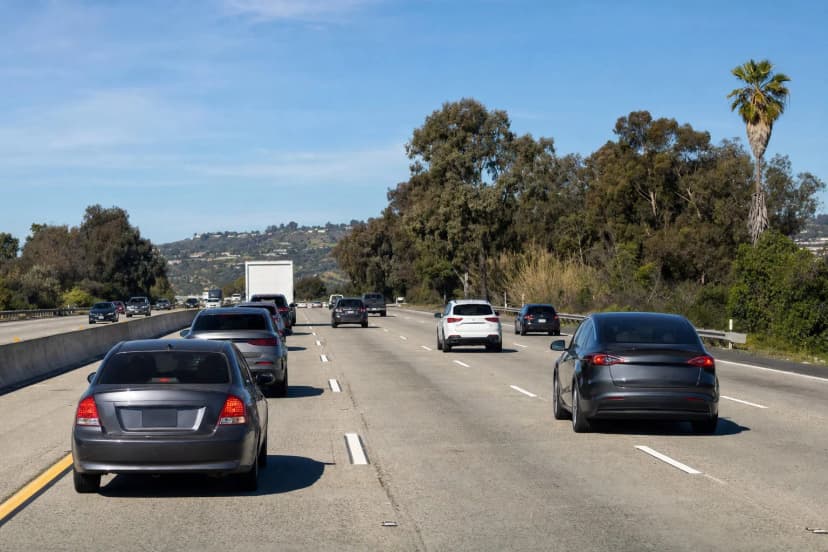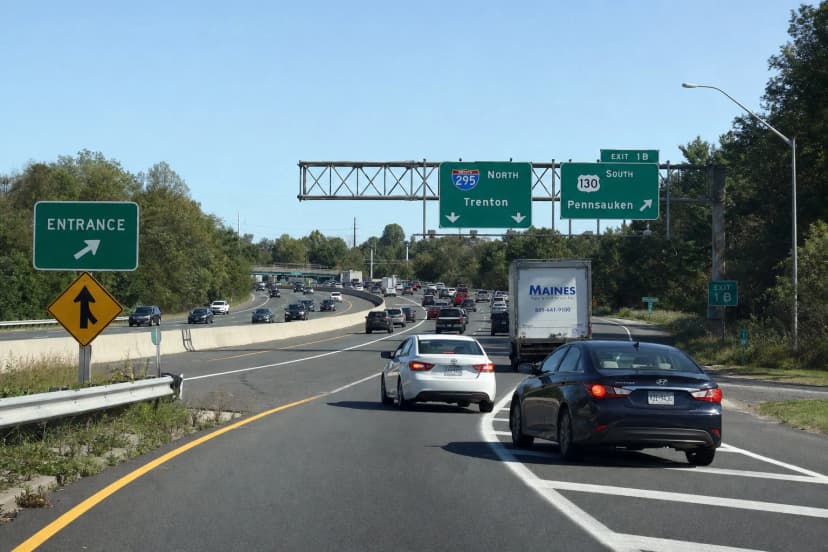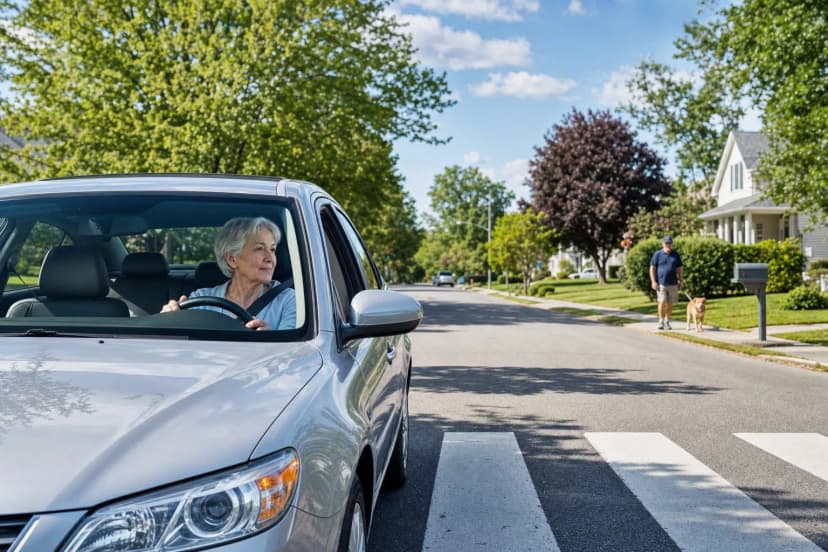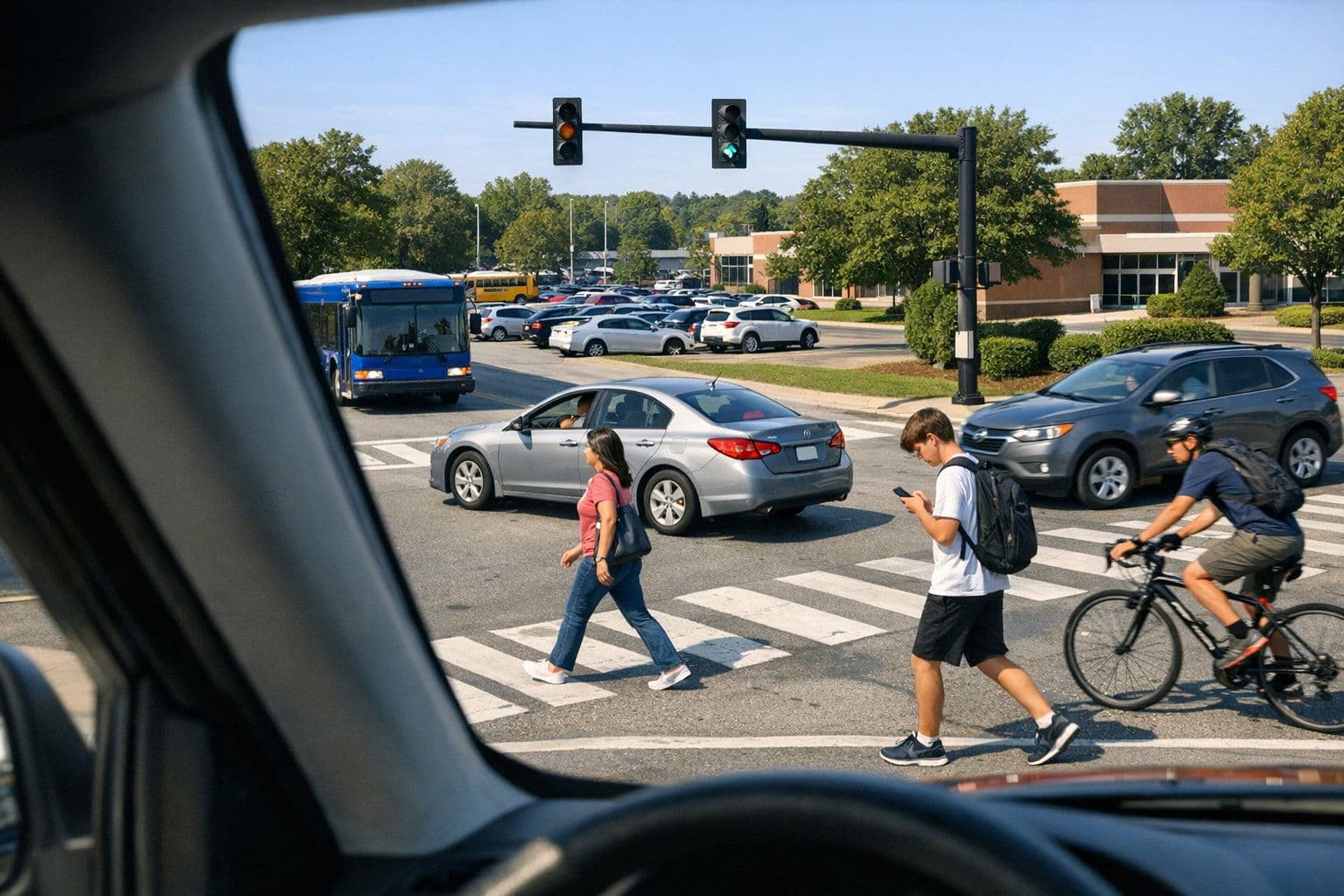
The Most Common ‘Close Call’ Locations: Intersections, School Zones, Parking Lots
1. Introduction: The Anatomy of the "Almost"
We have all felt it. That sudden, cold spike of adrenaline that shoots down your spine and grips your chest. The sharp intake of breath. The involuntary slam of the brake pedal, the screech of tires, or the blare of a horn that hangs in the air for a moment too long. Then, silence. You look in the rearview mirror, eyes wide, meeting the gaze of the driver behind you, or perhaps you stare straight ahead, knuckles white on the steering wheel, realizing just how fragile the metal shell around you really is.
It wasn't a crash. No metal crumpled. No glass shattered. No sirens wailed in the distance. In the sterile language of insurance actuaries and traffic engineers, nothing happened. It was a non-event. But you know better. You know that for a fraction of a second, the timeline of your day—and perhaps your life—forked. In one reality, you continued home to dinner. In the other, you became a statistic.
This is the "close call," the "near miss," the "almost." And while accident statistics paint a grim picture of what happens when things go wrong, they often fail to capture the sheer volume of these near-miss events that occur every single day on American roads. Research suggests that for every fatal accident, there are hundreds of minor accidents and thousands of near misses. These incidents are the hidden data of our roadways—the phantom signals that tell us where our infrastructure is failing, where our attention is drifting, and where our social contract as drivers is breaking down.
As a community of drivers, we tend to discuss the crashes—the pile-up on the interstate, the fender bender downtown. But at Carszy, we believe that real safety innovation comes from studying the silence before the crash. By understanding where and why we almost collide, we can prevent the collision entirely. Our mission to connect drivers through license plate-based communication and community reporting—what we call Human Media™—is built on the premise that awareness and communication are the antidotes to chaos. If you want to go deeper into how near-miss reporting turns driver stories into predictive safety tools, explore our article inside the hidden world of near misses.
This report is an exhaustive deep-dive into the three most notorious theaters of the "close call": Intersections, School Zones, and Parking Lots. We will not just list statistics; we will dissect the geometry of these spaces, analyze the psychology of the drivers navigating them, and explore the technological and behavioral changes needed to survive them. We are moving beyond fear-mongering to uncover patterns. Because if you know where the trap is, you are far less likely to step in it.
1.1 The Psychology of Survival: Why Near Misses Haunt Us
Why do close calls linger with us so much longer than a mundane commute? To the traffic camera, a near miss is just cars passing close together. To the human brain, it is a trauma. Psychologically, a near miss triggers an acute stress response.
The body floods with cortisol and adrenaline, preparing for a "fight or flight" scenario that never fully resolves because the impact never comes. Unlike a crash, where there is immediate procedural aftermath—exchanging insurance, calling the police—a near miss leaves the driver with a surplus of nervous energy and nowhere to direct it.
Research indicates that this post-incident state is actually a period of heightened vulnerability. A significant study by researchers in Poland utilized driving simulators to analyze this phenomenon. They found that drivers who experienced a near miss were nearly three times as likely to crash in a subsequent dangerous situation shortly after the initial event.
The cognitive load of processing "what almost happened" distracts the brain from "what is happening now." This creates a dangerous feedback loop, especially in complex environments like city intersections where split-second decisions are constant.
Furthermore, untreated, repeated exposure to these high-stress near misses can lead to a form of driver burnout or even acute stress symptoms similar to Post-Traumatic Stress Disorder (PTSD). Drivers may begin to avoid certain intersections, develop aggressive defensive habits, or experience "intrusive thoughts" about potential accidents. Recognizing the mental toll of these locations is the first step in reclaiming our confidence on the road. The psychological impact extends beyond the individual; it contributes to a collective anxiety on our roadways, manifesting as hesitation, unpredictability, or aggressive overcompensation—behaviors that often precipitate the very accidents we are trying to avoid.
1.2 The Data Gap: Lagging vs. Leading Indicators
The challenge with close calls is that they rarely generate official data. Police reports are filed for collisions, not for "almost collisions." This leaves a massive blind spot in our traffic safety planning. If an intersection has ten crashes a year, it gets a stoplight. But if it has ten thousand near misses a year, it might remain unchanged until the bodies pile up. In safety science, crashes are "lagging indicators"—they tell us what has failed. Near misses are "leading indicators"—they tell us what is about to fail.
This is where the concept of Human Media™—community-sourced safety reporting—becomes revolutionary. Platforms that allow drivers to report dangerous behaviors, confusing intersections, or reckless incidents create a "heat map" of risk that official statistics miss. When a neighborhood watch group logs fifty speeding cars in a school zone, or when users on apps like Waze or Citizen flag a hazard, they are converting anecdotal fear into actionable data.
We are seeing a shift in how cities manage this. Programs like "Street Story" by UC Berkeley allow communities to log near misses and perceived hazards, providing qualitative data that complements police reports. This report aggregates such insights, combining official NHTSA and IIHS data with the lived experiences of drivers to map the true geography of danger. By pivoting our focus to these precursors, we can transition from a reactive model of road safety—fixing broken roads after tragedies—to a proactive, community-led approach like the one described in our playbook on building a local road safety hub with the Carszy app.
2. Intersections: The Geometry of Conflict
Intersections are the most complex nodes in our transportation network. They are the friction points of modern mobility, where opposing forces—cars, trucks, buses, cyclists, and pedestrians—must occupy the same space, separated only by time. It is a choreography of trust, relying on lights, paint, and the mutual agreement that Red means Stop and Green means Go. When that choreography falters, the results are catastrophic.
According to the National Highway Traffic Safety Administration (NHTSA), roughly 40% of all motor vehicle crashes occur at intersections. However, the "near miss" rate is exponentially higher. This is where the physics of speed meets the limits of human perception. Understanding the specific mechanics of intersection failures—why we miss seeing that car, or why we misjudge that gap—is essential for any driver hoping to avoid them. If you want to see how software-defined and connected vehicles are starting to change this picture, our article on how software-defined vehicles transform road safety offers a detailed look.
2.1 The "Left Turn" Dilemma: The Most Dangerous Maneuver
The unprotected left turn is widely considered the most dangerous maneuver in everyday driving. It is a cognitive heavy lift. It requires a driver to process an immense amount of information simultaneously: the speed of oncoming traffic across multiple lanes (velocity estimation), the status of the traffic light (timing), the presence of pedestrians in the crosswalk to the left (scanning), and the position of vehicles waiting behind them (pressure).
The "Wave of Death"
One of the most prolific and insidious causes of intersection near-misses is a phenomenon grimly known as the "Wave of Death". This occurs in multi-lane scenarios where traffic is heavy or stopped in one lane but flowing in another. A well-meaning driver in the lane closest to you stops and waves you through to make your left turn or to exit a driveway. You accept the courtesy, inching out, only to nearly be T-boned by a car traveling at full speed in the next lane over—a lane you couldn't see, and a driver who definitely didn't see you.
The Insight: The "Wave of Death" is a failure of social driving norms clashing with legal right-of-way. The waving driver is trying to be "polite," but they are essentially soliciting you to drive blind into active traffic. This is a prime example of where unofficial communication breaks down. In the Carszy philosophy of accountable communication, we recognize the limitations of hand gestures. A license plate message alert system might one day allow cars to signal "Lane Clear" or "Danger" with verified data, but until V2V (Vehicle-to-Vehicle) tech is ubiquitous, reliance on hand signals is a gamble with high odds of failure.
Defensive Strategy: Never trust the wave. If a driver stops to let you through, treat it as a warning, not a permission slip. You must creep forward just enough to gain a line of sight to the next lane, stopping fully before committing to the turn. As noted in defensive driving tutorials, your primary obligation is to not impede the flow of the traffic you can't see. The "polite" driver will recover from the rejection of their wave; you might not recover from the T-bone collision.
The "Yellow Light" Gamble and the Dilemma Zone
Another prolific source of near misses is the "dilemma zone"—that split second when the light turns yellow. The driver faces a binary choice: slam on the brakes and risk being rear-ended, or accelerate and risk entering the intersection on red. Human reaction time is roughly 1.5 to 2.5 seconds, meaning that at 40 mph, a car travels a significant distance before the driver's foot even hits the pedal.
This leads to the "left turn hang." You pull into the intersection on green to wait for a gap. The gap never comes. The light turns yellow, then red. You are now stranded in the middle of the box, forcing cross traffic to wait or swerve around you. While legally you often have the right to clear the intersection if you entered on green, socially, you have become an obstacle, spiking the rage of every other driver involved. This moment—the "clearance interval"—is the golden hour for intersection collisions.
2.2 Pedestrians in the Crosshairs: The A-Pillar Blind Spot
The intersection is also the primary conflict zone for pedestrians. NHTSA data from 2023 shows that pedestrian fatalities remain tragically high, with over 7,300 deaths. A significant portion of these occur at intersections where turning vehicles fail to yield.
The "A-Pillar Blind Spot" is a major culprit here. Modern vehicles, driven by stricter rollover safety standards, have thicker A-pillars (the structural posts framing the windshield). These pillars can completely obscure a pedestrian crossing the street during a left-hand turn. A driver scans the intersection, sees "clear road," accelerates, and suddenly a pedestrian "appears out of nowhere." It wasn't magic; it was geometry. The angular velocity of the turning car can sometimes match the walking speed of the pedestrian, keeping them perfectly hidden behind the pillar for the entire duration of the turn until impact is imminent.
Community Insight: Reports from local communities often highlight specific intersections where this is prevalent. For example, mid-block crosswalks or intersections near transit hubs often have "near miss" clusters that don't show up in fatality stats until it's too late. Community reporting tools like Street Story allow residents to log these "almosts," providing the qualitative data cities need to install bulb-outs or leading pedestrian intervals (LPIs).
2.3 Community Solutions: When Data Fixes Design
It is not all doom and gloom. Communities that leverage data—both from police reports and crowdsourced feedback—are fixing these "close call" locations. The "Vision Zero" initiatives adopted by many cities are heavily reliant on identifying high-risk intersections before fatalities occur.
- Cleveland, OH: The city used a pilot program to install speed tables in neighborhoods reporting high speeds. The result? A reduction in average speeds by nearly 8 mph. The success led to a citywide expansion.
- Winterville, NC: A small community installed painted bulb-outs (extending the curb to shorten crossing distance) at busy intersections near schools. Community feedback immediately shifted from fear to feeling safer and more visible.
- Los Angeles, CA: Community complaints about "race car" speeds on major thoroughfares led to the installation of plastic barriers and lane narrowing on corridors like Branham Lane, significantly reducing fatalities and drag racing incidents.
The Lesson: If you have a dangerous intersection in your neighborhood, report it. Don't wait for a crash. Use local council meetings, apps like Citizen, or even social platforms to document the near misses. Traffic engineers respond to patterns, and you are the sensor network. Many of these improvements tie into a broader shift where the neighborhood, not just the DOT, leads road safety.
3. School Zones: The High-Stakes Chaos
If intersections are a geometry problem, school zones are a behavioral one. There is perhaps no location on earth that combines such a volatile mix of vulnerable pedestrians (children), distracted drivers (harried parents), and localized congestion. The "drop-off line" has become a cultural touchstone of frustration, but it is also a theater of extreme danger.
Statistics from Safe Kids Worldwide paint a concerning picture. While overall pedestrian death rates for younger children have dropped over the last two decades, the rate for teens (12-19) has risen. In school zones, the perception of safety often leads to a relaxation of vigilance, precisely when it is needed most. For a broader look at how culture and community can shift driver behavior, see how the Driven revolution is reshaping car culture around safety.
3.1 The "Toxic Drop-Off" Phenomenon
The morning drop-off is a pressure cooker. Parents are rushing to get to work. Kids are rushing to see friends. Bells are about to ring. This time pressure leads to erratic decision-making that fuels "close calls." We see a degradation of driving standards that would not be tolerated on a highway but is commonplace in the school driveway.
- The "Double Park & Dash": Parents who stop in the active travel lane to let a child out, forcing other drivers to swerve around them into oncoming traffic. This forces the child to navigate between moving cars, often obscured from view.
- The "U-Turn" Menace: Frustrated by the long line, a parent pulls a U-turn in the middle of the school zone, often blindly backing up or cutting across crosswalks. This maneuver is particularly dangerous because it is unexpected; children are taught to look left and right, not for cars rotating 180 degrees in the middle of the road.
- The "Mid-Block" Sprint: Children, seeing their school or parent's car across the street, dart out from between parked cars—the classic "dart-out" scenario responsible for a significant percentage of child injuries.
Anecdotes from Reddit and local news confirm that these aren't isolated incidents; they are systemic. One parent noted, "It’s a complete zoo... parents gun ahead of the line, stop in the middle of the street... we’ve had 2 close calls where someone ran a stop sign and almost hit us". Another parent in Murray, Utah, described "years of near-misses" and dangerous U-turns just feet from an elementary school, highlighting how persistent these issues can be without intervention.
3.2 The Teen Distraction Epidemic: The "Zombie" Walker
While we often worry about small children, it is the teenagers who are increasingly at risk. A study observing nearly 40,000 students found that 1 in 4 high school students and 1 in 6 middle school students were distracted while walking.
The distraction is threefold:
- Visual: Looking at a screen (Texting/Social Media).
- Auditory: Wearing headphones (unable to hear approaching cars or horns).
- Cognitive: Being deep in conversation or thought.
The data reveals a stark progression of distraction as children age. As students move from middle school to high school, their engagement with devices while walking increases significantly.
| Distraction Type | Middle School Students | High School Students | Risk Implication |
|---|---|---|---|
| Headphones | 44% of distracted walkers | Significantly Higher | Cannot hear hybrids/EVs or warnings. |
| Texting | 31% of distracted walkers | Higher Frequency | Visual attention completely removed from road. |
| Talking on Phone | 18% of distracted walkers | Higher Frequency | Cognitive load reduces peripheral awareness. |
| Total Distracted | 1 in 6 (approx. 17%) | 1 in 4 (approx. 27%) | High schoolers are 50% more likely to be distracted. |
Table 1: Distraction rates among students walking to/from school. Derived from Safe Kids Worldwide observational study of 39,000 students.
When you combine a teen wearing noise-canceling headphones with a silent electric vehicle approaching from behind, the margin for error evaporates. The "near miss" here often happens when a student steps off the curb without looking, assuming the world will stop for them because they are in a "safe zone."
3.3 The Blind Zone Crisis: Bigger Trucks, Smaller Kids
One of the most alarming trends in school zone safety is the increasing size of personal vehicles. As Americans shift from sedans to large SUVs and pickup trucks, the "front blind zone"—the area directly in front of the hood that the driver cannot see—has grown massively.
Consumer Reports investigations have found that some modern heavy-duty trucks have front blind spots that are 11 feet longer than a standard sedan. This creates a terrifying "frontover" risk. A small child, or even a teenager bending down to tie a shoe, can be completely invisible to a driver sitting high up in a truck cab.
The Near Miss Scenario: A parent in a large SUV is inching forward in the drop-off line. A child drops their backpack and kneels to pick it up in front of the bumper. The parent, seeing "clear air" over the hood, lifts their foot off the brake. The only thing preventing a tragedy is a shout from a crossing guard or a sensor beep.
Tech Solution: This is where modern ADAS (Advanced Driver Assistance Systems) like 360-degree cameras and front parking sensors are vital. However, technology is not a panacea; sensors can be dirty or ignored. The low-tech solution—the "shoulder check" and situational awareness—remains king. Legislation like the proposed "STOP Frontovers Act" aims to make front-facing cameras and sensors mandatory, similar to the backup camera mandate of 2018. Newer safety tech, from in-cabin sensors to occupancy detection, also plays a huge role in preventing tragedies; learn how these tools help in our guide to preventing child and pet heatstroke in vehicles.
3.4 Etiquette as a Safety Feature
Most school zone friction comes from a breakdown of etiquette. "Line cutting," blocking driveways, and ignoring staff instructions aren't just rude; they are dangerous.
The Golden Rules of the Drop-Off Line:
- Do Not be the "Exception": Rules apply to everyone. If the school says "don't get out of the car," stay in the car. Efficiency breeds safety; unpredictable stops breed chaos.
- The "Hug and Go": Preparation starts at home. Backpacks should be on laps, not in the trunk. Goodbyes happen at the breakfast table, not at the curb.
- Respect the Crossing Guard: They are the human traffic lights of the school zone. Ignoring them is a legal offense and a moral failing.
- No U-Turns: Drive around the block. The 2 minutes you save are not worth the blind-spot risk you create.
4. Parking Lots: The Deceptive Safety
We tend to relax when we enter a parking lot. We are off the highway, speeds are low, and we feel "arrived." But statistics show that parking lots are actually one of the most common locations for accidents and near misses. The National Safety Council (NSC) estimates that tens of thousands of crashes occur in parking lots annually, resulting in hundreds of deaths.
Why? Because a parking lot is not a road; it is a shared surface where the rules of traffic flow are vague, and where cars and pedestrians mix freely in every direction. It is a "wild west" of unregulated movement.

4.1 The Distraction Playground
The moment we enter a parking lot, our focus shifts. We are looking for a spot, checking our phone for a shopping list, or texting a friend "I'm here." We treat the parking lot as a destination, rather than a thoroughfare, and our vigilance drops accordingly.
NSC data reveals shocking levels of distraction in parking lots. It is not just a few bad apples; it is the majority of drivers.
This "cognitive vacuum" means that while the car is moving at 10 mph, the driver's brain is stationary. A pedestrian walking out from between cars requires a reaction time that a texting driver simply does not have. The NSC poll found that 66% of drivers would make phone calls and 63% would program GPS systems while moving through parking lots. This high rate of distraction turns low-speed environments into high-risk zones. Adding technology like modern dashcams can help document and even predict these hazards; our deep-dive on the future of AI dashcams and community safety explains how.
4.2 The "Back-In" vs. "Pull-Through" Debate
One of the most actionable changes a driver can make to reduce near misses is to change how they park. The American Automobile Association (AAA) and fleet safety experts overwhelmingly recommend backing into a parking spot or finding a pull-through spot whenever possible.
The Science of Reversing:
When you back into a spot, you are reversing into a controlled, empty space (the parking stall). When you leave, you are driving forward into the uncontrolled, chaotic traffic lane.
- Field of View: Driving forward gives you a nearly 180-degree view of the aisle. Backing out restricts your view to the rearview camera and mirrors, often blocked by the cars parked next to you.
- The "Pincer" Movement: When backing out, you are vulnerable to traffic from both directions and pedestrians who may be in your blind spots.
- Fleet Statistics: Backing accidents account for up to half of all fleet vehicle collisions, despite reversing representing a fraction of driving time. This is why corporate fleets often mandate "First Move Forward" policies.
The Resistance: Many drivers find backing in stressful or "rude" if traffic is waiting. However, the 10 seconds of patience required from the driver behind you is a small price to pay for the massive safety dividend gained upon departure. AAA warns that even with rear cross-traffic alert systems, technology has limitations—failing to detect motorcycles 48% of the time in tests—making the "pull-through" or "reverse park" maneuver the superior safety choice.
4.3 The "Mall Madness" Effect and "Spot Stalking"
The density of near misses spikes predictably. "Black Friday" and the holiday season see a massive increase in parking lot claims. The combination of higher traffic volume, tighter timelines, and shorter tempers creates a perfect storm.
The "Spot Stalking" Phenomenon: A driver follows a pedestrian to their car to "claim" the spot. This creates congestion and pressure. The pedestrian feels rushed (increasing slip/trip risk), and the driver is focused on the spot, not the environment.
- Safety Tip: Park further away. The "prestige" of a close spot is an illusion. Distant spots have fewer cars, fewer pedestrians, and wider turning radii. The extra 60 seconds of walking is the safest part of your trip and reduces the likelihood of door dings and fender benders.
5. The Role of "Human Media": Turning Angst into Action
We live in an era of hyper-connectivity, yet our cars remain surprisingly isolated islands. When we experience a near miss, our only outlet is usually a scream inside the cabin or a rant on social media later. But what if that energy could be harnessed?
Carszy envisions a shift from "Social Media" (posting for likes) to Human Media™ (posting for impact). This concept aligns with the broader trend of crowdsourced safety data seen in apps like Waze, Citizen, and Street Story. It is about democratizing safety data and using it to build safer streets together.
5.1 Community as a Sensor Network
Traditional traffic engineering relies on historical crash data—a "lagging indicator." By the time an intersection is flagged as dangerous, people have already been hurt. Community reporting turns near misses into "leading indicators."
- Waze for Cities: This program aggregates user data to help cities identify congestion and hazard hotspots in real-time. Louisville, KY, and Boston, MA, have used Waze data to re-time traffic signals and measure the impact of safety redesigns. By analyzing where drivers are braking hard or reporting hazards, cities can intervene before crashes happen.
- Citizen App: While sometimes controversial, Citizen provides real-time situational awareness. Knowing there is a fire or police activity on your route allows you to avoid the area entirely, reducing congestion for first responders. This app has changed how people perceive local safety, turning every user into a potential reporter.
- Carszy VOIS™ (Vehicle of Interest Search): This takes community reporting a step further. Instead of just reporting a "hazard," drivers can alert the community to a specific vehicle involved in a critical incident (e.g., an Amber Alert or hit-and-run). This turns every driver into an active participant in community safety and dovetails with new anti-theft tools like UWB-powered community networks that fight relay attacks and car theft.
5.2 De-Escalating Road Rage through Communication
Many "close calls" escalate into road rage because of a lack of communication. You cut someone off inadvertently. They think it was malicious. They tailgate you. You brake check them. The situation spirals.
Psychologists note that misunderstandings and the inability to apologize are key drivers of conflict. The isolation of the vehicle cabin dehumanizes other drivers, making it easier to attribute malice to their actions. A simple way to say "I'm sorry" or "My bad" could defuse thousands of road rage incidents annually. While we wait for tech to bridge this gap, the old-school "courtesy wave" remains our best tool. If you make a mistake, acknowledge it. If someone else makes a mistake, assume it was incompetence, not malice (Hanlon's Razor).
Tech platforms like Carszy are working to bridge this gap with privacy-first license plate messaging. Imagine receiving a text: "Hey, your brake light is out" or "Sorry I cut you off, didn't see you." This humanizes the metal box in the next lane, de-escalating tension and potentially preventing the retaliatory driving that leads to crashes. For more on how to respond calmly and safely when tempers flare, read our guide on how to report road rage and stay safe on the road.
6. Conclusion: The Road Ahead
The "close call" is a warning shot. It is the universe telling us that the margin for error has thinned to a razor's edge. Whether it is the geometry of a busy intersection, the chaotic energy of a school drop-off zone, or the distracted drift of a parking lot, these locations share a common thread: they are places where human attention is pushed to its limit.
The data is clear. We are driving larger vehicles with bigger blind spots. We are more distracted by our devices than ever before. And our infrastructure is struggling to keep up with the changing mix of pedestrians, cyclists, and cars.
But there is hope. The solution lies in a "Swiss Cheese" model of defense:
- Infrastructure: Better crosswalks, dedicated turn signals, and traffic calming measures driven by community data.
- Technology: ADAS features like auto-braking and blind-spot monitoring, and future V2X (Vehicle-to-Everything) communication.
- Community: Reporting hazards, sharing data, and holding each other accountable through platforms like Carszy.
- Behavior: The individual choice to put the phone down, back into the parking spot, and respect the school zone speed limit. Taken together, these layers reflect the broader shift to community-led tech interventions in road safety.
As you drive tomorrow, pay attention to the "almosts." Do not just breathe a sigh of relief and forget them. Analyze them. Report them. Learn from them. Because the only difference between a near miss and a tragedy is often just a matter of inches and milliseconds.
Let’s widen that margin together.
Frequently Asked Question
Q: I constantly see near-misses at a specific intersection in my neighborhood. What can I actually do about it besides complaining?
A: You have more power than you think! Traffic engineers rely on data, and often "near miss" data is missing from their models. Here is a 3-step action plan:
- Document It: Start a log. Note the date, time, and type of near miss (e.g., "Left turn conflict," "Pedestrian nearly hit"). If safe, video evidence is powerful.
- Report It Officially: Use your city’s 311 app, "Street Story" platform, or local Department of Transportation (DOT) website to file a hazard report. Be specific: "Drivers turning left from Main St cannot see oncoming traffic due to the hedge."
- Mobilize the Community: Use neighborhood apps (Nextdoor, Facebook Groups) to see if others share your concern. A petition or a collective presentation to the City Council carries far more weight than a single email. Cities do respond to organized community data—initiatives in Cleveland and Winterville prove that resident feedback can lead to speed bumps, new signage, and safer streets. You can also encourage neighbors to use tools like Carszy so that local driving culture shifts toward accountability and care.
Next Steps:
- Stay Connected: Download the Carszy app to join a community of drivers dedicated to accountability and safety. (Visit carszy.com).
- Check Your Tech: Does your car have blind-spot monitoring? Test it (safely) to understand its limits.
- Audit Your Drive: For one week, count your "close calls." The number might surprise you—and change how you drive. As vehicle software and AI evolve, features like V2X and edge computing will help, but your awareness is still the first line of defense.