Navigating Modern Road Hazards: A Comprehensive Guide to Reporting Dangerous Driving and Reclaiming Intersection Safety
The daily commute has increasingly become an exercise in high-stakes hazard navigation. Despite unprecedented advancements in vehicle crashworthiness, autonomous emergency braking, and active lane-keeping systems, American roads remain inexplicably perilous. In 2024, early estimates from the National Highway Traffic Safety Administration (NHTSA) projected 39,345 traffic fatalities nationwide.
While this figure represents a slight 3.8 percent decline from the pandemic-era highs of 2023, the absolute numbers reflect a continuing, catastrophic crisis on the nation's asphalt.
A significant portion of this ongoing tragedy stems from two distinct but tightly linked failures within the transportation ecosystem: the unpredictable, aggressive, and distracted behavior of individual drivers, and the systemic, historical flaws built directly into local roadway and intersection design. For the safety-conscious parent calculating the safest route to school, the daily commuter navigating congested interstates, and the neighborhood watch advocate petitioning for calmer streets, addressing this dual threat requires a comprehensive, multi-tiered strategy. It is no longer sufficient to simply practice defensive driving and hope for the best. Modern road safety demands active, informed, and technologically enabled participation.
This participation involves knowing exactly how to report immediate threats—such as tailgating, weaving, and texting—without compromising personal safety or escalating a volatile situation. It requires an understanding of how emerging driver-to-driver communication technologies are stripping away the dangerous anonymity of the highway, replacing isolation with community accountability. Furthermore, achieving long-term safety means identifying the physical dangers engineered into local infrastructure—specifically, the most deadly intersection patterns—and utilizing grassroots advocacy to implement proven, low-cost urban design fixes that save lives.
This exhaustive report dissects the anatomy of dangerous driving behaviors, outlines precise, actionable protocols for safe incident reporting, explores the technological vanguard of community-driven vehicle identification platforms, and provides a definitive blueprint for transforming deadly intersections through tactical urbanism and civic advocacy.
Part 1: The Epidemic of Dangerous Driving Behaviors
To effectively report and mitigate dangerous driving, one must first understand the specific human behaviors that contribute most heavily to road trauma. Cognitive neuroscientists and traffic safety analysts frequently refer to the "four horsemen" of traffic fatalities: speed, impairment, distraction, and fatigue. Together, these behavioral failures account for more than 90 percent of all motor vehicle crashes. On modern roadways, these underlying factors show up most visibly and dangerously as texting, tailgating, and erratic lane weaving.

The Lethal Illusion of Multitasking: Texting and Cognitive Distraction
Distracted driving is broadly defined by the NHTSA as any activity that diverts a driver's attention away from the primary task of safely operating a motor vehicle. However, among all potential diversions—from eating to adjusting navigation systems—texting remains the most alarming and pervasive form of distraction. Public health data categorizes driving distractions into four distinct types: visual (taking eyes off the road), manual (taking hands off the wheel), cognitive (taking the mind off the task of driving), and auditory (focusing on sounds other than traffic). Texting is uniquely hazardous because it demands visual, manual, and cognitive attention simultaneously.
The statistical reality of distracted driving highlights a persistent behavioral epidemic. In 2023, NHTSA data revealed that 3,275 people were killed, and an estimated 325,000 individuals were injured, in crashes involving distracted drivers. To comprehend the physical reality of this danger, one must consider the mathematics of speed, distance, and human reaction times. Sending or reading a text message takes a driver's eyes off the road for an average of five seconds. At a standard highway speed of 55 miles per hour, a vehicle covers the entire length of a football field in that brief five-second window—effectively driving completely blind.
| Distracted Driving Impact Metrics (U.S. Data) | Statistical Finding |
|---|---|
| Total Fatalities (2023) | 3,275 people killed in distraction-affected crashes. |
| Total Injuries (2023) | Nearly 325,000 people injured in distraction-related incidents. |
| Nonoccupant Fatalities | 611 pedestrians and cyclists killed by distracted drivers in 2023. |
| Crash Multiplier Risk | Drivers actively texting are up to 23 times more likely to crash. For practical tips to reduce risk, see night driving safety strategies that also apply in daylight. |
| Attention Deficit | Cell phone usage reduces a driver's attention capacity by up to 37%. |
The consequences of this cognitive disconnect extend far beyond the occupants of the offending vehicle. Nonoccupants, particularly pedestrians and cyclists, bear a disproportionate share of the risk; 611 nonoccupants were killed in distraction-affected traffic crashes in 2023. Demographically, young drivers are particularly susceptible to this digital compulsion. Seven percent of drivers aged 15 to 20 involved in fatal crashes were reported as distracted at the time of the collision, representing the highest proportion of any measured age group.
Despite widespread public awareness campaigns and legislative action—with 48 states and the District of Columbia having explicitly banned texting while driving as of 2024—the behavior stubbornly persists. Surveys indicate that a staggering 74.2 percent of California residents identify distracted driving, such as texting or calling, as their absolute top traffic safety concern, underscoring the gap between public anxiety and actual behavioral change. If you’ve ever had an “almost” near-miss moment at an intersection because of distraction, you’ve felt this risk up close.
The Physics and Psychology of Aggression: Tailgating and Weaving
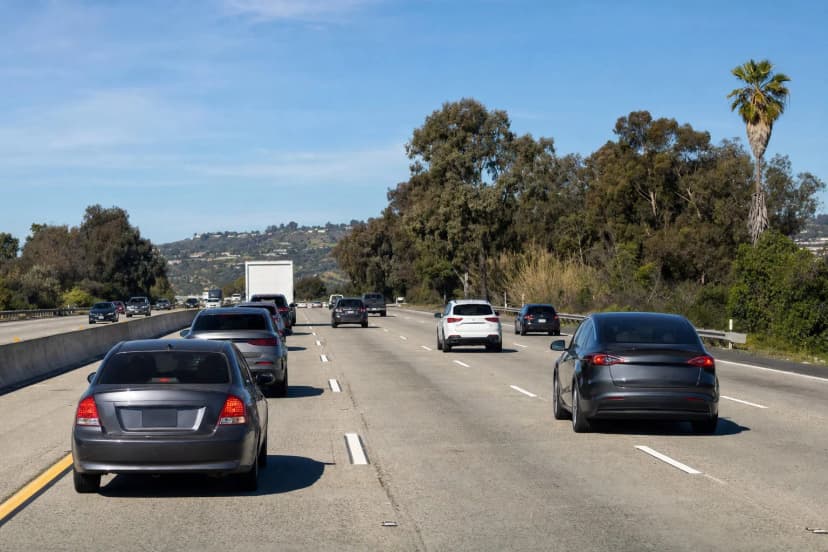
While distracted driving is frequently an act of dangerous negligence, behaviors such as tailgating and high-speed lane weaving are often conscious acts of vehicular aggression. The scale of this aggression is staggering. Recent research conducted by the American Automobile Association (AAA) Foundation for Traffic Safety reveals that an overwhelming 96 percent of drivers admit to engaging in aggressive driving behaviors over the past year, while simultaneously being on the receiving end of such hostility.
Tailgating is uniquely perilous because it fundamentally violates the basic physics of braking and human reaction time. Stopping distance is not instantaneous; it is a combination of the time it takes for the human brain to perceive a hazard and initiate action (reaction time), plus the mechanical time and distance required for the vehicle to halt (braking distance). When a driver follows another vehicle too closely, this critical reaction window vanishes entirely. If the lead vehicle is forced to brake suddenly due to debris, a pedestrian, or slowing traffic, a rear-end collision becomes almost mathematically unavoidable.
Furthermore, tailgating introduces a hazardous "domino effect" into congested traffic streams. A single sudden stop induced by a tailgater can force multiple trailing vehicles to brake harshly, triggering shockwaves of deceleration that frequently result in multi-car chain-reaction pileups, leading to severe whiplash injuries, structural vehicle damage, and massive traffic gridlock.
Erratic lane weaving—the act of aggressively shifting between lanes with minimal clearance to overtake slower vehicles—adds to this physical danger. Aggressive drivers rarely commit isolated infractions; they often stack risky maneuvers, combining tailgating with illegal overtakes, failure to signal, and sudden swerves. This chaotic behavior strips surrounding drivers of their ability to predict the flow of traffic, leading to panicked overcorrections and high-speed side-impact collisions. These behaviors are intrinsically tied to excessive speed. In 2023, speeding was identified as a contributing factor in 29 percent of all traffic fatalities, claiming the lives of 11,775 individuals. Learning how to calmly recognize this behavior, document it, and protect yourself financially is part of staying calm behind the wheel around road rage and recklessness.
Understanding the psychological mechanisms that drive these aggressive behaviors is crucial for addressing them. The physical isolation inherent in modern automobile design creates a profound sense of anonymity. Enclosed in sound-dampened cabins of metal and tinted glass, drivers become disconnected from the humanity of those occupying the surrounding vehicles. This psychological phenomenon, heavily studied in the context of road rage and driving psychology, closely mirrors the disinhibition effect frequently observed in anonymous online interactions. Without the moderating effects of face-to-face social cues, minor roadway frustrations—such as being cut off, stuck behind a slower vehicle in the passing lane, or missing a traffic light cycle—can rapidly escalate into severe emotional dysregulation.
The AAA study further concluded that aggressive driving operates as a psychological contagion on the highway. Drivers who are subjected to aggressive behavior from others are significantly more likely to adopt aggressive driving tactics themselves, creating a self-fulfilling, cascading cycle of hostility and impatience that poisons the driving culture. Cohort studies evaluating the mental health of professional drivers have even demonstrated that underlying psychological factors, such as undiagnosed depression or anxiety, can increase the odds of road accidents by up to 2.7 times, underscoring the deep connection between mental state and vehicular operation.
Part 2: Protocols for Safe and Effective Reporting
When a motorist encounters a driver exhibiting profoundly dangerous behaviors—whether that entails swerving erratically across lanes due to obvious intoxication, riding a bumper in a fit of escalating road rage, or drifting precariously onto the shoulder while fixated on a smartphone—other drivers possess a civic responsibility to act. However, acting incorrectly or impulsively can easily escalate a dangerous situation into a deadly one.
Reporting dangerous driving requires strict adherence to established safety protocols, emotional regulation, and a clear understanding of what specific information law enforcement dispatchers actually require to intervene effectively. If you’ve never reported an incident before, reviewing a simple 5-step near-miss action plan can make it much easier to respond calmly when it counts.
Distinguishing Between Immediate Peril and Chronic Hazards
The absolute first step in the reporting process is situational triage: assessing whether the observed behavior constitutes an active, immediate emergency requiring a 911 response, or a chronic hazard better suited for a non-emergency tip line.
When to Call 911 (Immediate Danger):
Emergency services should be engaged immediately if a driver poses an active, ongoing, and imminent threat to human life. Examples of immediate peril include:
- Drivers who appear severely intoxicated or impaired, characterized by extreme, unpredictable lane weaving, driving significantly below the posted speed limit, striking curbs, or driving against the flow of traffic on the wrong side of the road.
- Instances of active, escalating road rage where a driver is intentionally ramming another vehicle, brandishing a weapon, aggressively attempting to force others off the roadway, or physically exiting their vehicle at a traffic light to initiate an altercation.
- Reckless drivers traveling at extreme speeds, aggressively weaving through dense traffic with inches of clearance, and actively causing near-miss collisions.
When to Use Non-Emergency Lines (e.g., Highway Patrol Tip Lines): For behaviors that are undoubtedly dangerous but do not constitute an active, deadly pursuit, non-emergency channels are the appropriate avenue. Many state highway patrols and local departments offer dedicated phone numbers (such as California's 1-800-TELL-CHP) or online reporting portals specifically for traffic complaints. Situations for non-emergency reporting include:
- A driver who was previously tailgating or driving aggressively but has since exited the highway or pulled into a destination, thereby neutralizing the immediate threat.
- Reporting chronic traffic issues in a specific geographical area, such as a localized stretch of rural highway where commercial trucks consistently speed, or an urban intersection where vehicles regularly ignore a newly installed stop sign.
- Reporting concerns about the deteriorated driving skills of an elderly neighbor or family member, which typically involves submitting a formal Driver Condition Report to the local Department of Motor Vehicles (DMV) rather than calling the police.
These non-emergency reports are vital. They allow law enforcement agencies to track problem areas through data analysis, allocate limited resources efficiently, and deploy targeted, proactive patrols to identified hot spots.
| Scenario Assessment | Recommended Action | Justification |
|---|---|---|
| Erratic swerving, striking lane dividers, suspected DUI. | Call 911 immediately. | Poses an immediate, unpredictable threat of fatal head-on or side-swipe collision. |
| Active road rage, intentional ramming, brandishing weapons. | Call 911 immediately. | Escalating violence requiring immediate police intervention to prevent severe injury or death. |
| Vehicle tailgating excessively, then exiting the freeway. | Call Non-Emergency Line (e.g., Highway Patrol). | The immediate threat has passed, but the behavior warrants documentation for area patrol data. |
| Consistent speeding by multiple vehicles at a specific intersection daily. | Submit Online Traffic Complaint / Call Local Precinct. | Identifies a chronic infrastructural or enforcement gap for long-term traffic planning and targeted enforcement. |
| Elderly family member repeatedly displaying severe mental confusion while driving. | File Driver Condition Report with DMV. | Triggers a medical/skills reevaluation to protect the driver and the public without criminalizing the behavior. |
The Architecture of a Useful Report: Information that Matters
When a driver connects with authorities, dispatchers require precise, actionable, and objective data. Vague, emotionally charged complaints (for example, "A blue car is driving like a complete maniac right now!") provide no tactical value to responding officers. Whether calling 911 or a non-emergency tip line, the reporting individual must remain calm and provide the following critical details, ideally prioritized in this exact order:
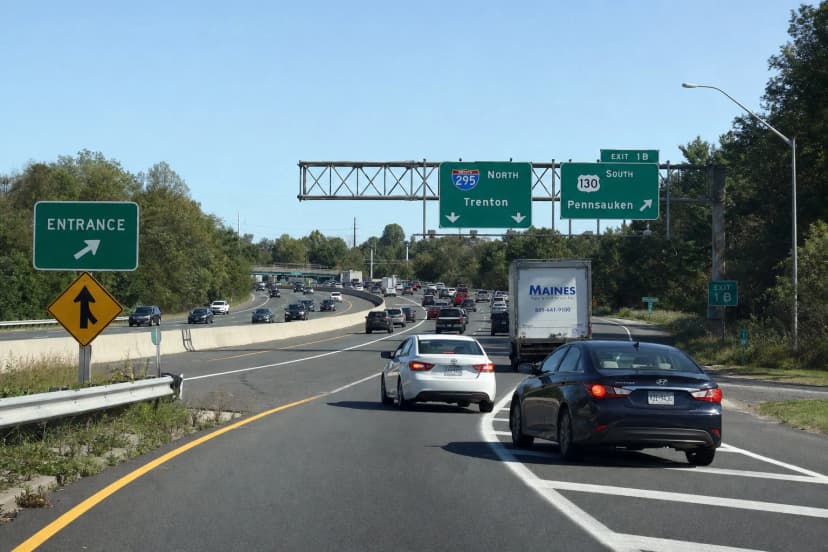
- Exact Location and Direction of Travel: The most important piece of information is where the vehicle is and where it is going. Provide the current highway number or street name, the specific direction of travel (for example, Northbound Interstate 5), and precise geographical markers such as the nearest cross street, highway mile marker, or upcoming exit number.
- License Plate Number: This serves as the unique identifier and is the most critical piece of vehicle data. Even a partial plate number, when combined with the vehicle make and color, allows automated dispatch systems and Automated License Plate Readers (ALPR) to drastically narrow down the suspect vehicle.
- Vehicle Description: Clearly state the make, model, and color of the offending vehicle (for example, "Silver Honda Civic" or "Red Ford F-150"). Include any easily identifiable features, such as severe body damage, custom wheels, or prominent bumper stickers.
- Specific Behavioral Description: Provide a calm, objective description of what the driver is physically doing to cause alarm. Replace emotional interpretations with physical facts (for example, instead of "driving crazy," state "The driver is weaving across three lanes, nearly struck the center divider twice, and is fluctuating between 40 and 80 miles per hour"). If your dashcam captured a clear clip of the behavior, that evidence can be extremely helpful; modern AI-enabled dashcams even tag near-miss events automatically.
- Driver Description: If it is possible to obtain this information safely without drawing attention, provide a brief physical description of the driver, noting gender, approximate age, and distinguishing features.
The Absolute Rules of Engagement: What NOT to Do While Driving
The physical safety of the reporting driver and their passengers remains paramount. Attempting to gather evidence or administer "vigilante justice" on the road can instantly lead to catastrophic, unintended consequences. Highway patrol guidelines and safety advocates universally emphasize the following strict prohibitions:
- Never Use a Handheld Phone While Driving: The supreme irony of causing a distracted driving crash while attempting to report another dangerous driver is both tragic and sadly common. A driver must pull over to a safe, well-lit location—such as a designated rest area, a populated parking lot, or a wide shoulder—before physically dialing 911. Alternatively, rely on a passenger to make the call, or utilize a fully hands-free, voice-activated Bluetooth system if pulling over is geographically impossible.
- Never Confront, Block, or Retaliate: Put pride in the back seat. If an aggressive driver is tailgating, the safest, most effective maneuver is to simply activate a turn signal, change lanes safely, and allow the aggressor to pass. Do not speed up to block their progress, and absolutely never engage in "brake-checking" (slamming on the brakes to frighten a tailgater), as this frequently causes high-speed collisions and escalates aggression to violence. If the situation continues to escalate toward true road rage, follow best practices for reporting road rage incidents safely.
- Avoid Eye Contact and Ignore Gestures: In the highly charged context of road rage, making sustained eye contact is frequently perceived as a direct challenge or provocation. Similarly, returning a rude hand gesture can instantly escalate verbal frustration into physical, vehicular violence. Drivers must ignore all provocations, refuse to return gestures, and maintain a calm, forward-facing posture.
- Do Not Play Detective or Pursue: Never follow an aggressive, erratic, or suspected drunk driver in an attempt to capture their license plate on video or discover their final destination. If an aggressive driver realizes they are being tailed, they may intentionally cause a crash, abruptly stop in the roadway, or lead the pursuing vehicle into an ambush or isolated area. Maintain a safe following distance, disengage completely, and let law enforcement handle the pursuit. If you feel you are being actively followed or targeted by another driver, do not drive home. Drive directly to the nearest police station, fire station, or well-lit, crowded public area and dial 911.
Part 3: Technology, Accountability, and Community Mobilization
While dialing 911 remains the standard protocol for life-threatening emergencies, the modern road safety ecosystem is undergoing a rapid technological evolution. Traditional law enforcement agencies are frequently stretched thin across vast geographical jurisdictions, and emergency response times can vary wildly based on staffing shortages, urban gridlock, and the volume of concurrent emergency calls. In some regions, calling in a reckless driver results in an immediate dispatch, while in others, it merely logs a data point for future patrol planning.
To bridge this critical gap between the occurrence of dangerous driving and official intervention, technology companies and community safety platforms are fundamentally redefining how drivers interact and how critical vehicle data is shared securely.
The Shift from "Social Media" to "Human Media"
The concept of "Human Media™" represents a deliberate, philosophical shift away from the passive, algorithm-driven consumption of traditional social networks toward utility-driven, real-world impact. Platforms embodying this philosophy, such as Carszy’s Driven™ car culture model, operate as dedicated driver-to-driver communication and community safety networks.
The core technological innovation lies in piercing the dangerous veil of vehicular anonymity without requiring the exchange of personal phone numbers, names, or private identities. By utilizing license plates as unique, public-facing identifiers, these platforms allow individuals to connect securely and contextually on the road.
License Plate Messaging for De-escalation and Courtesy: Consider a common commuting scenario where a driver inadvertently leaves their headlights off at night, has a dangerously low or flat tire, or unknowingly leaves a coffee cup or wallet on their rear bumper. Traditional methods for alerting another driver to these hazards involve honking the horn, flashing high beams, or frantic waving from adjacent lanes. Because of the inherent stress of driving, these well-intentioned actions are frequently misinterpreted as aggressive behavior, impatience, or the initiation of road rage.
A platform that features License Plate Messaging allows a passenger in one vehicle to securely text or voice-alert a pre-set warning directly to the other vehicle's license plate (for example, "Your brake lights are out," "Your trunk is open," or "Dog left in a hot car"). This technology transforms a potential conflict or escalating hazard into an act of community care and proactive safety. It fosters a culture of accountability while maintaining strict privacy protocols, as systems utilizing US-based servers route the alerts via iOS or Android app integrations without ever revealing the sender's or recipient's private contact information.
VOIS™ and the Power of Crowdsourced Interdiction
The utility of license plate identification extends far beyond courteous maintenance alerts; it is rapidly becoming a vital tool in critical incident response and criminal interdiction. Law enforcement has long relied on Automated License Plate Readers (ALPR) mounted on patrol cars or traffic lights to track stolen vehicles, apprehend wanted suspects, and locate abducted children. However, traditional ALPR networks are inherently limited; they are expensive to deploy and geographically restricted to the specific intersections or toll booths where cameras are physically installed.
Community-driven alert systems, featuring technology like VOIS™ (Vehicle of Interest Search), effectively crowdsource the capabilities of ALPR, turning the community itself into a real-time sensor network. When a critical, time-sensitive incident occurs—such as a hit-and-run collision, a suspected human trafficking scenario, or an active AMBER Alert—time is the single most critical variable in achieving a successful resolution.
- Child Abductions and AMBER Alerts: The AMBER Alert system relies entirely on rapidly galvanizing the public to spot a specific vehicle involved in an abduction. Since its inception in 2001, community vigilance generated by these alerts has resulted in the safe recovery of hundreds of abducted children. Integrating VOIS technology allows a massive, distributed network of civilian drivers to act as a real-time, geolocated search grid, vastly expanding the operational reach beyond what local police cruisers can physically cover. A user who spots the vehicle can instantly log the sighting via the app, sending a verified location ping to authorities.
- Stolen Vehicle Recovery: Vehicle theft is not merely a property crime; it is frequently a precursor to other violent offenses, as stolen cars are used in robberies or high-speed evasions. While national vehicle thefts saw a historic 17 percent decrease in 2024 (dropping to 850,708 vehicles from a peak in 2023) due to better intelligence sharing and multi-jurisdictional collaboration, rapid recovery remains a persistent challenge. Community platforms allow users to log sightings of abandoned, suspicious, or matching vehicles. This directly aids law enforcement databases, accelerating recovery times and returning vehicles before they are used in secondary crimes or stripped for parts in illegal chop shops. In some regions, these tools are part of a wider push for smarter mobility and community-led defenses against high-tech car theft and relay attacks.
By seamlessly crowdsourcing incident reporting, leveraging geolocation safety features, and utilizing vehicle identification, these tech-forward platforms reduce law enforcement response times, mobilize neighborhoods in real-time, and enforce a localized social contract of accountability that actively promotes safer driving behaviors. In cities like Orange County, these tools are being combined with on-the-ground outreach, ambassadors, and events to build an OC road safety hub powered by community reporting.
Part 4: Built to Fail—The 10 Most Dangerous Intersection Patterns
While holding individual drivers accountable through reporting and technology is vital, it addresses only one half of the highway safety equation. A significant percentage of severe and fatal crashes do not occur because a driver was actively malicious, intoxicated, or distracted. Rather, they occur because a driver made an inevitable, minor human error within a fundamentally unforgiving infrastructure environment.
This concept is the philosophical foundation of the "Safe System Approach" and the "Vision Zero" movement—the engineering philosophy dictating that roadways must be designed to anticipate human mistakes and reduce kinetic crash energy so that inevitable driver errors do not result in fatal consequences. The traditional approach of prioritizing "Level of Service"—which focuses purely on moving the maximum volume of vehicles as quickly as possible—overlooks the physical vulnerability of human beings inside and outside of those vehicles.
Nowhere is the failure of traditional road design more violently evident than at intersections. By their very definition, intersections are planned points of conflict where vehicles, pedestrians, and cyclists must cross paths, often at perpendicular angles. Across the nation, traffic data reveals consistent geometric and operational patterns that repeatedly breed disaster. An analysis of historical crash data from highly congested corridors—such as the Maricopa Association of Governments (MAG) safety score data in Phoenix, Arizona, and municipal incident reports from Orange County, California—highlights the top 10 most dangerous intersection patterns that plague American communities.
| Dangerous Intersection Pattern | Primary Risk Factor / Crash Type | Real-World Example Zone |
|---|---|---|
| 1. High-Speed, Wide Arterials | Excessive speeding during off-peak hours leading to severe multi-vehicle collisions. | 67th Ave & McDowell Rd (Phoenix, AZ) |
| 2. Complex Multi-Lane Left Turns | High cognitive load causes misjudgment of oncoming speed, resulting in deadly T-bone crashes. | I-10 Off-Ramps / Urban Boulevards |
| 3. Skewed / Non-Right-Angle | Acute angles destroy lateral visibility, hiding cyclists and cross-traffic in severe blind spots. | Historic Downtown Grids / Diagonal Avenues |
| 4. High-Pedestrian Unsignalized | Fast vehicle traffic mixed with foot traffic lacking protected signals yields high pedestrian fatalities. | Beach Blvd & Chapman Ave (Orange County, CA) |
| 5. High-Speed Slip Lanes | Encourages drivers to turn right without stopping or looking right, endangering pedestrians in crosswalks. | Suburban Highway Interchanges |
| 6. Vast Crossing Distances | Pedestrians remain exposed to traffic for too long across 6-8 lane intersections. | Commercial Shopping Center Corridors |
| 7. Poor Daylighting (Blind Corners) | Parked cars or foliage block sightlines, forcing drivers to inch blindly into active traffic. | Dense Urban Neighborhoods |
| 8. Offset Junctions (Staggered) | Overlapping turn conflicts and confusing right-of-way lead to sideswipes and rear-end crashes. | Rural Highway Intersections / Local Roads |
| 9. Missing Bike Infrastructure | Bike lanes ending abruptly at the intersection force cyclists to merge into heavy vehicle right-turn paths. | Major Commuter Routes |
| 10. Industrial/Commuter Mixing | Severe vehicle size mismatch (commercial trucks vs. passenger cars) causes devastating crushing accidents. | 99th Ave & Lower Buckeye Rd (Phoenix, AZ) |
Detailed Breakdown of Geometric Failures
1. High-Speed, Wide Arterial Crossings The absolute most lethal intersections are frequently found where two multi-lane arterial roads intersect in suburban or sprawling urban environments. A prime, data-backed example is the intersection of 67th Avenue and McDowell Road in Phoenix, which recorded a staggering 251 crashes in a five-year span, ranking it among the most dangerous in the region based on MAG’s Crash Frequency Score. These roads are designed to mimic highways, moving massive volumes of vehicles quickly. Wide travel lanes combined with exceptionally long traffic signal cycles naturally encourage drivers to speed up to "beat the red light," particularly during off-peak hours when congestion clears. When a collision occurs in this environment, the high kinetic energy guarantees severe, life-altering trauma.
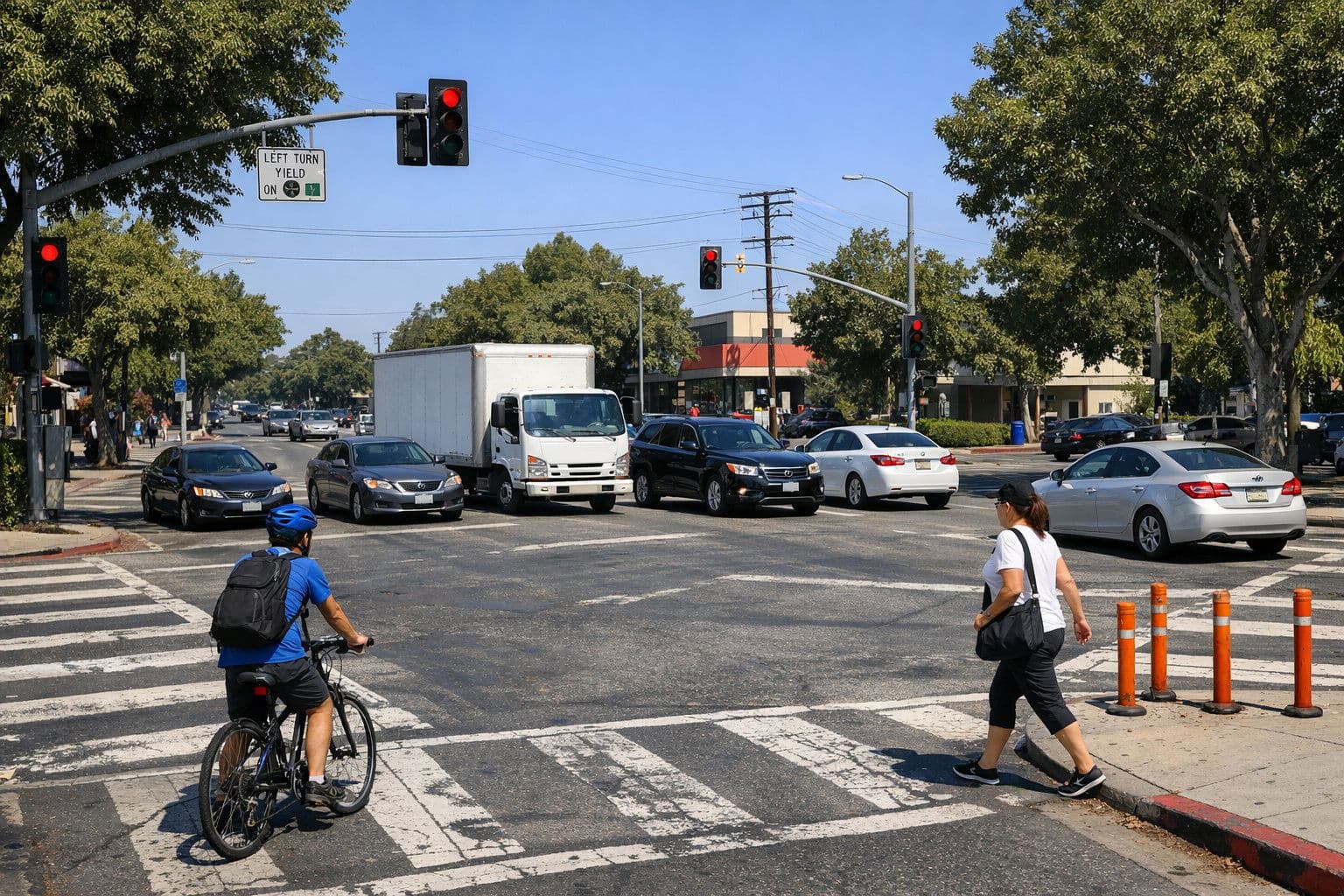
2. Complex Multi-Lane Left Turns Intersections featuring dual or even triple dedicated left-turn lanes create massive, overwhelming cognitive loads for even experienced drivers. Drivers attempting an unprotected left turn must judge the speed and distance of oncoming traffic across three or four opposing lanes while simultaneously managing their own turning trajectory. A slight miscalculation in gap acceptance—or an oncoming driver speeding up—frequently results in devastating "T-bone" or side-impact collisions. These crashes are particularly deadly because the sides of passenger vehicles offer the least structural crumple-zone protection to occupants.
3. Skewed or Non-Right-Angle Intersections Standard, safe intersections meet at crisp 90-degree angles, allowing drivers clear, unobstructed peripheral vision in both directions. However, historical street grids and geographical constraints often result in skewed intersections that meet at sharp acute or wide obtuse angles. These non-right-angle junctions force drivers to physically turn in their seats and look over their shoulders at awkward angles just to check for oncoming traffic, severely limiting lateral visibility. This design flaw easily hides approaching cyclists, pedestrians, and fast-moving vehicles in a driver's vehicle pillars or natural blind spots.
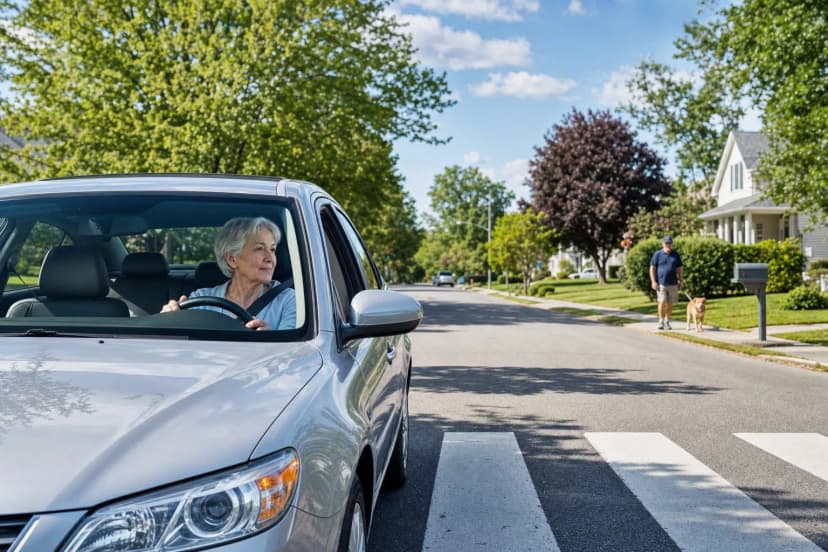
4. Unsignalized Crossings in High-Pedestrian Zones Intersections situated near schools, transit stops, and dense shopping centers naturally generate heavy foot traffic. When these necessary crossings lack dedicated pedestrian signals, or are simply painted crosswalks placed across high-volume, multi-lane roads, pedestrians are left highly exposed and vulnerable. In Orange County, California, the intersection of Beach Boulevard and Chapman Avenue in Stanton is a notorious hotspot for pedestrian accidents due to this precise, lethal mixing of high-speed vehicle volume and vulnerable road users attempting to cross safely.
5. Slip Lanes for Free-Flowing Right Turns A slip lane is a channelized, sweeping lane at an intersection corner separated by a small triangular island, designed to allow right-turning vehicles to bypass the main traffic light and merge without coming to a complete stop. While highly efficient for maximizing vehicle throughput and preventing right-turn backups, slip lanes are incredibly hostile and dangerous to pedestrians. The sweeping geometry encourages drivers to maintain their speed through the crosswalk while looking exclusively over their left shoulder for a gap in oncoming traffic, completely ignoring the pedestrian stepping off the curb immediately to their right.
6. Vast Pedestrian Crossing Distances Over decades of expansion to accommodate more cars, many suburban intersections have widened to include multiple dedicated turn lanes, raised medians, and wide through lanes, resulting in pedestrian crossing distances spanning six to eight lanes of asphalt. This geometry requires a pedestrian to be physically in the roadway, exposed to moving traffic, for a prolonged duration. For older adults, small children, or individuals with mobility impairments, the physical crossing time required often far exceeds the time provided by the automated pedestrian signal, leaving them stranded in the middle of a massive intersection when the light turns green for cross-traffic.
7. Poor Sightlines and Lack of "Daylighting" Clear visibility is the absolute cornerstone of intersection safety. When street parking, large utility boxes, or overgrown municipal landscaping is permitted right up to the very edge of an intersection corner, it destroys "daylighting"—the clear, unobstructed physical space needed for drivers to see pedestrians waiting to cross, and for cross-traffic to view oncoming cars. Lacking daylighting, drivers are forced to inch out into the active intersection blindly to see past parked cars, leading to preventable vehicle strikes and pedestrian collisions.
8. Offset Junctions (Staggered Intersections) An offset junction occurs when a continuous cross street does not align perfectly on either side of the main arterial roadway. Instead of driving straight across, drivers must enter the main road, travel a short distance, and then turn off again to continue on the cross street. This staggered layout creates unpredictable, weaving traffic flow, overlapping turn conflicts, and profound confusion over right-of-way, dramatically increasing the statistical risk of side-swipes, head-on collisions, and rear-end crashes.
9. Missing Bicycle Infrastructure at Conflict Zones Even when progressive cities install painted bike lanes along long corridors, those lanes often mysteriously disappear exactly where they are needed most: at the complex intersection. As vehicles maneuver to turn right, they cross directly into the path of cyclists intending to go straight, creating the dreaded and frequently fatal "right hook" collision. Without protected intersection designs that carry the bike lane safely through the junction, cyclists are forced to merge with heavy vehicle traffic in the middle of the turn.
10. Mixed Industrial and Commuter Traffic Zones Intersections that serve as geographical border zones between residential/commercial areas and heavy industrial parks face unique, severe challenges. The intersection of 99th Avenue and Lower Buckeye Road in Phoenix ranks as profoundly dangerous—logging 411 crashes over a five-year period—largely due to this exact mixing of uses. Heavy commercial trucks and logistics vehicles have massive blind spots, wide turning radii that often require sweeping into adjacent lanes, and incredibly long stopping distances. When forced to navigate intersections heavily populated by small passenger cars, cyclists, and impatient commuters, the sheer mismatch in vehicle size, weight, and operational capability routinely leads to crushing, catastrophic accidents.
Part 5: Reclaiming the Streets—Low-Cost Fixes and Community Advocacy
Identifying a dangerous intersection pattern is only the beginning of the safety journey. The traditional response from municipal engineering departments has often been that major infrastructure overhauls—requiring land acquisition, environmental reviews, and heavy concrete construction—are simply too expensive or will take a decade to implement. However, a growing, global movement known as "Tactical Urbanism"—also referred to as "Lighter, Quicker, Cheaper" (LQC) interventions—has definitively proven that communities do not need to wait ten years or spend millions of taxpayer dollars to save lives immediately.
By utilizing low-cost, readily available materials like bright paint, flexible plastic bollards, modular rubber curbing, and temporary heavy planters, cities can implement "quick-build" demonstration projects to immediately calm traffic, alter driver behavior, and test geometric changes in real-world conditions before committing to expensive concrete reconstruction. Neighborhood watch leads, concerned parents, and civic advocates can actively petition their local transportation departments to implement the following high-impact, low-cost fixes.

Low-Cost Engineering Countermeasures
1. Daylighting and High-Visibility Crosswalks The simplest, cheapest, and most immediate fix for an intersection suffering from poor visibility is "daylighting." This process involves removing the one or two street parking spaces immediately adjacent to the intersection corner and using paint and vertical plastic bollards to physically extend the curb line into the street. This physically prevents large vehicles from parking in the sightline, making pedestrians highly visible to approaching drivers before they step off the curb. Pairing this with upgrading standard parallel-line crosswalks to high-visibility, wide "ladder" or "zebra" stripes further alerts drivers visually that they are entering a dedicated pedestrian crossing zone.
2. Lane Narrowing (Road Diets) Wide, expansive lanes implicitly signal to the human brain that it is safe to drive at highway speeds. Communities can advocate for narrowing standard 12-foot travel lanes down to 10 feet using painted edge lines or cross-hatching, a process known as a "road diet". The extra, reclaimed asphalt space can be reallocated to create dedicated left-turn pockets or physically protected bike lanes. Narrower lanes naturally and subconsciously enforce speed compliance because drivers instinctively slow down and focus when their margins of error are visually reduced.
3. Pedestrian Refuge Islands For wide intersections featuring vast crossing distances, installing a pedestrian refuge island in the center median is a transformative, low-cost safety measure. Rather than pouring concrete, these islands can be built quickly and cheaply using modular rubber curbing bolted to the street, filled with delineator posts. Refuge islands allow pedestrians to focus entirely on crossing one direction of traffic at a time, providing a safe, physical haven in the middle of the roadway if the traffic signal changes before they reach the far sidewalk.
4. Mini-Roundabouts and Residential Traffic Circles While large, multi-lane concrete roundabouts represent major, expensive capital projects, neighborhoods suffering from chronic speeding or frequent T-bone crashes can implement mini-roundabouts or residential traffic circles using temporary, inexpensive materials. The city of Artesia, California, successfully utilized this exact approach in a community demonstration project to combat severe residential speeding and crashes. By placing a circular barrier constructed of straw wattles, traffic cones, and planters in the dead center of a problematic intersection, drivers were physically forced to deflect their straight-line path and navigate the circle slowly. This geometry drastically reduces speeds and virtually eliminates the physical possibility of high-speed, right-angle T-bone collisions, which are the most fatal type of intersection crash.
5. Smart Signal Phasing: LPIs and RRFBs
In situations where physical geometric changes to the roadway are not immediately possible due to municipal red tape, altering the software programming of the traffic signals provides profound, immediate safety benefits.
- Leading Pedestrian Intervals (LPI): This is a virtually zero-cost programming change to existing traffic lights. An LPI gives pedestrians a 3 to 7-second head start to enter the crosswalk with a "Walk" signal before the adjacent vehicle traffic is given a green light. This critical head start establishes the pedestrian deep in the intersection, making them highly visible to drivers waiting to turn left or right, thereby preventing crosswalk strikes.
- Rectangular Rapid Flashing Beacons (RRFBs): For unsignalized mid-block crossings or trail intersections, RRFBs are a highly effective, relatively inexpensive, solar-powered technological solution. When activated by a pedestrian pushing a button, the system emits an intense, irregular, strobe-like flashing pattern that pierces driver distraction, commands immediate attention, and has been statistically proven to drastically increase driver yield rates compared to standard yellow warning signs.
The Path to Advocacy: How to Mobilize for Change
Civic infrastructure change does not occur in a vacuum; it requires organized, sustained, and data-driven civic pressure. Neighborhood watch leads, tech-savvy drivers, and safety advocates can leverage several established avenues to bring these low-cost fixes to their local streets.
First, communities should investigate and utilize their municipal "Traffic Calming Programs." Many progressive cities, such as Milwaukee, Wisconsin, and Spokane, Washington, offer formalized programs where residents can officially petition the engineering department for traffic calming measures on their specific streets. These programs typically require residents to gather signatures from a certain percentage of impacted property owners to demonstrate neighborhood consensus. Furthermore, cities at the forefront of this movement maintain a "Traffic Calming Lending Library," which literally delivers temporary materials (like cones and rubber speed bumps) directly to neighborhoods so residents can set up authorized, temporary demonstrations themselves to prove a concept before the city makes it permanent.
Second, local advocates must familiarize themselves with the federal Safe Streets and Roads for All (SS4A) grant program. Enacted as a core component of the Bipartisan Infrastructure Law, this program directs billions of federal dollars specifically toward local communities—bypassing state bureaucracies—to develop comprehensive Vision Zero Action Plans and execute exactly the type of low-cost, quick-build demonstration projects aimed at eliminating traffic fatalities discussed above. By presenting data-backed requests to city council members, highlighting dangerous intersection patterns, and pointing directly to available federal SS4A funding, citizens transition from merely complaining about dangerous roads to providing actionable, fully funded solutions. These local wins, layered on top of smarter vehicles and connected apps, form a broader shift toward software-defined road safety systems that treat every car as part of a neighborhood safety network.
Conclusion
The pursuit of roadway and neighborhood safety is an ongoing, dynamic battle fought on two distinct but complementary fronts: the immediate, technological accountability of human behavior and the long-term, structural rectification of infrastructure design.
When encountering the pervasive, daily threats of texting, erratic weaving, and aggressive tailgating, individual drivers must act as the ultimate fail-safe. By adhering strictly to established safety protocols—reporting via 911 for acute, life-threatening emergencies and utilizing non-emergency lines for chronic hazards, while strictly avoiding the escalating dangers of vigilante confrontation—citizens ensure that law enforcement can intervene effectively without generating additional casualties. Simultaneously, the rapid rise of tech-forward platforms is shifting the entire paradigm of civic participation. By leveraging license plate identification to overcome the toxic anonymity of the highway, tools featuring VOIS™ technology and the Human Media™ philosophy are transforming isolated commuters into an interconnected, vigilant network. This technological leap accelerates the recovery of stolen vehicles, aids in locating abducted children, and fosters a localized culture of mutual accountability that makes aggressive driving socially unacceptable.
Yet, human behavior, even when monitored, will never be flawless. Therefore, communities must look critically at the asphalt outside their front doors. Understanding the specific, geometric patterns of deadly intersections empowers citizens to demand structural change. By aggressively advocating for Tactical Urbanism and championing proven, low-cost engineering interventions like daylighting, pedestrian refuge islands, and road diets, neighborhoods can physically force traffic to slow down, prioritizing the lives of vulnerable road users over the mere speed of vehicles.
True safety is not an inherent trait of the modern highway or the suburban grid; it is a fragile condition that must be actively constructed, rigorously reported, and relentlessly advocated for. To take the next definitive step in protecting your community, tracking local hazards, and staying securely connected on the road, download the app to stay connected at carszy.com.