Surviving the Skid and Securing the Streets: The Physics of Winter Driving, Dangerous Intersections, and Community Tech
The sudden, terrifying moment a 4,000-pound vehicle loses traction on a rain-slicked highway or a snow-covered suburban street is a universal dread shared by everyday commuters, protective parents, and seasoned automotive reviewers alike. In a fraction of a second, the steering wheel becomes unnervingly light, the brakes feel utterly disconnected from the deceleration of the vehicle, and the car begins to move independently of the driver’s inputs. Understanding exactly why this happens requires moving beyond the initial surge of panic and systematically dissecting the fundamental physics of motion, friction, and momentum. However, the scope of road safety does not exist in a vacuum consisting merely of inclement weather and vehicular physics. True community safety is deeply intertwined with the built environment—specifically, how roadway intersections are designed to handle traffic flow—and the rapidly evolving digital networks that connect neighborhood watch advocates and tech-savvy drivers in real-time.
This exhaustive research report examines the critical intersection of physical driving dynamics, infrastructure vulnerabilities, and modern technological solutions. By decoding the physics of a vehicle skid in plain, accessible language, analyzing the ten most dangerous intersection patterns currently plaguing modern roadways, and exploring how community-driven technology platforms are revolutionizing emergency response and driver accountability, motorists and neighborhood safety advocates can transform reactive fear into proactive, community-wide safety. For a broader look at how modern vehicles and connected tech can act as rolling safety nodes in your neighborhood, you can also explore how software-defined vehicles are transforming road safety in 2026.
The Physical Foundation: The Mechanics of the Skid in Inclement Weather
To comprehend why a modern vehicle suddenly transforms into an uncontrollable sled during winter blizzards or severe rainstorms, one must first examine the physical forces that govern vehicular motion. The entire ability of any vehicle to accelerate, brake, and turn relies completely on four small contact patches of vulcanized rubber meeting the pavement. These contact patches are the sole intermediaries between the driver's intentions and the laws of physics.

Decoding the Traction Circle and the Contact Patch
Automotive chassis engineers and performance driving instructors utilize a foundational concept known as the "Traction Circle" (often referred to as the Friction Circle) to visualize and manage how available grip is distributed across these contact patches. The Traction Circle represents the absolute maximum performance envelope of a specific tire under specific conditions.
Inside this theoretical circle lies every possible combination of accelerating, braking, and turning forces a tire can handle simultaneously without breaking traction. The horizontal axis of the circle represents lateral forces, which encompass the energy required to turn the vehicle left or right. Conversely, the vertical axis represents longitudinal forces, which dictate the vehicle's ability to accelerate forward or brake to a stop. Any point falling within the boundary of the circle indicates that the tire maintains available grip. Reaching the exact edge of the circle means the tire is operating at its maximum physical capability, and exceeding that boundary guarantees that the tire will lose traction, resulting in wheelspin, lockup, or a dangerous slide.
A tire possesses only a finite, mathematically calculable amount of traction. To illustrate this, consider a perfectly balanced vehicle where each tire supports exactly 750 pounds of load. If the cornering efficiency is optimal, there is up to 750 pounds of traction per tire available in whatever direction the driver chooses to input force. However, if the driver applies 100 percent of the available grip to braking along the longitudinal axis, there is precisely zero percent of grip remaining for cornering along the lateral axis. If a motorist panics during a sudden highway slowdown and fully locks the brakes, attempting to simultaneously turn the steering wheel to avoid a collision will be entirely futile. The vehicle will simply slide straight forward because the friction boundary has been wholly consumed by the braking effort.
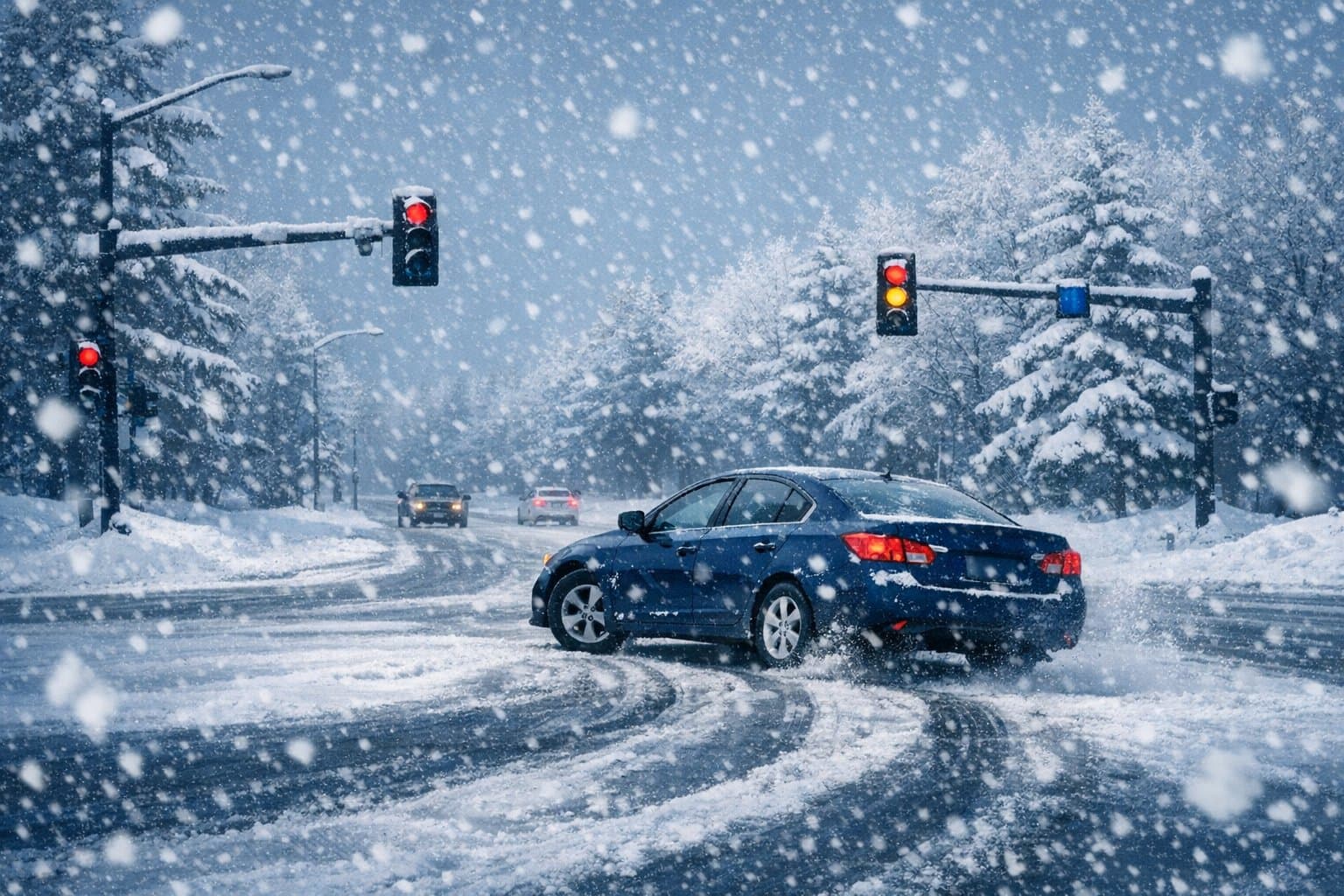
Furthermore, combined forces are subtractive. Braking while turning splits the available 100 percent of grip between the two actions. A driver might utilize 707 pounds of force for turning and 707 pounds for accelerating to stay perfectly on the edge of the circle's boundary, but exceeding this delicate balance invites an immediate loss of control. In optimal, dry conditions, the overall diameter of the Traction Circle is large, offering a wide margin for driver error. However, when rain, ice, or snow covers the roadway, the overall size of the Traction Circle shrinks dramatically. Abrupt maneuvers that were perfectly safe on dry, warm asphalt suddenly push the vehicle beyond the boundaries of the severely contracted wet-weather friction circle, initiating a skid.
Newton's First Law, Momentum, and Vehicle Inertia
A vehicle's behavior during a skid is heavily dictated by Newton’s First Law of Motion, which fundamentally states that an object in motion will remain in motion in a straight line unless acted upon by an external force.
When a commuter approaches a sharp, icy curve, the vehicle's mass possesses significant forward momentum. To successfully navigate the curve, the tires must generate enough lateral frictional force against the pavement to overcome that forward momentum and redirect the vehicle along a new path. On solid ice or hard-packed snow, the available frictional force is drastically reduced. When the necessary turning force exceeds what the compromised, icy road surface can physically provide, momentum wins the physical battle. The vehicle outright ignores the angle of the turned steering wheel and continues traveling straight ahead. This phenomenon—where the frictional force required to change direction is greater than the available surface grip—is directly responsible for countless vehicles ending up stranded in roadside ditches during winter storms.
Inertia also plays a critical, observable role during the acceleration phase of driving. When a tire rotates, inertia acts upon the tread, transferring rotational force down into the ground to push the vehicle forward against the resisting pavement. If the throttle is applied too aggressively on a slippery winter surface, the sheer rotational force generated by the engine instantly exceeds the static friction of the contact patch. The result is furious wheelspin instead of forward movement, a common sight at snowy intersections. For more practical tips on handling these conditions, including extreme rain, smoke, and floods, see this guide on reducing road collisions in dangerous weather and intersections.
The Mechanics of Hydroplaning and the Illusion of Black Ice
Rain introduces a distinct, highly dangerous physical hazard known as hydroplaning. When a vehicle travels at high speeds over wet surfaces, the tread patterns on the tires are tasked with rapidly displacing gallons of water to maintain contact with the asphalt. If the vehicle's forward speed outpaces the tire's mechanical ability to channel that water away through its grooves, a thin, solid film of water builds up directly between the tire tread and the pavement.
This creates immediate hydrodynamic lift. The tire becomes physically separated from the road surface, entirely negating the "normal force"—the physics term for the downward pressure of the car's weight counterbalanced by the road—that typically generates necessary friction. During a hydroplaning event, the vehicle is quite literally water-skiing across the surface of the highway. Steering inputs and braking attempts have absolutely no effect on the vehicle's trajectory until the car's momentum drops enough for the water to disperse and the tires to regain mechanical contact with the asphalt.
Similarly, black ice acts as a near-perfect friction inhibitor during the winter months. Black ice is a thin, visually transparent layer of frozen water that blends seamlessly with the dark pavement below it. It frequently forms on bridges, overpasses, shaded intersections, and tree-lined neighborhood streets. Because bridges are exposed to freezing ambient air from both above the roadway and below the structure, their surface temperatures plummet much faster than adjacent, earth-insulated roadways. This turns vital commuter overpasses into sudden, unexpected zones of zero traction, catching even the most cautious drivers entirely off guard.
Identifying and Recovering from the Modern Vehicle Skid
When the limits of the Traction Circle are breached due to poor weather or aggressive driving, the vehicle enters a dynamic skid. Skids generally manifest in two primary, highly distinct forms depending on which specific axle loses its grip on the road first: understeer and oversteer. Knowing how to manipulate the vehicle's weight, momentum, and pedal inputs is absolutely critical for safely recovering control.
The Mechanics of Understeer (Plowing)
Understeer is a condition that occurs when the front wheels of a vehicle lose traction before the rear wheels. This scenario typically unfolds when a driver enters a corner or a highway off-ramp far too fast for the current weather conditions, or when they apply the brakes too harshly while simultaneously attempting to turn the steering wheel.
Because the front tires are sliding across the pavement rather than gripping it, the vehicle simply "plows" straight ahead, pushing outward toward the outside boundary of the curve despite the driver desperately turning the steering wheel in the intended direction of travel. This is incredibly common in modern front-wheel-drive commuter vehicles.
The instinctual, panic-driven reaction of most everyday drivers is to turn the steering wheel even further in an attempt to force the car to turn. Scientifically, this is entirely incorrect and highly counterproductive. Turning the wheels further merely increases the angle of attack relative to the direction of travel, completely overwhelming any remaining friction and worsening the slide.
To properly recover from an understeer skid, the driver must immediately remove their foot from the accelerator pedal, critically avoiding the urge to slam on the brakes. Decelerating naturally makes it significantly easier to regain control. Concurrently, the driver must slightly unwind the steering wheel, bringing it back toward the center. This counterintuitive action reduces the severe slip angle of the tires, allowing the front wheels to realign with the actual momentum of the car and regain their rotational grip. Furthermore, releasing the throttle initiates engine braking, which naturally shifts the vehicle's mass forward onto the front axle. This weight transfer pushes the front tires down into the road surface, increasing the normal force and thereby restoring crucial traction to the steering wheels.
The Mechanics of Oversteer (Fishtailing)
Oversteer represents a more violent, jarring loss of control and occurs when the rear wheels lose traction before the front wheels. This causes the rear of the vehicle to slide outward, attempting to pivot around and overtake the front of the car. Colloquially known as "fishtailing," this skid is frequently caused by applying too much throttle mid-corner in a rear-wheel-drive vehicle, or by suddenly lifting completely off the throttle while navigating a sharp turn—a phenomenon known as lift-off oversteer, which rapidly unweights the rear tires and breaks their grip.
If an oversteer skid goes completely uncorrected, the vehicle's momentum will cause it to spin like a top, turning basic physics into a terrifying, multi-lane hazard. Recovery requires rapidly aligning the front wheels with the vehicle's newly altered trajectory to arrest the uncontrolled rotation.
If the rear of the car is aggressively sliding to the right, the driver must turn the steering wheel to the right to match the slide. This specific technique leverages Newton’s First Law by realigning the tires with the direction of the car's actual momentum, effectively reducing the sideways slipping caused by the mismatch between the car's inertia and the available traction. However, a critical danger during oversteer recovery is late overcorrection. As the vehicle's rear tires regain grip and the car snaps back into a straight line, the driver must rapidly unwind the steering wheel to center. Failing to counter-steer quickly enough as traction returns will result in a violent secondary skid in the opposite direction, known in automotive circles as a tank-slapper. Throughout this maneuver, the driver must keep their foot off the accelerator and completely avoid hard braking. If the vehicle is equipped with a modern Anti-lock Braking System (ABS), steady, firm pressure can be applied if a complete stop is absolutely necessary to avoid a collision; the brake pedal will pulse against the foot, which is entirely normal operation and should not induce panic.
Wheelspin and Hydroplaning Recovery Strategies
When a driver experiences a pure longitudinal traction loss—such as violent wheelspin during winter acceleration or sudden hydroplaning at highway speeds—the physics of recovery rely entirely on patience, smoothness, and deceleration.
Wheelspin occurs when the tires rotate at a faster rate than the vehicle is physically traveling over the ground. The cure for this is remarkably simple: the driver must back off the throttle entirely until the tires regain static traction, and then attempt to apply power much more slowly and cautiously. Interestingly, intentionally testing for minor wheelspin at low speeds, such as when initially pulling out of a snowy suburban driveway, can serve as an excellent, safe litmus test to gauge how much grip the day's weather is actually providing.
Hydroplaning, conversely, requires absolute stillness at the controls. If the steering suddenly goes alarmingly light and the sound of the road surface vanishes from the cabin, the vehicle has begun to hydroplane. In this critical moment, drivers must avoid touching the brake pedal or turning the steering wheel, as any sudden mechanical input will translate into an immediate, catastrophic spin the exact millisecond the tires reconnect with the dry asphalt. The only correct action is to smoothly lift off the accelerator pedal and wait for the vehicle's speed to naturally decay until the tire treads can successfully cut back through the water film and restore the friction circle.
Structural Hazards: The 10 Most Dangerous Intersection Patterns
While inclement weather acts as a severe catalyst for traffic incidents, the baseline safety of any community roadway is ultimately determined by its physical, structural design. Intersections represent the absolute most complex environments in the entire transportation network. Within the span of an intersection, dozens of rapid, high-stakes decisions regarding speed, right-of-way, and spatial awareness must occur simultaneously among multiple drivers, pedestrians, and cyclists.
The data highlights the severity of this infrastructure problem. In the United States, nearly 25 percent of all fatal crashes occur at intersections. An analysis of national crash databases, augmented by highly specific high-injury network statistics from heavily trafficked regions like Orange County, California, and Phoenix, Arizona, reveals alarming, recurring geometric and operational failures. The following ten intersection patterns represent the most dangerous structural designs currently endangering motorists and neighborhood communities. If you’d like a driver-focused tour of these patterns, see this companion piece on the 2026 pedestrian safety crisis and dangerous intersection types.
1. High-Volume Arterials with Poor Visibility
Intersections that bridge major commercial corridors and heavy commuter routes experience massive daily traffic volumes, mixing large delivery trucks, commercial freight, and local passenger vehicles. This sheer volume creates severe visual obstruction. Large box trucks frequently block the line of sight for passenger vehicles attempting to navigate left turns or evaluate cross traffic. The constant, unpredictable congestion and sudden stops associated with these high-volume corridors lead to exceptional rates of severe rear-end collisions.
2. Excessively Wide Roads Promoting Speed and Red-Light Running
Wide, multi-lane arterial roads inherently signal to drivers that high speeds are acceptable, regardless of the legally posted speed limit. In commercial areas where long, inefficient traffic signal cycles cause driver frustration, wide lanes actively encourage speeding as motorists attempt to gamble on late yellow lights to avoid waiting. This behavior creates deadly, high-energy side-impact (T-bone) collisions. A prime example of this failure is the intersection of 67th Avenue and McDowell Road in Phoenix, Arizona, which routinely ranks as a profoundly dangerous corridor due to its wide lanes inviting extreme speeds and red-light running.
3. Complex Turn Lanes Accompanied by Short Signal Cycles
Intersections featuring confusing dual or triple turn lanes alongside unusually short signal phases create a pressure-cooker environment for commuters. Drivers easily become confused by unclear lane markings and feel intensely rushed to complete their turns before the light cycles back to red. This psychological pressure leads directly to misjudged gaps in oncoming traffic and catastrophic left-turn failures.
4. High-Speed Rural Unsignalized Intersections
The statistics surrounding rural roads are devastating; more than 80 percent of rural intersection fatalities occur at unsignalized crossings. These intersections typically feature a minor local road controlled only by a stop sign crossing a major highway with approach speeds of 55 miles per hour or higher. The most severe crash type here is the high-speed right-angle crash, caused when a driver on the minor road critically underestimates the speed of approaching cross-traffic and fails to yield the right-of-way. Out of every 100 reported angle crashes at these unsignalized intersections, it is estimated that between 1 to 3 fatalities and up to 15 serious injuries occur.
5. Skewed Angles and Severely Limited Sight Distances
When roads intersect at an angle other than a perfect 90 degrees (a skewed intersection), drivers are forced to look over their shoulders at deeply unnatural, physically uncomfortable angles to check for oncoming traffic. This physical difficulty, combined with environmental blind spots such as overgrown local vegetation, steep hills, or encroaching structures, severely limits sight distance, inevitably leading to catastrophic intersection entry errors.
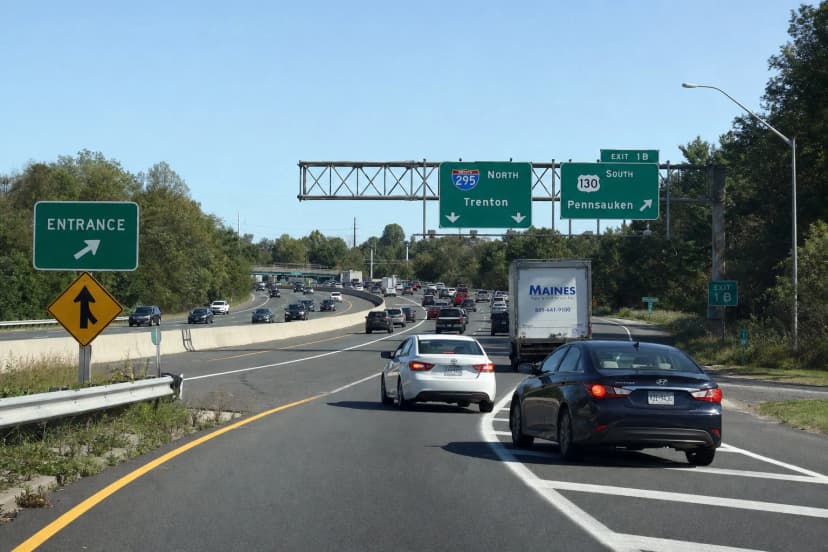
6. Outdated Freeway Interchanges Merging into Surface Streets
Older highway infrastructure was simply not designed to handle modern, explosive traffic volumes. Short, sharp on- and off-ramps that dump highway vehicles directly onto busy local surface streets create severe, unmanageable choke points. An illustrative example is the SR-55/SR-57 interchange near Chapman Avenue in Orange, California. These short ramps force drivers to merge at high speeds with minimal room for error, leading to countless sideswipe accidents during merges and brutal T-bone crashes at the surface-street intersections located immediately off the ramp.
7. Heavy Pedestrian Corridors Crossing Multi-Lane Arterials
Locations where dense pedestrian or bicycle activity intersects directly with fast-moving, multi-lane vehicle traffic are inherently deadly if left physically unprotected. In Orange County, intersections near schools, major shopping centers, and transit hubs frequently see pedestrian fatalities because drivers fail to yield during right-on-red maneuvers or speed recklessly through poorly marked crosswalks. The intersection of Bristol Street and McFadden Avenue in Santa Ana is notorious for such conflicts, frequently involving vulnerable students and parents attempting to navigate complex crosswalks during school hours, resulting in severe pedestrian injuries. For a deeper dive into protecting people on foot and on bikes in exactly these environments, see this analysis of pedestrian and cyclist safety with a human-centric approach.
8. Substandard Lighting and Nighttime Vulnerability
The sheer lack of adequate, modern illumination at local and rural intersections drastically reduces a driver's ability to identify stop signs, intersection geometry, or vulnerable pedestrians waiting in the roadway. Fatalities historically spike during nighttime hours. In coastal zones prone to heavy fog or dense marine layers, such as the Pacific Coast Highway, visibility can drop to near zero, heavily exacerbating the extreme dangers of unlit intersections and leading to devastating chain-reaction collisions. Drivers who often travel at night can also benefit from targeted training on night driving mastery and ways to cut risk after dark, especially when visibility is already compromised.
9. The Absence of Dedicated Left-Turn Lanes
Intersections that entirely lack dedicated left-turn lanes force turning vehicles to come to a complete stop in the fast-moving "through" travel lane while they wait for a safe gap in oncoming traffic. This structural flaw creates a severe, immediate risk of high-speed rear-end collisions. Furthermore, it encourages aggressive, blind lane-changes by frustrated drivers trapped behind the turning vehicle, compounding the risk for adjacent lanes.
10. The Rural-to-Urban Transition Zone (Gateway Intersections)
When a high-speed rural highway or county road transitions abruptly into a densely populated local town road, drivers often fail to recalibrate their speeds in time. These transitional "gateway" intersections are disproportionately deadly because motorists approach with highway-level momentum but suddenly encounter slow-moving local cross-traffic, pedestrians, and sudden stop controls.
| Orange County High-Risk Intersections | Primary Danger Profile | Known Casualties in Recent Reporting |
|---|---|---|
| 17th Street at Fairview (Santa Ana) | Cyclist/Pedestrian Hazards | 1 fatality (cyclist), 5 major injuries (red light running, jaywalking). |
| Bristol St at McFadden Ave (Santa Ana) | School Zone Conflicts | 1 pedestrian fatality, 10 severe injuries near elementary crosswalk. |
| SR-55/SR-57 Interchange & Chapman Ave | High-Speed Merges | Extreme density of rear-end and T-bone collisions off short ramps. |
| Jeffrey Road & Irvine Center Drive | Wide Arterial Speeds | 6 severe injuries involving cyclists; caused by DUI and speeding. |
Low-Cost Community Fixes and the Vision Zero Advocacy Movement
Recognizing dangerous intersection patterns is only the diagnostic first step; rectifying them requires a blend of public policy, intelligent urban design, and fierce community advocacy. The prevailing philosophy guiding modern road safety initiatives globally is "Vision Zero." This framework adopts the ethical stance that absolutely no loss of life is acceptable on public roadways, and that transportation systems must be inherently designed to anticipate, accommodate, and forgive inevitable human error.
Through extensive research provided by organizations like the National Association of City Transportation Officials (NACTO) and the Federal Highway Administration (FHWA), highly effective, low-cost engineering countermeasures have been strictly identified. Neighborhood watches and community advocates can forcefully lobby their local governments for these quick-build solutions without having to wait for multi-million-dollar, decade-long infrastructure overhauls. If you’ve recently witnessed or narrowly avoided a collision yourself, pairing this advocacy with a clear bystander playbook for documenting crashes can make your reports far more persuasive.

The Essential Shift to Safe System Design
Historically, American roads were designed using a metric to maximize the "Level of Service." This engineering approach prioritized the rapid, efficient movement of vehicles and sought to minimize traffic congestion above all other considerations. This car-centric approach led directly to the wide, fast, pedestrian-hostile arterials that currently dominate suburban landscapes. The Vision Zero movement advocates for a total paradigm shift toward prioritizing the "Level of Safety," placing the vulnerability of the fragile human body at the center of all design decisions.
Neighborhood groups must lobby local departments to implement physical speed management strategies. Speeding contributes to nearly 30 percent of all fatal collisions in heavily trafficked regions like Orange County. Because the probability of severe injury or death doubles for every 10 miles per hour a vehicle travels over 50 miles per hour, managing vehicle speed through physical roadway alterations—rather than relying hopelessly on sporadic police enforcement—is an absolute necessity. Community reporting tools and near-miss maps, like those described in this guide to the hidden world of near-misses on our roads, can give local engineers the data they need to justify these changes.
Proven Safety Countermeasures for Community Action
Community advocates can petition their local city councils and departments of transportation for the following proven, low-cost intersection modifications:
The implementation of Approach Speed Humps serves as a highly effective, low-cost retrofit that physically slows turning vehicles and manages speed just before an intersection. Placed strategically within 50 feet of a conflict point, these physical interventions force drivers to decelerate before executing maneuvers, greatly reducing the kinetic energy of any potential collision. They are highly cost-effective, with standard speed cushions costing between 5,000 to 7,000 to install, representing a fraction of the cost of a full $35,000 raised intersection rebuild.
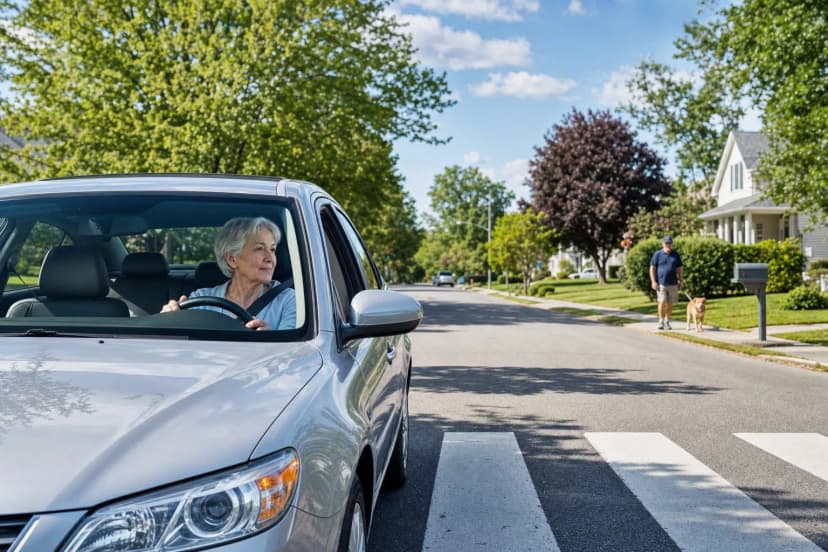
Upgrading standard, fading parallel-line crosswalks to High-Visibility Crosswalks and Pedestrian Refuge Islands is another crucial step. Utilizing thick thermoplastic paint for "ladder" or "zebra" stripes is a low-cost solution that significantly increases the visual conspicuity of the crossing zone. Adding a raised median pedestrian refuge island allows individuals to cross wide, dangerous arterials in two distinct, safer stages. This directly mitigates the "multiple-threat" crash scenario where one vehicle stops for a pedestrian, but a vehicle in the adjacent lane continues through. A pedestrian refuge island boasts an impressive Crash Modification Factor (CMF) indicating up to a 31 percent reduction in pedestrian crashes. Furthermore, upgrading crossings with Rectangular Rapid Flashing Beacons (RRFB) can yield a 47 percent reduction in crashes, while Pedestrian Hybrid Beacons can achieve a massive 55 percent reduction.
The use of Hardened Centerlines and Turn Wedges addresses the epidemic of dangerous left turns. By utilizing simple rubber curbs, flexible bollards, or raised pavement markers to create a physical centerline barrier, traffic engineers force drivers to make much slower, squarely angled left turns. This entirely prevents drivers from lazily and dangerously "cutting the corner" into oncoming lanes, forcing them to cross pedestrian paths at a safer, 90-degree perpendicular angle where driver visibility is at its absolute highest. For more examples of these tactical changes in action, including before-and-after crash results, see this primer on enhancing road safety with zipper merges and community tools.
A purely software-based fix available at signalized intersections is the Leading Pedestrian Interval (LPI). An LPI alters the traffic light timing to give pedestrians a 3-to-7 second head start to enter the crosswalk before the parallel vehicular traffic is given a green light. This securely establishes the pedestrian's highly visible presence within the crosswalk, drastically reducing fatal conflicts with aggressive right-turning vehicles. The implementation cost for an LPI is exceedingly low, requiring only a reprogramming of the existing signal infrastructure.
For rural, high-speed unsignalized intersections, installing Transverse Rumble Strips and Enhanced Signage is a lifesaver. Milling rumble strips across the travel lane provides severe auditory and tactile feedback to alert distracted or drowsy drivers to an upcoming stop sign. This low-cost physical intervention boasts a CMF of 0.72, equating to a massive 28 percent reduction in catastrophic stop-sign running crashes. Upgrading to oversized, highly retroreflective "Stop Ahead" signs similarly yields an impressive 15 percent reduction in crashes, requiring minimal municipal budgeting.
| Low-Cost Safety Countermeasure | Primary Benefit & Crash Modification | Implementation Cost Profile |
|---|---|---|
| Leading Pedestrian Interval (LPI) | Gives pedestrians a 3-7 second head start; establishes visibility. | Very Low (Software timing update) |
| Hardened Centerlines | Prevents corner-cutting; slows left turns. | Low (Rubber curbs, bollards) |
| Transverse Rumble Strips | Tactile warning for upcoming rural stops; 28% crash reduction. | Low (Pavement milling) |
| Approach Speed Humps | Physically forces deceleration prior to intersection entry. | Moderate (5,000 - 7,000 per unit) |
| Pedestrian Hybrid Beacons | High-visibility warning system; yields a 55% reduction in crashes. | Moderate (Hardware installation) |
The Technological Revolution in Road Safety: Overcoming the Response Gap
While the physics of tire friction dictate the behavior of the vehicle, and urban infrastructure dictates the geometry of the road, the human element remains the most volatile and unpredictable variable in the safety equation. Even with advanced physical countermeasures installed at every intersection, reckless driving, road rage, and hit-and-run incidents persistently plague communities. To actively combat these deeply entrenched behavioral issues, a completely new paradigm of community-driven safety technology is emerging, elegantly bridging the massive gap between passive infrastructure and overwhelmed active law enforcement.
Platforms operating as driver-to-driver communication and community safety networks represent a profound, necessary shift in how neighborhoods interact on the road. By utilizing existing license plates as secure, unique digital identifiers, these technologies facilitate real-time, privacy-focused connectivity. This shifts the digital focus entirely away from traditional social media vanity and directly toward real-world, localized impact—a burgeoning concept within the tech space known as Human Media™.
The Escalating Crisis of Police Response Times and Unreported Hazards
Traditional law enforcement agencies and emergency medical services (EMS) are currently operating under immense, unprecedented strain. Rising urban crime rates, severe municipal budget constraints, and historic officer shortages have stretched departments incredibly thin across the nation. This reality forces dispatchers to utilize strict prioritization protocols, where non-violent incidents or unverified emergency alarms are routinely pushed to the absolute bottom of the dispatch queue.
The raw statistics regarding emergency response capabilities are stark and deeply concerning. Depending on the municipality, the time interval between an initial 911 call and the actual arrival of EMS personnel on the scene can average anywhere between 7 to 14 agonzing minutes. In some sprawling urban areas facing severe dispatch backlogs, non-emergency police response times for unverified alarms can stretch to a staggering 146 minutes, leaving citizens and businesses profoundly vulnerable. Furthermore, the vast majority of highly erratic or dangerous driving incidents go entirely unreported by the public because the threshold to dial 911 feels too high for a passing swerve, and safely collecting legally viable evidence while piloting a vehicle is both dangerous and cumbersome.
Crowdsourced data and specialized community alert systems dramatically circumvent these fatal dispatch delays. Peer-reviewed research indicates that crowdsourced traffic alerts generated by mobile application users appear, on average, a full 2 minutes and 41 seconds before the corresponding, official highway patrol crash reports are generated. In the high-stakes context of severe physical trauma—where every passing second bleeds into mortality rates—slicing nearly three minutes off the initial response sequence can fundamentally mean the difference between life and death for a crash victim.
Moreover, modern vehicular telematics provide objective, real-time metrics on crash severity, automatically transmitting data regarding the speed at impact, airbag deployment status, and rollover metrics to emergency centers. This allows dispatchers to prepare trauma teams before the ambulance even arrives. However, telematics alone cannot catch fleeing criminals or warn a driver of a smoldering tire. This requires human intervention. That’s where community-powered tools, like those described in this overview of community-led tech interventions for road safety, begin to close the gap.
The Hit-and-Run Epidemic and the Urgent Need for Community Mobilization
The United States is currently facing an unprecedented epidemic of hit-and-run crashes that leave victims stranded and severely traumatized. Recent data published by safety foundations reveals that a shocking 15 percent of all police-reported crashes now involve a driver who heartlessly flees the scene of the accident, representing the highest percentage ever recorded in recent traffic history. Alarmingly, one in four pedestrians killed in traffic incidents are the victims of these hit-and-run drivers.
The underlying demographics of these fleeing offenders perfectly explain their high motivation to escape accountability: nearly 40 percent of drivers involved in fatal hit-and-run crashes do not possess a valid driver’s license, and more than half are operating vehicles that are not legally registered in their name. Fearing severe apprehension for these secondary crimes, or lacking basic vehicular documentation, these individuals choose to abandon victims bleeding in the roadway. Historically, the law enforcement clearance rate for hit-and-run incidents is abysmal; some major metropolitan areas, including massive hubs like Los Angeles County, report solving fewer than one in five hit-and-run cases, with over 40,000 of these collisions occurring annually in the county alone.
State-level legislative interventions, such as the implementation of the "Yellow Alert" system utilized in California, Colorado, and Maryland, boldly attempt to notify the public when a fatal hit-and-run occurs, broadcasting vehicle descriptors to highway signs. However, official state-run alerts are frequently subject to bureaucratic activation delays and suffer from public "alarm fatigue," where citizens simply tune out the blaring highway signs.
This critical failure point is exactly where community-driven technology systems excel and outperform traditional methods. Innovative features like VOIS™ (Vehicle of Interest Search) empower everyday citizens to rapidly mobilize in real-time. If a devastating hit-and-run occurs, or an Amber/Yellow alert is triggered by the state, specialized community networks can instantly flag the suspect's license plate within the application. Utilizing secure, highly privacy-focused databases hosted strictly on US-based servers, everyday drivers are instantly transformed into a massive, decentralized, highly attentive neighborhood watch. When thousands of daily commuters are actively, digitally alerted to look for a specific vehicle profile on their route, the mathematical probability of recovery increases exponentially compared to relying solely on the eyes of sparse, overworked police patrols. For step-by-step ideas on how everyday drivers can help reclaim chaotic intersections and report dangerous behavior safely, see this roadmap to reducing traffic fatalities with urban design and tech.
Building Accountability Through License Plate Messaging and VOIS™
Automated License Plate Readers (ALPR) have long been the exclusive domain of law enforcement and municipal parking authorities, capturing millions of automated data points to track stolen vehicles, uncover criminal networks, or trigger active warrants. While highly effective for solving crimes post-incident and admissible in court proceedings, the technology has historically been entirely unilateral—flowing exclusively from the surveillance state down to the citizen.
Modern safety platforms actively democratize this powerful concept for civic good through the implementation of License Plate Messaging. By cleverly utilizing the public license plate as a secure, anonymous proxy, drivers can directly text or call one another without ever exchanging personal phone numbers or compromising their privacy. This paradigm shift unlocks a vast, unprecedented array of immediate safety interventions that were previously entirely impossible on the highway:
A driver can immediately alert a fellow commuter that their brake lights are completely dead, that a rear tire is severely underinflated and close to a blowout, or that a heavy load in their pickup bed is dangerously unsecured before it flies through a windshield and causes a massive highway pileup.
On a community welfare level, a concerned citizen can instantly contact the registered owner of a vehicle if a dog or a young child has been left inside a dangerously hot car in a supermarket parking lot, allowing for an immediate, peaceful resolution without waiting precious minutes for a police dispatcher to assign a unit.
Furthermore, License Plate Messaging elegantly resolves minor, everyday municipal frustrations. Blocked driveways, tight parking disputes, or minor fender benders can be resolved amicably through direct communication, keeping tempers low and freeing up vital municipal police resources to handle actual violent crimes.
Mitigating the Road Rage Epidemic via Human Media™
Aggressive driving and road rage represent a massive, terrifying behavioral hazard on modern roadways. Recent comprehensive surveys indicate that up to 96 percent of individuals have recently witnessed road rage, and a shocking 50 percent of drivers admit to responding with aggressive behavior of their own when provoked by another motorist. Extreme speeding, illegal maneuvers, dangerous tailgating, and hostile, threatening gestures contribute to a highly toxic roadway environment that frequently and tragically escalates into physical assault or fatal, high-speed crashes. Statistics show that 51 percent of all drivers killed while speeding are between the ages of 20 and 34, highlighting the lethal consequences of youthful aggression behind the wheel.
The psychological anonymity of the steel, soundproof vehicle cabin heavily emboldens aggressive drivers; they feel entirely disconnected from the societal consequences of their reckless actions because they assume they will never see the victims of their aggression again. The concept of Human Media™ completely subverts this dangerous anonymity. When drivers become aware that their highly visible public license plate is directly linked to a robust, community-wide accountability network, the psychological barrier of anonymity instantly dissolves. The ability for peers to securely report dangerous driving, erratic swerving, or aggressive tailgating directly to a transparent platform creates a permanent, decentralized ledger of civic accountability.
Instead of shouting helplessly into the void or escalating a dangerous situation on the shoulder of the highway, a terrified commuter or a protective parent with children in the backseat can simply flag a consistently reckless driver within the application. This localized, community-enforced moderation promotes a culture of mutual safety that traditional, sporadic traffic citations—which only occur if a police officer happens to be sitting at that exact intersection—simply cannot match. It represents the digital equivalent of a vigilant neighborhood watch, intelligently leveraging modern geolocation and mobile technology to foster a highly cooperative, rather than adversarial and violent, driving environment. If you want a calm, clear framework for recognizing and responding to this behavior without escalating it, this guide on understanding road rage, recklessness, and insurance risks is a powerful companion resource.
Strategic Conclusions and Next Steps for Civic Safety
Navigating the complexities of modern roadway safety is a multifaceted, highly demanding equation. It demands a deep, working understanding of the unforgiving physics that govern wet and icy roads, where the shrinking margins of the Traction Circle leave absolutely no room for aggressive inputs, sudden braking, or excessive speeding. It requires a highly critical, unflinching examination of our civic infrastructure, recognizing that the geometric layout of our intersections—from excessively wide, high-speed arterials to severely blind, rural crossings—directly dictates the statistical likelihood of fatal collisions occurring in our neighborhoods. Finally, and perhaps most importantly, it relies entirely on the human element: the willingness of local communities to actively advocate for proven, low-cost engineering fixes, and the readiness to adopt collaborative, life-saving safety technology.
By seamlessly integrating scientifically sound driving practices with highly advanced, community-centric digital tools like VOIS™ and License Plate Messaging, neighborhoods can drastically reduce municipal emergency response times, aggressively deter hit-and-run offenders from fleeing the scene, and firmly hold aggressive, dangerous drivers accountable for their actions in real-time. True community safety is no longer solely the responsibility of stretched-thin, underfunded municipal police departments; it has evolved into a shared, highly connected civic duty. To see how these ideas play out in a real region, including events, ambassadors, and agency partnerships, review this case study on an Orange County road safety hub powered by community tools.
To actively participate in securing neighborhood streets, to protect vulnerable pedestrians, and to join a rapidly growing, proactive network of safety-conscious commuters, drivers are encouraged to download the app to stay connected at carszy.com.