Don’t Be Nice, Be Predictable: Why Giving Up the Right of Way Can Make Roads More Dangerous
The modern roadway is a complex, high-speed ecosystem that relies on a strict set of rules to function safely and efficiently. Every day, millions of motorists, cyclists, and pedestrians navigate this shared physical space, depending on a mutual understanding of traffic laws to prevent catastrophic collisions.
Within this highly kinetic environment, a pervasive and profoundly dangerous misconception continues to thrive: the belief that yielding the right of way out of turn is an act of commendable courtesy. While social etiquette in a pedestrian setting—such as stepping aside in a doorway to let another person pass—is encouraged, applying this same logic to motor vehicle operation introduces a deadly element of unpredictability.
Safety advocates, driving instructors, and traffic engineering experts universally emphasize a foundational rule of the road: driving etiquette is not about being polite; it is strictly about being predictable. When a motorist unexpectedly stops to wave another vehicle, cyclist, or pedestrian through an intersection when it is not their legal turn, they disrupt the established flow of traffic. This unexpected "kindness" creates profound confusion, hesitation, and devastating crashes, primarily because other road users are still operating under the assumption that the actual, codified rules of right of way are being followed. The breakdown of this shared understanding transforms a routine commute into a hazardous scenario.

The Anatomy and Physics of the "Wave of Death"
The phenomenon of waving another road user through an intersection when they do not possess the legal right of way is ominously referred to in legal, insurance, and safety circles as the "Wave of Death."
The moniker is earned through the specific, highly lethal mechanics of the crashes it reliably produces.
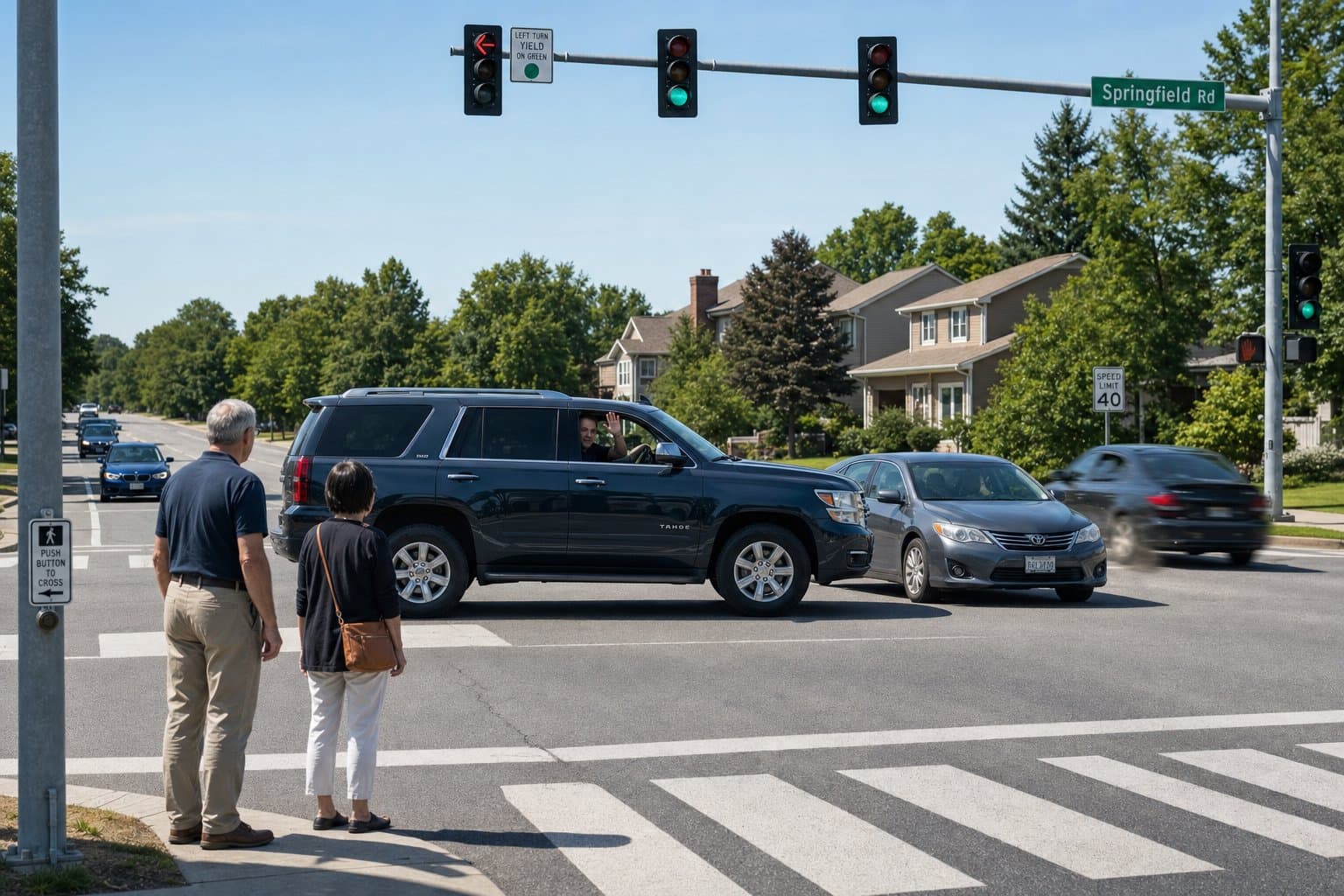
The scenario typically unfolds on multi-lane roadways, busy thoroughfares, or congested intersections. A driver, hereafter referred to as the "waver," has the legal right of way but chooses to bring their vehicle to a complete stop. This decision is often born out of a misguided sense of altruism, an attempt to be helpful, or simply impatience with a stagnant traffic situation. The waver then signals—via a hand wave, a nod, or flashing headlights—to a driver waiting to pull out of a side street or parking lot, or to a pedestrian waiting to cross the road.
The fatal flaw in this interaction lies in the limitations of visibility, the physics of line-of-sight, and the asymmetry of information:
First, the yielding vehicle inherently creates a massive visual obstruction. By stopping in the nearest lane, the waver physically blocks the turning driver’s or the pedestrian's line of sight to the adjacent lanes. Modern vehicles, particularly larger SUVs and trucks, possess substantial A-pillars and wide bodies that completely eclipse approaching traffic. When the waver stops, they create a blind wall.
Second, the communication—the wave itself—is entirely private between the waver and the recipient. Drivers approaching from behind in the adjacent, unobstructed lanes are completely unaware of this secret interaction. They are simply following the standard flow of traffic, maintaining their speed, and assuming the road ahead remains clear and predictable.
Third, human communication via a hand wave is an inherently ambiguous gesture in a high-stakes environment. The waving driver may intend to communicate a limited message, such as, "I am yielding my specific lane to you." However, the receiving driver or pedestrian almost universally interprets the gesture as a blanket clearance, understanding it to mean, "The entire roadway is clear, and it is safe for you to cross all lanes."
When the recipient of the wave accepts the gesture and proceeds into the intersection, they frequently cross directly from behind the visual obstruction into the path of an oncoming vehicle traveling in the adjacent lane. The result is almost always a severe "T-bone" (broadside) collision or a direct pedestrian strike. In these highly specific situations, misguided politeness directly results in fatalities. The kinetic energy transferred in a broadside collision, where the impacted vehicle has minimal structural crumple zones to absorb the blow, makes these crashes particularly devastating. If you want a deeper breakdown of how intersection geometry and vehicle paths interact in crashes, see our guide on safer intersection designs and how they reduce traffic violence.

Statistical Analysis of Intersection Volatility
Intersections are mathematically the most volatile points on any roadway network because they represent the planned convergence of conflicting traffic paths. According to comprehensive analysis from the National Highway Traffic Safety Administration (NHTSA), intersections are exceptionally dangerous zones that demand total predictability. Between 1997 and 2004, the NHTSA reported nearly 64,000 fatalities resulting from over 57,000 intersection crashes, which equates to roughly 7,000 fatalities annually. The most frequently cited human errors in these crashes are the failure to obey traffic signals, accounting for 62 percent of errors, and the failure to properly yield to other traffic, which is present in a staggering 87 percent of these specific crashes.
To understand the systemic nature of these failures, it is necessary to examine the broader datasets provided by the National Safety Council (NSC). The NSC's analysis of the NHTSA's Fatality Analysis Reporting System (FARS) details the specific driver-related factors that contribute to fatal crashes. While the majority of vehicles involved in fatal crashes do not have a specific driver-related factor reported on the police report, among those that do, "Failure to yield right-of-way" ranks as the second most common human error, trailing only behind driving at unsafe speeds. For a bigger-picture look at how speeding, visibility, and intersection design all stack together, explore our overview on night driving safety and intersection risks.
| Top Driver-Related Factors in Fatal Crashes (NSC Analysis) | Percentage of Vehicles Involved |
|---|---|
| No driver-related factor reported | 63.7% |
| Speed too fast or unsafe | 18.8% |
| Failure to yield right-of-way | 8.4% |
| Careless driving | 7.6% |
| Improper lane usage | 5.2% |
Data Source: National Safety Council (NSC) analysis of NHTSA FARS data.
The persistence of right-of-way failures is heavily corroborated by regional and state-level data. In California’s Orange County, for example, the failure to yield the right of way and red-light violations are the definitive primary causes of intersection collisions. Between 2019 and 2021, Orange County witnessed 33,530 total crashes, resulting in 540 fatalities and over 47,000 injuries. State-level data from the California Highway Patrol's Statewide Integrated Traffic Records System (SWITRS) continually cites failure to yield as a significant primary collision factor, noting it is particularly deadly in pedestrian-related incidents.
Data from the Connecticut Crash Data Repository further illustrates the overwhelming concentration of danger at crossroads. In 2022, 32.17 percent of all accidents on Connecticut roads occurred in and around intersections. The structural design of the intersection heavily dictates the volume of crashes, with standard four-way stops proving to be the most complex for drivers to navigate safely.
| Connecticut Intersection Crash Statistics | Number of Accidents | Percentage of Intersection Accidents |
|---|---|---|
| 4-way intersections | 13,360 | 16.42% |
| T-intersections | 11,131 | 13.68% |
| Y-intersections | 925 | 1.14% |
| 5-point (or more) intersections | 324 | 0.40% |
| L-intersections | 270 | 0.33% |
| Roundabouts | 105 | 0.13% |
Data Source: Connecticut Crash Data Repository.
Demographic Vulnerabilities: Age and Intersection Complexity
The role of intersection complexity and the requirement for rapid, predictable decision-making increases significantly with the age of the driver. Navigating a situation where another driver is offering a "courtesy wave" requires complex cognitive processing regarding vehicle speed, gap acceptance, and spatial awareness. As drivers age, natural changes in cognitive processing speeds and visual acuity can make these calculations more difficult.
NHTSA data indicates a clear, undeniable upward trend in intersection-related crash proportions as the driver's age increases. This correlation suggests that situations requiring the negotiation of the right of way become progressively more hazardous over a driver's lifespan. Families thinking about how to protect older or younger drivers may also find it helpful to read our framework for choosing and managing a safer first car for teen drivers, since the same predictability principles apply at both ends of the age spectrum.
| Driver Age Bracket | Percentage of Crashes that are Intersection-Related |
|---|---|
| 21 to 24 years old | 26.7% |
| 25 to 54 years old | ~35.0% |
| 55 to 64 years old | 43.4% |
| 65 years and older | 53.9% |
Data Source: NHTSA Crash Statistics.
When analyzing these demographic shifts, researchers from the University of North Carolina Highway Safety Research Center found that older drivers involved in failure-to-yield crashes tended to make specific gap acceptance errors. The complexities of evaluating an ambiguous wave from another driver while simultaneously monitoring blind spots overwhelm the diminished processing capabilities of some older motorists, leading directly to broadside collisions.
The Danger of Unsignalized Intersections
The presence or absence of automated traffic controls heavily influences where right-of-way confusion leads to fatalities. Unsignalized intersections—where the "wave of death" is most prevalent because drivers are left to negotiate passage among themselves—see consistently high fatality rates nationwide. Drivers operating at unsignalized crossings must rely entirely on their understanding of the law and the predictability of others.
| Year | Total Traffic Fatalities | Fatalities Involving an Unsignalized Intersection | Fatalities Involving Red-Light Running (Signalized) |
|---|---|---|---|
| 2018 | 36,835 | 6,801 | 871 |
| 2019 | 36,355 | 6,977 | 856 |
| 2020 | 39,007 | 7,143 | 1,074 |
| 2021 | 42,939 | 7,752 | 1,202 |
Data Source: NHTSA Traffic Safety Facts.
The data demonstrates that fatalities at unsignalized intersections outnumber fatalities from red-light running at signalized intersections by a factor of nearly six to one. This stark contrast underscores the absolute necessity for strict, uncompromising adherence to right-of-way rules when traffic lights are not present to dictate the flow.
Vulnerable Road Users: Pedestrians and Cyclists
While multi-vehicle collisions account for significant property damage and injury, pedestrians and cyclists bear a disproportionate amount of the physical risk when predictability breaks down on the roadway. In 2024 alone, 7,080 pedestrians were killed in traffic crashes nationwide, equating to one pedestrian death every 74 minutes. Furthermore, an estimated 71,000 pedestrians were injured. These numbers are part of a broader pattern of rising roadway harm that we unpack further in our analysis of why modern car safety tech hasn’t stopped traffic violence.
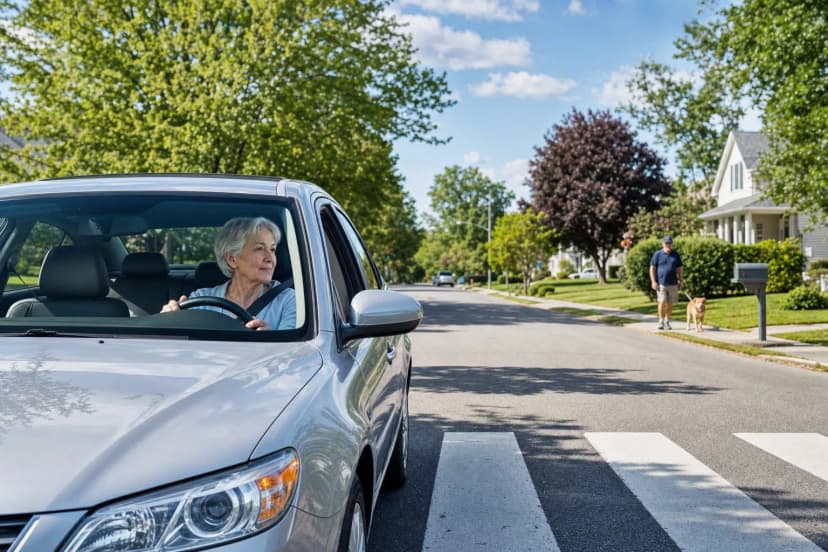
A substantial number of these incidents occur due to direct right-of-way violations. Common scenarios include vehicles making a left or right turn at an intersection and merging directly into the path of a pedestrian without yielding. However, the "wave of death" scenario is particularly lethal for those on foot. When a driver stops in the middle of a block or at an uncontrolled crosswalk to wave a pedestrian across, they obscure the pedestrian from vehicles traveling in the adjacent lanes.
Pedestrians are structurally unprotected; when a pedestrian steps out from the protective shadow of the yielding vehicle and into the adjacent lane, the resulting impact from a vehicle traveling at standard road speeds is frequently fatal. The State of California, which tracks active transportation safety rigorously, reported that pedestrian deaths have increased by 60 percent since 2011, with pedestrians representing over 25 percent of all traffic fatalities in the state.
Cyclists face similar, highly lethal threats. Bicycles operate at speeds faster than pedestrians but slower than motor vehicles, placing them in a precarious middle ground. When a well-meaning motorist stops to wave a cyclist across a lane or through an intersection without a stop sign, they invite the cyclist to cross into the path of oncoming traffic whose drivers have no indication that a bicycle is entering the roadway. The law mandates that drivers give cyclists three feet of clearance when passing, and it is entirely permissible for a motorist to cross a double yellow line to safely pass a slow-moving bicycle if the oncoming lane is clear. However, attempting to halt the flow of traffic to grant a cyclist special privileges creates a chaotic environment where the cyclist is ultimately the one who suffers the physical consequences of the confusion.
The Mechanics of Right-of-Way and Predictability
To fully understand why the "courtesy wave" is so destructive to community safety, it is necessary to examine the rigid, highly engineered framework of right-of-way laws. Right-of-way rules dictate exactly who must yield and who has the legal permission to proceed first in any given traffic scenario. These rules are not mere suggestions or guidelines for polite society; they are the fundamental language of vehicular communication.
According to comprehensive safety guidelines provided by the National Safety Council, AAA, and various state driving handbooks, right-of-way rules cover every conceivable interaction on the road to eliminate guesswork and standardize human behavior. A deep understanding of these rules reveals that deviation—even well-intentioned deviation—is inherently dangerous. If you want to see how right-of-way fits into a complete safety routine, including what you carry in your car and how you respond after a crash, check out our modern driver’s guide to staying road ready.
Four-Way Stops and Uncontrolled Intersections
The four-way stop is a common point of friction. The rule is simple: the first motorist or cyclist to arrive at the intersection and come to a complete stop possesses the right of way and must proceed first. If multiple vehicles arrive at the intersection at the exact same moment, the vehicle or cyclist situated on the right holds the priority. Crucially, if a pedestrian is present at a four-way stop, the pedestrian maintains absolute priority and has the right of way regardless of which vehicle arrived first. Refusing to take one's rightful turn at a four-way stop in order to wave another driver through creates a cascading effect of hesitation among all other waiting drivers, drastically increasing the likelihood of a collision.
The Unprotected Left Turn
Executing a left turn without the protection of a dedicated green arrow is one of the most hazardous maneuvers in daily driving. During an unprotected left turn, the turning driver is legally required to yield to all oncoming vehicles, bicycles, and pedestrians. The driver must use their turn signal and wait patiently in the correct lane until the oncoming traffic gap is large enough to complete the maneuver without forcing any other driver to brake or alter their speed. When an oncoming driver abruptly stops to wave a left-turning vehicle across their lane, they invite the turning vehicle to cross blindly into the adjacent right lane, setting the stage for a catastrophic T-bone crash.
Entering Traffic, Merging, and Roundabouts
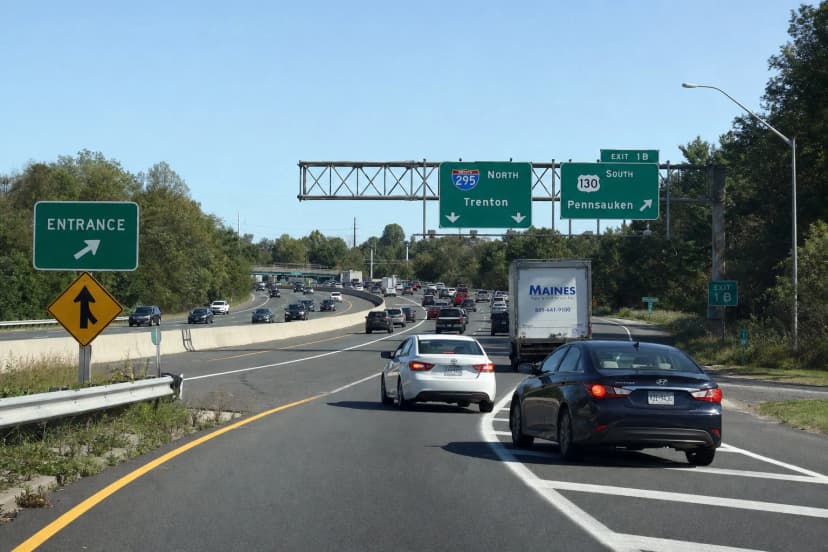
When merging onto a highway, entering a main road from a private driveway, or joining a roundabout, the entering vehicle must yield the right of way to all current traffic already occupying the roadway. Safe entry requires the driver to wait for a natural opening or gap between the waves of traffic that provides sufficient distance to accelerate safely. Vehicles already circulating within a roundabout have absolute right of way over those waiting to enter. Stopping inside a flowing roundabout to let an entering vehicle join is a severe violation of traffic engineering principles and almost guarantees a rear-end collision.
Malfunctioning Traffic Signals
If an intersection's traffic signals lose power or begin flashing red in all directions, the intersection legally converts to a four-way stop. Drivers must treat the intersection exactly as they would standard stop signs, yielding to the vehicle that arrived first or the vehicle on the right, unless an active traffic controller or law enforcement officer is on-site actively directing the flow of vehicles.
Mountain Roads and Narrow Passages
On narrow, steep inclines—such as mountain passes—where two vehicles meet and cannot safely pass each other due to the width of the road, the vehicle facing uphill retains the right of way. The physics of vehicle operation dictate that reversing uphill is significantly more difficult and dangerous. Therefore, the vehicle facing downhill is legally required to back up until there is enough space for the uphill vehicle to safely pass.
The Limits of Useful Politeness
True driving etiquette involves actions that enhance predictability and optimize the flow of traffic, rather than subvert the rules. Safe, useful courtesy habits include signaling intentions at least 100 feet before turning or changing lanes, yielding to merging traffic through efficient "zipper merging" techniques when lanes narrow, staying out of the left passing lane when cruising below the speed of traffic, and maintaining a safe four-second following distance to allow for adequate reaction times.
Conversely, stopping in the middle of a busy, flowing main road to let a vehicle pull out from a side street is an act of false politeness that creates massive rear-end collision risks. Drivers traveling behind the yielding vehicle are predicting continuous forward movement; they are not anticipating an abrupt, unsignaled stop to accommodate a single left-turning vehicle. When a driver breaks the chain of predictability, they prioritize the convenience of one individual over the safety of the entire community.
The Legal Trap: Civil Liability for "Nice" Drivers
The dangers of the "wave of death" are not strictly physical; they extend deep into civil liability, personal injury law, and financial ruin. A common and deeply held misconception among everyday drivers is that waving someone through an intersection is a harmless, unenforceable gesture that carries no legal weight. In reality, the judicial system has routinely found that a waving driver actively assumes a legal duty of care, and they can be held financially responsible if their gesture directly results in an accident.
When a motorist signals another driver to proceed, they transition from a passive participant in the traffic ecosystem to an active director of it. By issuing a command or giving clearance, they assume a responsibility to ensure that the instruction they are giving is actually safe to follow. The courts have established robust legal precedents that penalize drivers who issue unsafe waves.
Precedent-Setting Case Law in New Jersey
In the state of New Jersey, the courts have consistently ruled that a waving driver assumes a strict duty of reasonable care.
- Thorne v. Miller, 317 N.J. Super. 552 (1998): This landmark case established the foundational rule for waving liability in the state. The trial judge ruled that if a motor vehicle operator gestures to another motorist to facilitate traffic movement, that waving driver is legally charged with the responsibility to do so using reasonable care. If a breach of this duty results in foreseeable injuries, the waving driver is subject to direct liability.
- La Russa v. Four Points at Sheraton Hotel, 360 N.J. Super. 156 (2003): The Appellate Division expanded on the Thorne ruling, emphasizing that even the most minor gestures establish a legal duty. The court explicitly stated that "even the simplest gesture, such as a friendly waive by a motorist signaling another motorist to pull out in front of him, created a duty of care." The court reasoned that it is entirely foreseeable that a driver waved into traffic will rely on that gesture, making the risk of harm resulting from the gesture "serious".
- Lopez v. Allstate (Recent Case): In a more recent trial illustrating the complexity of these crashes, a third-party driver was waved forward into traffic by an unidentified motorist who subsequently fled the scene. The third-party driver relied on the wave to enter the roadway and collided with the plaintiff's vehicle, which was traveling legally in the adjacent right lane. The defense attempted to argue that the third party did not actually rely on the wave, or that doing so was unreasonable. However, the trial resulted in a jury award for the plaintiff, reinforcing the legal stance that relying on a waving driver's signal can be a primary factor in assigning liability and awarding damages.
Assumption of Duty in Indiana
The legal concept of "assumption of duty" was heavily tested and affirmed in the Indiana Court of Appeals case Key v. Hamilton.
- The Incident: In this tragic scenario, a driver named Key stopped his vehicle in a growing line of traffic and waved another vehicle through to make a left turn across his lane. As the waved vehicle crossed the lane, it collided violently with a motorcyclist, Hamilton, who was traveling legally in the adjacent, unobstructed lane.
- The Legal Standard: The trial court grounded Key's liability in a principle embodied by the Restatement (Second) of Torts 324A. This legal concept dictates that anyone who gratuitously undertakes to render services to another, which they should recognize as necessary for the protection of a third person, is subject to liability if their failure to exercise reasonable care results in physical harm to that third person.
- The Verdict: The jury evaluated the actions of all parties and returned a verdict holding the waving driver (Key) to be 45 percent at fault for the accident. The driver who accepted the wave was found 50 percent at fault, and the motorcyclist was assigned 5 percent fault. The jury calculated total damages at an astounding $2.2 million, which was subsequently reduced under Indiana's Comparative Fault Act to a $990,000 judgment.
These legal precedents deliver a sobering, undeniable message to well-intentioned motorists: signaling another driver to turn in front of oncoming traffic effectively forces the waving driver to assume total responsibility for an outcome they cannot control. If a driver's line of sight is obstructed by a truck or SUV, trusting the judgment of a waving driver in another lane is a catastrophic and legally indefensible risk.
The Insurance Paradigm: When Politeness Costs Millions
The legal precedents surrounding the "wave of death" directly influence how massive auto insurance carriers investigate, assign fault, and distribute financial payouts following a complex intersection crash. In an at-fault state, the driver determined to have caused the crash bears the ultimate financial burden for vehicle replacement, property damage, and the staggering costs of emergency medical bills.
Insurance adjusters evaluate claims based heavily on strict adherence to codified right-of-way laws. Because no individual strictly "owns" the public road, traffic codes determine who had legal permission to occupy a specific spatial coordinate at a given time. Failing to yield the right of way is one of the leading reasons auto insurance claims are reduced, complicated by prolonged litigation, or outright denied.
When an accident occurs under a "wave of death" scenario, multiple drivers can share the financial blame under comparative fault laws, which are widely recognized in states like Washington and Florida.
- The Turning Driver: The driver who actively accepted the wave and pulled into traffic is frequently found to be primarily at fault by insurance carriers. Companies like Progressive base their fault determinations on the strict fact that the turning driver failed to yield to the lane that possessed the legal right of way, regardless of who waved them through. Relying on a stranger's hand gesture does not legally excuse a driver from their foundational duty to confirm a lane is clear before entering it. Adjusters will frequently assign 70 to 100 percent of the liability to the driver making the unprotected turn.
- The Waving Driver: As established by the aforementioned case law, if evidence or witness testimony can prove that a driver actively encouraged an unsafe maneuver via a wave, their insurance policy may be tapped for comparative negligence. They can be held financially responsible for a significant percentage of the damages.
- The Driver with the Right of Way: In a frustrating twist of insurance logic, even the driver who was traveling legally in the clear lane can face partial fault. If an insurance adjuster utilizes traffic camera footage or telematics to determine the legal driver was momentarily distracted, speeding, or driving too fast for weather conditions when the collision occurred, their compensation can be severely reduced.
The financial ramifications of these specific crashes are immense. A "courtesy wave" that results in a severe T-bone collision or a pedestrian fatality can exhaust standard auto policy limits instantly, leading directly to personal financial ruin, wage garnishment, and devastating long-term injuries. Some insurance companies actively deploy aggressive strategies to minimize their payouts in complex intersection crashes, including offering rapid personal injury settlements before victims can fully evaluate their long-term medical needs. This adversarial environment makes it vital for drivers to prioritize absolute predictability and avoid creating ambiguous intersection scenarios entirely.
The Technological Shift: Evolution of Driver Communication
A core underlying reason the "wave of death" persists—despite the overwhelming statistical and legal evidence against it—is the fundamental human desire to communicate, assist, and connect with others. Historically, however, drivers have been trapped in isolated metal boxes, lacking the proper tools to execute this communication effectively or safely. For decades, motorists have relied on primitive, aggressive, or easily misinterpreted signals: flashing high beams, honking horns, extending middle fingers, and utilizing vague hand gestures to convey complex messages ("Your tail light is completely out," "Your dog looks dangerously hot in the back seat," "You left your coffee on the roof," or "Go ahead and turn"). Because these signals lack nuance, they generate the exact confusion that leads directly to intersection accidents.
To bridge this critical communication gap safely, technological advancements are rapidly shifting the paradigm from dangerous, real-time intersection gestures to secure, asynchronous, digital communication. Platforms utilizing standard license plates as unique, searchable identifiers have emerged as a viable method to facilitate this connection without requiring vehicles to interact physically on the roadway. Early iterations of this concept, such as applications like WheelBees, Plext, and PlateBuddy, pioneered the basic functionality of messaging an owner via their license plate to notify them of broken lights or to request they move a vehicle blocking a driveway.
However, the evolution of this technology has culminated in comprehensive, highly sophisticated community safety platforms like Carszy. Carszy operates as a robust driver-to-driver communication and community safety network that allows individuals to connect securely using license plate numbers as the primary identifier. For the Tech-Savvy Driver or the Commuter, this means that rather than relying on a dangerous physical wave to warn another driver of an impending hazard, users can utilize secure License Plate Messaging to send direct alerts while safely parked or via passenger assistance. The same tools can support everyday driving, from avoiding roadside hazards to coordinating help after a breakdown, and pair well with the emergency steps outlined in our guide to surviving highway breakdowns and roadside emergencies.
This platform represents a fundamental shift toward what is designated as "Human Media™"—a deliberate departure from the passive consumption of traditional "Social Media." Human Media focuses instead on driving real-world impact, accountability, and community safety. Carszy’s technology replaces the lethal ambiguity of hand signals with definitive, actionable digital communication. It empowers users to report dangerous driving, alert neighborhood watches to suspicious behavior, or contact an owner about a vehicle blocking a driveway, all without risking a confrontation.
For the Protective Parent or the Neighborhood Watch Lead, Carszy introduces advanced, community-mobilizing features like the VOIS™ (Vehicle of Interest Search). VOIS™ acts as a community-driven alert system explicitly designed to mobilize the public in locating vehicles involved in critical, time-sensitive incidents such as hit-and-runs, child abductions, or human trafficking. By routing all interactions through privacy-focused, US-based servers, the technology ensures user security while actively reducing law enforcement response times and fostering a culture of profound accountability on the roads.
By offloading the human need to communicate to a dedicated, secure digital platform, drivers are freed to focus their cognitive load entirely on the mechanics of safe, predictable vehicle operation while actually at the wheel.
Exhaustive Safety Protocols for Navigating the Roadway
To systematically dismantle the threat of the "wave of death" and drastically improve overall roadway safety, every category of road user must commit to a philosophy of predictability over politeness. The National Safety Council, alongside the comprehensive driving handbooks from AAA, outlines robust defensive driving techniques that serve as actionable safety protocols for handling complex traffic interactions. These protocols work best when paired with a solid understanding of other common risks like hydroplaning and bad-weather braking, which we cover in our piece on hydroplaning and wet-weather intersection safety.
For Drivers: Mastering Defensive Predictability
Defensive driving is formally defined as constantly identifying potential risky situations and responding proactively to prevent trouble before it occurs. Drivers must internalize the following techniques:
Never Direct Traffic
Drivers must strictly and absolutely resist the urge to wave other vehicles, cyclists, or pedestrians through an intersection or across a lane of traffic when it is not their legal turn. If a driver possesses the right of way, the safest action for the entire ecosystem is to proceed through the intersection at a consistent, predictable speed. You are not a traffic controller; do not attempt to act as one.
Refuse the Courtesy Wave
If a driver is waiting at a stop sign, parking lot exit, or attempting to make an unprotected left turn, and another driver stops to wave them through, the safest protocol is to unequivocally refuse the wave. Do not pull out into traffic. Avoid eye contact, shake your head "no," or gesture for the yielding driver to continue moving. Wait until the waving driver moves on, or wait until all lanes of traffic are visibly, undeniably clear and it is legally safe to proceed. Waiting an extra two minutes is vastly preferable to entering a blind intersection.
Maintain Safe Following Distances
To avoid rear-ending a "polite" driver who stops abruptly in the middle of a flowing road to grant a wave, drivers must maintain a minimum of a three-to-four-second following distance in clear conditions. This physical space provides the room needed to maneuver if traffic stops suddenly. If negative factors are present—such as darkness, rain, fog, or snow—an additional second of following distance must be added for each factor. When stopped behind another vehicle, ensure you can physically see where their rear tires meet the road to allow space for an evasive maneuver.
Execute Evasive Steering Safely
If a vehicle pulls out unexpectedly into your path due to a wave of death, rapid evasive steering is required. Drivers should maintain their hands at the 9 o'clock and 3 o'clock positions on the steering wheel at all times. This precise positioning provides 180-degree steering input without the need to remove hands from the wheel, offering maximum leverage, vehicle control, and quicker reaction times during sudden, violent swerves.
Utilize Proper Braking Dynamics
If an unexpected collision threat emerges from a blind lane, correct braking technique is the difference between a near-miss and a fatality. For vehicles equipped with Anti-Lock Brakes (ABS), the driver must press the brake pedal down firmly and hold it; the computer will automatically pulse the brakes to prevent lockup, allowing the driver to continue steering. For older vehicles without ABS, drivers must use squeeze (threshold) braking—keeping the heel on the floor and using the toes to apply pressure just to the point before the wheels lock up, maximizing deceleration without losing directional control.
Avoid Distractions and Weather Hazards
Distracted driving fundamentally impairs a driver's ability to react to unpredictable behavior. Technologies should be set up before shifting out of park, and phones must remain out of sight. Furthermore, adverse weather drastically reduces tire traction. In snow, ice, or heavy rain, drivers must slow down significantly to regain the traction levels experienced in dry conditions, as advanced safety sensors (ADAS) can become blocked and disabled by ice buildup. Good tire health and tread depth are also critical here; for a deeper dive into how tires protect you in split-second emergencies, read our guide to tire safety and blowout prevention.
For Cyclists: Navigating Vehicle Interactions
Cyclists exist in a highly vulnerable physical space. When encountering well-meaning but unpredictable drivers, cyclists must prioritize maximum visibility and strict adherence to the law.
Refuse Unsafe Yields
Cyclists frequently encounter motorists who stop at green lights or inside traffic circles to "politely" let the bicycle cross. Cyclists must treat these waves with extreme skepticism, as vehicles in adjacent lanes will absolutely not anticipate a cyclist entering the roadway against the flow of traffic. Cyclists must ensure all approaching traffic from all directions is fully stopped before proceeding.
For Pedestrians: Surviving the Crosswalk
Pedestrians are the most exposed users of the roadway and suffer catastrophic, life-altering injuries in right-of-way disputes.
Interpret the Wave Correctly
A pedestrian must train themselves to treat a wave from a driver solely as a signal that the specific, individual driver is yielding their vehicle. It must never be interpreted as an "all-clear" signal indicating that the entire road is safe to cross.
Confirm Every Individual Lane
Before stepping out from the protective, visual shadow of a yielded vehicle, the pedestrian must stop at the exact edge of the next lane, lean their head forward cautiously, and visually confirm that the adjacent lane is completely free of approaching traffic before continuing.
Establish Eye Contact
Whenever physically possible, pedestrians should make direct, sustained eye contact with the drivers in every single lane they intend to cross. If the driver cannot be seen through the glare of the windshield, the pedestrian must assume the driver cannot see them. Furthermore, pedestrians should only cross at marked crosswalks or intersections; crossing mid-block removes legal protections and drastically increases the risk of being struck.
Conclusion
The intersection of human psychology and motor vehicle operation often yields incredibly dangerous paradoxes. The natural human instinct to be kind, polite, and accommodating is a virtue in almost every aspect of daily life; however, behind the wheel of a multi-ton kinetic machine moving at high speeds, this instinct transforms into a severe liability.
Driving is not a social exercise or a venue for practicing etiquette. It is a highly regimented, physics-bound mechanical system that relies entirely on the predictable, uniform adherence to a shared set of rules. The "wave of death" perfectly encapsulates the tragic, irreversible consequences of abandoning that predictability. When a driver voluntarily surrenders their legal right of way, they create massive visual blind spots, foster false senses of security in vulnerable road users, and force adjacent drivers into deadly, unavoidable broadside collisions. The exhaustive data from the NHTSA and the NSC unequivocally proves that intersections are the most lethal points on our roadways, and the failure to yield predictably remains a primary, dominating driver of fatalities. Furthermore, the legal and insurance frameworks rigorously penalize those who disrupt traffic flow, placing heavy, life-altering financial burdens on drivers whose "politeness" directly results in a crash.
To cultivate a genuinely safe, secure community on the road, everyday drivers, commuters, and neighborhood advocates must systematically replace random acts of intersection kindness with rigorous, uncompromising predictability. By utilizing modern, privacy-focused communication platforms like Carszy for necessary vehicle-related alerts, firmly obeying the established right-of-way laws without exception, and acting exactly as other drivers expect them to act, individuals can significantly reduce the risk of catastrophic accidents. Predictable driving also pairs with smarter choices long before you reach an intersection, including how you acquire a vehicle with the right safety tech and protections for your family.
True, meaningful driving courtesy is achieved not by waving someone through a stop sign out of turn, but by being the safest, most predictable vehicle on the road.
Download the app to stay connected, report hazards safely, and help build a predictably safer driving community.
Frequently Asked Question
What should a driver do when another motorist waves them through an intersection out of turn?
When a driver is waiting at a stop sign, exiting a parking lot, or attempting to make an unprotected left turn and an approaching vehicle unexpectedly stops to wave them through, the waiting driver should firmly decline the gesture. The safest and most legally sound protocol is to remain entirely stationary and refuse to enter the intersection. Because the yielding vehicle physically obstructs the view of adjacent traffic lanes, proceeding forward risks a severe, multi-lane T-bone collision with a vehicle that is not anticipating your presence. The waiting driver should avoid eye contact, shake their head, or clearly signal for the yielding driver to continue moving. The right of way should only be taken when the driver can independently verify that all lanes are visibly clear and it is legally safe to proceed under standard traffic laws, completely independent of the other driver's wave. For more step-by-step guidance on what to do if that poor choice by someone else does lead to a crash, you can also review our checklist for handling fender benders safely and legally.
- ( https://www.theautopian.com/the-wave-of-death-please-stop-trying-to-be-nice-by-yielding-when-you-have-right-of-way/ )
- ( https://www.slocumblaw.com/blog/impacts-of-right-of-way-laws-on-your-insurance-claim/ )
- ( https://epsteinostrove.com/navigating-liability-the-duty-of-waving-drivers-in-new-jersey-traffic/ )