EV Charging Etiquette in 2026: Navigating the Unwritten Rules, Mitigating Conflict, and Fostering Community Safety
The Evolution of the Modern Charging Landscape
As the automotive industry progresses deep into 2026, the transition from internal combustion engine (ICE) vehicles to electric vehicles (EVs) has firmly crossed the threshold from early adoption into mainstream normalization. However, this rapid and monumental technological shift has exposed a critical friction point: the physical, digital, and social infrastructure required to keep these modern vehicles moving. Unlike traditional petroleum refueling, which relies on a highly standardized, century-old model of rapid transactional throughput, electric vehicle charging represents a profoundly complex socio-technical system. It demands extended dwell times, relies on a fragmented patchwork of public and private network providers, and requires drivers across all demographics to share a remarkably limited public resource.
This environment has birthed an entirely new behavioral framework. What began just a decade ago as a niche subculture of early adopters trading technical tips on internet forums has rapidly evolved into a high-stakes arena of public etiquette and social regulation. The unwritten rules of public charging—governing everything from physical parking spacing to digital battery percentage limits—are no longer merely polite suggestions. They have become essential survival mechanics for navigating a grid that is under immense stress. When these unwritten rules are violated, whether intentionally or through simple ignorance, the resulting friction often manifests as "charger rage." This phenomenon is a modern iteration of road rage, uniquely localized to parking lots, retail centers, and highway charging hubs.
Understanding EV charging etiquette in 2026 requires more than a simple list of dos and don'ts. For the everyday commuter, the tech-savvy driver, the protective parent, and the neighborhood watch advocate, it requires a comprehensive analysis of the underlying infrastructure deficits. It demands a deep look into the demographic disparities in charging access, the psychological drivers of resource conflict, and the evolving legal frameworks attempting to codify community standards. Furthermore, it necessitates a thorough exploration of emerging technological solutions, such as driver-to-driver communication platforms and community safety networks, which seek to de-escalate conflicts and foster a culture of communal accountability on the increasingly electrified road.
The Quantitative Reality: Infrastructure Stress and the Rise of "Charge Anxiety"
The primary catalyst for the intense societal focus on charging etiquette is the stark mathematical disparity between electric vehicle adoption rates and the deployment of reliable charging infrastructure. The modern EV driver faces a landscape where the vehicles themselves are highly capable, featuring advanced battery chemistries and impressive ranges, but the supporting networks are fraught with reliability issues and extreme congestion.
The Paradigm Shift from Range Anxiety to Charge Anxiety
Historically, the dominant psychological barrier to EV adoption was "range anxiety"—the persistent fear that a vehicle's battery would not contain enough energy to reach a specific destination. By 2026, continuous advancements in battery density, aerodynamics, and vehicle efficiency have largely mitigated this concern for the average driver. The modern electric vehicle can easily handle daily commutes and substantial road trips without entirely depleting its reserves, especially when drivers follow broader modern driver safety and trip-planning practices that integrate charging stops into their route.
Instead, the psychological paradigm has shifted dramatically toward "charge anxiety". This modern phenomenon is characterized not by the fear of a dead battery in transit, but by the intense dread of arriving at a public charging station only to find it completely inoperable, occupied by idling vehicles, or blocked by gasoline-powered cars. A comprehensive academic analysis of over one million consumer reviews reveals that mass consumers are highly sensitive to this specific type of anxiety. A single negative experience—such as a commuter arriving at a station with a critically low state of charge, only to find unresponsive digital screens, payment network failures, or severed cables—can permanently alter a driver's perception of EV viability. This anxiety is not unfounded; it is supported by extensive, nationwide data regarding network performance and mirrors the way drivers react to other unreliable, high‑risk points in the road network, like dangerous intersections and weather-compromised roads.
Analyzing Network Failure Rates and the Anatomy of a Dead Charger
The reliability of the public charging network remains a persistent vulnerability that directly fuels interpersonal conflict at the stations. According to comprehensive industry intelligence reports tracking network performance through the end of 2024 and into 2025, exactly 20% of EV owners were completely unable to charge their vehicles upon arriving at a public station. This represents a steady deterioration of service, increasing from a 19% failure rate in the third quarter of 2024, and an 18% failure rate in the fourth quarter of 2023.
The anatomy of a failed charging attempt is multifaceted. When drivers encounter a station where they cannot initiate a charge, the root causes distribute across a wide spectrum of mechanical, logistical, and social failures.

| Primary Cause of Public Charging Failure | Percentage of Total Failed Attempts |
|---|---|
| Charger hardware out of service or malfunctioning | 62% |
| No charger available / Queuing wait times too long | 18% |
| Digital payment system rejection or software crash | 11% |
| Charging cable or connector physically damaged | 9% |
| Station blocked by non-charging vehicle (ICEing) | 7% |
Table 1: Distribution of primary causes for failed public charging attempts based on nationwide network data analytics.
The data indicates that while hardware and software malfunctions constitute the majority of immediate failures, a full 25% of charging failures are directly related to human behavior and severe infrastructure scarcity (specifically, excessively long waits and illegally blocked chargers). Furthermore, the latest data shows that when survey participants were asked to attribute the cause of their charging failures, 72% pointed specifically to older charging stations that have fallen into a severe state of disrepair, particularly those operated by smaller, independent owner-operators rather than massive national networks. This intersection of mechanical unreliability and intense human competition forms the crucible in which modern charging etiquette is forged, much like the way outdated road designs and failing signals fuel collisions at poorly designed intersections.
Navigating Data Deserts and Real-Time Uncertainty
The data landscape itself is highly fractured, compounding the physical stress of the infrastructure. A rigorous field experiment and subsequent study analyzing major interstate corridors found that only 34% of EV charging stations provide accurate, real-time status updates to digital mapping applications. This critical lack of connectivity creates vast "data deserts" spanning stretches of 150 to 350 miles where drivers cannot verify if a charger is operational, in use, or blocked before they physically arrive at the location.
For the everyday commuter or the family embarking on a road trip, this uncertainty is paralyzing. The inability to plan routes with absolute certainty exacerbates the tension surrounding the chargers that are known to be functional. When a driver has traversed a 200-mile data desert to reach a functional station, their tolerance for poor etiquette, charger hogging, or ICEing from other drivers is virtually nonexistent. That same driver is likely already stressed from monitoring weather, visibility, and road hazards—similar to the pressures described in guides on night driving and dangerous intersections—so even small lapses in charging etiquette can feel like personal threats.
Future Grid Projections and the Escalation of Demand
The urgency of establishing, communicating, and enforcing functional charging etiquette is magnified by long-term future projections. Estimates from national laboratories indicate that by the year 2030, there will be 33 million electric vehicles operating on national roadways. Supporting this massive fleet will require an estimated 28 million individual charging ports.
While 80% of this staggering demand is expected to be met by private Level 1 and Level 2 chargers installed at single-family homes, the public network will bear the intense burden of long-distance travelers, multi-unit dwelling residents, and high-density urban commuters. Specifically, models project that the national network will require at least 182,000 public Direct Current (DC) fast-charging ports to support those with no access to consistent off-street parking. As the density of EVs on the road increases exponentially, the physical public charging space will become increasingly contested. Adherence to strict community standards will transition from a matter of simple politeness to a critical component of functional civic life, just as communities have learned to adopt roundabouts and traffic-calming designs to reduce conflict at busy intersections.
Demographic and Geographic Disparities in Charging Access
The tension surrounding public charging is not distributed equally across the population. Geographic location, housing types, and socio-economic factors heavily influence an individual driver's reliance on public infrastructure, and consequently, their exposure to charging-related conflicts. Understanding these disparities is essential for community watch advocates and tech-forward citizens aiming to build a more equitable driving environment.
Spatial Inequity and the Multi-Family Housing Dilemma
A landmark academic study utilizing artificial intelligence to analyze over 470,000 user reviews alongside federal Department of Energy location data revealed stark inequities in the distribution and reliability of EV charging stations. The research identified that disadvantaged communities possess 64% fewer public charging stations per capita within a three-mile radius compared to more affluent, high-income areas.

The disparity becomes even more pronounced when examining housing demographics. Renters living in multi-family housing—such as dense apartment complexes and older condominiums—face the steepest barriers to EV ownership. These individuals experience access to 73% fewer chargers per capita relative to residents living in wealthier, single-family neighborhoods.
For affluent homeowners with dedicated driveways and garages, EV ownership offers unparalleled convenience; the vehicle is plugged in overnight and leaves the home every morning with a fully replenished battery. For the renter, however, EV ownership requires a constant, highly logistical reliance on the public grid. This reliance is deeply compounded by the fact that chargers located in disadvantaged or highly dense rental communities are statistically more likely to be broken or suffering from severe software errors. This creates a dual barrier: fewer available ports to begin with, and a substantially higher probability of malfunction at the ports that do manage to exist. Consequently, drivers in these demographics experience significantly higher baseline levels of charge anxiety and are forced much more frequently into competitive, high-stress public charging scenarios—very similar to how residents in under-served neighborhoods face higher risks at dangerous crossings and poorly designed streets.
Case Study: The Infrastructure Gap in Orange County, California
The dynamic of high electric vehicle adoption clashing violently with infrastructure limits is clearly observable in high-growth, affluent regions such as Orange County, California. The region currently boasts an EV population exceeding 80,000 vehicles, with an astonishing annual registration growth rate surpassing 60%. Projections suggest this number could surge to between 150,000 and 200,000 vehicles within a brief three-to-five-year window.
However, Orange County possesses a unique demographic and architectural layout. A massive percentage of its residents live in multi-unit dwellings, which notoriously lack the internal electrical infrastructure to support dedicated vehicle charging for every tenant. Furthermore, older, established neighborhoods face strict physical constraints—such as narrow streets, limited street parking, and outdated local electrical grid capacities—which make the installation of traditional, fixed charging equipment prohibitively expensive or physically impossible. Adding to the complexity, workplace charging availability remains highly inconsistent across different corporate employers.
Because permanent public stations require years of municipal planning, zoning approvals, electrical trenching, and construction, the physical supply of chargers cannot possibly match the explosive consumer demand. This structural failure has led to the rise of mobile charging solutions—innovative services that deliver Level 3 fast charging directly to a vehicle's physical location. For the massive renter demographic in Southern California, mobile charging is rapidly transitioning from a luxury convenience to an absolute necessity. Yet, for the tens of thousands of drivers who continue to rely heavily on fixed public stations at local grocery stores and retail parks, the intense concentration of vehicles competing for a handful of functional ports elevates the necessity for strict adherence to community charging etiquette and for broader equity-focused street-safety policies that recognize who is most exposed to risk.
State-by-State Contrasts: Wyoming vs. The Urban Core
The geographic disparity is not limited to neighborhood levels; it stretches across entire states and nations. An analysis of the 2026 EV Charging Station Report highlights the massive differences in infrastructure density based on local policies and EV adoption curves. Wyoming, for instance, leads the nation in terms of charging stations per electric vehicle, boasting 22.2 chargers for every 100 EVs registered in the state. This incredibly high ratio is the result of state policies that prioritized the aggressive deployment of federal funds to build infrastructure along major rural highways before mass adoption occurred, resulting in a low-stress charging environment for the 1,500 registered EV owners in the state.
In sharp contrast, heavily populated urban centers face intense bottlenecks. Outside of central hubs like London, which possesses roughly one-third of all EV chargers in the United Kingdom, drivers in more rural or suburban European locales report waiting up to a day and a half to access a functional charger due to rampant charger hogging and severe equipment shortages. This incredible contrast highlights that charging etiquette is highly contextual; what is a minor inconvenience in Wyoming is a critical disruption to daily life in a dense suburban commuter hub, just as winter commuters in snowbelt cities must learn different habits to share icy roads and treacherous intersections safely.
The Evolution of Public Charging Culture and the Phenomenon of Behavior Lag
The culture of public EV charging is a fascinating study in behavioral evolution and the sociology of shared spaces. The modern gasoline station took many decades to develop its standard operating procedures, architectural flow, and social norms. By contrast, EV charging culture is attempting to solidify its norms in real-time, amidst a rapidly expanding user base and constantly, unpredictably shifting hardware technologies.
Because the process of initiating a charge is complex—often involving downloading proprietary applications, creating digital accounts, pre-loading payment methods, and managing complex digital handshakes between the car's computer and the charging station—the process is rarely intuitive. Drivers are thrust into a steep learning curve. Crucially, the vital rules governing behavior at the station are almost never posted on official signage; they are unwritten norms learned through trial, error, silent observation, and occasionally, harsh social reprimand from fellow drivers.
The Persistence of Behavior Lag
One of the most interesting aspects of this rapidly evolving culture is "behavior lag," a sociological phenomenon wherein social habits and etiquette rules persist long after the technological limitations that created them have been engineered away.
A prime example observed at modern charging hubs is the "spacing habit." Observers at large stations, particularly Tesla Supercharger hubs, often notice vehicles parked with intentional, empty stalls between them, mimicking a checkerboard pattern. To the uninitiated observer or new EV owner, this appears to be a simple, polite courtesy—akin to leaving an empty urinal between patrons in a public restroom. However, the habit actually originated from a very strict technical requirement. Early generations of DC fast chargers physically paired adjacent stalls together, meaning that two vehicles parked side-by-side had to share a single power module. If two vehicles charged simultaneously in a paired set, their charging speeds could drop by as much as 50%. Manufacturers explicitly recommended skipping a stall whenever possible to maximize thermal management and charging performance. Today, modern charging architecture dynamically and intelligently distributes power across all stalls simultaneously, making the physical spacing rule technologically obsolete. Yet, veteran drivers continue to practice it out of habit, and new drivers mimic the behavior, cementing it as an unwritten social norm despite its technical irrelevance.
Similarly, the "broken charger signal" has emerged as a silent, physical language among drivers navigating unreliable networks. When a user encounters a malfunctioning unit with a blank screen or a failed payment reader, they will often leave the heavy charging connector resting slightly outside of its holster, or deliberately draped over the top of the unit. This subtle, unwritten visual cue saves the next driver the immense frustration of backing into the spot, opening their charging port, navigating the payment app, and wrestling with the heavy, liquid-cooled cable, only to discover the station is dead.
The Tenets of Modern EV Charging Etiquette in 2026
As the infrastructure strain has intensified and federal funding for network expansion faces political and bureaucratic delays, the fluid and unspoken habits of early adopters have hardened into a rigid set of community expectations. Adherence to these tenets is the primary mechanism for everyday commuters and tech-savvy drivers to avoid conflict in public spaces.
1. The Absolute Principle of Active Charging
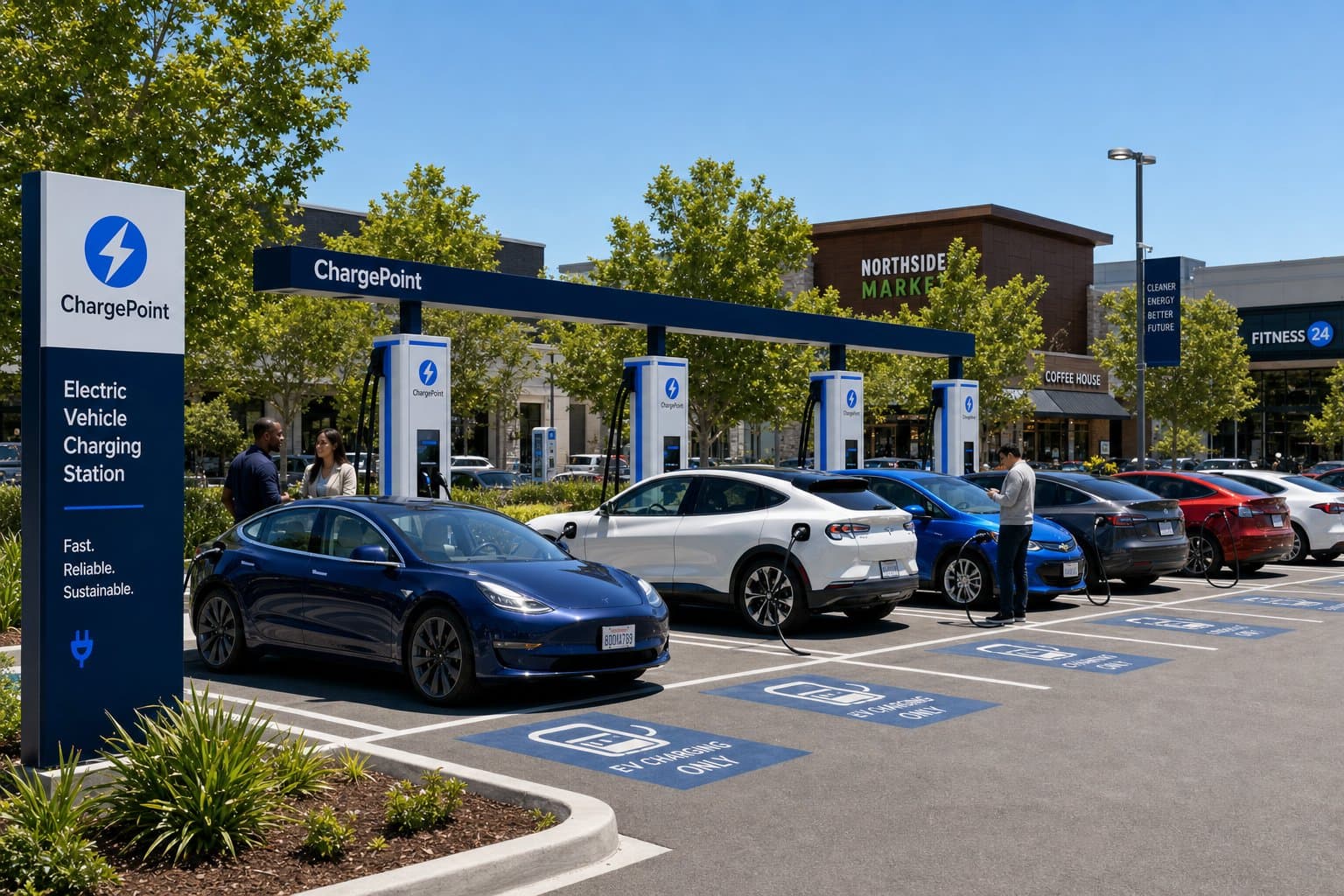
The single most fundamental rule of modern EV etiquette dictates that a charging space is an active utility node, not a premium VIP parking spot. If a vehicle is not actively connected to the station and actively drawing electrical power, it possesses no legitimate claim to occupy the space.
This critical rule is most frequently violated in highly congested urban environments and retail centers, where charging stations are strategically placed in highly desirable, high-visibility locations near the front entrances of shopping malls, grocery stores, or transit hubs. Drivers will frequently plug in their vehicles, wander off to conduct hours of shopping or sit down for a long meal, and leave the vehicle parked long after the battery has reached 100% capacity. This behavior, colloquially known as "charger hogging," drastically reduces the mathematical throughput of the station and creates severe bottlenecks.
Ethical charging requires the driver to meticulously monitor their charging session via their smartphone application and relocate the vehicle promptly—ideally within five to ten minutes—once the charging session completes. Many major network operators have begun enforcing this social norm through financial penalties, implementing steep "idle fees" that bill the user by the minute if the cable remains connected after the battery is full. Treating the charger as a shared utility rather than a personal parking perk is as important to community safety as following zipper-merge and lane-sharing etiquette on busy highways.
2. Respecting the 80% DC Fast Charging Threshold
Perhaps the most mathematically crucial etiquette rule involves respecting the battery's state of charge (SoC) ceiling during high-demand periods. At Level 3 DC fast chargers, it is considered a severe breach of community etiquette to charge a vehicle past the 80% or 90% threshold when other drivers are actively waiting in the queue.
This unwritten rule is deeply rooted in the underlying physics and chemistry of lithium-ion battery management systems. To protect the highly volatile battery cells from overheating, swelling, and permanent thermal degradation, the electric vehicle's internal computer significantly throttles the rate of electrical intake as the battery nears maximum capacity. For example, a vehicle that can accept a massive 150-kilowatt surge of power at a 20% state of charge may throttle its intake down to a mere 10 or 15 kilowatts when it reaches 85%. Consequently, the time it takes to painstakingly trickle-charge the battery from 80% to 100% can often take longer than the entire time it took to charge from 10% to 80%.
Occupying a high-speed, high-demand 350-kilowatt stall while the vehicle slowly trickles the final 10% of energy is incredibly inefficient and highly inconsiderate to commuters waiting to get home. Responsible, tech-savvy drivers aim to arrive at the charger with a low state of charge, rapidly pull the maximum current to reach roughly 80%, and then promptly vacate the stall to allow the next vehicle access to the high-speed hardware. If a driver truly needs 100% capacity for an extreme long-distance journey, they are expected to move to a slower Level 2 destination charger to finish the top-off. This "good citizenship" approach mirrors how careful drivers clear intersections quickly to avoid gridlock and reduce crash risk at complex junctions.
3. Hardware Matching and Network Appropriateness
Ethical charging also demands that drivers intimately understand their specific vehicle's hardware capabilities and match them to the appropriate public infrastructure. The grid offers various tiers of charging, primarily Level 2 (Alternating Current charging, adding roughly 20 to 30 miles of range per hour) and Level 3 (Direct Current fast charging, capable of adding hundreds of miles in under thirty minutes).
A frequent and intense source of community friction involves drivers of Plug-in Hybrid Electric Vehicles (PHEVs) utilizing high-speed DC fast chargers. Most PHEVs possess relatively small batteries and lack the internal hardware required to accept rapid DC currents. This means that even if they are plugged into a massive rapid charger, they will only charge at their maximum slow, AC-equivalent rate (often just 3.6kW to 7kW). Furthermore, PHEVs possess internal combustion engines that can easily be utilized with gasoline to complete a journey if the battery is depleted.
When a PHEV occupies a high-speed DC fast charger to slowly trickle power for hours, it directly prevents a fully electric Battery Electric Vehicle (BEV)—which possesses no backup gas engine and is entirely dependent on the electrical grid to avoid being stranded on the side of the highway—from utilizing the infrastructure. Etiquette clearly dictates that BEVs must be prioritized at rapid chargers, while PHEV drivers should utilize Level 2 destination chargers or rely on their hybrid gas engines during times of high public demand. This kind of self-awareness is similar to how responsible drivers choose safer routes and better-timed trips after experiencing a near-miss or close call on the road.
4. Cable Management, Spatial Awareness, and Accessibility
The physical manipulation of charging hardware carries its own distinct set of community safety responsibilities. Unlike the highly uniform, standardized layout of traditional gas pumps, electric vehicles feature charging ports located on vastly different areas of the vehicle chassis—ranging from front bumpers and rear quarter panels to front fenders. This extreme physical variability requires drivers to park precisely and carefully to ensure the heavy, liquid-cooled cables can reach the port without excessive mechanical strain.
Poor spatial awareness often results in vehicles parking diagonally across multiple bays, blocking adjacent stalls, or encroaching on pedestrian thoroughfares. Furthermore, failing to return the connector neatly to its holster creates severe physical safety hazards. Cables left lazily on the ground present major tripping risks for pedestrians, are highly vulnerable to being run over and crushed by other vehicles, and can suffer catastrophic damage to their delicate high-voltage contact pins if dropped in puddles of water or packed into winter snow. Maintaining a neat, tidy station is paramount for the safety and accessibility of all community members, particularly disabled drivers who may struggle to navigate around discarded cables.
5. The Absolute Prohibition of Unplugging Another Vehicle
Under almost zero circumstances is it considered acceptable for one driver to physically unplug another driver's vehicle without explicit, prior, established permission. In the early, highly collegiate days of Level 2 workplace charging, a loose norm existed where a driver might leave a physical note on their dashboard giving permission to coworkers to unplug their vehicle once the dashboard charging indicator light turned green.
However, in the modern, mass-market landscape of high-voltage DC charging, physically touching another individual's vehicle or interrupting an active financial transaction tied to a smartphone app is considered a severe boundary violation. Unplugging a car can trigger loud vehicle security alarms, lock the charging cable into the port, or corrupt the digital handshake between the station and the network, resulting in billing errors. It is a primary trigger for intense altercation and must be avoided entirely.
The Psychological Phenomenon of "Charger Rage" and Resource Conflict
When the complex, unwritten rules of charging are violated within an environment of severe physical scarcity, the result is the rapidly growing phenomenon of "charger rage." Academic analyses of human interactions at EV charging stations indicate that these locations function as highly volatile "affective nodes". In these confined spaces, deep frustrations regarding limited resources, broken infrastructure, and perceived entitlement circulate and intensify, transforming routine infrastructure use into competitive, emotionally charged negotiations.
The transition to electric vehicles fundamentally disrupts the traditional, deeply ingrained expectations of car ownership. At a traditional gas station, the rapid throughput of liquid fuel minimizes interpersonal conflict; drivers are separated by pumps, refueling takes minutes, and individuals rarely have time to interact, let alone formulate arguments over access. Charging infrastructure, conversely, requires prolonged occupation of physical space. Drivers must sit and wait, often in incredibly close physical proximity to one another, observing exactly how others are utilizing the resource.
The Four Manifestations of Charger Rage
Extensive research identifying the core patterns of charging conflict categorizes charger rage into four distinct, observable manifestations:
Queuing and Access Disputes: Unlike gas stations, which often feature clear, linear traffic flows and dedicated entrance lanes, charging stations are frequently retrofitted into standard parking lots without any defined queuing lanes. When multiple vehicles arrive simultaneously with low batteries, disputes over who holds the rightful place in the invisible queue frequently escalate into shouting matches.
ICEing and Occupancy Violations: The most volatile interactions occur when non-EV drivers occupy charging spaces, or when EV drivers overstay their sessions and refuse to move. These actions are perceived as direct, intentional violations of fairness.
Unplugging Altercations: Intense physical confrontations sparked by one driver taking matters into their own hands and physically removing the high-voltage charging cable from another vehicle. This is often driven by the perception that the first vehicle had finished charging and was unfairly monopolizing the plug.
Systemic and Ambient Frustration: Rage directed not necessarily at a specific individual driver, but at the sheer presence of long lines, broken equipment, unresponsive customer service hotlines, and inadequate infrastructure planning.
At the very heart of these conflicts are perceived violations of fairness and reciprocity. The EV community relies heavily on a fragile social contract of mutual aid and efficient resource rotation. When a driver hogs a charger or a gas vehicle blocks a bay, it shatters that social contract, eliciting feelings of entitlement and deep, visceral frustration.
The Perception vs. Reality of Conflict
While it is vital to understand the mechanics of charger rage, it is equally important for the protective parent or the community watch advocate to acknowledge the massive role of digital mediation in skewing the perception of this issue. Viral videos on social media frequently showcase extreme, sensationalized instances of entitled drivers blocking stations or escalating into physical road rage. These visceral depictions of conflict serve to heighten anxieties among prospective EV buyers, making charging stations appear as lawless battlegrounds.
However, statistical reality suggests a much calmer baseline. While social media algorithms highlight explosive confrontations, these events remain relatively rare compared to the total volume of daily charging sessions. With tens of thousands of public ports in operation globally, the vast majority of human interactions are polite, cooperative, and entirely unremarkable. Furthermore, early adopters and rural EV drivers frequently report highly positive, inquisitive interactions with the general public, suggesting that hostility is often localized to highly congested metropolitan charging hubs rather than a universal societal rejection of EVs. Nonetheless, the threat of conflict is a known, unpredictable variable that drivers must actively plan for and navigate.
The Scourge of "ICEing": Intentional Blockades and Legal Frameworks
Of all the violations of charging etiquette, absolutely none elicits a stronger, more desperate reaction than the act of "ICEing." ICEing is the act of parking an internal combustion engine (ICE) vehicle—such as a traditional gasoline or diesel car, or a large pickup truck—in a physical space explicitly reserved for electric vehicle charging, without making any use of the electrical equipment.
The term originated years ago during the early, highly publicized rollout of the Tesla Supercharger network. During this period, organized groups of drivers operating large, modified pickup trucks would intentionally block multiple charging stalls in coordinated acts of ideological protest, occasionally harassing EV drivers who attempted to charge their vehicles. In certain extreme instances, these individuals even mockingly clamped the expensive charging cables to the load beds of their trucks. Today, while intentional, aggressive ICEing still occurs as a form of cultural retaliation, many modern instances are simply the result of sheer ignorance, highly crowded parking lots where drivers seize any available spot, or a general societal disregard for specialized infrastructure.
The physical impact of ICEing is absolute and devastating: it entirely neutralizes the utility of the charging station. For a battery electric vehicle operating near a zero percent state of charge, arriving at a critical waypoint only to find an ICEd station represents a catastrophic failure of the transport network. It leaves the driver completely stranded with zero immediate recourse, effectively acting as an impassable blockade.
Legislative Responses: Decoding California Vehicle Code 22511
To combat the severe disruption caused by ICEing, sophisticated jurisdictions have slowly transitioned from relying on polite social etiquette to implementing hard, enforceable legal frameworks. California, serving as the vanguard for global electric vehicle policy, utilizes California Vehicle Code (CVC) Section 22511 to strictly regulate parking and charging spaces.
Under the strict language of CVC 22511, it is explicitly and unconditionally illegal to park a motor vehicle in any on-street or off-street space that has been specifically designated by a local authority for EV charging, unless the vehicle is both an electric vehicle and is actively in the process of charging. The statute cleverly and purposefully eliminates the "hogging" loophole; simply owning an expensive EV does not grant the driver the legal right to park in the space if the vehicle is not physically connected to the hardware and drawing electrical power.
Violations of this specific vehicle code classify as formal traffic infractions. Any person found responsible for a violation is subject to standard traffic violation penalties, which include steep fines that easily exceed $100. Furthermore, the code legally authorizes local police, or the property owner, to physically tow the offending vehicle away from the charging stall entirely at the vehicle owner's expense.
The Complexities and Failures of Enforcement on Private Property
Despite the existence of robust legislative language like CVC 22511, the actual, real-world enforcement of anti-ICEing laws remains highly problematic and incredibly frustrating for drivers. This is primarily because the vast majority of public EV chargers are not located on public streets, but on privately owned commercial real estate, such as massive shopping malls, grocery store parking lots, and gated corporate campuses.
Municipal police departments generally do not patrol or enforce vehicle parking codes on private retail property without explicit authorization, engagement, and presence from the property owner. For an ICEing vehicle to be legally towed from a commercial charging space, the property management company must possess properly formatted, legally compliant signage detailing the specific towing regulations and CVC references, and a representative must personally notify law enforcement to initiate the removal process.
In daily practice, commercial property managers have absolutely zero financial or operational incentive to aggressively monitor charging spaces, field angry complaints from EV drivers, or engage in the highly confrontational, litigious process of towing a paying customer's gasoline vehicle. Consequently, EV drivers who find a station ICEd often discover that despite the clear existence of CVC 22511, there is no immediate, practical mechanism for enforcement. By the time a property manager is successfully contacted during business hours, convinced to act, and a tow truck is finally dispatched, the offending ICE driver has usually completed their shopping and departed, leaving the EV driver frustrated, delayed, and uncharged.
This massive enforcement gap has prompted some charging networks operating in international markets to implement expensive physical solutions, such as floor-locking mechanical barriers that can only be lowered via scanning a QR code with a verified EV driver's smartphone application, though these physical barriers remain highly expensive to install and incredibly difficult to scale across millions of ports.
Enhancing Community Safety and Managing Risk at the Charging Station
Beyond the logistics of parking and the frustration of broken screens, public charging stations introduce unique safety dynamics that must be considered, particularly for the protective parent or the solo commuter. Charging stations are often relegated to the far, poorly lit corners of massive retail parking lots, or located in isolated industrial parks adjacent to major highways. Because charging takes between 20 and 45 minutes, drivers are forced to remain stationary in these potentially vulnerable locations for extended periods.
Addressing the Misconceptions of EV Battery Fires
From a physical safety standpoint, a primary concern often amplified by social media algorithms is the risk of catastrophic battery fires during charging. To manage community safety accurately, it is essential to rely on empirical data rather than sensationalism. Research analyzing global EV fire data indicates that approximately 15% of all EV battery fires occur while the vehicle is connected to an active charging station. This includes vehicles that go into thermal runaway while connected to AC or DC chargers, or within an hour of being disconnected.
However, experts clearly emphasize that it is a common misconception that the mere presence of an EV charger automatically increases fire risk. In normally operating, road-registered electric vehicles, it is physically and electrically impossible for the battery to be "overcharged" to the point of ignition while using an electrically compliant unit installed by a qualified professional. The battery management system is designed to sever the connection long before a critical threshold is reached. While the 15% statistic highlights the critical need for urban planners to consider emergency response access, hydrants, and water run-off at mega-charging hubs, the everyday driver utilizing compliant public networks should not fear spontaneous combustion.
The far more pressing safety concern is not thermal runaway, but human vulnerability. A driver stranded at an ICEd charger at midnight, or a family waiting in a dark lot for an hour, requires robust tools to ensure their physical security and connectivity to the broader community.
Technological Solutions: De-escalation and the Rise of Human Media™
Because municipal law enforcement is poorly equipped to manage parking-level disputes in real-time, and because direct physical confrontations carry immense, unpredictable safety risks, the operational void is increasingly being filled by sophisticated, community-driven technological solutions. Resolving charging conflicts and ensuring personal safety requires a digital mechanism for communication that entirely bypasses the need for face-to-face confrontation, which can rapidly escalate into dangerous road rage.
It is precisely in this critical space that platforms like Carszy have emerged as indispensable tools for modern drivers. Operating as a highly advanced driver-to-driver communication and community safety platform, the technology utilizes public license plates as unique, secure identifiers to connect individuals on the road without exchanging personal phone numbers or names.
De-escalating Charging Conflicts through License Plate Messaging
The most immediate, actionable application of this technology at the modern charging station is License Plate Messaging. Consider the highly common scenario: an EV driver arrives at a fully occupied charging hub with a critically low battery. They observe a vehicle that has clearly finished charging—the screen indicates 100%—but the owner is nowhere to be found, and the vehicle remains locked and plugged in.
Traditional etiquette and older infrastructure leave the waiting driver with terrible options: wait indefinitely in frustration, leave a passive-aggressive physical note on the windshield, or risk a severe verbal altercation if they decide to wait and confront the owner upon their return.
Through secure license plate lookup via a mobile app integration (available on Android and iOS), the waiting driver can simply input the plate number of the idling vehicle. They can then send a polite, entirely anonymous text message or automated alert notifying the owner that their charge is complete and that others are waiting in the queue. This digital mediation completely removes the physical proximity, anonymity, and emotional heat from the interaction. It allows for the polite, clear communication demanded by core etiquette guidelines without risking personal safety. Similarly, if a driver absolutely cannot move their vehicle immediately due to a family emergency or a physical mobility issue, they can broadcast their status securely, managing the expectations of those waiting and de-escalating the tension of the invisible queue.
Empowering the Neighborhood Watch and Promoting Accountability
The utility of vehicle-based network platforms extends far beyond the logistics of charging lot management. It represents a fundamental paradigm shift away from traditional "Social Media"—which is characterized by engagement algorithms prioritizing outrage and division—toward the concept of "Human Media™." This is a framework entirely focused on real-world impact, actionable community accountability, and tangible safety.
Beyond alerting a fellow driver to a mundane issue like a set of headlights accidentally left on, or a critical danger like a dog left in a hot car during a charging session, the technology fundamentally enhances neighborhood security. Features such as VOIS™ (Vehicle of Interest Search) empower community watch advocates, proactive citizens, and protective parents to mobilize in real-time. By leveraging a vast network of observant, connected drivers, communities can rapidly locate specific vehicles involved in critical, time-sensitive incidents—such as hit-and-runs in parking lots, dangerous highway driving, or severe cases of road rage originating from charging disputes.
Operating strictly on privacy-focused, US-based servers, these geolocation safety features promote safer roads by instituting a persistent layer of communal accountability. When dangerous driving, aggressive intentional ICEing, or charger vandalism is observed, the ability to report, track, and communicate acts as a powerful psychological deterrent. Ultimately, this connected approach reduces law enforcement response times, prevents minor etiquette breaches from escalating into physical violence, and fosters a highly connected, safety-conscious driving public capable of self-regulating the transition to the electric future—complementing other community-led efforts to document and report dangerous driving around intersections.
Frequently Asked Questions
What is the safest and most polite way to handle a vehicle blocking a designated charging space?
Drivers are strictly advised never to engage in direct physical confrontation or tamper with another individual's vehicle, as this frequently escalates into dangerous road rage incidents. If an electric vehicle is idling long past its charge time, utilizing a secure driver-to-driver communication platform to send a polite, anonymous alert via the license plate is the safest and most effective approach. If an internal combustion engine vehicle is illegally parked (ICEing), drivers should document the incident and notify the property management or utilize designated reporting applications, avoiding any aggressive retaliation.
Is it ever acceptable to unplug another electric vehicle if they are at 100%?
No. Unplugging another vehicle without explicitly established permission is considered a severe violation of charging etiquette and community boundaries. Interrupting a session can interfere with digital payment authorizations, damage hardware, and trigger loud vehicle security alarms. Drivers must wait for the owner to return, use digital communication tools to politely request the port, or contact network customer service for assistance.
Why do some charging stations charge extremely high fees if a vehicle remains parked after the battery is full?
These financial penalties are known as "idle fees," and they are strategically implemented by network operators to discourage charger hogging. Because public charging infrastructure is a severely limited physical resource, idle fees financially penalize drivers who treat active charging stalls as standard parking spaces. This ensures that high-speed equipment remains rapidly available for those who genuinely require electricity to continue their journey.
Conclusion and Future Outlook
The landscape of electric vehicle charging in 2026 is defined by a delicate, high-stakes balance between rapid, mass-market technological adoption and the severely lagging reality of physical grid infrastructure. The unwritten rules of public charging—ranging from strict adherence to the 80% fast-charging threshold to the absolute prohibition of ICEing—serve as the vital social contract holding this strained network together.
As the sheer volume of electric vehicles continues to surge toward the massive 2030 projections, the societal reliance on these etiquette tenets will only intensify. The dramatic shift from "range anxiety" to "charge anxiety" proves that the modern automotive challenge is no longer about the technical capability of the vehicle, but the reliability, accessibility, and shared management of the public grid. Overcoming severe spatial inequities, particularly for renters in high-density areas, and mitigating the intense psychological triggers of "charger rage" will require much more than just pouring concrete and installing more copper cables.
It requires a fundamental, sociological shift in how drivers interact with one another in shared spaces. The integration of community safety platforms, advanced license plate messaging, and secure driver-to-driver communication represents the necessary evolution of road safety in the electric era. By actively replacing dangerous anonymity and physical confrontation with digital accountability, Human Media™, and polite mediation, the driving community can successfully navigate the intense friction of limited infrastructure. Download a driver-to-driver communication app today to stay connected, protect your community, and ensure that our shared roads remain safe as we continuously move forward into the electric future, alongside other evidence-based strategies to respond safely to crashes and protect vulnerable road users.
- (https://source-ev.com/articles/charging-etiquette-best-practices-for-ev-drivers)
- Charging Etiquette | EVgo
- (https://www.mazdausa.com/resource-center/ev-charging-etiquette)