How to Buy a Used Car Without Getting Scammed: A 2026 Guide to VIN Checks, Title Washing, and Hidden Damages
The automotive marketplace of 2026 presents an incredibly complex and frequently hazardous environment for the everyday driver. Whether you are a protective parent seeking a safe and reliable commuter vehicle for your newly licensed teenager, a commuter looking to upgrade your daily ride without breaking the bank, or a neighborhood watch advocate concerned about the vehicles moving through your community, the stakes have never been higher.
To understand the current landscape of automotive fraud, we must first look at the economic pressures driving it. Earlier in the decade, the average price of a brand-new vehicle surged past the $50,000 threshold, representing a massive escalation from the roughly $38,000 average seen in 2020. This intense economic pressure systematically priced millions of consumers out of the new car market, forcing an unprecedented volume of buyers into the used vehicle sector. However, this massive surge in demand, coupled with consumers' desperate desire to stretch their purchasing power, has inadvertently fostered a golden age for automotive deception.
Scammers, unscrupulous dealerships, and highly organized criminal syndicates have adapted to this modern market with sophisticated digital, legal, and logistical tactics. The days of simply kicking the tires and looking for a "lemon" are over. Today, buyers must be prepared to identify highly organized title washing operations, untraceable digital odometer rollbacks, and the clandestine interstate trafficking of dangerously compromised flood vehicles. For the modern, tech-savvy driver, understanding the underlying mechanics of these scams is no longer optional—it is a critical prerequisite for your financial security and your physical safety on the road. For a broader look at how vehicle design and policy affect crash risk, see our guide on pedestrian and cyclist safety and how smarter streets protect everyone who shares the road.
The Diagnostic of Deception: Unpacking the 2026 Complaint Data
To fully grasp the magnitude of the problem, we must look at the hard data generated by consumer protection agencies. The sheer volume of automotive-related disputes underscores the severity of the crisis facing the everyday commuter. Data released by the California Bureau of Automotive Repair (BAR) for the 2025-2026 fiscal year highlights widespread and deeply entrenched consumer grievances across the state.
Within a single reporting period, the bureau logged thousands of complaints, revealing a marketplace fraught with peril for the uneducated buyer. When we analyze the raw data, the distribution of these complaints provides a clear roadmap of where the most significant dangers lie.
California Bureau of Automotive Repair (BAR) Complaint Statistics (2025-2026)
| Complaint Category | Number of Complaints | Percentage of Total |
|---|---|---|
| Engine Repair and Engine Performance | 1525 | 32% |
| General Repair and Maintenance | 866 | 18% |
| Used Car Lots | 369 | 8% |
| Vehicle Purchase Complaints | 320 | 7% |
| Smog | 270 | 6% |
| Towing and Storage | 155 | 3% |
| Unlicensed Activity | 80 | 2% |
Data Source: California Bureau of Automotive Repair Enforcement Statistics, October 2025
The fact that 32% of all complaints center around engine repair and performance is a massive red flag for used car buyers. These are rarely simple maintenance misunderstandings; they frequently represent catastrophic mechanical failures that occur shortly after a vehicle is purchased from a disreputable source.
Furthermore, the specific allegations leveled against automotive businesses and used car lots span a staggering array of deceptive practices. The BAR records detail complaints involving false advertising, bait and switch tactics, and gross negligence. The data specifically highlights issues such as contractual breaches, false and misleading statements, and outright fraud. If you’re trying to protect yourself and your family from these kinds of failures, pair this buying checklist with a year‑round driver’s safety and emergency-kit guide so a bad car doesn’t turn into a roadside crisis.
A particularly concerning subset of these complaints involves emissions tampering, specifically "Clean Piping" and "Clean Plugging". These are highly technical forms of fraud where a clean vehicle's emissions profile or digital diagnostic signature is substituted for a failing vehicle's data during a smog check. This ensures that a heavily polluting, mechanically compromised used car is granted a passing certificate and pushed onto the market, leaving the buyer with a vehicle that cannot be legally registered the following year without thousands of dollars in repairs.
When analyzing the specific allegations related strictly to vehicle purchases, the data from earlier in 2026 shows a concentration in warranty disputes and contractual deceit. There were 113 complaints specifically regarding warranty repairs, 106 regarding new/used vehicle warranties, 84 for contractual issues, 75 for negligence, and 66 for false and misleading statements. This data paints a picture of a retail environment where verbal promises are routinely broken, and written contracts are manipulated to the detriment of the consumer.
The Digital Odometer Epidemic: A $3,300 Invisible Tax
Historically, altering a vehicle's mileage was a laborious physical process. It required the illicit mechanic to dismantle the dashboard, access the instrument cluster, and manually manipulate the mechanical gears of the odometer—a process that was time-consuming and often left obvious visual evidence of tampering, such as scratched plastic or misaligned numbers. However, the automotive industry's complete transition to fully digital odometers, which was initially intended to bolster security and accuracy, has ironically democratized odometer fraud for the digital age.
The Vulnerability of Digital Dashboards
Odometer rollbacks occur when bad actors alter the mileage data stored within a vehicle's electronic control modules (ECMs) to make the car appear significantly less driven than it actually is. Because a lower mileage reading directly correlates to a significantly higher resale value and a false perception of mechanical reliability, the financial incentive for this crime is immense.
As modern vehicles have transitioned from mechanical to digital systems, tampering has become incredibly common due to the wide availability of inexpensive, aftermarket electronic tools. Scammers can now purchase devices online that plug directly into a vehicle's OBD-II (On-Board Diagnostics) port beneath the steering wheel. With a few taps on a connected laptop or smartphone, they can rewrite the digital mileage codes in a matter of minutes, completely erasing tens of thousands of miles of wear and tear from the vehicle's history.
The competitive nature of the 2026 used car market has acted as an accelerant for this crime. As Faisal Hasan, the vice president of Data Acquisition at CARFAX, explains, the affordability pressures of the modern market have made buyers hypersensitive to price. Scammers recognize that consumers do not want to spend as much money, so they artificially manufacture "desirable" inventory by digitally shaving miles off heavily used vehicles.

The Staggering Scale of Mileage Fraud
The resulting data indicates an alarming, national escalation of this crime. Industry analysis reveals that an estimated 2.45 million vehicles currently navigating United States roads are suspected of possessing rolled-back odometers. This figure represents a dramatic 14 percent year-over-year increase from 2025, which is a sharp and dangerous acceleration compared to the relatively modest 4 percent increase observed between 2023 and 2024.
The financial ramifications for the protective parent or the daily commuter are severe. Vehicles subjected to odometer tampering in the current market inflict an average financial loss of approximately $3,300 upon the unsuspecting buyer. This invisible tax manifests not only in the inflated initial purchase price but also in accelerated depreciation, unexpected maintenance costs, and the premature, catastrophic failure of critical components—such as timing belts and transmissions—that have endured vastly more physical wear than the digital dashboard indicates.
Geographic Concentrations of Mileage Tampering
The prevalence of this digital manipulation is not distributed evenly across the country. An analysis of the CARFAX data reveals stark geographic concentrations, often aligning with massive populations and high-volume vehicle turnover rates, as well as distinct regional spikes in criminal activity.
| National Rank | State | Estimated Vehicles with Rolled-Back Odometers |
|---|---|---|
| 1 | California | 532,200 |
| 2 | Texas | 333,900 |
| 3 | Florida | 109,000 |
| 4 | New York | 104,000 |
| 5 | Illinois | 92,500 |
| 6 | Pennsylvania | 77,400 |
| 7 | Georgia | 76,700 |
| 8 | Virginia | 74,000 |
| 9 | Arizona | 69,000 |
| 10 | North Carolina | 59,000 |
Data source: CARFAX 2025/2026 National Odometer Fraud Analysis
While California leads the nation in absolute volume with over half a million affected vehicles—a total that far exceeds any other state—other regions are experiencing the most rapid acceleration of the crime. States exhibiting the largest year-over-year percentage increases in suspected rollbacks include Montana (a staggering 33 percent increase), Tennessee (30 percent), Arkansas (28 percent), Oklahoma (25 percent), Kansas (24 percent), New Jersey (21 percent), and Florida (20 percent).
To combat this invisible tax, consumers must abandon the assumption that digital displays are infallible. The most effective countermeasure relies on historical documentation rather than dashboard readings. By utilizing comprehensive vehicle history reports, buyers can cross-reference the currently displayed mileage against records captured during routine maintenance, emissions inspections, and previous title transfers. A sudden drop in recorded mileage between a 2023 dealer service visit and a 2026 private sale listing is a definitive indicator of fraud.
Furthermore, physical inspections remain a vital layer of defense. Buyers must look for unusual physical wear and tear on the clutch, brake, or gas pedals, the steering wheel, and the driver's seat bolsters. If a vehicle claims to have only 30,000 miles, but the brake pedal rubber is worn down to the metal, the digital reading is a lie. To put these risks in context with other dangerous road conditions, you can also review our playbook on driving safely in extreme weather and at dangerous intersections.
Automotive Identity Theft: The Mechanics of VIN Cloning
Beyond simple mileage manipulation, the most sophisticated scammers engage in full-scale automotive identity theft. These operations pose an existential threat to the consumer's financial investment, as the resulting purchase can be legally confiscated by law enforcement without any compensation to the defrauded buyer.
Every legally manufactured vehicle possesses a unique Vehicle Identification Number (VIN), serving as the automobile's permanent fingerprint. Vehicle cloning is a highly lucrative criminal enterprise wherein this unique identity is stolen and replicated to mask a stolen vehicle.
The Lifecycle of a Cloned Vehicle
The operational lifecycle of a VIN cloning scam follows a precise and highly organized methodology. Enterprising criminals begin by scouting public spaces—such as dealership lots, mall parking lots, or residential streets—to locate a legally owned, well-documented vehicle of a specific make and model. The criminals record the legitimate VIN, which is easily visible through the driver's side windshield.
Subsequently, the syndicate steals an identical make and model vehicle. Using specialized manufacturing equipment, the perpetrators create counterfeit VIN plates reflecting the legitimate, legally registered number they previously recorded. They then remove the true VIN tags from the stolen vehicle and carefully install the counterfeit plates, effectively creating an illegal "twin" of the legitimate car.
Armed with forged ownership documents, the criminals frequently transport the cloned vehicle across state or international borders. This geographic displacement capitalizes on higher market prices in different regions and intentionally exploits the lack of rapid cross-verification between disparate state licensing agencies. Because most state motor vehicle departments do not rigorously check for duplicate ownership when an out-of-state ownership document is surrendered, the odds of immediate discovery are fairly low.
The Devastating Consequence for the Buyer
For the unsuspecting consumer, the consequences of purchasing a cloned vehicle are catastrophic. If you buy a cloned vehicle, it is never legally yours, regardless of how much money you paid the scammer.
When law enforcement inevitably discovers the VIN switch—often during a routine traffic stop, a subsequent attempt to register the vehicle, or a deep mechanical inspection where secondary, hidden VINs on the engine block are checked—the vehicle is immediately confiscated by the police. The automobile is then returned to the original, legitimate owner or to the insurance company that paid out the initial theft claim. This leaves the defrauded buyer entirely without transportation, still on the hook for any auto loan they may have taken out, and completely devoid of the capital they invested.
To mitigate this severe risk, buyers are strongly advised to utilize the National Insurance Crime Bureau's (NICB) VINCheck. This is a free public service provided by cooperating NICB member insurance companies, designed to assist consumers in determining if a vehicle has been reported as stolen, but not recovered, or has been reported as a salvage vehicle. Furthermore, buyers must meticulously verify that the VIN displayed on the dashboard matches the VIN stamped on the driver's side door jamb, the engine block, and all associated paperwork. If you ever witness a suspicious deal or a likely stolen car in motion, use community tools like VOIS and our guide to reporting dangerous drivers and vehicles of interest to help law enforcement safely.
Erasing History: The Interstate Shell Game of Title Washing
While VIN cloning masks a stolen car, another highly sophisticated scam known as "title washing" is designed to mask a structurally ruined car.
A vehicle's title is a state-issued legal document that not only proves ownership but also serves as the official, permanent record of the vehicle's physical state and history. When a vehicle suffers catastrophic damage—such as being totaled in a severe high-speed collision, gutted by an interior fire, or fully submerged in a flood—insurance companies declare it a total loss. Following this declaration, the state issues a "branded" title, permanently marking the vehicle's paperwork with designations such as "Salvage," "Rebuilt," or "Flood". This brand is legally intended to remain on the vehicle's record for its entire operational life, serving as a bright red warning flag to any future buyers that the vehicle has suffered severe structural or environmental trauma.
The Bureaucratic Loophole
However, criminal syndicates circumvent this vital safety safeguard through a bureaucratic exploitation process known as title washing. Title washing occurs when a protective title brand is illegally removed as paper documents are transferred between states, or when the physical documents themselves are altered or counterfeited.
This scam exploits the fundamentally fragmented nature of the American motor vehicle registration system. Because not all 50 states mandate the same rigorous mechanical inspections, and crucially, because states do not uniformly recognize the specific title brands issued by other jurisdictions, scammers can systematically move a damaged vehicle's paperwork across state lines. By repeatedly retitling the damaged vehicle in states with lax regulatory frameworks or differing brand definitions, the negative brands are eventually dropped from the new documents. The vehicle is then legally issued a "clean" paper title by the final state, completely obscuring its disastrous past.
The scale of this fraud is staggering, and it actively endangers the lives of commuters and families. Federal task forces and state attorney generals continuously battle these syndicates. In one prominent recent example, Pennsylvania Attorney General Josh Shapiro charged 30 individuals and 21 businesses in a massive, coordinated car-title washing operation, noting that the defendants systematically gamed the system to rack up millions in illegal profits while putting everyday consumers at severe physical risk. Industry analysts estimate that the sheer volume of title-washing fraud currently puts approximately 1 in every 325 used vehicles on the road with a hidden damage history.
The Digital Antidote: NMVTIS
The most potent defense against the interstate shell game of title washing is the National Motor Vehicle Title Information System (NMVTIS). Managed by the Department of Justice, this federal database requires all states, insurance carriers, auto recyclers, and salvage yards to report vehicle histories on a regular basis.
By utilizing an NMVTIS-approved data provider—such as vehiclehistory.gov, Carfax, or AutoCheck—buyers can bypass the localized, potentially washed state paperwork sitting in the seller's hand, and access a comprehensive, nationwide chronological history of the vehicle's title brands. This digital system guards effectively against interstate laundering by tracking the vehicle's status from the moment it leaves the assembly line, ensuring that a "Salvage" brand issued in Texas cannot simply disappear when the car is registered in California.
Unearthing the Invisible: Spotting Hidden Flood Damage
The consequences of purchasing a vehicle with a washed title are perhaps most acute and dangerous when the underlying hidden damage involves flooding. While cosmetic damage from a fender bender might be easy for a layperson to spot, flood damage acts as an insidious, creeping decay that fundamentally compromises the vehicle's mechanical integrity, its safety systems, and the health of its occupants.
The Hurricane Migration Phenomenon
At any given moment, industry data indicates that approximately 482,000 water-damaged vehicles are circulating on United States roads. A single aggressive hurricane season can add tens of thousands of submerged vehicles to this total; for example, the severe storms of early 2025 injected over 45,000 heavily flood-damaged cars into the automotive ecosystem between April and July alone. According to CarFax, recent hurricane seasons have resulted in as many as 347,000 vehicles sustaining flood damage.
A critical second-order insight derived from national vehicle tracking data is the phenomenon of "hurricane migration." While states like Florida and Texas logically lead the nation in the initial volume of flooded vehicles due to their coastal geography, these cars do not remain in the regions where the storms occurred. Scammers intentionally export these waterlogged vehicles to states where local consumers lack the situational awareness to look for water damage.
Consequently, CARFAX data frequently identifies massive concentrations of flood-damaged units turning up in states like Pennsylvania, Illinois, New Jersey, and California. These are regions that frequently experience minimal direct impact from the precipitating tropical storms. By moving the inventory across the country, fraudsters capitalize on the psychological complacency of buyers who simply do not intuitively associate a sunny Southern California car lot, or a dry Illinois dealership, with Gulf Coast hurricane flooding.
The Creeping Decay of Submersion
A flood-damaged car can be meticulously cleaned, detailed, and polished to look absolutely immaculate on the surface. A scammer can dry out the interior and ensure the car runs perfectly well during a standard ten-minute test drive. However, the long-term consequences are disastrous and unavoidable.
Water intrusion destroys complex engine components; if water mixes with the engine oil, it can cause catastrophic and permanent internal friction damage. Furthermore, modern vehicles are essentially rolling computers, chock full of sensitive electronic systems. Water is inherently hostile to electronics. While you might notice a flickering radio, more critical systems—such as the Advanced Driver Assistance Systems (ADAS) or the airbag deployment modules—may be silently compromised, failing to trigger during a life-or-death collision. In rare but documented instances, short-circuiting water-logged electronics can even result in spontaneous vehicle fires. Finally, the moisture trapped deep within the seat foam and insulation creates severe mold and mildew hazards that can trigger chronic respiratory distress for the driver and their family. For a deeper dive into how water, ice, and loss of traction affect your stopping distances and crash risk, see our explainer on hydroplaning and wet‑weather safety.
A Multilayered Inspection Protocol
Because vehicle history reports can be manipulated by scammers who simply do not report the flood damage to their insurance company, physical verification is absolutely paramount. Consumers must adopt a rigorous, multilayered inspection protocol to identify the subtle, physical tells of a submerged vehicle:
- Olfactory Indicators and Scent Masking: A pervasive musty odor is the most common and immediate sign of flood damage. However, scammers are aware of this. Buyers must be highly suspicious of older vehicles that feature brand-new carpeting, or cars that possess an overwhelmingly strong scent of industrial air fresheners, heavy perfumes, or ozone generators, which are frequently deployed to temporarily mask the smell of deep-seated mildew.
- Hardware, Fasteners, and Seat Mounts: While exterior body panels are heavily painted and treated to resist rain, the bare metal components hidden beneath the dashboard and seats are entirely unprotected. Buyers must physically inspect the seat rails, the mounting brackets, unpainted bolts, exposed hinges, and the metal structures near the brake and gas pedals. Pitted, orange rust, or a powdery white oxidation in these interior, unexposed areas indicates the vehicle was filled with standing water.
- Silt, Mud, and Waterlines: Water exposure leaves indelible physical evidence long after the water has receded. Consumers should inspect the vehicle's headliner, lift the floor mats, and feel the padding beneath the carpets near the firewall. Furthermore, buyers must actively search for fine silt, dried mud, or distinct waterlines left behind in hard-to-reach places: inside the glove compartment, within the spare tire well in the trunk, and pooled at the very bottom of the headlight and taillight housings. Fogged lenses with water droplets inside are a major warning sign.
- Upholstery Inconsistencies: Mismatched upholstery, or seats that appear suspiciously newer than the rest of the vehicle's interior wear-and-tear, can indicate that the original fabric was ruined by contaminated flood water and replaced cheaply to push the car onto the market. A highly effective detection method is to fully extend the seatbelts all the way to their limit; buyers should look for distinct water stains, discoloration, or mildew at the base of the retractors where water pools.

Electrical gremlins are the ultimate, undeniable legacy of a flooded car. Before starting the engine, buyers must turn the ignition to the accessory position and verify that every single warning light on the instrument cluster illuminates; scammers will sometimes remove the bulbs for the "check engine" or "airbag" warning lights to hide faults. During the test drive, buyers must repeatedly test the air conditioning, radio, turn signals, windshield wipers, heater, and interior dome lights. If a vehicle exhibits erratic behavior—such as the headlights illuminating when a door is slammed, or the radio powering on randomly—it is a near-certain indicator of deep-seated electrical corrosion resulting from submersion. For a seasonal lens on how water, snow, and ice transform risk at intersections, you can pair this with our winter guide on how communities win slippery streets and stop skids.
The Epidemic of Vehicle Theft and the Fraud Pipeline
To fully comprehend the used car fraud landscape, we must recognize that fraudulent sales are intrinsically linked to the broader epidemic of vehicle theft. The criminals orchestrating VIN cloning and title washing require a massive, steady supply of illicit vehicles.
In California, the scale of vehicle theft provides this very pipeline. While theft rates saw a decrease recently, the absolute numbers remain staggering. In 2024, California recorded 176,230 vehicle thefts, representing an estimated total value of $1.56 billion. While this marked a 13.14 percent decrease from the 2023 total, the sheer frequency—one vehicle stolen approximately every 2.94 minutes—ensures a constant flow of stolen assets that criminal enterprises attempt to launder back into the legitimate marketplace.
The types of vehicles targeted also provide insight into the mindset of the criminals. Of the 176,230 vehicles stolen in 2024, 43.44 percent were personal trucks and sport utility vehicles (SUVs), while 39.38 percent were standard automobiles.
The Most Frequently Stolen Vehicles in California (2024)
| Category | Top Targeted Models |
|---|---|
| Automobiles | Kia Optima (2015), Hyundai Elantra (2013), Hyundai Sonata (2013) |
| Trucks/SUVs | Chevrolet Silverado (2001, 2002, 2006) |
| Commercial | Freightliner (2016, 2019, 2015) |
Data Source: 2024 California Vehicle Theft Facts (CHP)
The prevalence of older Chevrolet Silverados and mid-2010s Kias and Hyundais highlights two distinct criminal motivations. The Kias and Hyundais are frequently targeted due to well-publicized ignition vulnerabilities, often used for joyriding or committing secondary crimes before being abandoned. Conversely, older trucks like the Silverado are highly prized for their interchangeable parts, or they are systematically stolen, their VINs cloned, and then resold to unsuspecting contractors or blue-collar workers looking for affordable work vehicles.
The Geographic Distribution of Auto Theft
The geographic data shows exactly where these syndicates operate most heavily. In 2024, 53.21 percent of all vehicle thefts in California occurred in Southern California (Los Angeles, San Diego, San Bernardino, Riverside, and Orange Counties), with Los Angeles County alone accounting for nearly 62% of that regional total. The San Francisco Bay Area accounted for 25.36 percent of thefts, while the Central Valley accounted for 11.31 percent.
A closer look at Orange County reveals the persistent, historical nature of this battle. The Orange County Auto Theft Task Force (OCATT), a multijurisdictional law enforcement program, has been tracking and combating this issue for decades.
Orange County Auto Theft Trends & Population Data
| Year | Orange County Population | Increase / Decrease in Thefts |
|---|---|---|
| 2018 | 3,222,498 | -11.4% |
| 2019 | 3,194,332 | -9.9% |
| 2020 | 3,186,989 | +20.52% |
| 2021 | 3,161,005 | +1.12% |
| 2022 | 3,151,184 | +2.08% |
| 2023 | 3,135,755 | -12.08% |
Data Source: Orange County District Attorney Statistics
The data shows significant volatility, with massive spikes in theft corresponding to the pandemic years (2020), followed by recent crackdowns. The financial toll is immense; historical OCATT data notes that losses to Orange County victims and insurance companies have topped $100,000,000, while the task force successfully recovered hundreds of vehicles worth millions of dollars. In Orange County specifically, older Honda models (such as the 1998 Civic and 1996 Accord) have historically dominated the top ten stolen lists, highlighting the enduring demand for reliable, easily stripped, or easily cloned commuter cars. If you’re unlucky enough to experience a crash or theft-related collision yourself, follow the calm, step‑by‑step protocol in our fender‑bender survival guide so you protect your legal rights and document evidence properly.
The Regulatory Shield: The 2026 California CARS Act
The alarming proliferation of sophisticated fraud, coupled with aggressive, exhausting, and deceptive sales tactics at traditional dealerships, eventually triggered significant legislative pushback aimed at protecting the consumer.
At the federal level, the Federal Trade Commission (FTC) attempted to curb these predatory practices by issuing the Combating Auto Retail Scams (CARS) Trade Regulation Rule in 2024. This federal mandate sought to enforce total price transparency across the nation and ban the sale of worthless add-on products. However, following intense lobbying and litigation from national automobile dealership associations, the United States Fifth Circuit Court of Appeals vacated the FTC's rule in January 2025. The court struck the rule down entirely on a procedural flaw, citing the FTC's failure to issue an Advance Notice of Proposed Rulemaking (ANPRM) before publishing its proposed rules.
Filling the Federal Void with State Law
The collapse of the federal CARS rule left American consumers legally vulnerable to the very practices the FTC had rightly identified as unfair and deceptive. Recognizing this dangerous regulatory vacuum, state legislatures intervened to protect their residents. California led the vanguard by passing its own state-level Combating Auto Retail Scams (CARS) Act (Senate Bill 766), which Governor Newsom signed into law in October 2025.
Taking effect on October 1, 2026, the California CARS Act embeds vital consumer protections directly into the state's Civil Code (commencing with Cal. Civ. Code § 1784.20). This provides a robust legal framework specifically designed to dismantle the exhausting, deceptive, and predatory negotiation tactics that have long plagued the vehicle buying process.
Mandating Absolute Total Price Transparency
A cornerstone of the 2026 California CARS Act is the strict regulation of how vehicle pricing is represented to the public. Historically, unscrupulous dealers lured buyers onto the lot with heavily discounted, artificially low advertised sticker prices. Upon sitting in the finance office after hours of wearing down the customer, buyers would discover that the actual cost was thousands of dollars higher due to hidden destination fees, mandatory high-profit dealer markups (ADM), and forced aftermarket options like paint sealant.
Under the new 2026 legislation, dealers are legally obligated to disclose the vehicle's true "Total Price" clearly and conspicuously in any advertisement or initial written communication with the consumer.
The legally defined "Total Price" must comprehensively encompass:
- The total base sales price of the vehicle (excluding only government taxes, license fees, and registration charges).
- Any and all dealer price adjustments or markups.
- The absolute cost of any items, accessories, or services already installed on the vehicle at the time of the advertisement.
Crucially, the legislation expressly forbids dealers from using hypothetical rebates—which many buyers do not actually qualify for, such as recent college graduate or active military discounts—to artificially lower the advertised Total Price. By forcing dealers to present the genuine financial bottom line before the buyer even arrives at the lot, the law fundamentally eases comparison shopping and mitigates the psychological pressure of prolonged, exhausting dealership negotiations. To see how safer policy fits into a bigger picture that also includes intersection design and crash‑reduction tech, explore our overview on bridging the gap in vehicle safety and traffic violence.
Banned Add-Ons and Language Requirements
The California CARS Act also takes aim at the financing office, implementing profound changes regarding the sale of supplemental dealership products.
First, the law outright bans dealerships from charging consumers for any dealer-installed add-on product or service that provides no actual benefit to the purchaser. This targets a highly specific subset of predatory upselling that has cost consumers millions. Under the 2026 framework, dealers are strictly prohibited from charging for:
- Nitrogen-filled tire services if the provided gas contains less than 95 percent nitrogen purity.
- Extended service contracts that are fundamentally void at the time of sale due to preexisting conditions on the vehicle.
- Routine internal combustion maintenance, such as oil changes, sold to buyers of fully electric vehicles.
- Catalytic converter theft-deterrent markings applied to vehicles that do not physically possess a catalytic converter.
- Surface protection products that actively void the manufacturer's own paint job warranties.
Furthermore, recognizing the diversity of the state, the law mandates strict language accommodations. If vehicle negotiations are conducted primarily in Spanish, Chinese, Tagalog, Vietnamese, or Korean, the mandatory disclosures stating that add-on products are optional must be provided in that corresponding language. When representing monthly payments, the dealer must disclose the actual total amount the consumer will pay over the entire term, preventing the illusion of affordability through extended 84-month loan terms.
The Three-Day Cancellation Mandate
Finally, for the retail sale or lease of any used vehicle priced up to $50,000, the California CARS Act establishes a strict, mandatory cooling-off period. Replacing previous, weaker statutes, the 2026 law grants consumers an absolute right to cancel the purchase within three calendar days or 400 miles driven, whichever comes first.
If the consumer exercises this right, the dealer is mandated to process a full refund within 48 hours (though they may collect a standard restocking fee) and return any vehicle utilized as a trade-in. Dealerships are heavily penalized under the act if they attempt to block, stall, or impede this right by utilizing tactics such as overcharging restocking fees, holding the down payment hostage, or falsely claiming that the management personnel authorized to process the return are unavailable. Dealerships must display signs in at least 36-point font in every sales office notifying customers of this 3-day cancellation right.
Reclaiming the Roads: Community Defense and Human Media
As the automotive retail environment becomes increasingly complex and heavily regulated, the mechanisms by which everyday drivers interact with one another and safeguard their local communities are also undergoing a profound digital evolution. While legislative actions like the CARS Act regulate the transactional side of vehicle ownership, community-driven technology is addressing the behavioral and safety aspects of the modern roadway.
The contemporary approach to road safety relies heavily on leveraging the one unique identifier visibly attached to every single vehicle on the road: the license plate. Platforms prioritizing driver-to-driver communication, such as Carszy, facilitate secure interactions that strip away the dangerous anonymity often responsible for aggressive driving, road rage, and a lack of on-road accountability.
From Social Media to Human Media
This paradigm shift—often characterized as the transition from traditional, passive "Social Media" to actionable, real-world "Human Media™"—focuses on tangible impact over digital posturing. By enabling drivers to securely text or call one another using just a license plate number, communities can self-regulate minor hazards before they escalate into true emergencies.
An observant commuter can seamlessly send a secure alert to a fellow motorist, informing them that their taillights are completely burned out, their trunk is unlatched on the highway, or, more critically, that a pet has been left in a dangerously hot car in a supermarket parking lot. This immediate, peer-to-peer accountability fundamentally changes the sociology of the neighborhood commute. It fosters a culture where safety is no longer just the purview of the highway patrol, but a shared, communal responsibility among citizens. To see how these same tools can also help in winter storms, dark school zones, and dangerous crossings, read our breakdown of roundabouts, safer intersections, and community tech.
VOIS and Real-Time Mobilization
The integration of unique identifiers extends far beyond polite notifications; it serves as a critical infrastructure for emergency response. In scenarios involving severe automotive crimes—such as hit-and-run incidents, abductions, human trafficking, or the movement of a known stolen vehicle—time is the most critical variable.
Community safety platforms deploy advanced systems like the VOIS™ (Vehicle of Interest Search), transforming the everyday commuter into an active, vital participant in regional security. When a critical incident occurs, rather than waiting exclusively for overburdened law enforcement agencies to dispatch units to comb a massive city, community-driven alert systems can instantly mobilize thousands of local drivers.
If a vehicle involved in a hit-and-run is identified by its plate, the localized network can track and report its movements in real-time, drastically reducing response times and aiding law enforcement. By utilizing US-based servers to ensure strict privacy while maximizing geolocation safety features, these platforms empower the neighborhood watch lead, the protective parent, and the everyday commuter to reclaim the safety of their streets through organized, decentralized vigilance. For more ways bystanders can act safely and effectively after a serious crash, see our life‑saving bystander playbook.
The Ultimate 2026 Buyer's Action Plan
Navigating the 2026 used car market safely requires a highly disciplined, methodical approach. To avoid falling victim to odometer fraud, title washing, or structural deception, buyers must adhere to a standardized protocol that relies entirely on empirical verification rather than the verbal assurances of a seller.
- Demand Absolute Total Price Transparency: Before engaging in extensive in-person negotiations or test drives, buyers must request written confirmation of the vehicle's Total Price. Under new legislative frameworks like the California CARS Act, this figure must include all dealer markups and pre-installed accessories, explicitly excluding hypothetical rebates. If the dealer refuses to provide this, walk away.
- Verify the Physical Identity (VIN Check): Buyers must physically cross-reference the VIN displayed on the dashboard against the sticker on the driver's side door jamb, the stamp on the engine block, and all associated title documents. To guard against cloning and theft, the VIN must be run through the free NICB VINCheck database to ensure it has not been reported stolen.
- Audit the Title History Digitally: Never rely solely on the physical paper title handed over by a private seller or a used car lot, as it may have been washed from another state. Buyers must input the VIN into an NMVTIS-approved data provider (such as vehiclehistory.gov, Carfax, or AutoCheck) to uncover hidden "Salvage" or "Flood" brands that previous jurisdictions may have applied to the vehicle.
- Investigate the Mileage Chronology: With odometer rollbacks averaging a $3,300 loss per vehicle, buyers must aggressively scrutinize the vehicle history report for mileage inconsistencies. A digital odometer is easily hacked via the OBD-II port; therefore, consistent, chronological mileage records pulled from state emissions tests, dealership oil changes, and prior sales are the only reliable metrics.
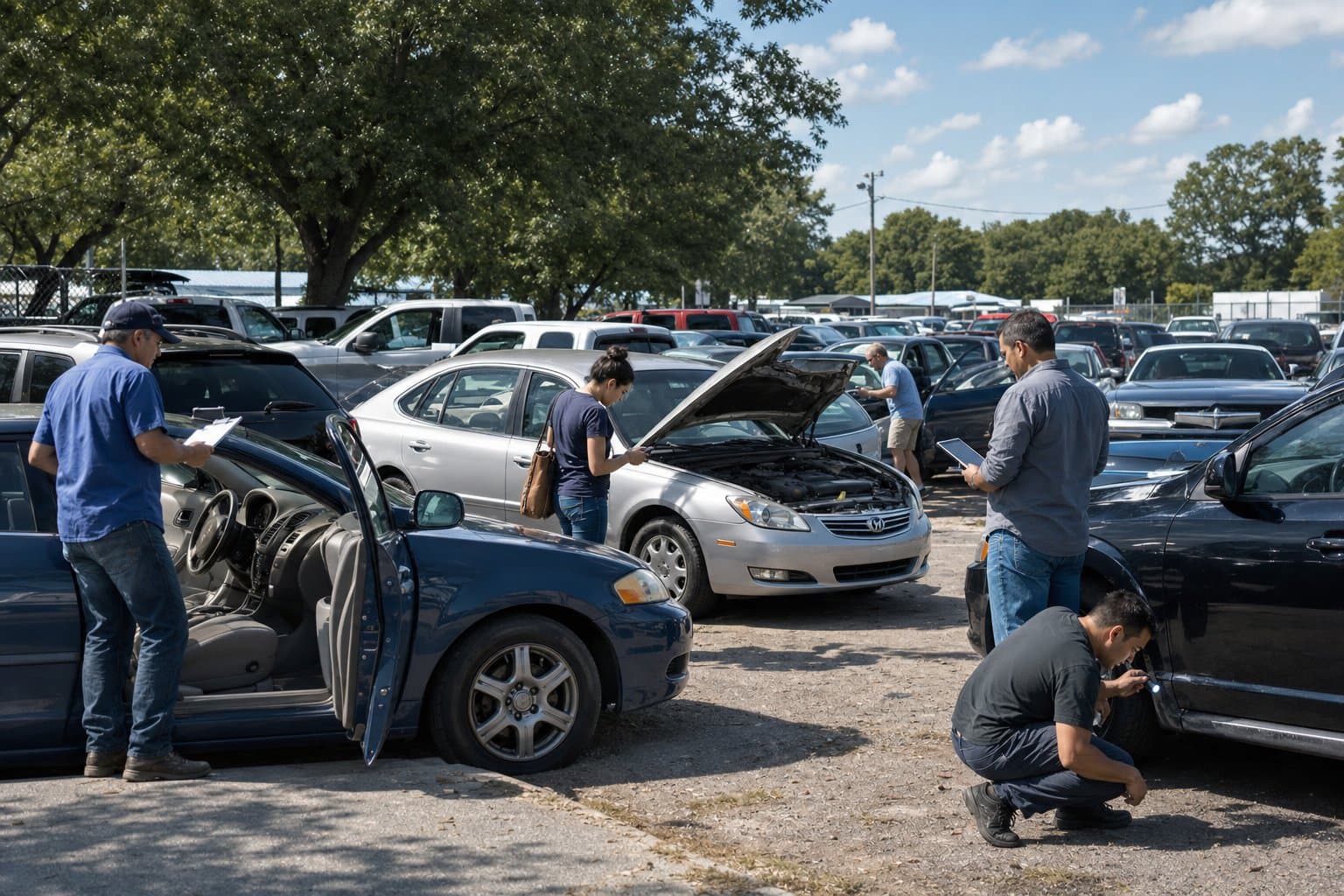
- Conduct a Multi-Sensory Flood Inspection: The buyer must actively hunt for the subtle physical indicators of flood damage. This involves smelling the interior for mildew (or ozone generators), feeling beneath the carpets for dampness, and using a flashlight and mirror to inspect the unpainted metal seat brackets and pedals for extensive, orange rust. Look for silt pooled in the taillight housings.
- Secure an Independent Diagnostic Assessment: The most crucial defense against sophisticated fraud is the mechanic's garage lift. Before any funds are transferred, the vehicle must be inspected by an independent, trusted mechanic who can read the electronic OBD-II computer codes, evaluate the suspension for advanced corrosion, and verify the structural integrity of the frame. If you’re arranging that inspection before a long trip, combine it with the highway‑specific tips in our highway breakdown and emergency survival guide.
- Finalize the Transfer Properly to Avoid Liability: In the event of a private sale, the buyer and seller must complete the title transfer immediately. The seller is required to submit a Notice of Transfer and Release of Liability (NRL) within five days to notify the Department of Motor Vehicles that ownership has officially changed, legally protecting both parties from future civil liabilities, toll evasions, or parking infractions committed by the other party.
Conclusion
The pursuit of a reliable, affordable used car in 2026 requires a level of hyper-vigilance that previous generations of drivers never had to employ. Scammers have ruthlessly capitalized on unprecedented economic pressures by weaponizing digital tools to roll back odometers on over 2.45 million vehicles, utilizing complex cross-border bureaucratic loopholes to wash the titles of nearly half a million flooded cars, and cloning VINs to sell stolen property directly to the unsuspecting public.
However, the modern buyer is far from defenseless. By systematically leveraging federal digital databases like the NMVTIS, strictly enforcing the robust consumer protections guaranteed by new legislation such as the California CARS Act, and executing rigorous, independent mechanical inspections, consumers can successfully navigate this treacherous market and secure a safe vehicle for their families.
Ultimately, road safety extends far beyond the initial point of purchase. Connecting with local communities and utilizing advanced driver-to-driver technology ensures that the vehicle, once safely acquired, remains a protected asset within a secure, accountable neighborhood environment. Drivers are highly encouraged to download the Carszy app to stay connected with their community, report dangerous conditions, and actively contribute to the real-time protection of their local roadways through Human Media™.
Frequently Asked Question
Can a vehicle history report like CARFAX guarantee that a used car has not been flooded or structurally damaged?
No, a vehicle history report cannot offer an absolute, 100 percent guarantee. While reports generated through NMVTIS-approved providers (such as CARFAX, AutoCheck, or Vinaudit) are absolutely essential for identifying prior insurance claims, salvage brands, and interstate title washing, they possess a critical blind spot: they only display information that has been officially reported to state authorities or insurance companies. If a vehicle was flooded in a hurricane, or damaged in a severe collision, and the previous owner repaired it entirely out-of-pocket in their own garage without ever filing an insurance claim or a police report, the history report will appear completely clean. Therefore, vehicle history reports must always be paired with a comprehensive, physical inspection by an independent mechanic who can put the car on a lift and verify its structural and electrical integrity.