Range Anxiety, Decoded: How EV Range Really Works, What Drains It Faster Than Drivers Expect, and Practical Habits to Plan Trips with Confidence
The modern automotive landscape is undergoing a profound paradigmatic shift. As internal combustion engines (ICE) slowly yield the right of way to electrified powertrains, society is adapting to a new infrastructure of energy consumption, vehicle maintenance, and transit planning. For the modern commuter navigating rush hour traffic, the protective parent ferrying children to school on a frigid January morning, or the tech-forward driver embarking on a cross-country journey, the electric vehicle (EV) represents the pinnacle of automotive innovation. Yet, alongside the quiet acceleration, the elimination of tailpipe emissions, and the advanced telematics comes a uniquely modern psychological hurdle: range anxiety. The sudden, visceral realization that a dashboard range estimate is plummeting faster than the physical miles are passing transforms what should be a routine drive into an exercise in high-stakes logistical planning.
Understanding the complex mechanisms behind this phenomenon is essential for navigating the electrified roadway with complete confidence. Range anxiety is rarely the result of a defective high-voltage battery or a catastrophic mechanical failure; rather, it is the direct byproduct of the complex, uncompromising interplay between battery chemistry, thermal management systems, aerodynamic resistance, algorithmic forecasting, and human driving behavior. When an electric vehicle's projected range drops precipitously, it is merely responding to the rigid laws of physics and thermodynamics.
As electrification becomes ubiquitous, understanding these variables is no longer just a matter of maximizing convenience—it is fundamentally a matter of public safety, community resilience, and economic efficiency. A depleted battery on a desolate highway or a dark neighborhood street is a critical safety vulnerability. This comprehensive report decodes the realities of electric vehicle range, exploring the underlying science of battery management systems, the severe impacts of extreme weather and high-speed aerodynamics, and the actionable, data-driven strategies that safety-conscious drivers can deploy to maximize their vehicle's efficiency while prioritizing the security of their communities. Drivers who also want to prepare for broader roadside risks can learn even more in our guide to building a year-round vehicle emergency kit and spotting dangerous intersections.
The Human Element: Community Safety and the Connected Commute
Before delving into the technical intricacies of battery chemistry, algorithmic estimation, and aerodynamic drag, it is absolutely crucial to contextualize the human element of range anxiety. The transition to electric mobility introduces new failure modes for drivers. Unlike a gasoline-powered vehicle that can be quickly refueled on the shoulder of a highway with a simple jerrycan, a fully depleted electric vehicle requires specialized flatbed towing to a fast-charging station. In severe weather conditions—where EVs are most vulnerable to sudden range drops—a stranded vehicle poses an immediate threat to the occupants and surrounding traffic.
In these critical moments of vulnerability, community safety networks and driver-to-driver communication infrastructure become paramount. Technology platforms operating on a Human Media™ model represent a vital evolution in roadside safety. This framework deliberately shifts the focus away from superficial social media interactions toward tangible, real-world impact, providing a crucial safety net for everyday drivers, community watch advocates, and protective parents alike.
Systems that utilize License Plate Messaging are at the forefront of this safety revolution. By utilizing state-issued license plates as unique, secure identifiers, these platforms allow individuals to securely text or call other drivers on the road. The safety applications for EV drivers are extensive. A community member noticing an electric vehicle parked with its headlights accidentally left on, or observing an operator unknowingly driving with a mechanical fault that increases rolling resistance, can instantly notify the owner. This rapid, driver-to-driver alert system can prevent unnecessary auxiliary battery drain, potentially saving the driver from an unexpected stranding hours later. These same tools also help communities report dangerous drivers and reclaim chaotic intersections before a close call turns into a crash.
Furthermore, community watch advocates benefit immensely from integrated tools like VOIS™ (Vehicle of Interest Search). This community-driven alert system mobilizes local networks in real-time to help locate vehicles involved in critical incidents, such as extreme weather strandings, abductions, human trafficking, or hit-and-runs. By drastically reducing law enforcement response times and promoting safer roads through immediate community accountability, these privacy-focused platforms—which operate strictly on secure, US-based servers—empower drivers to actively look out for one another. When range anxiety transitions into a physical stranding, the ability to rapidly connect with the surrounding community through Android or iOS app integrations transforms individual vulnerability into collective security, ensuring that no driver is ever truly isolated. In a world where crashes and near-misses can happen in seconds, pairing this with a solid bystander crash-response playbook turns everyday motorists into a powerful safety network.
The Central Nervous System: Decoding the Battery Management System
To fully decode range anxiety, one must first understand precisely how an electric vehicle calculates its available range. The dashboard mileage number, frequently and affectionately—or frustratingly—referred to by the EV community as the "Guessometer," is not a direct, physical measurement of distance. Unlike the mechanical float inside the fuel tank of an internal combustion vehicle, the remaining electric range cannot be directly measured; it must be continuously estimated and calculated by onboard computers.
The Architecture of the Power Grid
Every modern electric vehicle is equipped with a highly sophisticated Battery Management System (BMS). The high-voltage battery pack, which is typically integrated into the vehicle's skateboard chassis underneath the floorboard, consists of multiple individual battery modules. These modules house hundreds, or sometimes thousands, of individual battery cells. Each of these lithium-ion cells operates within a strictly defined operation window to ensure safe, reliable performance over the vehicle's entire lifetime.
The BMS functions as the central nervous system for this massive power grid. It continuously monitors individual cell voltage, thermal output, and current flow to prevent overcharging, manage heat dissipation, estimate remaining range, and communicate seamlessly with the rest of the vehicle's telematics systems in real-time. There is a strict minimum and maximum voltage that must never be exceeded; pushing a cell beyond these limits results in overcharging or over-discharging, which can lead to rapid capacity degradation or severe thermal safety events.
The precise voltage, current, and temperature limits for safe operation are dictated by the specific battery chemistry chosen by the manufacturer. While graphite is the most popular anode material across the industry, the cathode chemistry generally dictates the vehicle's performance profile. The two most popular cathode chemistries are LFP (Lithium Iron Phosphate) and NMC (Lithium Nickel Manganese Cobalt Oxide), each requiring distinct mathematical modeling from the BMS to accurately predict energy release.
The Algorithmic Estimation of the "Guessometer"
To display a mileage number on the dashboard, the BMS must first determine the battery's State of Charge (SOC). The system calculates this by precisely measuring the amps going into and out of the battery pack. By multiplying the amps of discharge by the total time of discharge, the system determines the battery's spent amp-hours. Multiplying these amp-hours by the measured voltage yields the total energy remaining in kilowatt-hours (kWh).
Because physical degradation and temperature fluctuations constantly alter a battery's true capacity, the SOC estimation is performed using multiple complex mathematical algorithms simultaneously. Modern systems synthesize Coulomb Counting (CC) with advanced probabilistic models like the Extended Kalman Filter (EKF) and the Unscented Kalman Filter (UKF). The EKF linearizes non-linear systems to estimate the battery's state, while the UKF utilizes deterministic sampling to achieve higher accuracy in highly dynamic driving environments. These algorithms continuously feed data into a State of Health (SOH) estimator, which uses the estimated SOC alongside the battery's internal resistance (R0) to calculate the overall health and maximum capacity of the pack.
Once the SOC is mathematically established, the vehicle must guesstimate its own driving efficiency, which is typically measured in miles per kWh. The final projected range displayed to the driver is the simple product of these two dynamic estimates. For example, if the BMS determines the battery holds exactly 34.5 kWh of usable energy, and recent driving patterns suggest an efficiency rating of 3.14 miles per kWh, the vehicle will multiply those figures to display an expected remaining range of 108.3 miles.
The Inherent Vulnerability of the Estimation
The fatal flaw of the "Guessometer"—and the primary psychological driver of range anxiety—lies in its heavy reliance on immediate historical data. The estimated range is heavily weighted by the vehicle's most recent driving efficiency. This "recent" period is often an opaque algorithm known only to the manufacturer's engineers, but it typically spans the previous few hundred miles of operation.
If a commuter has spent the past week navigating low-speed, stop-and-go city traffic, the vehicle will register exceptionally high efficiency due to the frequent use of regenerative braking and low aerodynamic drag. The BMS will consequently project a highly optimistic range. However, if that same driver merges onto an interstate highway with a 75 mph speed limit on a Friday afternoon, the vehicle's efficiency will plummet instantly. The BMS must rapidly recalculate the new, terrible efficiency against the remaining kWh, causing the estimated range to drop at an alarming, non-linear rate. This sudden drop is not a mechanical failure; it is simply the algorithm violently adjusting to new physics. Drivers who reset their trip meter before long journeys can monitor this convergence: if the sum of the miles driven and the estimated remaining range is rapidly decreasing, the vehicle is experiencing significantly lower efficiency than the BMS initially predicted. Understanding this behavior, and how it ties into the limits of smart-car technology on real-world streets, helps set realistic expectations before a long trip.
The Aerodynamic Wall: Why High Speeds Decimate Driving Range
One of the most persistent and problematic misconceptions among new electric vehicle owners transitioning from internal combustion platforms is the assumption that highway driving is inherently more efficient than city driving. While gasoline-powered vehicles almost universally achieve their highest fuel economy on the open highway—where top gears allow engines to operate at low, efficient RPMs—electric vehicles exhibit the exact opposite behavior.
The Physics of High-Speed Cruising
Electric vehicles are undeniably magical in low-speed and variable-speed urban scenarios. This efficiency is driven by their ability to recapture kinetic energy when decelerating by using the electric motors as generators to slow the vehicle down, feeding that otherwise lost energy directly back into the battery pack. However, on a wide-open freeway, steady-state high-speed cruising entirely eliminates the opportunity for regenerative braking.
Furthermore, electric vehicles are subject to the unforgiving laws of fluid dynamics. Wind resistance, or aerodynamic drag, does not increase linearly with speed; it increases exponentially with the square of the vehicle's velocity. Pushing a heavy vehicle through the atmosphere at 75 mph requires exponentially more energy than moving it at 55 mph. As speed climbs, the electric motors must spin rapidly, generating massive amounts of heat and drawing enormous amounts of current from the high-voltage battery to overcome the atmospheric wall.

The Chelsea Proving Grounds Speed Test
To quantify the exact penalty of speed on EV range, automotive researchers at Car and Driver conducted a rigorous test at Stellantis's Chelsea Proving Grounds. The methodology was designed to represent the absolute worst-case scenario for EV efficiency: continuous, steady-state driving on a 4.7-mile oval track. This environment deliberately eliminated external variables such as unpredictable traffic, crosswinds, and elevation changes, preventing the vehicles from coasting or utilizing regenerative braking.
The test featured a stark contrast in automotive design: the low-slung, aerodynamically optimized Lucid Air Pure sedan, and the blocky, high-profile Kia EV9 three-row SUV. A traditional gas-powered Subaru Forester compact SUV was included to provide a real-world internal combustion benchmark. Each vehicle was run continuously at four strict speed intervals: 35 mph, 55 mph, 75 mph, and 95 mph, utilizing in-car telematics to calculate maximum cruising range at each specific speed.
The collected data reveals terrifying range degradation at high speeds, illustrating a precise linear progression of inefficiency:
| Vehicle Model | 35 mph to 55 mph Range Drop | 55 mph to 75 mph Range Drop | 75 mph to 95 mph Range Drop |
|---|---|---|---|
| Lucid Air Pure (EV) | 22% (from 485 mi down to 378 mi) | 23% (a loss of 88 miles) | 24% |
| Kia EV9 (EV) | 26% (from 459 mi down to 339 mi) | > 30% (a loss of 109 miles) | > 30% |
| Subaru Forester (ICE) | 9% | N/A | N/A |
Data sourced from Car and Driver testing at Chelsea Proving Grounds.
The aerodynamic superiority of the Lucid Air allowed it to perform better at higher speeds, experiencing a relatively stable 23% to 24% drop between the higher increments. Conversely, the less aerodynamic Kia EV9 plummeted by more than 30% during each high-speed increment.
When analyzing typical highway cruising speeds, the penalty becomes even more pronounced. Bumping the cruising speed from 70 mph to 80 mph reduced the Lucid Air's range by roughly 40 miles, and the Kia EV9's range by roughly 45 miles. The gas-powered Subaru Forester actually lost the most range numerically during this 10-mph increase—dropping by about 100 miles—but because the ICE vehicle starts with a vastly larger total range, it still retained more than double the total range of the EV9 at 80 mph, and roughly 175 miles more than the Lucid Air.
Other independent tracking studies suggest this drop in efficiency follows a remarkably precise linear progression. Tests on vehicles like the Kia EV6 indicate that for every 10 mph increase in highway speed, mileage drops by exactly 6 miles per kWh, allowing analytical drivers to easily extrapolate and estimate efficiency across different highway routes. Community data compiled by drivers of the Hyundai Ioniq 5 corroborates this, showing that the vehicle effectively has twice the range at 45 mph as it does at 70 mph, and that cruising at 75 mph imposes a massive 20% range penalty over cruising at 65 mph. For families logging long miles with teens behind the wheel, pairing these insights with smart strategies to keep new drivers safe in their first car makes high-speed travel far more manageable.
The Illusion of EPA Window Sticker Ratings
The Environmental Protection Agency (EPA) determines official EV range ratings using standardized tests on a dynamometer that simulate a blend of urban, highway, and steady-state driving. However, the combined estimate heavily advertised on dealership window stickers rarely reflects the reality of American road trips.
By fitting a mathematical curve to the proving grounds data, researchers calculated the exact steady-state cruising speeds required for these vehicles to actually achieve their advertised EPA range estimates. The results highlight why highway range anxiety is so prevalent:
- Lucid Air Pure: To hit its combined EPA rating of 419 miles, the driver must cruise at a painfully slow steady speed of just 47 mph. To hit its dedicated EPA highway rating of 410 miles, the vehicle cannot exceed 49 mph. This demonstrates highly aggressive window-sticker labeling.
- Kia EV9: The EV9 proved to be far more highway-friendly in its estimations; it can achieve its combined EPA rating of 280 miles while cruising at a respectable 66 mph, and its EPA highway rating of 253 miles at 71 mph.
- Subaru Forester: The internal combustion benchmark easily equaled its combined EPA rating of 28 mpg while cruising at a fast steady speed of 77 mph.
This data definitively proves that drivers expecting to match their EV's window-sticker range while keeping pace with 75 mph to 80 mph interstate traffic will inevitably experience severe, mathematically guaranteed range anxiety. If a driver is looking to cover 500 miles in a single day, it necessarily must be done at high speeds, making aerodynamic drag the primary enemy of the road trip.
The Cold Hard Truth: Winter Weather and the Thermodynamics of the Battery
If high speeds and aerodynamic drag are the first major variable in range anxiety, extreme temperatures are undeniably the second. Winter driving conditions represent the absolute worst-case scenario for electric vehicle efficiency, reliability, and range retention.
The Chemical Vulnerabilities of Lithium-Ion
At a fundamental molecular level, battery chemistry is directly dictated by temperature. Cold weather significantly inhibits the complex chemical reactions within the lithium-ion cells and acts as physical resistance, slowing down the vital processes of conductivity and diffusivity. When temperatures plummet, the ions flow through the battery cells much more slowly. This sluggishness immediately increases the battery's internal resistance—known as impedance—which severely limits the total electrical power available to the vehicle's drivetrain.
Furthermore, attempting to charge an EV rapidly in freezing temperatures introduces a catastrophic risk known as "lithium plating". Under optimal charging conditions, lithium ions move smoothly from the cathode, traverse the electrolyte, and lodge themselves perfectly into the anode's lattice-like graphite structure—a process known as intercalation. In cold temperatures, however, the ions' movement is severely restricted. If a high-voltage current forces ions into the battery while it is frozen, the ions physically cannot enter the anode grid fast enough. Consequently, the lithium builds up on the outside of the node and transforms into an inert, permanent metallic structure. This plating permanently reduces the battery's capacity, permanently increases internal resistance, and permanently blocks the future flow of energy.
To prevent this internal destruction, the vehicle's Battery Management System will strictly regulate and throttle charging speeds in the cold, prioritizing battery health over convenience. Reports from national laboratories indicate that cold weather can increase charging times by almost threefold, transforming a quick pitstop into a lengthy, frustrating ordeal.
The Devastating Drain of Cabin Heating
While the chemical slowdown causes a temporary but notable reduction in range, the primary, overwhelming culprit behind winter range loss is cabin climate control. Internal combustion engines are fundamentally inefficient machines; they generate massive amounts of waste heat during the combustion process. This heat is easily repurposed and blown into the passenger cabin to keep occupants warm.
Electric motors, conversely, are masterpieces of efficiency and produce almost zero waste heat. Therefore, an electric vehicle is placed in the difficult position of having to actively generate its own heat from scratch. To keep the driver, passengers, and the battery pack warm, the EV must draw massive amounts of electricity directly from the high-voltage propulsion battery, fundamentally reducing the remaining capacity left to physically move the vehicle forward.
According to efficiency metrics from the U.S. Department of Energy, if a driver completely foregoes cabin heating, EV fuel economy drops by a relatively manageable 8% at 20°F compared to a baseline of 75°F, with driving range decreasing by just 12%. However, when cabin heating is actively utilized to protect occupants from freezing temperatures, EV fuel economy can drop by a staggering 39% in mixed city and highway driving, and total range can plummet by 41%. Roughly two-thirds of the extra energy consumed by an EV in the winter is dedicated entirely to generating heat.
AAA Dynamometer Temperature Testing
A landmark study conducted by the American Automobile Association (AAA) quantified these severe impacts under strictly controlled laboratory conditions. Utilizing a highly calibrated chassis dynamometer—effectively a massive treadmill for cars—researchers inputted standard EPA-published road load coefficients based on specific vehicle details and powertrain configurations. The testing protocol utilized a modified version of the SAE test standards, specifically designed to reflect how drivers actually use their vehicles in the real world. This meant engaging the vehicle's Heating, Ventilation, and Air Conditioning (HVAC) systems to a comfortable 72°F while the laboratory test cell was subjected to extreme temperature swings of 20°F, 75°F, and 95°F.
The AAA findings revealed staggering, undeniable reductions in cold-weather efficiency across all powertrains:
- Electric Vehicles (20°F): Demonstrated a severe 35.6% drop in efficiency (MPGe, miles per gallon of gasoline equivalent) and a corresponding 39.0% decrease in calculated driving range relative to the 75°F baseline.
- Hybrid Vehicles (20°F): Exhibited a 22.8% reduction in fuel economy (MPG) under the exact same cold-temperature conditions.
The economic implications of this efficiency loss are profound. Operating an EV in 20°F weather resulted in an increase in operating costs of $32.11 per 1,000 miles when the vehicle was charged exclusively at residential electricity rates. However, when drivers were forced to rely on public charging infrastructure, the financial penalty skyrocketed, with operating costs increasing by a staggering $76.93 per 1,000 miles.
Cold operation highlighted a distinct and somewhat counterintuitive cost gap between electrified powertrains. While EVs were mathematically $36.19 cheaper to operate per 1,000 miles than their hybrid counterparts when charging on cheap residential power, they became $86.26 more expensive per 1,000 miles than hybrids when drivers were subjected to commercial public charging rates in the cold.
Engineering the Climate: Heat Pumps, Resistive Heaters, and Thermal Modeling
To combat the massive energy drain of winter climate control and preserve driving range, automotive engineers and national laboratories have focused intensely on revolutionizing thermal management systems. Research conducted by the National Renewable Energy Laboratory (NREL) has shown that climate control can reduce overall vehicle efficiency and range by more than 50%. Because of the relative shortage of waste heat, heating the passenger cabin is exceptionally difficult, while simultaneously, cabin cooling in the summer can take a high portion of the energy available in the battery.
To solve these complex thermodynamic challenges, NREL researchers utilize the MATLAB/Simulink dynamic system simulation environment to model full EV thermal management systems. By incorporating liquid-coolant system components into air-conditioning models and utilizing complex lookup tables to characterize component performance, engineers can accurately predict thermal data. NREL studies have proven that advanced thermal management strategies—including zone-based cabin temperature controls, seat-based climate controls, and thermal pre-conditioning techniques—can successfully increase EV range by as much as 10%. Furthermore, NREL has investigated cutting-edge solutions for hot climates, such as combining high-grade insulation with small vapor compression systems and Phase Change Materials (PCM) to provide standby thermal cooling for batteries while the vehicle is plugged into the grid, significantly slowing degradation rates.
The Resistive Heater vs. The Heat Pump
In the consumer market, automakers have deployed two primary technologies to heat the cabin: Positive Temperature Coefficient (PTC) resistive heaters and advanced heat pumps.
Older electric vehicles, as well as some modern models prioritizing budget pricing or rapid cabin comfort over range optimization, rely on PTC resistive heaters. These systems operate much like a giant electrical toaster or a heavy-duty hairdryer; they draw massive amounts of electricity directly from the high-voltage battery and run it through resistive elements to generate heat from scratch. This brute-force method is incredibly effective at warming a cabin quickly, but it decimates driving range.
The current industry standard for efficiency is the heat pump. Rather than generating heat through resistance, a heat pump acts as an air conditioner operating in reverse. It compresses and expands specialized refrigerants to capture ambient thermal energy from the outside air, or scavenges waste heat directly from the vehicle's powertrain and high-voltage electronics, and moves that heat into the passenger cabin. Heat pumps are masterpieces of thermodynamics; for every single unit of electrical energy consumed by the compressor, a heat pump can generate three to four units of heat for the cabin.
Data analytics firm Recurrent Auto determined through extensive fleet tracking that outfitting an EV with a heat pump reliably extends its range by an average of 10% at freezing temperatures (32°F). However, the laws of physics present a hard limit to this technology: as ambient outside temperatures drop closer to 0°F (-18°C), there is simply less ambient heat available in the atmosphere to scavenge. At these extreme sub-zero temperatures, heat pumps lose their efficiency advantage and must revert to operating with similar inefficiency to standard resistive heaters.
Manufacturer Strategies: Tesla's Octovalve vs. General Motors' Ultium
Different automakers have taken radically divergent engineering paths regarding thermal management, resulting in vastly different real-world winter performances.
Tesla has consistently dominated cold-weather range retention rankings due to early, aggressive, and continuous investments in thermal architecture. In 2021, Tesla revolutionized EV thermal management with the introduction of the "Octovalve" in the Model Y. The Octovalve is a highly sophisticated, multi-channel thermal controller that completely replaced traditional separate pumps and valves. It serves as a central clearinghouse for vehicle thermals, intelligently routing liquid coolant and recycling waste heat between the passenger cabin, the high-voltage battery pack, and the electric motors. By treating the entire vehicle as a single, interconnected thermal system, the Octovalve ensures optimal temperatures across all critical components with minimal electrical waste.
Conversely, rigorous analysis of newer General Motors (GM) vehicles utilizing the highly touted Ultium battery platform—such as the Cadillac Lyriq, Chevrolet Equinox EV, and Chevrolet Blazer EV—reveals a vastly different software tuning philosophy. Despite being physically equipped with advanced heat pumps, these vehicles consistently exhibit lower-than-expected winter range retention. Analytics suggest that GM's software algorithms deliberately prioritize immediate passenger comfort over maximum vehicle range. GM engineered highly energy-intensive resistive heaters alongside their heat pumps. It is suspected that GM's programming triggers these resistive heaters to kick in at higher ambient temperatures than other manufacturers. This strategy blows much warmer air for the passengers much faster, ensuring a luxurious cabin experience, but it significantly drains the high-voltage battery and severely limits total driving distance.
Other manufacturers employ unique operational thresholds. The Nissan LEAF, for example, utilizes a Battery Management System that strictly limits energy expenditure on thermal regulation, only activating active battery warming when ambient temperatures drop to a severe -4°F (-20°C).
Heat Waves and Battery Health: The Summer Toll
While cold weather garners the most attention due to its severe, immediate impact on daily commuting, extreme heat presents a much more insidious, long-term threat to electric vehicles: permanent battery degradation.
The AAA testing protocol demonstrated that extreme heat exacts a noticeable toll on efficiency. At 95°F with the air conditioning actively engaged to maintain 72°F, EVs experience a 10.4% reduction in MPGe and an 8.5% loss of driving range. Interestingly, hybrid vehicles suffer slightly more in extreme heat, exhibiting a 12.0% decrease in overall fuel efficiency. At these elevated temperatures, EVs remain cheaper to operate at home charging rates ($46.11 less per 1,000 miles than hybrids) but become $41.00 more expensive per 1,000 miles at public fast-charging rates.
However, the true cost of hot weather is paid in battery longevity. High temperatures dramatically increase the total kinetic energy within the battery system, accelerating the rate and efficiency of chemical reactions inside the individual cells. While this speeds up the reactions that produce power, it also vastly accelerates "unwanted" secondary chemical reactions that cause permanent degradation.
Inside a healthy lithium-ion battery, a protective layer of inactive lithium salts known as the Solid Electrolyte Interphase (SEI) forms a critical shield over the anode surface to protect it from corrosion. Excessive ambient heat physically disrupts the organization and composition of this protective SEI layer. This disruption triggers a cascade of negative reactions that consume highly active lithium or create new, inert compounds that prevent ions from flowing freely, directly resulting in permanent capacity fade.
Furthermore, simply parking and storing an EV in high heat accelerates a process known as "calendar aging"—the natural, unavoidable degradation of the battery that occurs regardless of whether the vehicle is actually being driven. This degradation is primarily driven by the continuous growth and thickening of the SEI layer around the anode. Ions and battery particles must diffuse through this layer, and the speed of this diffusion is directly correlated to ambient temperature.
Attempting to fast-charge an EV at high temperatures further compounds this physical damage. Heat increases the effective force of the electric current driving lithium ions from the cathode to the anode. This excessive force causes the lithium ions to intercalate—lodge themselves into the anode's graphite grid—with such violence that it generates physical stress, microscopic cracks, and literal fissures in the anode structure. These tiny fractures create entirely new, unprotected surfaces for chemical reactions and additional SEI growth, which aggressively consumes active lithium. If the ions cannot find storage within the fractured anode grid, they may become trapped outside and undergo secondary reactions that create inert substances, including lithium plating. Both of these high-heat effects drastically increase the battery's internal resistance and permanently lower its available power and range.
Real-World Vehicle Performance: An Extensive Model-by-Model Analysis
To move beyond pristine laboratory dynamometer testing, it is absolutely necessary to examine how specific vehicle models perform in chaotic, real-world environments. Recurrent Auto, a U.S.-based EV analytics company, processed billions of data points by analyzing real-world driving telematics from over 30,000 electric vehicles across the United States during the 2025/2026 winter season.
The fleet-wide findings indicate that across 34 of the most popular models, EVs retain an average of 78% of their maximum range at a freezing 32°F, and 70% of their maximum range at an even colder 20°F. The gap between the best and worst engineering is vast: the top-performing vehicle in the study retained an impressive 88% of its range, while the lowest-performing model plummeted to just 69% retention.
Independent comparative testing by Consumer Reports strongly echoed these findings, noting that EVs lose anywhere between 20% to 40% of their rated range when subjected to real winter conditions on active highways. Fleet data suggests that when temperatures plunge to a brutal 5°F, EVs average roughly half of their highly publicized EPA-rated range.
The High Performers (80% - 89% Range Retention at 32°F)
Tesla's engineering heavily dominates the top tier of cold-weather range retention, buoyed by the continuous refinement of the Octovalve and standard heat pumps across their entire modern lineup.
- Tesla Model X: Retains a staggering 89% of its range in cold weather, outperforming the overall industry average by 9%. However, real-world owner feedback notes that heavy, sustained use of the HVAC heater can still aggressively cut into this statistical retention, often halving the true distance.
- Tesla Model S (100 kWh AWD/Plaid): Retains 88% of its range. In a fascinating display of thermal engineering, this cold-weather retention is actually higher than its hot-weather retention (which sits between 83% and 87%).
- Tesla Model 3 / Model Y: Both mass-market vehicles retain 86% of their range in freezing conditions, outperforming the 2025 EV average by a solid 6%. Surveyed drivers, however, noted that the reliability of the dashboard range estimate in cold weather still required improvement.
- Audi e-tron: Retains 87% of its typical range. Audi offers an optional, highly recommended winter heating package featuring vital battery preconditioning. Yet, community feedback highlights a severe technological bottleneck: massive reliability issues with the Audi mobile app. Owners report that the app needed to remotely precondition the cabin and battery only connects successfully 10% of the time, leaving drivers stranded with a cold battery.
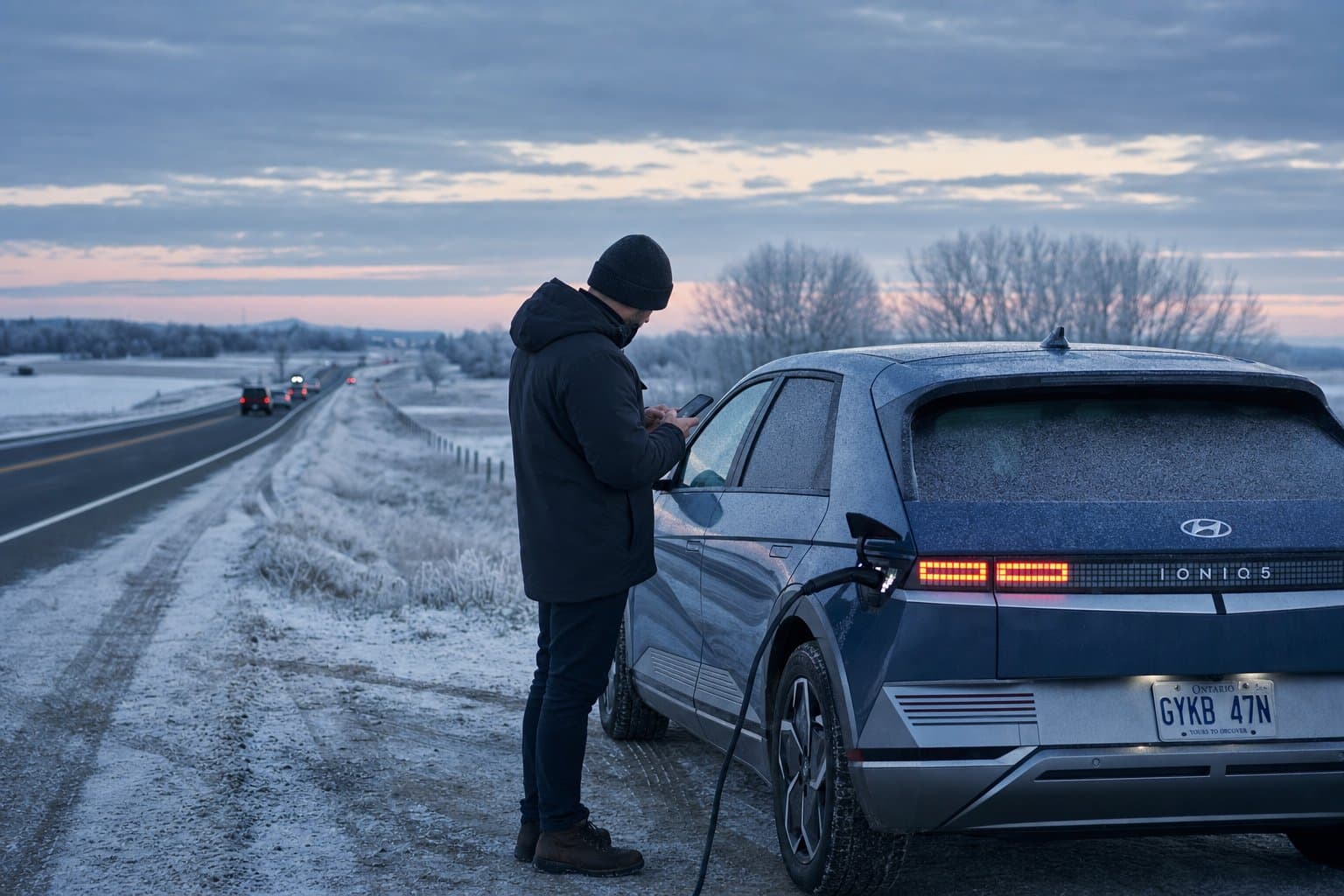
- Hyundai Ioniq 5: Retains roughly 85% of its standard range, heavily aided by a heat pump included on AWD configurations. However, surveyed drivers reported severe cold-weather DC fast-charging limitations, specifically citing a critical lack of adequate battery pre-heating capabilities before reaching a charger.
- Rivian R1T: The rugged electric truck retains a highly respectable 81% of its range in cold winter conditions, compared to 97% in the hot summer.
- Kia EV6: Retains exactly 80% of its range at freezing temperatures.
The Mid-Tier Performers (75% - 79% Range Retention at 32°F)
These vehicles represent the exact median of the industry, losing roughly a quarter of their range when temperatures hit freezing.
- Hyundai Kona Electric: Retains 78% to 79% of its range depending on the specific trim level (SE, SEL, N). This performance sits just 1% to 2% below the overall 2025 market average.
- Nissan LEAF: Retains approximately 77% of its normal capacity at freezing temperatures. Due to the LEAF's unique thermal strategy that delays active heating until -4°F, drivers heavily rely on battery-friendly localized options like heated seats to survive the winter without depleting the pack.
The High-Loss Performers (Below 75% Range Retention at 32°F)
Vehicles in this category experience the most severe operational impacts from cold weather. Operating these models in northern climates requires meticulous route planning and frequent charging stops.
- Ford F-150 Lightning: The heavy-duty truck retains only 74% of its range at freezing temperatures according to telemetry data. A separate, rigorous Consumer Reports test on the highway observed an even more aggressive 35% loss in harsh winter testing.
- Cadillac Lyriq: Retains just 72% of its range at freezing. This accurately reflects GM's aforementioned tuning strategy that favors aggressive, high-energy cabin heating over range preservation.
- Chevrolet Bolt EV (Pre-2025): Retains a concerning 69% of its maximum range. As a budget-friendly option utilizing older battery technology and relying entirely on a power-hungry resistive heater rather than a heat pump, the Bolt's onboard systems are highly sensitive to climate shifts. Dashboard range estimates fluctuate wildly based on recent temperature changes, inducing significant range anxiety. Owners also noted that the equipped heated seats—vital for saving range—often failed to get hot enough for true winter comfort.
Consumer Reports Comparative Winter Testing
A secondary, highly stringent analysis by Consumer Reports corroborates the severity of winter range loss across a variety of modern models. The organization explicitly tested vehicles during favorable summer weather to establish a baseline, then ran continuous highway loops under real-world winter conditions to determine true range depletion. The findings starkly illustrate the true cost of the "winter penalty":
| Vehicle Model | Approx. Rated Range | Observed Winter Range | Approx. Range Loss |
|---|---|---|---|
| Polestar 2 | 238 miles | 205 miles | 14% |
| Chevrolet Silverado EV | 440 miles | 380 miles | 14% |
| Kia EV9 | 304 miles | 243 miles | 20% |
| Volkswagen ID.4 (recent heat pump) | 291 miles | 233 miles | 20% |
| Honda Prologue | 273 miles | 207 miles | 24% |
| Kia Niro EV | 253 miles | 177 miles | 30% |
| Tesla Model 3 | 341 miles | 239 miles | 30% |
| Ford Mustang Mach-E | 270 miles | 186 miles | 31% |
| Chevrolet Equinox EV | 319 miles | 210 miles | 34% |
| Ford F-150 Lightning | 320 miles | 208 miles | 35% |
| Hyundai Ioniq 5 | 256 miles | 164 miles | 36% |
| Toyota bZ4X | 222 miles | 140 miles | 37% |
| Volvo XC40 Recharge | 254 miles | 155 miles | 39% |
Data compiled from Consumer Reports exhaustive winter range assessments.
These real-world numbers reflect the grim reality faced by daily drivers. As one Canadian EV owner candidly noted on a community forum, "Our winter conditions are basically the worst case for vehicle range. It absolutely, massively takes a hit. If we only had one vehicle, an EV wouldn't work for us because of the huge range reduction in the winter, which lasts for half the year". Another owner correlated this drop directly to aerodynamics and weather, noting that range loss perfectly parallels the wind chill; a -40°C wind chill routinely results in a 40% loss of range, exacerbated further by harsh crosswinds.
Despite these stark numbers, the economic advantage of EVs remains a powerful counterweight. Even with severe winter degradation, EV owners operating in regions with cheap electricity and standard rebates (e.g., $0.11/kWh in Saskatchewan) calculate their lifetime operating costs at roughly 2.42 to 2.50 per 100 kilometers. To achieve that same cost equivalent in a gasoline vehicle at $1.50/L, the ICE vehicle would need to achieve an impossible 1.6L/100km efficiency—roughly 30% of a Prius. Thus, while the range penalty is real, the financial insulation from wild gas swings remains highly attractive to safety-conscious commuters.
Actionable Strategies for Range Preservation and Confident Commuting
Given the severe impact that high-speed aerodynamics, plummeting temperatures, and power-hungry resistive heating exact upon the lithium-ion battery, drivers must adopt a highly proactive approach to trip planning. Range anxiety is significantly, if not entirely, mitigated through the adoption of strategic habits that meticulously optimize thermal efficiency and aerodynamic performance. These same habits pair well with broader winter driving and skid-avoidance strategies that keep your vehicle upright and your family protected when roads turn slick.
1. Master Thermal Preconditioning
The single most effective strategy for preserving winter EV range is the consistent practice of thermal preconditioning. This technique involves utilizing the vehicle's integrated mobile app or internal dashboard scheduling software to fully heat both the passenger cabin and the dense high-voltage battery pack while the vehicle is still physically plugged into the electrical grid at home or work.

By pulling electrical power directly from the residential charging station rather than the vehicle's internal battery, the EV reaches its optimal operating temperature without sacrificing a single mile of physical driving range. A pre-warmed battery also operates with significantly less internal impedance, allowing for immediate, efficient power delivery upon departure. Furthermore, when embarking on a road trip, setting the vehicle's built-in navigation system specifically to a DC fast charging station triggers automatic, on-route battery preconditioning in many modern models. This actively warms the battery cells to the perfect temperature required to accept maximum charging currents upon arrival, entirely bypassing the agonizingly slow charging times typically associated with frozen cells.
2. Utilize Localized Heating Protocols
Because heating an entire volumetric area of cabin air from sub-freezing temperatures to 72°F requires an immense, continuous expenditure of energy, drivers must prioritize localized heating mechanisms. Relying heavily on heated seats and heated steering wheels provides direct, highly efficient conductive thermal comfort straight to the driver and passengers.
These localized systems consume a minuscule fraction of the electrical energy required by the primary HVAC system to blow hot air. Lowering the main cabin thermostat by just a few degrees and opting to keep a winter coat and gloves on while utilizing the heated seats can reclaim massive amounts of lost mileage, alleviating the heavy burden on the high-voltage battery.
3. Adapt Charging Strategies for the Cold
Winter driving requires a fundamental shift in daily charging methodology. Because the BMS "Guessometer" is inherently less accurate and subject to wider fluctuations in extreme weather, drivers are strongly advised to charge much more frequently than the vehicle's numerical estimations might strictly necessitate. It is an essential safety practice to maintain a battery State of Charge (SOC) above 20% at all times during the winter months. This critical buffer ensures that an adequate reserve of power is always available to operate emergency heating systems for several hours should the vehicle become trapped in snow or stranded on an icy highway.
Furthermore, drivers utilizing public DC fast chargers must understand and respect the limitations of the chemical charging curve. Charging an EV slows down exponentially once the battery surpasses 80% capacity to protect the cells from degradation. While charging closer to a full 100% may be strictly mandatory to span vast, empty distances between rural chargers in the cold, deliberately terminating the session at 80% for shorter trips optimizes time, saves money, and prevents unnecessary wear on the battery architecture. For drivers who do end up in a fender bender or slide-off while juggling charging stops, following a calm post-crash checklist helps keep everyone safer and preserves crucial documentation.
4. Optimize Aerodynamics and Rolling Resistance
The unforgiving physics of high-speed cruising mandate strict attention to aerodynamic efficiency. Colder air is denser than warm air, which naturally increases the baseline aerodynamic drag on a vehicle, especially at 75 mph. Leaving bulky accessories attached to the exterior exacerbates this drag. Removing roof racks, cargo boxes, or rear-mounted bicycle carriers when not actively in use instantly reduces parasitic aerodynamic drag, saving significant energy.
Additionally, cold weather naturally causes the air inside tires to compress, resulting in dropped tire pressure. Under-inflated tires severely increase rolling resistance, forcing the electric motors to exert substantially more torque simply to maintain a constant speed. Regular, proactive tire pressure checks are essential for range preservation in the winter.
Finally, drivers must adopt a smooth, deliberate driving profile. Rapid, aggressive acceleration demands massive instantaneous power draws from the battery. Switching the vehicle into Eco mode, restricting top cruising speeds to below 70 mph, avoiding heavy cargo towing, and maximizing the use of regenerative braking allows the BMS to operate the powertrain at peak electrical efficiency. For drivers operating hybrid electric vehicles, ensuring the use of winter-grade synthetic oil specifically recommended by the manufacturer reduces internal engine friction in the cold and reclaims lost operational efficiency. On busy corridors and merge zones, combining these EV habits with good zipper-merge and traffic-calming practices can cut road rage, smooth traffic, and indirectly protect your range.
Conclusion: Transforming Vulnerability into Preparedness
Electric vehicle range anxiety is a highly complex, multifaceted challenge governed by the strict interplay of battery chemistry, thermodynamics, aerodynamic resistance, and software algorithms. The vehicle's Battery Management System can only project a range estimate based on immediate historical data, meaning that unexpected encounters with 75 mph speed limits or sudden drops to 20°F temperatures will inevitably cause the dashboard projection to plummet. Extreme cold severely limits battery conductivity while demanding massive energy expenditures for essential cabin heating, resulting in average real-world range losses of 20% to 40%. Conversely, extreme heat permanently degrades the chemical infrastructure of the cells.
However, drivers can confidently reclaim this lost mileage and secure their safety through proactive, educated measures. By preconditioning the battery while connected to the grid, prioritizing localized heated seats over aggressive cabin air, meticulously managing high-speed aerodynamic drag, and maintaining a robust 20% charging reserve, drivers can dictate the terms of their commute rather than being victims of the elements. For parents navigating school runs or busy pickup zones, pairing these habits with evidence-based school-zone safety practices and slower speeds around children can dramatically cut risks for everyone sharing the road.
Ultimately, as the automotive ecosystem fully transitions to electrified power, physical trip planning must be seamlessly paired with robust community vigilance. Technology dictates the maximum physical range of the vehicle, but a connected community guarantees the ultimate safety of the occupants. By embracing secure, privacy-focused driver-to-driver communication networks, neighborhoods and commuters can ensure that a depleted battery never compromises human safety. Transforming the modern commute into a deeply connected, secure experience is the ultimate antidote to range anxiety, especially when communities also work together to fix dangerous intersections and reduce traffic violence.
Frequently Asked Questions
Why does my EV range drop so fast on the highway?
Electric vehicles excel in stop-and-go city traffic because they recapture energy through regenerative braking. On a highway, sustained high speeds eliminate this regeneration. More importantly, wind resistance (aerodynamic drag) increases exponentially with the square of the vehicle's speed. Pushing a heavy EV through the air at 75 mph forces the electric motors to draw massive amounts of power from the battery simply to maintain velocity, causing efficiency to plummet rapidly compared to driving at 55 mph.
Is range loss in the winter permanent?
No. The immediate, severe range loss experienced in sub-freezing temperatures is a strictly temporary reduction caused by slower chemical reactions within the battery cells and the massive energy drain required to run the cabin heater. Once ambient temperatures return to mild conditions, the battery's standard capacity and efficiency will completely normalize. However, charging a completely frozen battery can cause permanent damage, which is why the vehicle automatically slows down fast-charging speeds in the winter to protect the cells. If you do get stuck in a storm or pileup, the same cautious approach used in highway breakdown survival guides applies: stay visible, conserve energy, and coordinate with community alerts.
What is a heat pump and why does it matter for an EV?
A heat pump is a highly efficient thermal management system that captures ambient heat from the outside air or scavenges waste heat from the vehicle's powertrain and moves it into the cabin. Unlike older resistive heaters, which draw heavy power from the battery to create heat from scratch (like a toaster), a heat pump can generate 3 to 4 units of heat for every single unit of electricity consumed. Recurrent data shows that equipping an EV with a heat pump extends its cold-weather range by roughly 10% at freezing temperatures.
How can I communicate with another driver if I see their vehicle is stranded or in danger?
Modern community safety platforms use License Plate Messaging to allow drivers to securely text or call other vehicle owners using just their state-issued license plate number as an identifier. Operating on privacy-focused, US-based servers, this technology allows for immediate, safe alerts regarding low tires, unlit headlights, or stranded situations without compromising personal data, ensuring community watch advocates can safely assist without direct confrontation.