Left-Lane Etiquette: When Camping in the Fast Lane Becomes a Safety Problem and a Ticketable Offense
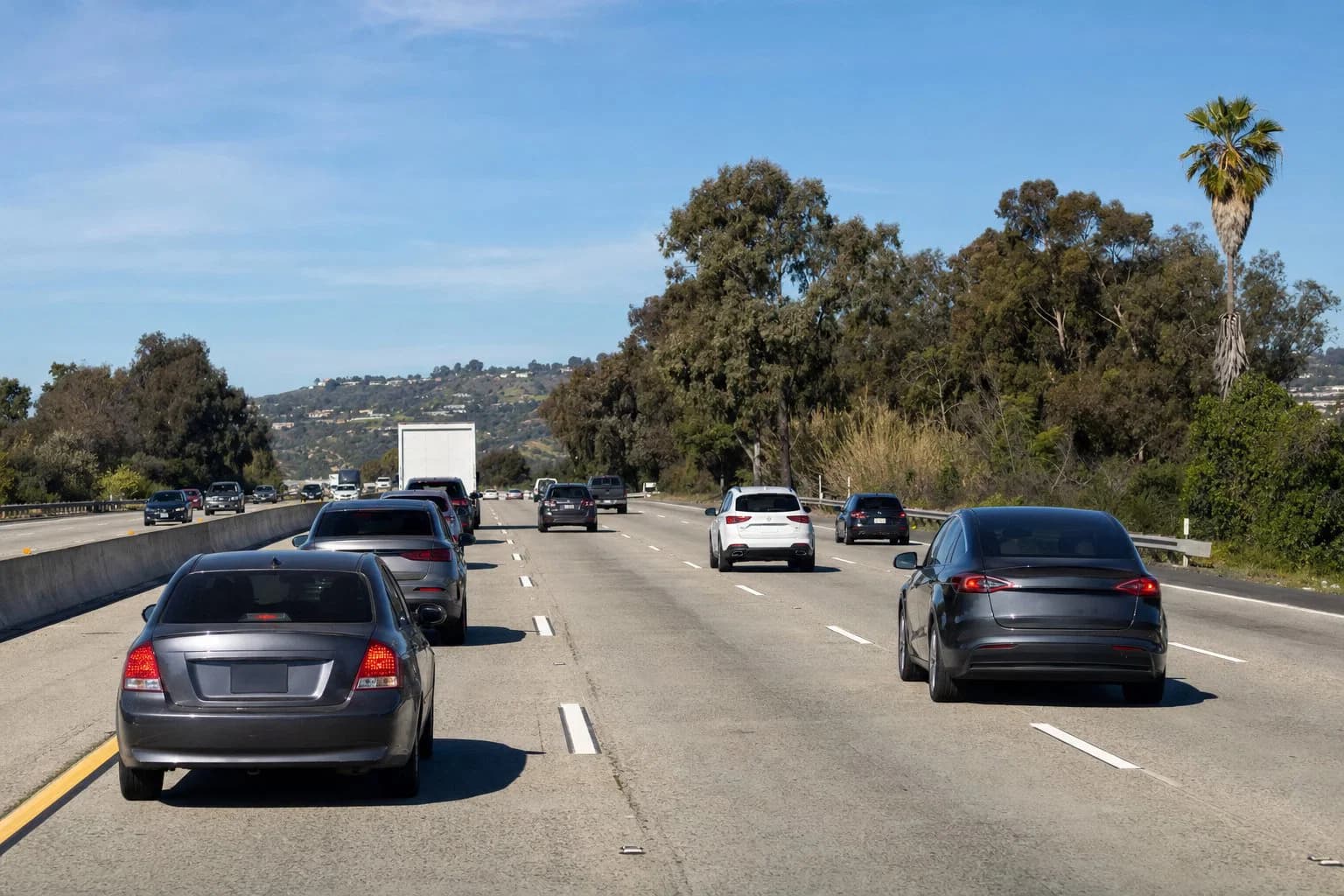
The daily commute across the modern highway system presents a complex and often high-stress environment for motorists. Among the myriad challenges faced on these sprawling arterial networks, few scenarios elicit as much universal frustration and systemic disruption as the phenomenon of the "left-lane camper." This term describes a motorist who occupies the far-left passing lane of a multi-lane roadway while matching, or falling below, the speed of adjacent traffic. For the safety-conscious parent ferrying children to school, the neighborhood watch advocate monitoring local road safety, or the tech-forward commuter navigating heavy gridlock, the left-lane camper is frequently dismissed as a mere nuisance. However, empirical traffic data, psychological studies, and strict legislative frameworks reveal a far more severe reality.
Occupying the passing lane without actively passing is a primary catalyst for highway congestion, a major trigger for dangerous road rage incidents, and in a vast majority of jurisdictions, a strictly enforced traffic violation. Understanding the intricate legal statutes governing lane discipline, the physical mechanics of traffic flow and phantom jams, the psychological underpinnings of aggressive driving, and the modern technological solutions available to communities is essential for fostering safer roadways and mitigating the systemic risks associated with left-lane impedance.

The Legal Landscape: Statutory Frameworks and Enforcement
A persistent and dangerous misconception among the driving public is that traveling exactly at the posted speed limit legally justifies remaining in the far-left lane. However, traffic laws across the United States are predominantly designed to prioritize the fluid flow of traffic over rigid, localized adherence to the speed limit in the designated passing lane. The legislative intent is to minimize chaotic lane changes and reduce the speed variance between adjacent lanes.
The Categorization of State Lane Laws
State laws regarding left-lane usage generally fall into four distinct categories based on their restrictiveness and approach to traffic flow:
- "Keep Right" States: Driving in the left lane is strictly prohibited under all circumstances except when actively passing another vehicle or preparing to execute a legal left turn.
- "Keep Right When Slower" States: These states follow the recommendations outlined in the Uniform Vehicle Code (UVC 11-1205). Motorists are permitted to utilize the left lane for cruising, but they are legally obligated to move to the right if they are traveling slower than the prevailing speed of current traffic, regardless of whether the prevailing traffic is exceeding the posted speed limit.
- "Yield" States: Driving in the left lane is generally tolerated, but drivers must yield and actively move to the right lane if they are impeding or blocking faster-moving traffic approaching from behind.
- "Permissive" States: Driving in the left lane is allowed without specific restrictions, provided the driver is not engaging in reckless behavior, though such states are increasingly rare due to modern safety data.
The California Vehicle Code (CVC) Framework
California serves as a prime example of a state with strict, highly specific legislative guidelines regarding lane discipline and speed impedance. Under California Vehicle Code (CVC) Section 21654, any vehicle proceeding upon a highway at a speed less than the normal speed of traffic moving in the same direction must be driven in the right-hand lane, or as close as practicable to the right-hand edge or curb.
The statutory language explicitly states that this rule applies notwithstanding the prima facie speed limits. Therefore, if the prevailing flow of traffic is moving faster than a vehicle situated in the left lane, the slower vehicle is legally required to transition to the right. This remains true even if the faster-moving vehicles are exceeding the posted speed limit. The objective of the law is not to endorse speeding, but to prevent the creation of moving bottlenecks that force faster traffic to execute dangerous right-side passes.
A violation of CVC 21654 is classified as an infraction. Motorists cited for this offense face a base fine of approximately $237 and the addition of one penalty point to their Department of Motor Vehicles (DMV) driving record. Accumulating a certain number of points within a one-, two-, or three-year period can lead to a driver being declared a "negligent operator," resulting in increased insurance premiums, compounded financial exposure if they are later hit by uninsured motorists, and the potential suspension or revocation of driving privileges.
Furthermore, CVC 22400, known as the Minimum Speed Law, prohibits drivers from operating a motor vehicle at such a slow speed that they impede or block the normal and reasonable movement of traffic. Exceptions are exclusively reserved for situations where reduced speed is absolutely necessary for safe operation due to severe weather, steep road grades, or compliance with another overriding law.
Restrictions on Commercial Trucks and Trailers
The regulations are even more stringent for commercial vehicles and large trucks, which inherently possess different acceleration, deceleration, and maneuverability profiles compared to standard passenger vehicles. According to CVC 22406, large motor trucks, truck tractors with three or more axles, and any passenger vehicles towing trailers are strictly prohibited from exceeding 55 miles per hour on California highways.
Because these heavy vehicles cannot legally or safely reach the higher speeds typical of the far-left passing lanes, CVC 21655 dictates that they must remain in designated slow-vehicle lanes at all times. On divided highways with four or more lanes in one direction, these vehicles are restricted to the far-right lane or the lane immediately to its left.
When a commercial truck illegally merges into the far-left lane, it fundamentally destabilizes the macroscopic flow of traffic. The significant speed differential forces standard passenger vehicles to brake suddenly, dramatically increasing the risk of catastrophic rear-end collisions and prompting impatient motorists to execute highly dangerous, blind-spot passes on the right. These risks stack on top of the already elevated danger that comes from tailgating a semi and misjudging truck stopping distances.
| Offense Level (Within One Year) | Commercial Truck Penalty (CVC 21654 / 21655) | Passenger Vehicle Penalty (CVC 21654) | DMV Action |
|---|---|---|---|
| 1st Offense | Fine up to $100 | ~$237 base fine | 1 Point on Driving Record |
| 2nd Offense | Fine up to $200 | Escalating fines | 1 Point on Driving Record |
| 3rd Offense | Fine up to $250 | Escalating fines | Potential License Suspension |
Data compiled from California legislative statutes and traffic defense profiles.
Legal Defenses and Highway Patrol Enforcement
Legal defenses for a CVC 21654 citation are exceedingly narrow. An accused driver must provide evidence that they were traveling at the normal speed of traffic, were in the active process of overtaking and passing another vehicle, were preparing for a legal left turn at an upcoming intersection, or were responding to a sudden, verifiable emergency. Simply testifying that the vehicle was traveling at the posted speed limit does not constitute a valid legal defense in a "keep right when slower" jurisdiction.
Enforcement of these laws, while sometimes challenging due to highway patrol staffing constraints, remains a priority for traffic safety organizations. For example, the California Highway Patrol (CHP) recently publicized an incident on US-101 near Santa Barbara where a motorist was cited for traveling 58 mph in the left lane. The slow-moving vehicle had caused a massive backup, forcing at least five vehicles to pass aggressively on the right. In issuing the citation, the CHP explicitly stated, "Remaining in the passing lane while traveling significantly below the flow of traffic can create congestion, frustration, and increase the risk of unsafe lane changes and possibly crashes."
Public safety campaigns, such as the "Slow Down in Town" and "Slow the Fast Down" initiatives spearheaded by Caltrans and the California Office of Traffic Safety (OTS), continually emphasize that while speeding is highly dangerous, traffic flow optimization requires all motorists to adhere to proper lane discipline and predictability. That same balance between speed, flow, and lane positioning shows up in other high-risk situations too, such as wildfire evacuation driving where clogged lanes can turn deadly.
The Physics of Traffic Flow: Speed Variance and Phantom Jams
Beyond the realm of legal penalties, left-lane camping initiates a cascade of physical, mechanical, and mathematical disruptions across the highway network. Traffic engineering and accident causation studies consistently reveal that absolute speed is often less dangerous than speed variance—the statistical difference in speed between multiple vehicles operating simultaneously on the same segment of roadway.
The Solomon Curve and Crash Probability
In 1964, researcher David Solomon published a landmark study analyzing the intricate relationship between average vehicle speed and the collision rates of automobiles. Based on a comprehensive study of over 10,000 collision-involved drivers across 600 miles of rural highways, the resulting graphical representation—now universally known as the Solomon Curve—demonstrated that the probability of a vehicle being involved in a collision follows a distinct U-shape relative to the median speed of traffic.
The Solomon Curve illustrates that vehicles traveling near or slightly above the average speed of the surrounding traffic experience the lowest statistical risk of collision. Conversely, vehicles traveling significantly faster or significantly slower than the median flow face an exponentially higher risk of triggering a crash. When a driver camps in the left lane at a speed notably lower than the prevailing traffic flow, they act as a moving, rigid roadblock. This stark speed differential forces rapidly approaching vehicles to suddenly decelerate, maneuver into smaller gaps, or undertake evasive actions, thereby increasing the overall crash probability for the entire localized cluster of traffic.
While subsequent studies in the 1970s and 1990s refined the data—noting that many slow-speed crashes in the original study involved turning vehicles—the foundational premise remains a cornerstone of modern traffic engineering: speed differentials on limited-access highways drastically increase interaction frequency (overtaking), which in turn exponentially increases the mathematical probability of a collision.
National Motor Vehicle Crash Causation Data
The National Highway Traffic Safety Administration (NHTSA) continually evaluates pre-crash scenarios to better understand the mechanics of highway collisions. Data extracted from the National Motor Vehicle Crash Causation Survey (NMVCCS) indicates that the "critical reason"—the last event in the crash causal chain—is assigned to driver error in a staggering 94% of crashes. These errors are further categorized into recognition errors (41%), decision errors (33%), and performance errors (11%).
Left-lane camping directly exacerbates these specific errors by forcing surrounding drivers into complex, high-stress decision-making matrices. When the passing lane is obstructed, trailing drivers must assess the speeds of vehicles in the center and right lanes, monitor their blind spots, and execute lane changes that would otherwise be unnecessary. In 1999 alone, the NHTSA reported approximately 539,000 two-vehicle lane change crashes in the United States, defining these events as occurring when one vehicle encroaches into the path of another vehicle initially traveling on a parallel path. The disruption of natural passing protocols is a direct contributor to these sideswipe and encroachment collisions, especially at complex geometries like modern roundabouts where lane choice and signaling already challenge many drivers.
Furthermore, NHTSA statistical white papers reveal that speeding-related crashes accounted for 12,330 fatalities in 2021 (a 19% increase from 2012) and 11,775 fatalities in 2023. While speeding is inherently lethal, the combination of high-velocity vehicles encountering stubbornly slow left-lane campers creates the exact high-variance differential that the Solomon Curve identifies as the most dangerous dynamic on the road.
Cellular Automata and the Genesis of Phantom Traffic Jams
The disruption caused by a single left-lane camper is not isolated to the immediate vicinity of the vehicle; it extends for miles backward through a phenomenon known as a "phantom traffic jam" or a stop-and-go wave. To understand how localized disturbances propagate through a highway system, traffic engineers utilize advanced simulation frameworks, most notably cellular automata (CA) models.
In a cellular automaton simulation—such as the highly regarded Nagel-Schreckenberg (NaSch) model or the Stochastic Traffic Cellular Automaton (STCA)—the roadway is divided into discrete, uniformly sized cells, and time advances in discrete steps. The mathematical behavior of each vehicle (particle) is governed by a set of simple, localized rules regarding acceleration to a desired maximum speed, deceleration to avoid hitting the vehicle ahead, and a randomization factor that accounts for human delay or overreaction.
When a left-lane camper impedes the flow of traffic, the trailing driver must tap their brakes to maintain the required safety gap. Due to human perception and reaction times, the driver behind them reacts slightly later and must brake a bit harder to avoid a collision. This delayed reaction and over-braking amplify with each subsequent vehicle in the chain. Within moments, a minor deceleration of 5 mph at the front of the pack transforms into a severe, complete standstill several miles down the road. The wave of congestion travels backward against the flow of traffic, existing as a self-sustaining entity long after the original left-lane camper has exited the highway.
Localized bottlenecks are exceptionally susceptible to these CA-modeled shockwaves. For example, the infamous "Orange Crush" interchange in Orange County, California (where the I-5, SR-55, and SR-22 freeways converge), processes upwards of 380,000 vehicles per day. In such densely packed environments, the mathematical density exceeds the critical threshold for phase transitions in traffic flow; a single left-lane impediment instantly triggers a massive breakdown from synchronized free-flow traffic to a heavily congested, stop-and-go state.

The Environmental and Economic Toll of Highway Disruptions
The physical shockwaves generated by poor lane discipline carry substantial economic and environmental costs that impact every vehicle trapped in the affected corridor. Tech-savvy drivers and efficiency-conscious vehicle owners consistently monitor their miles per gallon (MPG) or electric battery range, only to watch it plummet during congested highway commutes. This degradation is not a mechanical failure, but a direct consequence of the kinetic energy wasted by traffic flow disruptions.
The Thermodynamics of Stop-and-Go Traffic
According to the Environmental Protection Agency (EPA), aggressive driving behaviors and the stop-and-go traffic patterns they create can lower fuel economy by 15% to 30% at highway speeds, and by 10% to 40% in heavy congestion. The underlying mechanics are deeply rooted in the laws of thermodynamics. A motor vehicle expends chemical energy (via internal combustion) or electrical energy to overcome inertia and generate the kinetic energy required for forward momentum.
When a left-lane camper forces a trailing vehicle to brake, that carefully accumulated kinetic energy is not conserved; it is instantly dissipated into the atmosphere as waste heat through the friction of the brake pads and rotors. Calculations indicate that decelerating an average passenger vehicle to a stop and subsequently accelerating it back to cruising speed expends approximately 400,000 joules of energy. Regaining that lost momentum requires a massive, inefficient influx of fuel, meaning the constant cycling between the brake and the accelerator inherent in phantom jams forces engines to operate at their least efficient load ratios.
Idling Inefficiencies and Remediation Strategies
Furthermore, extended periods of idling within these traffic waves yield zero miles per gallon. An extensive study conducted by the Argonne National Laboratory evaluated the fuel consumption and emissions profile of idling versus restarting an engine. Utilizing a highly instrumented vehicle in the Advanced Powertrain Research Facility, researchers determined that idling for more than 10 seconds definitively utilizes more fuel and emits more carbon dioxide than simply turning the engine off and restarting it. During summer months, this inefficiency is compounded as air conditioning compressors draw heavy mechanical loads from the idling engine, further degrading fuel economy and increasing the risk of thermal overheating.
| Traffic Condition / Driver Behavior | Estimated Fuel Economy Impact | Primary Mechanism of Loss |
|---|---|---|
| Smooth Highway Cruising | Baseline Efficiency | Steady engine load, conserved momentum |
| Stop-and-Go Congestion | 10% to 40% Decrease | Kinetic energy lost as brake heat |
| Aggressive Acceleration | 15% to 30% Decrease | Inefficient fuel-to-air combustion ratios |
| Extended Idling (>10 Seconds) | High Fuel Waste | 0 MPG; AC compressor mechanical drag |
Source: EPA Fuel Economy Data & Argonne National Laboratory.
Track testing of autonomous traffic flow control offers a glimpse into the massive economic toll of these disruptions. Experiments utilizing a mix of human-driven and self-driving vehicles on circular tracks demonstrated that introducing just 5% of autonomous vehicles—programmed to dampen stop-and-go waves by maintaining steady velocities—can reduce total fuel consumption for the entire traffic stream by up to 40%. Until such autonomous systems are universally adopted, the left-lane camper remains a primary driver of immense, systemic fuel waste, especially when combined with other hazards like unsecured loads and road debris that can bring traffic to a sudden stop.
The Psychological Impact: Road Rage and Driver Aggression
Perhaps the most volatile and immediately dangerous byproduct of left-lane camping is the psychological toll it exacts on surrounding motorists. The modern highway is an inherently high-stress environment, characterized by high speeds, heavy cognitive workloads, and immense spatial pressure. Within this delicate ecosystem, perceived breaches of etiquette—such as refusing to yield the passing lane—frequently escalate into aggressive, and occasionally lethal, confrontations.
The Contagion of Aggressive Driving
The AAA Foundation for Traffic Safety closely monitors and quantifies driver behavior, and their longitudinal findings portray a deeply concerning culture of hostility on American roads. According to an extensive 2025 AAA study, an astounding 96% of drivers admitted to engaging in aggressive driving behaviors over the previous year, with 92% reporting actions that actively put others at risk, such as speeding or cutting off other vehicles.
Alarmingly, the study identified road rage not as an isolated incident, but as a "contagious" psychological cycle. Drivers who are exposed to higher levels of aggressive behavior or extreme frustration on the road are statistically far more likely to engage in aggressive driving themselves later in their journey. When a driver is trapped behind a left-lane camper, the resulting impedance acts as a profound psychological stressor, generating a self-fulfilling cycle of hostility that is particularly dangerous for inexperienced motorists like teen drivers still learning to manage stress and risk behind the wheel.
| Aggressive Driving Metric (AAA Foundation) | Percentage / Trend |
|---|---|
| Drivers Admitting to Aggressive Behavior (Past Year) | 96% |
| Drivers Admitting to Behaviors Putting Others at Risk | 92% |
| Admitted to Violent Actions (Bumping, Confrontations) | 11% |
| Trend: Cutting Off Other Vehicles (Since 2016) | Increased by 67% |
| Trend: Honking Out of Anger (Since 2016) | Increased by 47% |
Data derived from the 2025 AAA Foundation for Traffic Safety Aggressive Driving Report.
Furthermore, states with high rates of traffic incidents involving gun violence and fatal crashes tied to careless driving—such as Arkansas, New Mexico, and Louisiana—highlight the extreme endpoints of this aggressive continuum. The frustration born from a localized bottleneck can swiftly metastasize into violence.
The Psychological Profiles: The Unaware and The Vigilante
Clinical psychological analyses of driver behavior reveal competing mindsets that lead to this intense highway friction. Drivers who actively impede the left lane generally fall into two distinct psychological profiles: the unaware driver and the self-appointed vigilante.
The unaware driver operates with a profound lack of situational awareness. Overwhelmed by the cognitive workload of driving, or simply distracted by internal thoughts or modern infotainment systems, they navigate to the left lane to avoid the complexities of merging traffic on the right. To them, driving is merely the act of maintaining a position between the lane markers without colliding with the vehicle directly ahead; they remain entirely oblivious to the mile-long queue of frustrated motorists stacking up in their rearview mirror.
Conversely, the vigilante camper intentionally occupies the left lane to actively "police" the speed of the general public. This behavior is frequently rooted in a complex combination of internal anxiety, passive aggression, and narcissistic tendencies. Drivers who feel uncomfortable operating a vehicle at higher speeds often project their personal anxieties onto others, concluding that if a certain speed feels unsafe to them, it must inherently be unsafe for everyone else. By camping in the passing lane at exactly the speed limit, they attempt to forcibly impose their personal comfort parameters on the surrounding community.
Psychologists note that this intentional blocking shares defining traits with narcissistic behavior, specifically an inflated sense of entitlement and a complete lack of empathy for the inconvenience, frustration, or danger imposed upon others. Regardless of whether the camper is oblivious or acting with malicious intent, the external result is identical. Trailing drivers experience sudden spikes in emotional escalation, leading to elevated heart rates, impaired cognitive judgment, and a high propensity to execute wildly unsafe, aggressive maneuvers—such as diving across multiple lanes—to escape the bottleneck instead of calmly following defensive driving strategies that also protect against impaired drivers.
Technology and Community Accountability: Shifting the Paradigm
Mitigating the dangers of left-lane camping, dampening phantom traffic jams, and de-escalating the epidemic of road rage requires solutions that extend far beyond traditional law enforcement. In many major metropolitan areas, police departments are grappling with severe staffing shortages and overwhelming call volumes. For instance, municipal data indicates that the median police response time for life-threatening emergencies can stretch to nine minutes in cities like Oakland, California, while other well-staffed municipalities report average priority emergency response times hovering between three and four minutes.
Because dispatchers must prioritize severe, life-threatening crimes and major collisions, relying solely on highway patrol units to immediately rectify non-lethal traffic impediments is simply not a feasible strategy for modern traffic management.
The Promise of V2V Communication
The future of traffic safety relies heavily on the integration of Vehicle-to-Vehicle (V2V) and Vehicle-to-Infrastructure (V2I) communication networks. Automotive engineers, alongside global standards organizations like the IEEE, are actively developing advanced protocols—such as IEEE P2846—that allow vehicles to exchange real-time, microscopic data regarding speed, trajectory, and sudden braking events.
These sophisticated systems aim to mathematically extend driver awareness far beyond the physical line of sight. By utilizing optimized message dissemination protocols, trailing vehicles can automatically detect a left-lane camper or a sudden deceleration event miles ahead, allowing automated braking systems to gently adjust speeds, effectively dampening phantom traffic jams and preventing catastrophic rear-end collisions. However, while V2V technology represents a massive leap forward in theoretical traffic engineering, it currently requires the widespread adoption of built-in OEM (Original Equipment Manufacturer) hardware, leaving millions of legacy vehicles entirely disconnected from the safety grid, including many that are already struggling with new risks like large-vehicle blind zones that hide pedestrians and children.
The Carszy Platform: Fostering Safer Communities Through Human Media™
To bridge the immense gap between the future promises of autonomous vehicular connectivity and the harsh, dangerous realities of today's roadways, innovative community-driven platforms are democratizing vehicle communication. Carszy operates as a premier driver-to-driver communication and community safety platform, leveraging the single universal identifier already securely attached to every vehicle on the road: the license plate.
Through secure License Plate Messaging, the platform allows motorists to instantly and anonymously alert one another to critical issues. Instead of laying on the horn, flashing high-beams, or aggressively tailgating a distracted left-lane camper—actions proven by the AAA Foundation to trigger severe road rage—a driver or passenger can simply look up the vehicle's license plate number and transmit a courteous, text-based alert. This functionality serves as a vital de-escalation tool, extending far beyond lane discipline to notify drivers of immediate hazards, such as left-on headlights, dangerously underinflated tires, or a pet left in a sweltering vehicle.
Furthermore, Carszy represents a fundamental paradigm shift from the often toxic environment of traditional "Social Media" to what is termed Human Media™—technology focused entirely on generating positive, real-world impacts. By facilitating a secure platform where users can document and report dangerous driving, aggressive tailgating, and persistent left-lane camping, the community actively fosters a culture of accountability. Psychological studies indicate that individuals are significantly less likely to engage in reckless, narcissistic, or selfish behavior when they know their actions are visible, recorded, and reportable by the surrounding community.
Additionally, the platform's proprietary VOIS™ (Vehicle of Interest Search) system acts as a real-time, community-driven mobilization tool. In critical, time-sensitive incidents such as hit-and-run collisions, abductions, or human trafficking—scenarios where law enforcement response times and standard dispatch protocols may experience unavoidable delays—VOIS™ empowers the public to assist in locating specific vehicles instantly. Operating with a strict, uncompromising focus on user privacy and utilizing secure US-based servers, this digital ecosystem provides tech-forward vehicle owners, protective parents, and neighborhood watch advocates with the exact tools necessary to proactively protect their streets and highways, especially during high-risk roadside situations like those outlined in Carszy’s roadside breakdown and secondary-crash prevention guide.
Actionable Safety Strategies for Everyday Drivers
Improving macroscopic highway safety, smoothing traffic flow, and reducing the severe emotional and physical toll of the daily commute requires a collective, community-wide commitment to proper road etiquette. Motorists are highly encouraged to implement the following actionable, defensive driving strategies:
- Practice Strict Lane Discipline: Treat the far-left lane exclusively as a passing lane. Once a slower vehicle has been successfully overtaken, signal appropriately, verify blind spots, and safely merge back into the right or center travel lanes to keep traffic moving smoothly, just as you would when navigating complex features like lane-splitting motorcycles that depend on predictable lane use.
- Yield to Faster Traffic: If traveling in the left lane and a faster vehicle approaches from behind, move to the right as soon as it is safe to do so, regardless of the posted speed limit. Enforcing the speed limit is the strict, legal purview of sworn law enforcement officers, not civilian drivers attempting to dictate traffic flow.
- Maintain Situational Awareness: Check rearview and side mirrors frequently to ensure that trailing traffic is not bottlenecking. A buildup of multiple vehicles behind a single car is a clear, undeniable indicator that the lead driver is moving slower than the normal speed of traffic and is actively generating a hazard.
- De-escalate Aggression: If confronted by an aggressive driver, a tailgater, or a stubborn left-lane camper, prioritize safety over personal pride. Avoid prolonged eye contact, do not engage in retaliatory "brake-checking" or hostile gesturing, and deliberately give the aggressive vehicle plenty of physical space to pass. This same calm, space-creating mindset is critical when you need to yield to emergency responders safely and predictably.
- Utilize Community Tools: Equip passengers with modern technological tools to safely report and communicate with other vehicles. Leveraging secure, driver-to-driver communication platforms can peacefully resolve minor issues before they escalate into deadly highway emergencies.
Conclusion
The practice of "camping" in the left lane is not a harmless, idiosyncratic driving habit; it is a proven catalyst for physical traffic congestion, severe fuel economy degradation, and intense psychological distress among the motoring public. By forcing trailing vehicles to brake suddenly, execute erratic lane changes, and pass on the dangerous right side, left-lane campers violently disrupt the fragile mathematical equilibrium of highway traffic flow and inadvertently violate strict state vehicle codes. True, lasting roadway safety is built upon a foundation of predictability, heightened situational awareness, and mutual respect among drivers.
By understanding the explicit laws governing lane use, recognizing the physics of traffic wave propagation, and actively refusing to engage in retaliatory road rage, the driving public can drastically reduce the occurrence of fatal highway accidents. Furthermore, integrating modern community safety platforms empowers individuals to communicate securely, report hazardous behavior, and mobilize effectively in times of crisis. Drivers are encouraged to download the Carszy app to stay connected, hold the driving community accountable, and ensure that every journey concludes safely.
Frequently Asked Question
Is it actually illegal to drive the speed limit in the left lane if other cars are speeding?
Yes, in the vast majority of jurisdictions, it is highly illegal to impede the flow of traffic in the left lane, even if the vehicle is traveling exactly at the posted speed limit. For example, California Vehicle Code 21654 strictly dictates that vehicles moving slower than the normal speed of traffic must keep to the right, explicitly stating that this applies notwithstanding the prima facie speed limits. The left lane is legally designated for overtaking and passing; lingering within it while faster vehicles back up behind constitutes a ticketable infraction for failing to yield to the prevailing flow of traffic and creating a hazardous moving bottleneck.