The Ultimate Driver’s Guide to Motorcycle Lane Splitting in California: Navigating the Frustrations, Facts, and Freeway Safety
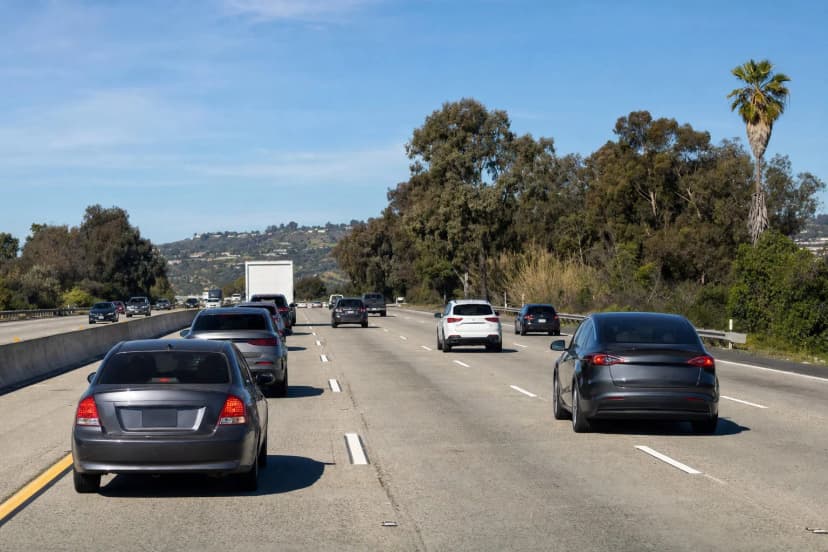
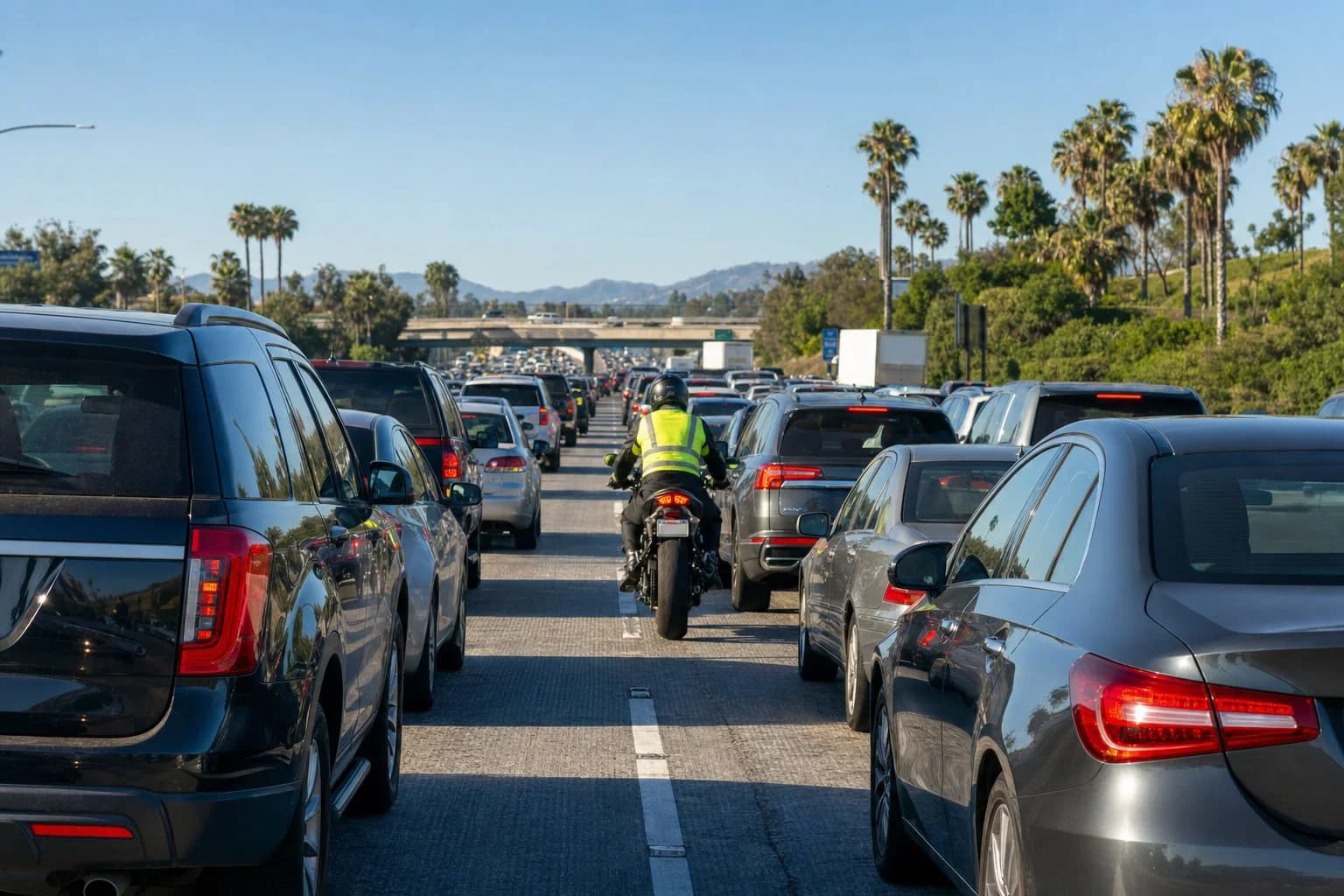
The afternoon commute through Orange County is a notoriously testing experience for the modern motorist. When traffic on the SR-55, the Interstate 5, or the dreaded "Orange Crush" interchange grinds to a sudden, exhaust-choked halt, the collective frustration of thousands of delayed commuters becomes an almost tangible force. The heat radiates off the asphalt, the brake lights stretch for miles, and the speedometer needle rests firmly at zero. In the midst of this standstill, a motorcycle suddenly materializes in the side-view mirror, glides effortlessly down the painted dashed line between two rows of trapped passenger vehicles, and vanishes into the distance ahead.
For the drivers left sitting in the gridlock, the reaction to this maneuver is often visceral. Startled by the sudden noise of the exhaust or the sheer proximity of the rider to the vehicle's side mirrors, motorists frequently experience a flash of irritation, if not outright anger. To the uninitiated or to drivers who have recently relocated from outside the Golden State, the maneuver feels inherently reckless, distinctly unfair, and entirely illegal.
Yet, in California, this maneuver—known legally as lane splitting—is a fully authorized, highly regulated, and surprisingly necessary traffic safety mechanism. While previous automotive discussions have focused heavily on educating motorcycle riders about driver visibility and defensive riding techniques, it is equally critical to examine this specific legal maneuver from the perspective of the passenger-car driver. By dissecting the intricate legal code, analyzing the psychological triggers of road rage, evaluating the profound limitations of modern vehicle safety technology, and highlighting the community safety tools available to everyday commuters, a much clearer picture of modern highway dynamics emerges. This comprehensive report serves to bridge the gap between driver frustration and rider safety, offering an in-depth analysis of the realities of sharing the road in the nation's only lane-splitting state.
Decoding the Law: California Vehicle Code 21658.1
For decades, the practice of a motorcycle riding between lanes of traffic operated in a confusing legal gray area within the state of California. The maneuver was neither explicitly permitted nor expressly forbidden by the state's vehicle code. It existed simply because there was no specific statute in the books to prohibit a two-wheeled vehicle from sharing a lane with a four-wheeled vehicle. This ambiguity led to widespread confusion among motorists, riders, law enforcement officers, and insurance adjusters, who frequently clashed over who was at fault when an accident occurred between the lanes.
That paradigm shifted permanently in 2016. California made history by becoming the first—and currently the only—state in the United States to formally legalize the practice of moving between rows of moving or stopped traffic at highway speeds. Assembly Bill 51 was drafted, debated, and eventually signed into law by Governor Jerry Brown, officially adding Section 21658.1 to the California Vehicle Code (CVC). The law went into effect on January 1, 2017, effectively shielding riders from being cited merely for the act of splitting a lane.
Clarifying the Terminology: Splitting vs. Filtering vs. Sharing
To fully understand the legal landscape and the specific protections afforded to riders, it is necessary to differentiate between terms that are often incorrectly used interchangeably by the general public and the media. The distinctions are vital in the 2026 riding community:
- Lane Splitting: This is defined under CVC 21658.1 as the act of driving a two-wheeled motorcycle between rows of stopped or moving vehicles in the same lane, including on both divided and undivided streets, roads, or highways. This is what California uniquely permits, allowing the maneuver at moderate freeway speeds.
- Lane Filtering: This refers specifically to moving between slow or stopped vehicles to reach the front of a line at a red light or intersection. Several other states have legalized this much narrower, low-speed practice to prevent rear-end collisions at stoplights, but California law encompasses this action within the broader, overarching definition of lane splitting.
- Lane Sharing: This term most often refers to two motorcycles riding side-by-side within a single marked lane. While generally permissible for two motorcycles to share a lane, a motorcycle attempting to "share" a lane side-by-side with a passenger car is highly dangerous and distinct from the act of splitting the dashed dividing line.
Interestingly, a close reading of CVC 21658.1 reveals that the statute itself does not actually dictate a maximum speed limit or a maximum speed differential for lane splitting. Instead of writing hard speed limits into the law, the legislature delegated the responsibility of establishing safety benchmarks to the California Highway Patrol (CHP). The CHP was tasked with developing educational guidelines in a manner that would promote the safety of the motorcyclist, the drivers, and the passengers of the surrounding vehicles.
The California Highway Patrol Safety Guidelines
Following the passage of the legislation, the CHP, acting in consultation with the Department of Motor Vehicles (DMV), the Department of Transportation (Caltrans), and various motorcycle safety organizations, published official educational guidelines for lane splitting. While these guidelines are not strict laws—meaning a rider cannot be pulled over and cited under CVC 21658.1 merely for violating the guideline itself—they serve as the definitive benchmark for what constitutes "reasonable and prudent" riding behavior.
If an accident occurs on the freeway, law enforcement investigators, insurance adjusters, and civil juries rely heavily on these CHP metrics to determine liability. California is a pure comparative fault state, meaning that fault for an accident can be divided between the parties by percentages. If a rider is found to be operating outside the CHP guidelines, their percentage of fault will increase, reducing their financial recovery. Conversely, a driver who assumes the rider is automatically at fault is deeply mistaken; the statute functions as a legal shield for the rider, meaning the defense cannot argue that lane splitting is per se unlawful or negligent.
The Core Principles of Safe Splitting
The current CHP guidelines focus heavily on general safety principles, emphasizing the physical reality that the danger of a collision, as well as the severity of the resulting physical injuries, escalates rapidly as speed and speed differentials increase.

| Safety Metric | CHP Guideline Recommendation | Analytical Reasoning |
|---|---|---|
| Speed Differential | Maximum 10 mph faster than surrounding traffic | Provides adequate reaction time for both the rider to spot an opening and the driver to see the rider in their mirrors. The greater the differential, the less time a rider has to evade a sudden lane change. |
| Total Traffic Speed | Avoid splitting if overall traffic is moving > 30 mph | Impact severity and required braking distances escalate dangerously above 30 mph. At just 20 mph, a rider will travel 30 to 60 feet in the 1–2 seconds it takes merely to identify a hazard, let alone brake. |
| Lane Positioning | Split between the Far-Left Lanes (Lanes 1 & 2) | Drivers in the fast lanes anticipate motorcycles passing on their right. This positioning avoids the chaos of merging traffic, on-ramps, and off-ramps. |
| Commercial Vehicles | Avoid splitting near large trucks, buses, or RVs | Massive blind spots render the rider invisible. Aerodynamic turbulence generated by large rigs can physically destabilize a motorcycle and push it into adjacent traffic. |
The guidelines also urge riders to constantly evaluate the "total environment." This requires a continuous calculation of lane width, lighting conditions, weather, and pavement quality. Riding on the shoulder of the road is explicitly illegal and is not considered lane splitting under any circumstances.
Furthermore, the guidelines emphasize the "Four R's" of lane splitting for motorcyclists: Reasonableness (maintaining safe speeds), Responsibility (owning one's safety decisions), Respectfulness (avoiding aggressive gestures or revving loud pipes to startle drivers), and avoiding unnecessary Risks. These guidelines are formulated under the assumption of a high level of riding competency; inexperienced riders are strongly cautioned against attempting the maneuver.
The Psychology of Traffic: Why Drivers React Badly
If lane splitting is a highly regulated, fully legal maneuver supported by the California Highway Patrol, why does it continue to provoke such intense hostility and aggression from passenger-car motorists?
The data highlights a significant disconnect between the law and public perception. Surveys conducted by the California Office of Traffic Safety (OTS) reveal that while slightly more than half of California drivers (53%) correctly understand that the practice is legal, a staggering 7% of drivers admit to actively attempting to block or impede a lane-splitting motorcyclist from passing them.
This hostility stems from a complex intersection of human psychology, sociology, and the physical constraints of the modern commute.
The Empathy Imbalance
Researchers studying traffic psychology point to a phenomenon frequently described as the "empathy imbalance." Because the vast majority of motorists do not ride motorcycles, they cannot physically or mentally relate to the vulnerabilities and operational realities of a two-wheeled vehicle. To a driver insulated inside a climate-controlled, 4,000-pound steel cabin equipped with airbags and crumple zones, a motorcycle darting through narrow gaps at 20 miles per hour appears inherently reckless and chaotic.
The driver naturally interprets the motorcycle's maneuver through the lens of passenger-car dynamics. They fail to understand the mechanical realities of the motorcycle—such as the fact that many older or high-performance motorcycles rely on constant airflow over the engine block to prevent severe overheating, making sitting in gridlock mechanically destructive. More importantly, the driver cannot relate to the profound physical vulnerability of sitting completely exposed between the bumpers of two massive vehicles in stop-and-go traffic. What seems like "renegade" behavior to the driver is often a calculated survival strategy for the rider. For parents who are also trying to keep teen drivers safe in their first car, pairing this understanding with a structured approach like the one in smart strategies to keep teens safe in their first car can shift the whole family's mindset toward empathy and safety.
The Queue-Jumping Fallacy and Fairness Bias
American driving culture is heavily predicated on the concepts of egalitarianism, fairness, and "waiting one's turn." A traffic jam is viewed subconsciously as a collective burden, a shared suffering that everyone must endure equally. When a motorcyclist smoothly bypasses the miles of gridlock, it triggers a deep-seated psychological resentment often described by sociologists as the "queue-jumping fallacy" or the "crab bucket mentality."
Drivers perceive the rider as "cutting in line," viewing the maneuver as an unfair evasion of the commute's shared misery. This perception, however, overlooks a critical physical and mathematical reality: motorcycles are not taking up a space in the linear queue. By filtering to the front and removing themselves from the line of cars, motorcycles actually reduce the total length of the traffic jam, easing congestion and reducing overall emissions for the cars left behind. A motorcycle utilizing the unused roadway space between the lanes is actively benefiting the cars waiting in line, yet the psychological bias of "fairness" prevents many drivers from acknowledging this benefit.
The Startle Effect and Retaliatory Behavior
Beyond the philosophy of fairness, there is a visceral, biological reaction that occurs when a driver is suddenly passed by a motorcycle. In densely populated areas like Orange County, drivers are frequently distracted by navigation systems, climate controls, or fatigue. When a motorcycle passes closely, the sudden noise of the exhaust or the visual flash in the peripheral vision triggers a mammalian startle response. The driver's heart rate spikes, and that sudden jolt of adrenaline is instantly converted into anger directed at the rider.
Driven by this anger, a sense of injustice, or the desire to enforce their own version of vigilante traffic law, some motorists engage in retaliatory behaviors. They may drift toward the dashed line to close the gap, tap their brakes aggressively, block the lane entirely, or in extreme, highly documented cases, open a vehicle door as the motorcycle approaches.
The legal code is entirely unambiguous regarding this behavior. It is strictly and explicitly illegal to intentionally block or impede a motorcyclist in a manner that could cause them physical harm. Opening a vehicle door to impede a passing rider is an egregious violation of the law and can result in severe civil liability, criminal assault charges, and devastating financial ruin for the driver. Motorists can also be cited by law enforcement under CVC 22400 for intentionally driving at a slow speed that impedes the normal and reasonable movement of traffic.
The Surprising Science: Why Lane Splitting Enhances Safety
The most counterintuitive aspect of lane splitting for the average passenger-car driver is the statistical reality that, when performed within the bounds of the CHP guidelines, the maneuver actually protects the rider from catastrophic physical harm.
For years, proponents of the practice argued anecdotally that sitting in stop-and-go traffic was a death sentence for a motorcyclist. A landmark study conducted by Dr. Thomas Rice and an extensive team of researchers at the UC Berkeley Safe Transportation Research and Education Center (SafeTREC) finally provided the empirical data to support this claim. The researchers meticulously analyzed nearly 6,000 motorcycle-involved collisions across California between June 2012 and August 2013. The findings systematically dismantled the assumption that lane splitting is inherently suicidal, revealing profound insights into highway safety dynamics.
Escaping the Lethal Crush Zone
The SafeTREC study identified that the most profound and ever-present danger to a motorcyclist in congested traffic is the rear-end collision. A motorcycle completely lacks the safety features of a passenger car: there is no rear crumple zone, no trunk to absorb impact, no steel safety cage, and no seatbelts.
When a distracted driver—looking at a phone or adjusting a radio—fails to brake for slowed traffic, a motorcyclist sitting squarely in the center of the lane is caught between the accelerating vehicle behind them and the stationary vehicle in front of them. The resulting "sandwich" effect means the human body absorbs the kinetic energy of the collision, frequently resulting in fatal trauma or severe spinal cord injuries. In California, distracted drivers are responsible for a massive share of these multi-vehicle collisions with motorcycles. Many of the same split-second attention lapses also cause devastating intersection crashes, including with riders and pedestrians; learning why predictability comes first in intersection safety helps drivers understand how small choices about signaling and yielding can prevent deadly blind spots for everyone on two wheels or four.
Lane splitting effectively extracts the rider from this lethal crush zone. By positioning the motorcycle on the dashed line between the lanes, the rider is physically removed from the direct trajectory of a rear-end impact. The UC Berkeley data confirmed this hypothesis emphatically, showing that lane-splitting riders were significantly less likely to be rear-ended than those who sat compliantly in the center of the lane (2.6% versus 4.6%). Furthermore, when comparing California to states that prohibit lane splitting, such as Texas and Florida, California boasts a 30% reduced rate of rear-end collision deaths for motorcyclists.
Impact Severity, Glancing Blows, and Injury Rates
When collisions do inevitably occur during a lane-splitting maneuver, the physics of the impact differ dramatically from traditional rear-end or T-bone accidents. If a passenger car changes lanes without signaling and merges into a splitting motorcycle, the impact is typically a side-to-side "glancing blow."
Because the motorcycle is already moving in a forward trajectory alongside the vehicle, the rider often deflects off the side panels of the car rather than coming to an abrupt, energy-absorbing halt against a solid bumper. This physical dynamic allows the rider to sometimes maintain balance or, at the very least, scrub off speed before hitting the asphalt.
This dynamic is reflected vividly in the SafeTREC injury statistics. The study found that out of the 997 lane-splitting collisions analyzed, the riders were markedly less likely to suffer severe injuries compared to non-lane-splitting riders involved in crashes.
| Severe Injury Category | Rate for Non-Splitting Riders | Rate for Lane-Splitting Riders |
|---|---|---|
| Head Injury | 17% | 9% |
| Torso Injury | 29% | 19% |
| Fatal Injury | 3.0% | 1.2% |
Source: UC Berkeley SafeTREC Motorcycle Lane-Splitting and Safety Report.
The study concluded unequivocally that lane splitting is a relatively safe riding strategy, provided the overall traffic is moving at 50 mph or less, and the speed differential does not exceed 15 mph. However, the researchers noted a severe threshold: once that 15 mph speed differential is breached, the risk of injury skyrockets, validating the CHP's strict recommendation of a maximum 10 mph differential.
The data paints a clear picture. While lane splitting is not without risk, when performed prudently, it drastically mitigates the exposure to the most lethal types of collisions, ultimately saving lives on the highway.
The Technological Blind Spot: When Modern Vehicle Safety Features Fail
As modern passenger vehicles become increasingly sophisticated, effectively morphing into rolling computers, drivers have grown deeply reliant on Advanced Driver Assistance Systems (ADAS). One of the most ubiquitous and highly marketed features in modern automotive design is the Blind Spot Monitor (BSM).
BSMs utilize a complex network of cameras, radar, and ultrasonic sensors embedded in the rear bumpers and side mirrors to detect vehicles occupying adjacent lanes. When a vehicle is detected, the system triggers visual indicators—usually a glowing icon on the side mirror—and may emit audible chimes or vibrate the steering wheel if the driver activates a turn signal while the blind spot is occupied. Advanced iterations of this technology even feature Automatic Emergency Steering (AES) or Braking (AEB), which physically intervene to prevent the driver from merging into an occupied lane.
While BSMs have successfully reduced lane-change collisions between passenger cars by roughly 14% and reduced injury-causing crashes by 24%, they have simultaneously created a highly dangerous secondary effect: profound technological complacency. Drivers who trust their dashboard sensors implicitly are abandoning the fundamental, life-saving practice of physically turning their heads and looking over their shoulders to check their blind spots. For a lane-splitting motorcyclist, this over-reliance on technology is a critical, life-threatening hazard. The same overconfidence shows up when drivers assume radar, cameras, or even EV range estimates will save them in every situation; understanding the limits of these systems, like those explored in guides on EV range anxiety and real-world range, can help drivers rethink when it’s safe to lean on tech—and when they must rely on their own awareness.
The Sensor Limitation with Motorcycles
The harsh engineering reality is that blind spot monitors are notoriously flawed when it comes to detecting motorcycles. Because motorcycles possess a much smaller physical profile and operate closer to the ground than passenger cars or commercial trucks, they return significantly weaker radar signatures. Furthermore, the narrow profile of a motorcycle frequently allows it to slip entirely beneath the detection threshold of ultrasonic sensors designed to bounce off the broad side panels of an SUV.
A comprehensive evaluation conducted by the American Automobile Association (AAA) revealed alarming statistics regarding this technology. The AAA report demonstrated that BSMs detected motorcycles a staggering 26% later than passenger vehicles. In many tests, the systems completely failed to detect the motorcycle at all.
When a motorcycle is executing a lane-splitting maneuver, it is often riding precisely on the painted dashed line dividing the lanes. This places the motorcycle in a spatial gray zone. The BSM algorithms, programmed to look for the mass of a vehicle centered in the adjacent lane, struggle to categorize a narrow object riding the dividing line as a legitimate threat.
Furthermore, BSMs frequently struggle to compute rapid speed differentials. If a passenger vehicle is crawling in gridlock at 10 mph and a motorcycle splits the lane approaching from the rear at 25 mph, the rapidly approaching narrow object may trigger the mirror alert far too late for the driver to take evasive action. The technology is also highly susceptible to false positives caused by dirty sensors, heavy rain, blinding glare, or misaligned bumper tape, prompting many frustrated drivers to simply ignore the flashing lights entirely or disable the system altogether.

The Silent Threat: Electric Motorcycles and the Startle Effect
Compounding the technological blind spots is the rapid proliferation of Electric Vehicles (EVs) on California roadways. By 2026, high-performance electric motorcycles are a common, daily sight in California's carpool lanes.
Unlike traditional internal combustion engine motorcycles, which emit an unmistakable, low-frequency exhaust note that serves as a vital auditory warning to surrounding drivers, electric motorcycles are virtually silent. The "loud pipes save lives" mantra, while debated for its effectiveness, undoubtedly provides some advanced warning of a rider's approach. Electric motorcycles strip away this auditory cue entirely.
When an electric motorcycle splits a lane, the driver receives no sound warning. Combined with a failing radar sensor and a driver suffering from technological complacency who neglects to physically check their mirrors, the silent approach of an EV motorcycle dramatically increases the "startle effect." When the rider appears suddenly in the driver's side window, the terrified driver may jerk the steering wheel reflexively, causing the exact devastating collision the rider was attempting to avoid. While engineers are experimenting with Proactive Bus Blind Spot Warning (PBSW) systems that use Raspberry Pi and stereoscopic cameras to warn motorcyclists of large vehicle blind spots, the technology remains in its infancy. The burden of safety remains squarely on human awareness.
The Intersection of Technology, Accountability, and Community Safety
The complex, daily friction between frustrated motorists, vulnerable lane-splitting motorcyclists, and failing automotive safety sensors highlights a critical gap in modern road safety: the distinct lack of constructive, real-time communication between drivers.
When a passenger-car driver is startled by a close-passing motorcycle, or when a rider witnesses a driver texting and aimlessly drifting across the dashed dividing line, the immediate reaction is often shouting, aggressive tailgating, or dangerous physical confrontation. The anonymity of the highway breeds a lack of accountability, which in turn fuels the road rage incidents that plague Southern California freeways.
This is the precise safety gap that community-driven technology platforms aim to bridge. The Carszy platform represents a vital shift away from the toxicity of traditional "Social Media" and toward a concept defined as Human Media™—leveraging smartphone technology for real-world impact, accountability, and community safety.
By utilizing public license plates as unique, secure identifiers, the Carszy platform enables immediate Driver-to-Driver communication without ever exposing or requiring personal contact information. This License Plate Messaging system allows motorists and riders to alert one another to immediate hazards securely and anonymously.
Instead of a dangerous confrontation on the narrow shoulder of the SR-55 freeway, a driver can send a secure alert noting that a rider's brake light is burnt out, or a rider can alert a driver that they are drifting across the lane dividers. This de-escalates tension and replaces highway shouting matches with actionable, safety-oriented communication.
Moving Beyond Road Rage to Real-World Impact
For the neighborhood watch advocate, the safety-conscious protective parent, or the daily commuter navigating the chaotic arteries of Orange County, the open road can feel inherently unaccountable and lawless. When drivers witness extreme acts of road rage, such as a motorist deliberately swerving to block a lane-splitting motorcycle, the traditional recourse has been either to ignore the crime or engage in a highly dangerous physical intervention.
Platforms focused strictly on community mobilization offer a powerful alternative. Carszy's VOIS™ (Vehicle of Interest Search) feature allows communities to rapidly broadcast and share alerts regarding vehicles involved in critical incidents, such as hit-and-runs, severe road rage assaults, or even abductions.
By utilizing strictly US-based servers and rigorously protecting user privacy, the platform empowers the driving community to crowdsource safety. This drastically reduces law enforcement response times and promotes a culture of accountability on the highway. When a driver understands that an act of reckless swerving to block a motorcycle can be immediately documented, identified via license plate, and reported through an iOS or Android app by a dozen surrounding vehicles, the deterrent effect is profound. Transparency, real-time reporting, and community accountability replace the dangerous anonymity that has historically fueled highway aggression.
Actionable Advice for the Everyday Commuter
Understanding the complex legal framework and the underlying physics of lane splitting is only half the equation; applying that knowledge safely in the real world is paramount. Whether commuting down the congested I-405, navigating local city streets, or transitioning through the Orange Crush, both drivers and riders must adopt a defensive, educated posture.
Essential Practices for the Motorist
- Perform Physical Visual Checks: Never rely entirely on Blind Spot Monitors or Automatic Emergency Steering systems. Drivers must physically turn their heads to check the blind spot before initiating any lane change, particularly in heavy, stop-and-go traffic where motorcycles are statistically most likely to filter through. Building this habit goes hand in hand with cutting down on screen time and avoiding the dangerous "two-second glance" at in-car touchscreens—habits explored in depth in this guide to the danger of the two-second glance, which shows how tiny distractions can erase your reaction window to a splitting rider.
- Strictly Honor CVC 22107: California law mandates that no person shall turn a vehicle from a direct course unless the movement can be made with reasonable safety, and only after giving an appropriate turn signal for a minimum of 100 feet prior to the turn. Failing to signal deprives the rider of the ability to anticipate the gap closing and is the primary cause of lane-splitting collisions.
- Give Space in the Number One Lane: When driving in the far-left lane (Lane 1 or the HOV lane), make it a conscious habit to hug the left side of the lane divider. This simple adjustment provides ample, safe space for motorcyclists to pass on the right, significantly reducing driver tension and entirely eliminating the risk of a side-mirror clip. The same mindset of sharing space and reducing conflict also applies when you’re driving an EV, waiting for a charger, or using an HOV lane—many of the same courtesy principles from modern charger etiquette can be applied directly to how you treat riders and high-occupancy lanes.
Essential Practices for the Motorcyclist
- Adhere to the 10/30 Principle: Keep the speed differential strictly under 10 mph compared to the cars being passed, and merge safely back into the flow of traffic when the overall speed exceeds 30 mph. Violating these metrics destroys the safety margin provided by the maneuver.
- Assume Absolute Invisibility: Ride with the operating assumption that every vehicle's blind spot monitor will fail to detect the motorcycle, that every driver is distracted by a smartphone, and that the EV's silent approach is startling. Cover the brake levers at all times, watch the front wheels of passenger cars for sudden twitches indicating an unsignaled lane change, and utilize high beams during daylight hours to maximize presence in side mirrors.
Both drivers and riders should also prepare for what happens when something goes wrong: a flat, a breakdown, or a minor collision. Knowing how to safely move to the shoulder, set up a buffer, and call for help is just as important as mastering lane splitting itself, and the step-by-step roadside protocol in this roadside survival playbook for drivers can dramatically cut the risk of a secondary crash while you wait for assistance.
Conclusion
Lane splitting remains one of the most widely misunderstood and emotionally charged aspects of driving on California roadways. However, the empirical data and the legislative intent provide an undeniable truth: when executed responsibly and within the parameters established by the California Highway Patrol, lane splitting relieves crushing traffic congestion and profoundly protects motorcyclists from fatal rear-end collisions.
The friction on the highway arises when the empathy imbalance between drivers and riders, the severe over-reliance on automotive safety technology, and the psychological stress of endless gridlock converge. Rather than succumbing to the primal urge of road rage, the modern driver now has the knowledge and the tools to foster a significantly safer environment.
By understanding the protective legal framework of CVC 21658.1, respecting the undeniable physics of two-wheeled travel, and utilizing innovative platforms that promote driver-to-driver accountability, the daily commute can transform from a hostile battleground into a cooperative, shared ecosystem. For safety-conscious drivers, neighborhood watch leads, and everyday commuters seeking to protect their communities and promote road safety, leveraging technology offers a secure, effective way forward. Download the Carszy app today to stay connected with fellow commuters, report dangerous driving behavior, and take an active, vital role in mobilizing real-time community safety.
Frequently Asked Questions (FAQ)
Is lane splitting the exact same maneuver as lane filtering? While the two terms are often used interchangeably in casual conversation and media reports, they describe distinctly different maneuvers within the riding community. Lane filtering typically refers to the act of a motorcycle moving between stationary vehicles at very low speeds, usually to reach the front of an intersection at a red light. Lane splitting covers the much broader act of passing between vehicles that may be moving at higher speeds on a freeway. In California, CVC 21658.1 legally authorizes both practices under the single umbrella definition of "lane splitting." Conversely, some other states have recently passed laws that explicitly permit low-speed filtering at stoplights but maintain strict bans on freeway-speed splitting.
What should a driver do if a collision occurs with a lane-splitting motorcycle? The immediate priority is to pull the vehicle over safely, secure medical attention for any injured parties, and contact law enforcement. Drivers must not assume that the motorcyclist is automatically at fault simply because they were operating between the lanes. California follows a pure comparative negligence rule, meaning the financial fault for the accident can be divided between both parties based on their actions. If the driver failed to signal 100 feet before a lane change, merged without physically checking a blind spot, or acted aggressively, they could be held primarily or entirely liable for the collision, regardless of the rider's position between the lanes. Drivers should exchange information calmly, allow the CHP to document the scene, and rely on factual evidence rather than emotional assumptions. For teen and novice drivers especially, walking through this kind of step-by-step response ahead of time—as you might when teaching them to handle brake problems using an emergency brake-failure survival protocol—can reduce panic and keep everyone safer in the moment.
Does a driver have a legal obligation to move their vehicle out of the way for a lane-splitting motorcycle? No. Passenger-car motorists are not legally required by the California Vehicle Code to move over or yield their lane position to accommodate a lane-splitting motorcycle. However, drivers are strictly and legally prohibited from intentionally blocking or impeding a rider, which includes aggressively closing the gap, straddling the dashed line, or opening a door. While yielding is not a strict legal requirement, the California Highway Patrol strongly encourages drivers occupying the far-left lane to move to the left side of their lane as a common courtesy. This action provides ample room for the rider to pass safely on the right, reducing anxiety for the driver and ensuring the safety of the motorcyclist. Adopting this predictable, law-abiding behavior is part of a bigger pattern of safe decision-making—whether you’re choosing your next vehicle or your next route—and ties in with the kind of holistic decision-making covered in this guide to vehicle acquisition in 2026, where safety tech and community impact weigh just as much as price.