The Two-Second Lie: Distracted Driving in the Age of Infotainment
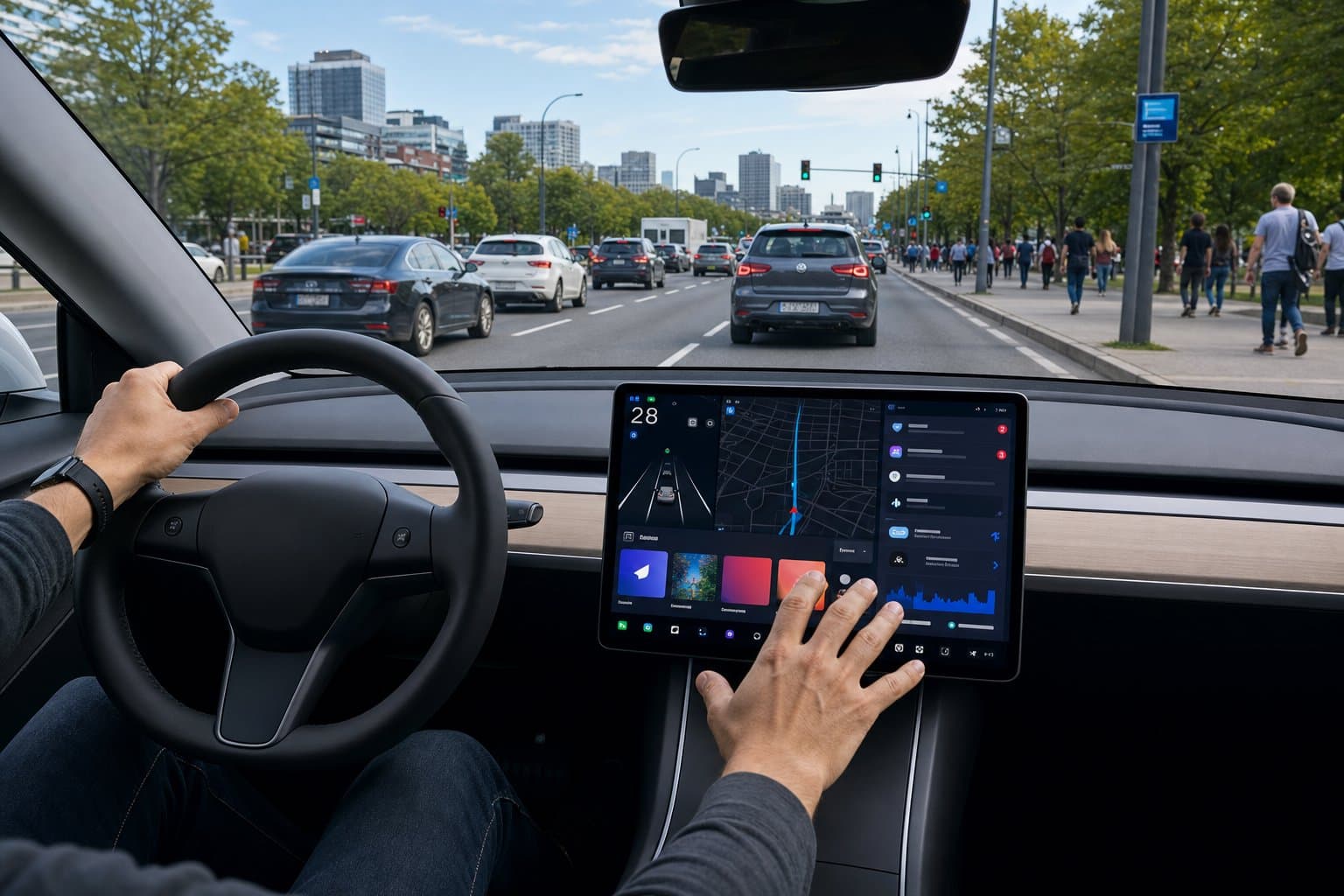
The modern commuter faces a profound paradox. While newly manufactured vehicles are equipped with unprecedented suites of active safety technology, the design of the contemporary vehicle cabin has never been more hostile to driver focus. Centralized touchscreens, glowing notification badges, and complex digital menus now dominate the dashboard, replacing tactile switchgear with high-definition glass.

Under the guise of seamless connectivity, drivers are subtly encouraged to believe that a brief visual detour is harmless. This behavioral assumption—that looking away from the forward roadway for a brief two-second interval carries negligible risk—is a dangerous falsehood that safety advocates, tech reviewers, and crash researchers refer to as the “two-second lie.”
Far from a benign transition, a two-second distraction represents a critical point of failure where vehicular velocity, human cognitive limitations, and flawed interface design converge with catastrophic consequences. As digital displays continue to expand, understanding the true neurological and physical costs of in-car technology is essential to restoring safety and accountability to public roads.
The Physical and Neurological Reality of the Two-Second Glance
For decades, defensive driving curricula have emphasized the “two-second rule” as a minimum threshold for safe following distance behind a lead vehicle. In a tragic cognitive inversion, many motorists have repurposed this metric, operating under the assumption that the eyes can safely wander away from the road for up to two seconds to interact with a device.
Empirical evidence from naturalistic driving studies conducted by the Virginia Tech Transportation Institute (VTTI) has thoroughly dismantled this belief. Taking eyes off the forward roadway for two seconds or longer more than doubles the risk of a crash or near-crash event in general driving scenarios.
For newly licensed or teenage drivers, the danger is amplified: a single longest glance away from the road exceeding two seconds multiplies the risk of a crash or near-crash by 3.8 times for general secondary tasks, and by a staggering 5.5 times when engaging with wireless devices. Families putting a teen in their first car should see that “quick glance” as a major risk signal, not a harmless habit, and pair this awareness with broader teen driver safety strategies around vehicle choice, tech limits, and family rules.
The physical mechanics of vehicle velocity illustrate why this behavioral gap is so unforgiving. When a vehicle is traveling at 55 mph, it covers approximately 81 feet per second. A driver who diverts their eyes for an average of 4.6 seconds to read or send a text message operates the vehicle blindly for roughly 370 feet—a distance exceeding the length of an entire football field.
Even a minor delay in driver response can be fatal; research indicates that if a driver reacts just a half-second slower due to an active distraction, the likelihood of a collision doubles.
Relative Crash Risks by Secondary Task Engagement
The table below outlines the dramatic escalation in crash and near-crash risk associated with various visual, manual, and cognitive distractions, as validated by naturalistic driving data.

| Secondary Task / Distracting Behavior | Elevated Crash Risk Multiplier (Odds Ratio) | Primary Distraction Vector |
|---|---|---|
| Reading or Writing (including tablet use) | 9.9x | Visual, Cognitive |
| Reaching for an Object (other than a cell phone) | 9.1x | Visual, Manual |
| Reaching for a Moving Object | 8.0x to 9.0x | Visual, Manual, Cognitive |
| Dialing a Handheld Mobile Device (Novice) | 8.3x | Visual, Manual, Cognitive |
| Reaching for a Handheld Mobile Phone | 7.1x | Visual, Manual |
| Looking at an External Outside Object | 7.1x | Visual, Cognitive |
| Texting or Web Browsing | 5.0x to 6.1x | Visual, Manual, Cognitive |
| Adjusting In-Vehicle Infotainment/Touchscreen | 4.6x | Visual, Manual, Cognitive |
| Browsing or Adjusting Vehicle Menu Systems | 2.7x | Visual, Manual, Cognitive |
Federal surveillance records from the National Highway Traffic Safety Administration (NHTSA) indicate that distraction-affected crashes officially claimed 3,208 lives and injured an estimated 315,167 people in 2024. However, traffic safety experts acknowledge that these numbers represent only the tip of the iceberg.
Because post-crash police logs rely heavily on self-reporting and circumstantial evidence, distraction is severely underreported. Naturalistic studies, which utilize in-vehicle cameras to record actual driver behavior prior to an impact, suggest that distraction is a contributing factor in approximately 29% of all traffic crashes, generating an estimated $98.2 billion in annual economic costs. When you zoom out to the broader pattern of rising traffic violence and vehicle safety gaps, distracted driving isn’t a side issue—it’s one of the main engines of preventable harm on our roads.
The Ergonomic Regression: Giant Screens and Dangerous Notification Design
The rapid transformation of the automotive cabin over the last decade has substituted intuitive, standardized physical layouts with customized digital interfaces. This design shift is driven by aesthetic trends originating in consumer electronics and a desire by automotive financial departments to lower manufacturing costs.
Consolidating physical climate dials, radio knobs, and suspension switches into a single central touchscreen is significantly cheaper than sourcing, wiring, and stocking physical switchgear. However, this shift has introduced a major ergonomic defect: the destruction of proprioception.
Proprioception is the human body’s subconscious ability to perceive the position and movement of its limbs in physical space. In legacy vehicle designs, a driver could operate climate controls or adjust radio volume purely by touch.
By sliding a hand across the dashboard, locating a raised physical dial, and feeling the tactile detents of its rotation, the driver could execute adjustments without ever taking their eyes off the roadway.
Touchscreens completely eliminate this physical feedback loop. Because a flat pane of glass offers no tactile landmarks, a driver is forced to look down to confirm where to tap.
This visual demand is further complicated by notification design. Modern infotainment operating systems utilize smartphone-like design languages, featuring flashing notification banners, incoming text pop-ups, and layered menu hierarchies.
These visual interruptions exploit human orienting reflexes, drawing the driver’s eyes downward to clear alerts or navigate nested settings. That same reflex gets weaponized again when drivers scroll phones at red lights or in gridlock, fueling the rear-end crashes and intersection conflicts explored in depth in our guide to safer intersections and night driving.
Comparative Task Performance: Touchscreens vs. Physical Controls
This physical danger was quantified in a landmark HMI (Human-Machine Interface) study by the Swedish motoring magazine Vi Bilägare. Researchers evaluated a dozen modern vehicles with varying levels of touchscreen integration against a 17-year-old 2005 Volvo V70 equipped entirely with physical buttons and dials.
Drivers were timed while performing four common, everyday tasks—such as adjusting climate settings, changing radio stations, and resetting the trip computer—while traveling at a constant speed of 110 km/h (68 mph).
| Tested Vehicle | Primary Interior Interface Type | Time Required to Complete Tasks (Seconds) | Distance Traveled During Interaction (Meters) |
|---|---|---|---|
| 2005 Volvo V70 | Physical Buttons, Dials, and Knobs | 10.0 | 306 |
| Dacia Sandero | Simplified Screen with Key Physical Buttons | 13.5 | 414 |
| Volvo C40 | Minimalist Touchscreen with Simple Menu Flow | 13.7 | 417 |
| Subaru Outback | Large Portrait-Oriented Touchscreen System | 19.4 | 592 |
| Mercedes GLB | Screen-Centric with Physical Trackpad / Buttons | 20.2 | 615 |
| Tesla Model 3 | Centralized, Multi-Layered Touchscreen | 23.5 | 715 |
| Volkswagen ID.3 | Screen with Unlit Capacitive Haptic Sliders | 25.7 | 785 |
| BMW iX | High-Complexity Screen and Rotary Controller | 30.4 | 928 |
| MG Marvel R | Large, Low-Responsiveness Touchscreen Display | 44.9 | 1,372 |
The empirical results reveal a stark safety gap. Operating the physical switchgear of the 2005 Volvo V70 required just 10 seconds, during which the vehicle covered 306 meters.
Conversely, the same operations in the Chinese-built MG Marvel R demanded 44.9 seconds of driver interaction, resulting in 1,372 meters—nearly seven-tenths of a mile—traveled with compromised forward attention.
Furthermore, eye-tracking analysis showed that operating lower touchscreen menus required drivers to lower their line of sight by up to 56 degrees, compared to a mere 20-degree drop in vehicles with well-positioned analogue dashboards. When you’re evaluating your next vehicle, these design choices belong right alongside price, fuel type, and safety ratings—much like the broader, tech-aware tradeoffs outlined in our guide to leasing, buying, or financing a car in 2026.
The Hands-Free Mirage: Cognitive Workload and the 27-Second Hangover
To address the rising risk of manual device interaction, automakers and legislators have heavily promoted voice-activated interfaces as a safe, distraction-free solution. While 29 states have enacted primary handheld cell phone bans for all drivers, none currently ban the use of hands-free communication devices for the general motoring public.
This regulatory distinction has fostered a widespread public belief that hands-free is risk-free.
Neurological and behavioral research conducted by the AAA Foundation for Traffic Safety and the University of Utah has dismantled this assumption. Driver distraction consists of three distinct vectors: visual (eyes off the road), manual (hands off the wheel), and cognitive (mind off the task). Of these, cognitive distraction is the most insidious because it is completely invisible to casual observation.
Using advanced monitoring equipment—including electroencephalograms (EEGs) to measure brainwave activity, brake reaction timers, and peripheral light detection systems—researchers mapped the mental workload imposed by voice-activated secondary tasks.
The study established a standardized cognitive distraction scale ranging from 1.0 (representing undistracted baseline driving) to 5.0 (representing a highly demanding mathematical and verbal processing task).
- Category 1 (Low Demand): Listening to the radio (1.21) or an audiobook (1.75).
- Category 2 (Moderate Demand): Maintaining a conversation on a hands-free phone (2.27).
- Category 3 (High Demand): Interacting with hands-free, voice-to-text systems to compose emails or dictate text messages (3.06).
Even when a driver’s eyes remain fixed on the forward roadway and both hands grip the steering wheel, high cognitive workloads degrade driving performance. Mentally distracted drivers experience “inattention blindness,” a phenomenon where the brain fails to process visual information captured by the retina.
This cognitive overload causes drivers to miss stop signs, overlook pedestrians, and fail to detect braking lead vehicles. Additionally, cognitive distraction induces a form of visual tunnel vision, severely reducing the driver’s lateral visual scanning of the surrounding traffic environment.
The most critical hazard identified in these studies is the persistence of cognitive impairment, often referred to as the “27-second hangover.” The brain does not instantaneously return to a safe driving state when a voice command is completed.
Rather, dangerous levels of cognitive distraction linger for up to 27 seconds after a driver finishes sending a voice-to-text message, selecting a song, or adjusting navigation settings.
At a speed of 25 mph, a vehicle travels the length of nearly three football fields during this post-interaction recovery window, leaving the driver functionally impaired during a critical transition back to baseline driving.
This cognitive vulnerability is further compounded by advanced driver assistance systems (ADAS), such as lane-keeping assist and adaptive cruise control. Rather than acting as a safety buffer, these semi-autonomous systems frequently induce driver complacency.
A study by the AAA Foundation found that drivers who routinely utilize ADAS are 80% more likely to engage in visually and manually distracting secondary tasks—such as texting, dialing, or reaching for objects—than those operating vehicles manually. In other words, the very tech that promises relief can lull us into the illusion that it’s safe to multitask, echoing the broader pattern described in The Invisible Co‑Pilot: When Smart Cars Meet Dumb Streets, where smart features collide with very human limits.
Demographic Disparities and Urban Vulnerability
The risk profile of distracted driving is highly stratified across age groups, geographic environments, and passenger dynamics. Younger, novice drivers represent the single highest-risk demographic on public roads.
Drivers between the ages of 15 and 20 account for approximately 9% of all drivers involved in fatal traffic crashes, yet they make up 10% of distracted drivers and 10% of drivers specifically distracted by cell phones in fatal collisions.
In-vehicle naturalistic recording devices reveal that teenage drivers spend between 20% and 21.1% of every driving trip looking directly at their mobile screens. For these novice motorists, passenger presence acts as a massive risk multiplier.
While the presence of passengers can occasionally assist older drivers, 94% of young people identify passengers as a primary source of distraction, and having multiple teens in a vehicle exponentially increases a novice driver’s likelihood of a fatal crash.
Gender also correlates strongly with high-risk behaviors: male drivers consistently account for approximately 71% of all distracted drivers involved in fatal traffic crashes nationwide. In California, male victims accounted for 62% of all distraction-related fatalities and serious injuries in 2023.
National vs. Regional Distraction Metrics
Geographic density dramatically influences distraction-affected collision rates, with urban environments bearing a disproportionate share of the safety burden. The table below contrasts national crash data against state-level statistics in California and metropolitan trends in Los Angeles County.
| Geographic Area | Annual Fatalities (Distraction-Affected) | Urban vs. Rural Crash Distribution | Top Primary Crash Factor in Serious Incidents | Top Traffic Safety Concern |
|---|---|---|---|---|
| United States (National) | 3,208 fatalities (2024) | N/A | Distracted Driving (accounting for 29% of all crashes) | Texting or emailing while driving (96% unsafe) |
| California (Statewide) | 158 fatalities (2023) | 74% Urban / 26% Rural | Unsafe speed (24.2% of serious injury crashes) | Texting or calling while driving (74.2% concern) |
| Los Angeles County | ~22,000 total crashes annually | Highly Concentrated Urban | Mobile device interaction and stopped-traffic scrolling | Distracted driving (linked to 15% of fatalities vs. 10% national) |
In dense metropolitan areas like Los Angeles, traffic congestion often acts as a behavioral catalyst for distraction. Drivers trapped in slow-moving traffic frequently overestimate their multitasking abilities, utilizing vehicle standstills to clear notifications, respond to work emails, or browse social media.
This micro-interaction habit directly contributes to rear-end collisions, which represent the most prevalent accident type in the United States, accounting for 2.5 million crashes annually.
Distracted driving is identified as the primary cause of approximately 90% of all rear-end collisions, typically occurring when a driver glances away for a “fleeting second” just as the leading vehicle brakes unexpectedly or comes to a complete stop. Those same blink-and-miss-it moments are especially unforgiving at intersections—exactly where our deep dive on roundabouts, safer designs, and community tech shows how tiny changes in driver attention can mean the difference between a near-miss and a serious crash.
Systemic Accountability and Behavioral Intervention
Addressing the public health crisis of distracted driving requires a two-pronged strategy: individual behavioral modifications that disrupt the habit loop of screen dependency, and systemic, community-driven accountability frameworks that leverage technology to promote safety rather than distraction.
Actionable Behavioral Fixes for Drivers
To establish safety habits that stick, drivers must treat the cockpit of their vehicle as an active operational environment rather than an extension of their digital workspace.
- The Pre-Drive Routine (Pre-Flighting): Before shifting the vehicle into drive, motorists should connect their smartphone to Apple CarPlay or Android Auto, input the destination address into the navigation display, and set their audio preferences. Once the vehicle is in motion, all non-essential adjustments must be suspended. This same “pre-flight” mindset—planning for weather, fuel, and emergency what-ifs—underpins broader preparedness steps like the ones in our modern driver’s guide to staying road ready.
- Physical Quarantine of Devices: To eliminate the visual and manual cues that trigger screen interaction, drivers should place their phones out of reach—such as in the glovebox, center console, or back seat—or configure their operating system to activate “Do Not Disturb While Driving” modes automatically.
- Analogue Overriding: Drivers should deliberately bypass touchscreen menus in favor of steering-wheel buttons or physical dials for basic operations like adjusting volume or passenger climate settings, training muscle memory to minimize head-down time.
Community-Driven Safety and Accountability
While individual behavioral habits are critical, real-world road safety requires broader community-wide vigilance and communication [cite: Company Context]. In-cabin isolation often leads to a tragedy of the commons, where drivers remain unaware of the immediate physical hazards they or their surrounding motorists present [cite: Company Context, 36].
Cooperative platforms like Carszy aim to bridge this gap by transforming vehicle communication through “Human Media™”—shifting technology away from self-centered social platforms and toward real-world community safety [cite: Company Context].
Carszy utilizes a vehicle’s license plate as a secure, unique identifier, enabling drivers to securely text or call other motorists using only their plate number [cite: Company Context]. Rather than forcing a driver to engage in dangerous touchscreen multitasking to signal a hazard, the platform facilitates safe, non-intrusive Driver Alerts [cite: Company Context]. That kind of targeted, off-road outreach pairs especially well with physical checks drivers can do themselves—like the quick tire, light, and fluid inspections highlighted in our hand-sized guide to tire safety.
Through this secure channel, a concerned motorist can alert another driver of critical issues—such as an unlatched roof rack, a flat tire, or a pet left inside a hot car—without violating driver privacy, as all data is securely hosted on US-based servers [cite: Company Context].
Beyond individual alerts, this community-oriented architecture supports broader public safety via the Vehicle of Interest Search (VOIS™) [cite: Company Context]. In the critical moments following a severe incident—such as a hit-and-run, a child abduction, or a trafficking event—the platform mobilizes local drivers to act as secure eyes on the road [cite: Company Context].
By crowdsourcing vehicle locations safely and sharing verified telemetry, this community-driven network reduces law enforcement response times and holds reckless driving accountable, establishing an active deterrent against dangerous behavior on shared roads [cite: Company Context]. It also helps communities respond faster when distraction has already caused harm, complementing the calm, step-by-step response protocols laid out in our 2026 fender bender survival guide.
The Regulatory Rebound: Reclaiming the Physical Button
As public frustration over distracting digital dashboards reaches a critical mass, global vehicle safety regulators are taking steps to restore tactile controls to modern cabins. The most influential catalyst in this movement is the comprehensive protocol overhaul enacted by the European New Car Assessment Programme (Euro NCAP) for 2026.
Representing the largest revision to vehicle testing and scoring procedures since 2009, the 2026 Euro NCAP protocols introduce a rigorous assessment of the human-machine interface (HMI) under its “Safe Driving” evaluation stage.
To achieve a coveted five-star safety rating—which serves as a key marketing tool in the global automotive industry—manufacturers must ensure that five critical, high-frequency vehicle functions are operated exclusively via dedicated, separate, physical controls outside of a touchscreen menu:
Turn Signals (Indicators)
[cite: 2, 22, 35]
Windshield Wipers
[cite: 2, 22, 35]
Hazard Warning Lights
[cite: 2, 22, 35]
The Horn
[cite: 2, 22, 35]
Emergency Calling Systems (eCall / SOS)
[cite: 2, 22, 35]
If an automaker chooses to bury these functions inside a digital screen or replace them with touch-sensitive capacitive sliders, the vehicle will be penalized, capping its maximum score at four stars.
This regulatory pressure is already forcing global automakers to pivot. Volkswagen, which faced heavy consumer backlash for its touch-intensive, unlit dashboard layouts in models like the ID.4, has committed to bringing back physical buttons and tactile dials in its upcoming models to keep driver focus on the road. The same kind of rethink is playing out around intersections, too, as cities pair stricter design standards with practical driver education like our explainer on why predictable behavior beats “being nice” at intersections.
Conclusion
The visual and cognitive demands of modern automotive touchscreens have exposed the “two-second glance” as a dangerous design fallacy. Operating a vehicle requires undivided visual and mental focus; when technology replaces tactile physical controls with flat glass menus, it compromises the safety margins of everyone on the road.
Addressing this hazard requires a combination of ergonomic design standards, disciplined driving habits, and community-driven safety platforms [cite: Company Context, 19, 26].
By adopting proactive pre-drive behaviors, supporting regulatory standards that mandate tactile switchgear, and participating in secure community safety networks like Carszy, drivers can reclaim control of their focus and help foster a safer, more accountable driving environment [cite: Company Context, 19, 26]. These same habits also prepare you to handle edge cases better—from sudden hydroplaning on a wet freeway to surprise hazards at busy junctions—as covered in our guide to hydroplaning safety and smarter intersections.
Drivers are invited to take the first step toward collective safety by downloading the Carszy app on Android or iOS to stay connected and help protect their neighborhoods [cite: Company Context].
Frequently Asked Question
Q: Why are physical buttons and dials safer than modern touchscreens, even if the touchscreen has haptic feedback?
A: Physical controls are safer because they leverage proprioception—the body’s ability to sense its limbs in physical space. This allows drivers to develop muscle memory, finding and adjusting controls (like climate settings or radio volume) entirely by feel without looking away from the road.
Touchscreens destroy this capability because flat glass feels identical regardless of the function displayed, forcing drivers to look down to confirm where to tap.
Haptic feedback fails to resolve this issue because it only provides confirmation after a screen has been touched, meaning the driver has already had to look at the display to locate the virtual button.