Teaching a Teenager to Drive: A Structured, Panic-Free Approach for Parents
The transition from passenger to licensed driver represents a monumental developmental milestone for a teenager, offering an intoxicating blend of newfound independence and mobility. However, for the parents and guardians tasked with supervising this transition from the passenger seat, the experience is frequently accompanied by profound, visceral anxiety. The modern roadway is a relentlessly complex, high-speed ecosystem populated by distracted commuters, heavy commercial vehicles, and unpredictable hazards. Teaching a teenager to safely navigate this environment requires far more than simply handing over the keys and offering a few words of encouragement; it necessitates a highly structured, patient, and psychologically sound coaching methodology.
The primary challenge for driving coaches lies in building fundamental vehicular skills in a logical, step-by-step sequence while simultaneously managing the volatile emotional dynamics of the parent-child relationship within the confined, high-stakes space of a moving vehicle. This comprehensive analysis provides an exhaustive, expert-level framework for teaching teenagers to drive. By dissecting empirical traffic safety data, deconstructing the Graduated Driver Licensing (GDL) system, exploring cognitive techniques such as commentary driving and predictable behavior at intersections, and examining the critical role of modern community safety platforms like Carszy, this report equips safety-conscious parents, neighborhood watch leads, and everyday drivers with the tools required to foster a lifetime of safe, accountable driving habits.
The Sobering Reality: An Analysis of Teen Driving Data
To understand why a highly structured coaching approach is strictly necessary, an examination of the empirical realities surrounding adolescent driving is required. Motor vehicle crashes remain the undisputed leading cause of preventable death for teenagers in the United States. The statistics surrounding young drivers highlight a stark vulnerability that stems primarily from cognitive inexperience rather than intentional, malicious recklessness.
In 2021, the National Highway Traffic Safety Administration (NHTSA) reported that 2,116 drivers aged 15 to 20 were killed in motor vehicle crashes, while an estimated 203,256 sustained injuries. When analyzing the broader age group of 13 to 19, the Centers for Disease Control and Prevention (CDC) notes that approximately 2,800 teens were killed and 227,000 were injured in 2020, resulting in roughly eight teenage deaths per day. The economic toll of these tragedies is equally staggering, with motor vehicle crash deaths among teens aged 13 to 19 resulting in an estimated $40.7 billion in medical costs and cost estimates for lives lost in 2020 alone.
Although young drivers between the ages of 15 and 20 represented only 5.0 percent of all licensed drivers in the United States in 2022, they accounted for 8.1 percent of all drivers involved in fatal traffic crashes. Furthermore, the crash rate per 100 million miles traveled is exceptionally high for this demographic. Drivers aged 16 to 19 were involved in 4.8 fatal crashes per 100 million travel miles, compared to just 1.4 for drivers aged 30 to 59, and 1.3 for drivers aged 60 to 69.
Identifying the Key Risk Factors
The heightened risk profile of teenage drivers is not uniform across all scenarios; it is heavily influenced by specific environmental, demographic, and behavioral factors. Recognizing these variables allows driving coaches to target their instruction and impose necessary restrictions effectively.

Gender Disparities in Crash Rates: The fatal crash involvement rate per 100,000 licensed drivers demonstrates a significant gender gap. In 2022, the involvement rate for young female drivers was 22.74, whereas the rate for young male drivers was 58.73—more than double. The CDC further corroborates this, stating that the motor vehicle crash death rate for male drivers ages 16 to 19 was three times as high as the death rate for female drivers in the same age group in 2020.
The Passenger Multiplier Effect: The presence of peer passengers exponentially increases the crash risk for unsupervised teen drivers. When a teen driver aged 16 or 17 carries exactly one peer passenger, the risk of dying in a crash doubles compared to driving alone. This risk multiplies by seven if the teen is carrying a mix of teen passengers and young adults. Conversely, in crashes where an adult aged 35 to 64 is present in the vehicle, the risk of the teen dying in a crash is cut in half. This dynamic explains why 56 percent of teens killed while riding as a passenger in 2021 were in a vehicle driven by another teenager.
Nighttime Driving Hazards: Darkness reduces visual acuity for all drivers, but it is particularly lethal for novices who have not yet developed advanced hazard-recognition and spatial-management skills. Approximately 44 percent of motor vehicle crash deaths among teens aged 13 to 19 occur between 9:00 p.m. and 6:00 a.m. A deeper dive into the data reveals a terrifying disproportion: while only 10 percent of trips taken by 16- and 17-year-olds occur between 9:00 p.m. and 11:59 p.m., 19 percent of their fatal crashes happen during this exact window. Even more dramatically, while only 1 percent of teen trips occur from 12:00 a.m. to 5:59 a.m., nearly 15 percent of their fatal crashes occur at this time.
Seat Belt Non-Compliance: Despite decades of high-visibility public safety campaigns, seat belt utilization among adolescents remains dangerously inconsistent. In 2022, of the young drivers of passenger vehicles killed with known restraint use, 53 percent were unrestrained at the time of the crash. The CDC reports that among teen drivers and passengers 16 to 19 years of age who were killed in car crashes in 2020, 56 percent were not wearing a seat belt. For families choosing or upgrading vehicles, pairing strict seat belt rules with cars that include strong crash protection and up-to-date safety tech—as outlined in our guide to keeping teens safe in their first car—can dramatically reduce risk.
Speeding and Following Distances: The developing adolescent brain frequently struggles with accurate risk assessment. Teens are significantly more likely than older drivers to speed and to allow shorter distances from the front of their vehicle to the rear of the next vehicle. In 2020, 35 percent of male drivers and 18 percent of female drivers aged 15 to 20 who were involved in fatal crashes were speeding at the time of the impact. Teaching them how speed, stopping distance, and tire grip interact—and how to maintain their tires properly, as covered in our tire safety guide—helps connect abstract rules to real-world physics.
| Risk Factor / Variable | Statistical Impact on Teen Drivers |
|---|---|
| Male Demographics | Fatality rate is 3 times higher than female peers; involvement rate is 58.73 vs 22.74 per 100k. |
| Night Driving | 44% of fatal teen crashes occur between 9 PM and 6 AM, despite representing a fraction of total trips. |
| Peer Passengers | Risk of death doubles with one peer; increases 7x with a mix of teens/young adults. |
| Seat Belt Omission | 53% to 56% of teen drivers/passengers killed were unbelted at the time of the crash. |
| Speeding Behaviors | 35% of male teens and 18% of female teens in fatal crashes were actively speeding. |
| Alcohol Impairment | 29% of drivers ages 15-20 killed in crashes had been drinking; 62% of those were unbelted. |
These data points underscore a critical biological reality: cognitive maturity dictates driving safety. The adolescent brain, particularly the prefrontal cortex—the region responsible for executive functions, risk assessment, impulse control, and anticipating consequences—is still actively developing and will not reach full maturity until the mid-twenties. Consequently, teenagers are biologically predisposed to underestimate dangerous situations, overestimate their own driving abilities, and succumb to digital and social distractions.
The Policy Blueprint: Graduated Driver Licensing (GDL)
To mitigate the outsized risks faced by novice drivers, public policy across the United States has universally shifted toward the Graduated Driver Licensing (GDL) framework. GDL systems are engineered to phase in full driving privileges over an extended period, ensuring that beginners acquire substantial experience in low-risk conditions before being legally exposed to high-risk environments like busy intersections, night driving, and complex traffic patterns. Many of the same principles show up in broader safety strategies, such as reducing intersection risks for motorcyclists and other vulnerable users.
While specific GDL laws vary by state jurisdiction, California's stringent and highly structured system serves as an excellent benchmark for understanding comprehensive driver training requirements. The California Department of Motor Vehicles (DMV) mandates a multi-stage process for all applicants under the age of 18.
Stage 1: The Instructional Permit Phase
In California, teenagers may apply for an instruction permit at the precise age of 15½, provided they meet strict educational prerequisites. The applicant must provide proof of enrollment in or completion of an approved driver education course, which typically consists of at least 30 hours of classroom or online instruction. Obtaining the permit requires a visit to the DMV to pass a rigorous written knowledge test covering traffic laws, road signs, and right-of-way rules, alongside a standard vision exam.
However, holding the physical permit does not grant immediate driving privileges. California law mandates that the provisional instruction permit is not considered legally valid until the student completes their first hour of behind-the-wheel instruction with a licensed, professional driving instructor. Overall, the state requires the completion of 6 hours of professional driver training, broken into multiple sessions, before the teen can test for a license.
Stage 2: The Parental Supervision Requirement
While professional instruction forms the baseline foundation of vehicle operation, parental supervision is where the necessary muscle memory and hazard-recognition skills are truly forged. The California DMV requires novice drivers to complete a heavily monitored minimum of 50 hours of supervised driving practice. This practice must be conducted with a licensed adult who is at least 25 years old (a higher age requirement than many other states, emphasizing the need for mature supervision).
Crucially, 10 of these 50 mandatory hours must be conducted at night. This specific mandate forces the novice driver to gain vital experience operating in low-visibility conditions—where depth perception is skewed and headlight glare can be blinding—under the safety of an experienced co-pilot. The student must hold the instruction permit for a minimum of six months before becoming eligible to take the practical behind-the-wheel driving test.
Stage 3: The Provisional License Restrictions
Passing the behind-the-wheel test is cause for celebration, but it does not represent the end of the GDL process. The successful applicant is granted a provisional license, which carries strict legal restrictions designed directly to limit the teenager's exposure to the highest-risk scenarios identified by the CDC and NHTSA. For the first 12 months of licensure (or until the driver turns 18), provisional drivers in California are strictly prohibited from:
Late-Night Driving: Operating a vehicle between the hours of 11:00 p.m. and 5:00 a.m.
Peer Passengers: Transporting any passengers under the age of 20 unless accompanied by a licensed driver aged 25 or older.
These restrictions perfectly align with the epidemiological data regarding the lethal nature of nighttime driving and the peer passenger distraction multiplier. The law allows for very specific exceptions, such as medical necessities, school-authorized activities (e.g., late sports practices), or employment requirements. However, these exceptions require the driver to carry signed, written documentation from a physician, school official, or employer in the vehicle at all times.
Pre-Driving Groundwork: The Parent-Teen Driving Agreement
Before the teenager even sits in the driver's seat and adjusts the mirrors, the psychological and operational groundwork for a safe learning environment must be firmly established. One of the most effective, evidence-based tools for setting clear expectations is a formal, written Parent-Teen Driving Agreement. Organizations dedicated to public safety, such as the Centers for Disease Control and Prevention (CDC) and the American Automobile Association (AAA), strongly advocate for putting family driving rules in writing prior to handing over the keys.
A written agreement transforms abstract, loosely enforced rules into concrete, mutual understandings, thereby preventing heated, emotional arguments about expectations in the future. It serves as a daily visual reminder of safety protocols when placed in a prominent household location, such as the refrigerator.
Core Components of a Robust Agreement
A comprehensive driving agreement should not merely be a list of demands; it should cover four distinct categories: operational safety, distraction mitigation, substance policies, and financial responsibilities, clearly outlining the obligations of both the teen and the parent.
1. Operational Safety: The agreement must stipulate strict, unwavering adherence to all traffic laws, including maintaining appropriate speeds, obeying all road markings, and utilizing turn signals. Most importantly, it requires a non-negotiable commitment that the driver and every single passenger will wear seat belts at all times. The CDC's sample agreement specifically includes language where the teen promises never to use the car to race or impress others.
2. Distraction Mitigation: Distracted driving is a primary catalyst for teen collisions. The agreement must include a strict, zero-tolerance prohibition on using mobile devices—including texting, reading emails, surfing social media, and even using hands-free speakerphone features—while the vehicle is in motion or stopped in traffic. It should also restrict eating, drinking, or wearing headphones/earbuds while driving, as these activities pull cognitive focus away from the road. Many families now also include rules about in-car screens and apps, especially in newer vehicles where a simple “two-second glance” at a screen can become dangerously distracting, as explored in our deep dive on the risks of the two-second glance.
3. Substance Policies and the Safety Net: The agreement must require absolute abstinence from alcohol and drugs before or during driving. However, it must also include a crucial psychological safety net: the teenager must agree to call the parent for a safe ride home if they find themselves impaired, or if their designated driver is impaired, without fear of immediate punitive action regarding the call itself. AAA agreements often include a clause where the parent promises to provide safe transportation home, regardless of the situation or time of the call, emphasizing that safety is the paramount priority.
4. Financial and Maintenance Responsibilities: Driving carries significant economic costs, and understanding this fosters a sense of responsibility. The agreement should clearly delineate who is responsible for fueling the vehicle, paying for routine maintenance (e.g., checking fluid levels, maintaining tire pressure, cleaning the interior), and covering monthly insurance premiums. Furthermore, the teen must explicitly agree to pay out-of-pocket for any traffic citations or parking tickets incurred due to their negligence. This can also be a natural place to talk about long-term costs and whether it makes sense to lease, buy, or finance a vehicle, using frameworks like those in our guide to vehicle acquisition decisions in 2026.
Establishing and Enforcing Penalties for Violations
An agreement lacks utility without consistently enforced consequences. The CDC guidelines suggest modifying or suspending driving privileges based on adherence to the rules. The following table outlines a standard, recommended framework for penalties associated with agreement violations:
| Violation of the Driving Agreement | Suggested Consequence / Penalty | Source Reference |
|---|---|---|
| Texting or using a cell phone while driving | Loss of driving privileges for 1 to 3 months. | CDC Agreement |
| Driving under the influence (Alcohol/Drugs) | Immediate loss of driving privileges for extended duration; zero-tolerance enforcement. | CDC / AAA |
| Speeding ticket or moving violation | Loss of driving privileges for several months; teen assumes financial cost of the ticket. | CDC Agreement |
| Violating passenger or curfew restrictions | Loss of driving privileges for several weeks to months. | CDC Agreement |
| Failure to enforce seat belt usage (self/others) | Loss of driving privileges for several weeks to months. | CDC Agreement |
The Psychology of Coaching: Avoiding Panic in the Passenger Seat
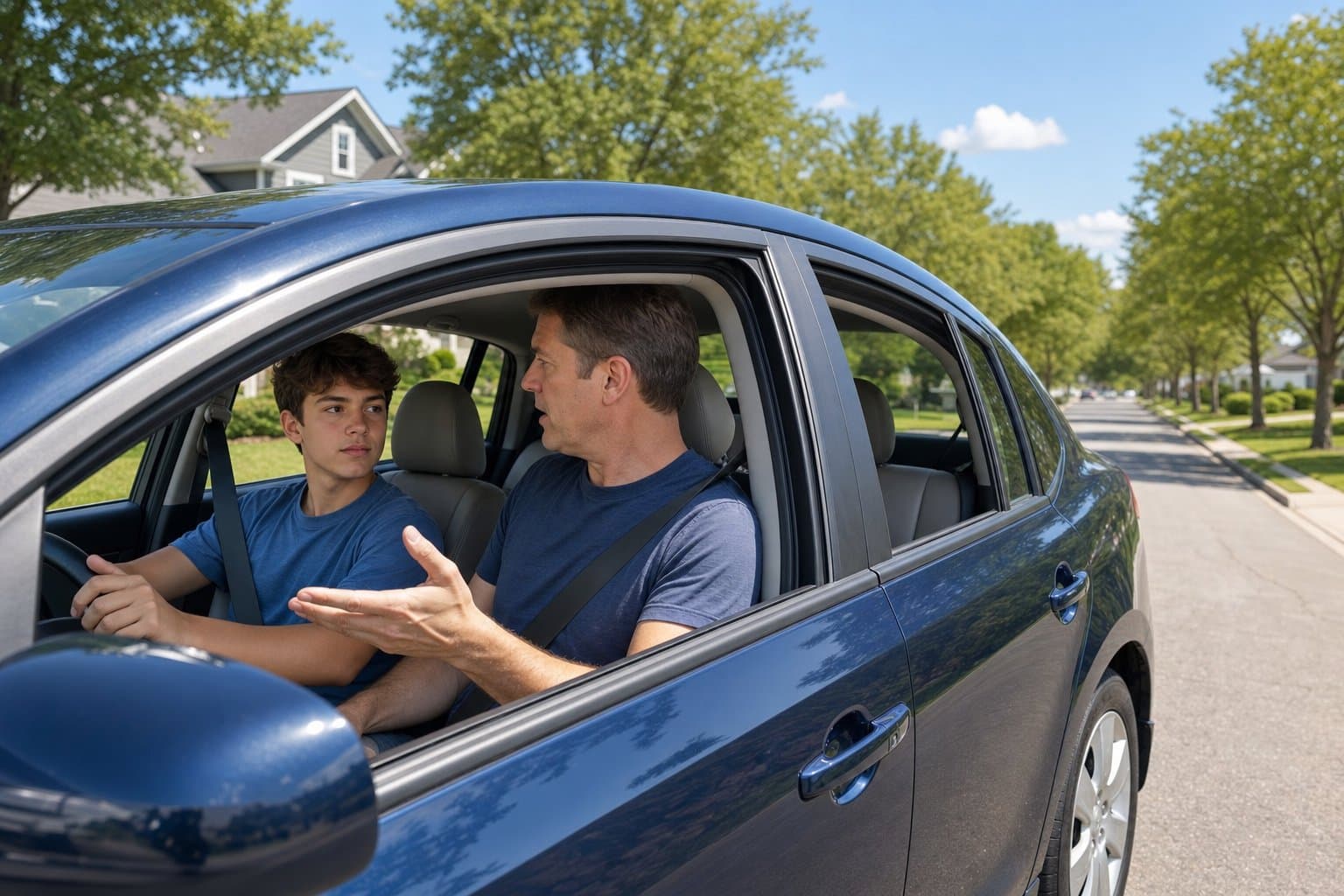
With expectations firmly set via the driving agreement, the practical, in-car coaching phase begins. The interior of a moving vehicle can easily become a high-stress, claustrophobic environment. The manner in which the parent communicates directly impacts the teenager's physiological state and ability to absorb information. A panicked coach inevitably creates a panicked, erratic driver.
To maintain a calm, productive environment, coaches should adhere to a set of psychological best practices:
Set Singular Goals: Rather than attempting to teach highway merging, parallel parking, and night driving all in one chaotic afternoon, a session should focus purely on a single, specific goal. One session might focus entirely on smooth braking, while another focuses solely on hazard identification.
Manage Session Length: Cognitive fatigue sets in rapidly for novice drivers. Taking regular breaks every 20 minutes to pull over, breathe, and review the recent drive helps the teenager process the experience without becoming overwhelmed.
Neutralize Feedback: Crucially, feedback must be calm, precise, and immediate. Vague, emotionally charged criticisms such as “You're doing it wrong!” or sudden, panicked shouts of “Watch out!” induce a startle response in the driver, which impairs motor control and decision-making. Instead, if a mistake is made, the coach should remain emotionally flat, direct the driver to pull over safely, and analyze the error objectively. The maneuver should then be repeated calmly until executed correctly, reinforcing the concept that mistakes are a standard, expected part of the learning curve.
Establish a Shared Vocabulary: Prior to initiating the vehicle, it is highly beneficial to establish a standardized vocabulary. For instance, agreeing that the word “right” will only ever refer to a directional turn, and using the word “correct” to affirm a statement, prevents dangerous, split-second miscommunications at busy intersections.
Leave the Baggage at the Curb: Driving time must be sacrosanct. Coaches must consciously leave touchy subjects—such as poor report cards, messy bedrooms, or interpersonal family drama—out of the vehicle. Bringing up stressful topics distracts both the driver and the coach from the life-or-death task of navigating the road.
The Secret Weapon: "Commentary Driving"
One of the most effective, yet vastly underutilized, cognitive tools in the parent-coach arsenal is a technique known as “commentary driving.” Borrowed from advanced defensive driving courses, law enforcement training, and specialized instruction for drivers with learning challenges, commentary driving requires the student to narrate their actions, thoughts, and visual observations aloud in real-time, functioning much like a sports play-by-play commentator.

The Mechanics of Commentary Driving
In standard, outdated coaching models, the parent acts as a passive observer who frequently interjects with urgent warnings or repetitive questions (“Did you see that car?” “Why are you braking?”). This reactive approach induces panic and increases the cognitive load on the teenager. Commentary driving completely flips this dynamic. The driver proactively vocalizes the environment, proving to the coach that they are actively scanning, processing, and predicting.
When executed properly, the learning process begins with the coach modeling the technique. The parent drives while stating observations aloud: “I am approaching a green light at 35 miles per hour. I see a pedestrian waiting on the right curb looking at their phone. I am checking my rearview mirror; the car behind me is at a safe distance. The light is still green. I am covering the brake with my foot just in case the pedestrian steps out. The intersection is clear, I am proceeding through.”
The teenager then takes the wheel and replicates this continuous narration. A typical commentary from the student might sound like: “Checking mirrors. Left mirror is clear. I see a cyclist ahead on the right edge of the lane. Easing off the gas to give them space. Signaling left to safely pass. Checking blind spot. Returning to the center of the lane.”
The Cognitive Benefits of Narration
Commentary driving yields immense psychological and practical benefits for novice drivers, particularly those who struggle with anxiety or attention deficits:
Enhances Situational Awareness: By forcing the brain to translate raw visual input into spoken words, the driver becomes hyper-aware of their surroundings. It actively prevents the hazardous “zoning out” or “highway hypnosis” that frequently afflicts unengaged drivers.
Improves Predictive Decision-Making: Verbalizing the thought process allows the driver to anticipate actions before they are strictly necessary, moving them from a reactive driving posture to a proactive one.
Facilitates Constructive, Pre-Emptive Feedback: The parent can hear the teenager's decision-making process before an error occurs. If the teen is approaching a stale red light and fails to mention it in their commentary, the parent instantly knows the hazard has not been perceived. The coach can then gently guide their attention (“What color is the light at the next intersection?”) without shouting or grabbing the dashboard.
Reduces In-Car Interpersonal Friction: By focusing entirely on the continuous narration of the road, interpersonal tension between the parent and teen is vastly reduced. The conversation remains strictly tethered to the driving task, eliminating awkward silences or the space for arguments.
Coaches should implement this technique gradually, starting in simple, low-traffic environments. Talking while driving initially requires significant mental bandwidth and can feel awkward for a self-conscious teenager. If a teenager suddenly stops commenting during a practice session despite prompting, it is a primary indicator of mental fatigue or cognitive overload. When the commentary ceases, hazard-spotting abilities decline rapidly, signaling to the coach that it is time to conclude the practice session.
The Skill-Building Roadmap: A Phased Approach to the 50 Hours
The most common structural error parents make is exposing the novice driver to complex traffic environments too quickly. Skill acquisition must follow a linear progression, isolating variables until mastery is achieved before introducing new complexities. The 50 hours of required practice should be broken down into distinct phases.
Phase 1: The Closed Environment (The Empty Parking Lot)
The initial driving sessions should occur in a large, level, completely obstacle-free parking lot. The objective here is strict mastery of the vehicle's controls, understanding its physical footprint, and grasping basic physics.
Before the engine is even started, the teenager must master the pre-drive checklist (the “cockpit drill”): fastening the seat belt, adjusting the seat for optimal pedal reach and airbag distance, setting the steering wheel height, and adjusting the rearview and side mirrors to eliminate blind spots.
Once the vehicle is placed in motion, instruction should focus entirely on smooth acceleration and braking. Novice drivers frequently exhibit a jerky driving style, overusing the brake and underusing the accelerator to control speed. Coaches should instruct the teen to practice smooth stops by “curling” the toes back to ease pressure off the brake pedal just before the vehicle comes to a complete halt; this relieves the suspension compression and prevents a jarring, whiplash-inducing stop.
During this phase, parents must introduce the concept of “reference points.” Reference points help drivers know the exact location of their vehicle in relation to pavement lines or curbs without taking their eyes off the road. For example, aligning a specific part of the hood ornament or the center of the windshield wiper with a parking line helps the driver understand exactly where the right tire is located.
Phase 2: Low-Risk Environments (Quiet Residential Streets)
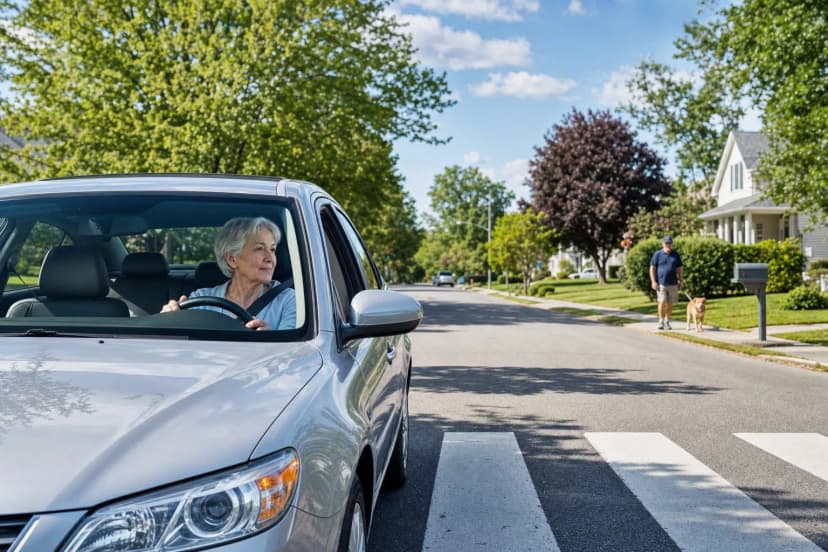
Once the teen can start, stop, and steer smoothly using push-pull or hand-to-hand steering techniques, the training progresses to quiet neighborhood streets. The primary focus here shifts from internal vehicle control to external environmental scanning and spatial awareness.
Teen drivers have a documented, physiological difficulty judging space and predicting hidden hazards. Coaches must train the student to look far ahead—creating a visual anticipation zone by scanning the road at least 15 to 20 seconds ahead of the vehicle's current path of travel. This phase involves practicing left and right turns, maintaining a steady speed limit without staring at the speedometer, and identifying standard road signs. The coach should continually play the “what if” game during commentary driving, asking the driver how they would react if a child ran out from behind a parked landscaping truck or if a vehicle suddenly backed out of a blind driveway. Quiet residential areas also provide an ideal space to practice checking for children hidden in SUV blind zones before moving the vehicle.
Phase 3: Moderate Traffic and Intersections
As competence and confidence grow, the driving environment scales up to multi-lane arterial roads and moderate traffic patterns. The cognitive load on the teenager increases exponentially here as they must track multiple moving variables simultaneously.
Coaching in this phase must focus intensely on right-of-way rules at four-way stops and complex traffic signals. Safe lane changes must be drilled until they become automatic, emphasizing the rigid sequence of: mirror check, activate turn signal, physical over-the-shoulder blind-spot check, and smooth execution. Because teenagers naturally allow dangerously shorter distances between vehicles than older drivers, enforcing a minimum three-to-four-second following distance is critical during this phase. This is also the right time to explain how intersections, turn lanes, and even modern roundabouts are designed, so new drivers understand not just what to do, but why the road looks the way it does.
Phase 4: Complex, High-Stress, and Adverse Conditions
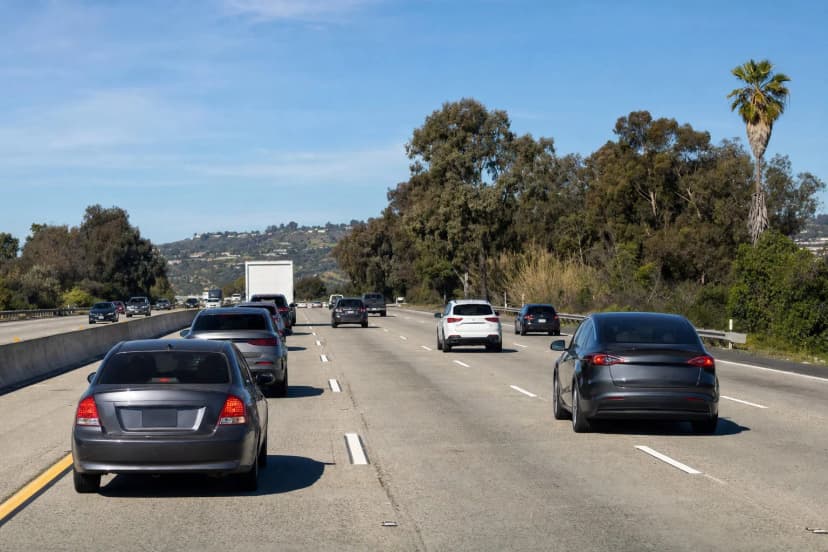
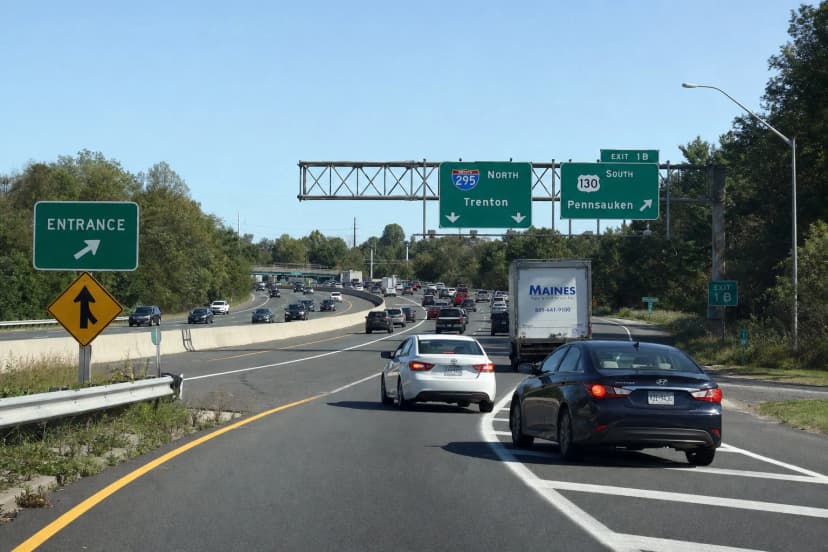
The final phase of parental supervision involves deliberate, highly controlled exposure to high-stress environments. This includes the daunting task of highway merging at high speeds, navigating narrow rural roads (where speeds are high and shoulders are practically nonexistent), and driving in adverse weather conditions like heavy rain or fog.
Crucially, this phase must include extensive night driving practice to satisfy GDL requirements (such as California's mandated 10 hours) and build competence in low-visibility scenarios. Driving at night requires a completely different visual strategy; the driver must learn not to stare directly into oncoming headlights to preserve night vision, and must understand how to adjust their stopping distance based on the limited reach of their own headlights.
The Technology Ecosystem: Integrating ADAS and Community Platforms
As teenagers develop practical manual skills, they also interact with increasingly sophisticated automotive and digital technology. The modern tech-forward vehicle owner has access to tools that can drastically improve safety outcomes, provided they are understood and utilized correctly.
In-Car Technology (ADAS)
Modern vehicles are frequently equipped with Advanced Driver Assistance Systems (ADAS) such as Automatic Emergency Braking (AEB), lane departure prevention, and blind-spot monitoring. The Insurance Institute for Highway Safety (IIHS) reports that these crash avoidance features are highly relevant to the specific errors made by teenagers, potentially mitigating up to a third of teen driver deaths and a quarter of teen driver injuries.
Because teen drivers often have trouble recognizing hazards, staying in control, and judging gaps for turning, technologies like AEB act as a crucial mechanical safety net. However, coaches must warn teenagers about over-relying on automated driving features. Systems that control steering or change lanes automatically require the driver to remain fully attentive and ready to take over at a moment's notice; treating these systems as autonomous chauffeurs is incredibly dangerous for young drivers who have not yet mastered manual recovery skills.
Bridging the Gap: Community Safety and Carszy
While vehicle-bound ADAS technology represents a massive leap forward in preventing initial collisions, it represents only one facet of modern road safety. For the safety-conscious parent, the commuter, and the neighborhood watch advocate, community-driven safety platforms bridge the critical gap between individual driving skills, post-accident logistics, and overarching community security. This is where platforms like Carszy provide a transformative, real-world utility.
Carszy operates as a driver-to-driver communication and community safety platform, shifting the digital paradigm from traditional, vanity-driven “Social Media” to what it terms “Human Media™”—technology intentionally designed to create real-world impact and accountability on the roadways.
Hosted on secure, privacy-focused US-based servers, the platform utilizes license plates as unique, public-facing identifiers, allowing users to securely connect with other drivers without compromising personal phone numbers. For everyday drivers and parents of newly licensed teens, Carszy offers several critical differentiators that elevate community safety:
- License Plate Messaging: This feature allows users to send secure, anonymous texts or calls to other drivers using only their license plate number. In practice, this means a vigilant community member can instantly alert a driver (or a parent whose registered vehicle the teen is driving) to immediate hazards. If a teenager forgets to turn their headlights on at night, leaves a turn signal blinking for miles, or has a dangerously low tire, a fellow driver can send a quick, non-confrontational alert to rectify the situation.
- VOIS™ (Vehicle of Interest Search): This community-driven alert system represents a massive leap in localized, crowdsourced safety. VOIS™ mobilizes the community to help locate vehicles involved in critical incidents—such as abductions, human trafficking, or hit-and-runs. By leveraging real-time geolocation and a network of vigilant drivers, it crowdsources situational awareness, essentially turning every user into an extra set of eyes for neighborhood watch leads and first responders.
- Promoting Accountability: The simple knowledge that a vehicle is connected to a community platform reduces the feeling of anonymity that often fuels road rage and dangerous driving behaviors, promoting safer roads through collective accountability.
Emergency Preparedness and the Reality of Response Times
Understanding the absolute necessity of community safety tools like Carszy requires a sobering, statistical look at post-accident logistics. When a critical incident occurs on the roadway, the time elapsed between the event and the arrival of professional assistance dictates survival rates and justice outcomes.
The Limitations of Official Dispatch
While municipal dispatchers expertly prioritize high-level emergencies, national data reveals that law enforcement and emergency medical services (EMS) response times can be highly variable, frequently delayed by staffing shortages, urban sprawl, and traffic congestion.
A comprehensive review of 911 dispatch data across major U.S. cities highlights this variability. For top-priority, life-threatening calls, Chicago reports an impressive average police response time of 3.46 minutes, while Los Angeles averages 5.7 minutes, and Seattle averages 7 minutes. However, response times lengthen significantly in other major jurisdictions; Dallas and Miami average around 8 minutes, New York City reaches 9.1 minutes, Atlanta averages 9.5 minutes, and Detroit historically averages 12 minutes. For non-critical situations, these times can stretch into hours.
| Major U.S. City | Average Police Response Time (High Priority Calls) |
|---|---|
| Chicago | 3.46 minutes |
| Los Angeles | 5.7 minutes |
| Seattle | 7.0 minutes |
| Dallas / Miami | 8.0 minutes |
| New York City | 9.1 minutes |
| Detroit | 12.0 minutes |
In medical emergencies resulting from traffic collisions, every passing minute drastically impacts patient outcomes. A massive cross-sectional study analyzing the 2019 National EMS Information System (evaluating 654,675 persons involved in crash events) found that 2,051 individuals died directly at the crash scene (DAS). The data established a direct, undeniable correlation between EMS arrival delays and mortality. Compared to a baseline chute initiation time of less than 1 minute, delays ranging from 1 to 5 minutes were associated with a 58 percent increased odds of death at the scene. Similarly, EMS travel times extending beyond 9 minutes correlated with a 34 percent increased likelihood of on-scene mortality compared to travel times under 9 minutes.
The Role of Community Mobilization in the "Golden Minutes"
The statistical gap between an incident occurring and official help arriving is precisely where community-driven systems intervene. In the context of criminal traffic incidents, such as hit-and-runs, national statistics indicate that only 60 to 65 percent of cases involving injuries are eventually solved, and the rate drops to a dismal 40 percent for incidents involving only property damage.
When law enforcement is 8 to 12 minutes away, community platforms act as an immediate, real-time safety net. Through the VOIS™ system, a witness to a hit-and-run or a severe erratic driving incident can instantly flag a license plate, disseminating the alert to the surrounding network faster than a traditional police dispatch can blanket an area. This drastically reduces the latency of information sharing, ultimately lowering law enforcement response times by providing real-time trajectory data and increasing the probability of locating vehicles of interest before they escape the immediate radius.
By teaching teenagers not only the mechanics of steering and braking but also integrating their vehicles into accountable, safety-focused networks, parents transition their children from vulnerable novices into responsible, protected members of the driving public. For added peace of mind, parents can also coach teens on what to do if they experience a sudden mechanical problem—like brake failure or a roadside breakdown—and reinforce it with step-by-step protocols such as those in our guides on emergency brake failures and roadside survival.
Conclusion
Guiding a teenager from the passenger seat to the driver's seat is an endeavor that demands infinite patience, rigorous structural planning, and the intelligent application of modern tools. The statistics surrounding adolescent driving are unforgiving; novices face immense risks due to biological inexperience, the hazards of nighttime conditions, and the fatal distraction of peer passengers.
However, by strictly adhering to the phased approach of Graduated Driver Licensing frameworks, formalizing expectations and financial responsibilities through a written Parent-Teen Driving Agreement, and utilizing advanced pedagogical techniques like commentary driving, parents can systematically dismantle these risks. Creating a panic-free environment inside the vehicle allows the teenager to absorb the critical spatial and operational skills necessary for survival on modern roads.
True safety, however, extends beyond the perimeter of the individual vehicle's bumper. Embracing community safety platforms transforms the solitary act of driving into a collaborative, neighborhood watch. By fostering spatial awareness behind the wheel and encouraging connectivity on the digital front, parents can release their newly licensed drivers onto the roads with profound confidence rather than paralyzing panic.
Frequently Asked Questions
Q: How does the "commentary driving" technique actually make a teenager a safer driver? A: Commentary driving requires the student to narrate their observations, thoughts, and planned actions aloud in real-time while driving. This technique prevents the teenager from experiencing “highway hypnosis” or zoning out by forcing continuous, active engagement with the environment. It vastly improves situational awareness and allows the supervising parent to hear the teen's decision-making process before an action is taken. This enables the coach to correct cognitive errors (such as failing to notice a stale red light or a hidden pedestrian) before they translate into dangerous physical driving mistakes, all without the need for panicked shouting.
Take the Next Step for Community Safety
Protecting our communities and our newest drivers requires more than just careful navigation; it requires active connection and accountability. Download the Carszy app today to stay securely connected with everyday drivers, utilize License Plate Messaging for real-time safety alerts, and join a tech-forward network dedicated to making the roads safer for everyone.