Trick-or-Treat Traffic: Halloween Night Is the Deadliest Night for Child Pedestrians
Every October, as neighborhoods transform into haunted havens of cobwebs and carved pumpkins, parents follow a familiar ritual. We carefully inspect candy wrappers for tampering, worry about food allergies, and double-check that costumes are flame-retardant. Yet, as an automotive safety and tech journalist who has spent years analyzing traffic data, crash physics, and community infrastructure, I can tell you that the most terrifying hazard on Halloween doesn’t come from a candy wrapper. It comes from the street.
The question safety-conscious parents and community watch advocates ask year after year is direct: Just how dangerous is neighborhood traffic on Halloween?
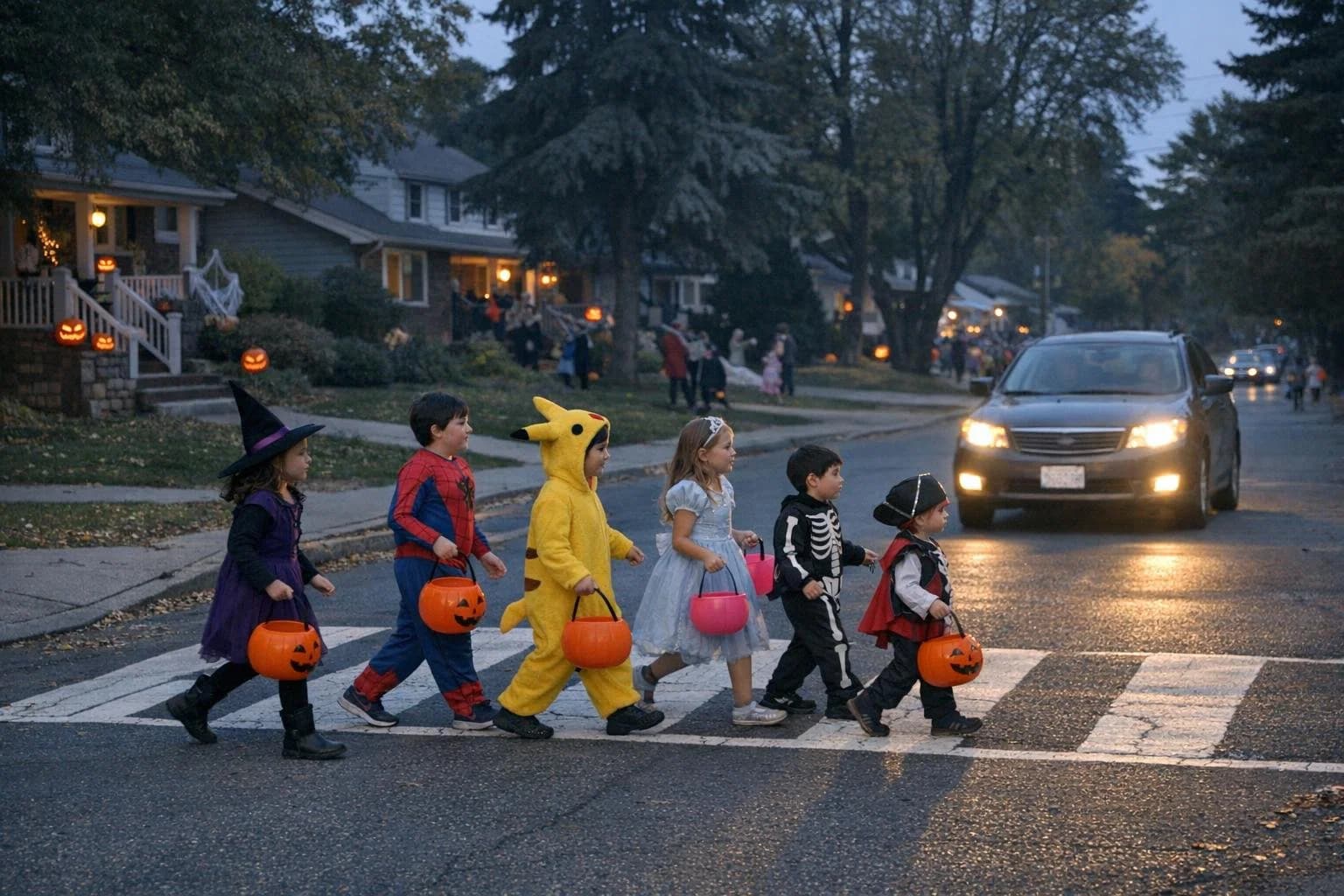
To answer that honestly, we have to look past urban legends and dig into the hard data. The reality is that October 31 is statistically the deadliest night of the year for child pedestrians. The combination of dark costumes, mid-block crossings, dense parked-car visibility issues, and an influx of impaired or distracted drivers turns quiet suburban cul-de-sacs into high-risk collision zones.
But this isn’t a report meant to incite panic. It is a detailed blueprint for awareness and action. By understanding the psychology of child pedestrians, the physics of low-speed collisions, the sobering reality of the data, and the growing role of community safety tech like Carszy, we can rewrite the narrative of Halloween night. Let’s unmask the statistics, break down the environmental hazards, and explore how a shift toward driver-to-driver communication is actively keeping our communities safe.
The Frightening Reality: Unpacking Decades of Fatality Data
The spike in pedestrian fatalities on Halloween is not a recent anomaly driven only by smartphones or modern distractions; it is a deeply entrenched, systemic issue that researchers have tracked for decades. To understand the true scale of the problem, we need to look at the definitive research that has shaped modern pedestrian safety advocacy.
The Landmark JAMA Pediatrics Study
A cornerstone study published in JAMA Pediatrics analyzed 42 years of data from the National Highway Traffic Safety Administration’s (NHTSA) Fatality Analysis Reporting System. The research window stretched from 1975 to 2016, covering a staggering 1,580,608 fatal traffic crashes involving over 2.3 million drivers and 268,468 pedestrians.
To isolate the specific “Halloween effect,” the researchers compared the number of pedestrian fatalities that occurred between 5:00 p.m. and 11:59 p.m. on October 31 with control evenings exactly one week earlier (October 24) and one week later (November 7).
The findings are a profound wake-up call. Over those four decades, 608 pedestrian fatalities occurred on Halloween evenings, compared to 851 across the combined 84 control evenings. When adjusted for hourly rates, the absolute mortality rate averaged 2.07 pedestrian fatalities per hour on Halloween, compared to 1.45 on the control nights. Overall, the relative risk of a pedestrian being killed in a traffic collision was found to be 43% higher on Halloween than on standard autumn evenings.
Safe Kids Worldwide backs up these systemic dangers, reporting that on average, children are more than twice as likely to be hit by a car and killed on Halloween than on any other day of the year. Their data highlights an average of 5.5 child pedestrian deaths on Halloween, compared to a daily average of 2.6 on other days.

| Traffic Fatality Metric | Control Evenings / Average Days | Halloween Night | Risk Increase / Multiplier |
| Pedestrian Fatalities per Hour | 1.45 | 2.07 | 43% Increase |
| Child Pedestrian Deaths per Day | 2.6 | 5.5 | 111% Increase |
| Fatality Risk (Ages 4 to 8) | Baseline Risk | 10x Baseline Risk | 1,000% Increase |
Data synthesized from JAMA Pediatrics (1975–2016) and Safe Kids Worldwide research.
The Unprecedented Vulnerability of Young Children
While the 43% overall increase is concerning for everyone, subgroup analysis reveals a catastrophic vulnerability among young children. According to the data, children aged 4 to 8 years old face a staggering tenfold (1,000%) increase in the risk of pedestrian fatality on Halloween night.
Why is this specific age bracket so disproportionately affected? As a safety advocate, I look at the intersection of developmental psychology and automotive design.
- Cognitive Development: Children between the ages of 4 and 8 lack the fully developed prefrontal cortex needed to accurately judge the speed and distance of an approaching 4,000-pound vehicle. They live in the moment and focus on excitement, not risk.
- The Excitement Factor: As Dr. John Staples of the University of British Columbia (lead researcher of the JAMA study) noted, children in this age group are especially excited about Halloween. In the rush of spotting a house giving out full-size candy bars across the street, they lose track of the very real danger that vehicles pose.
- Physical Stature: Modern vehicles, particularly SUVs and pickup trucks, have high beltlines and massive front grilles. A typical six-year-old can be physically invisible to a driver in an SUV if the child is standing within ten feet of the front bumper, a problem that also fuels the broader SUV blind zone crisis.
The Danger Zone: Why 6:00 PM Is the Deadliest Hour
The data clearly shows that risks peak sharply near dusk, specifically around 6:00 p.m. From a tech and visibility standpoint, this makes perfect sense. Six o’clock represents a high-risk transition phase. As the sun sets, human eyes struggle to adjust to rapidly shifting light conditions. The ambient light is too low for clear daytime vision, but it’s not yet dark enough for vehicle headlights and street lamps to provide maximum contrast.
At the same time, this “dusk zone” is exactly when the highest volume of eager young children takes to the streets, often overlapping with the tail end of the evening commuter rush hour, when drivers are fatigued and eager to get home. Similar dusk and low-visibility challenges also appear during the first rain in Southern California, when crash risks spike.
The Anatomy of a Halloween Crash: Environmental and Human Variables
Traffic collisions are rarely “accidents” in the truest sense; they are crashes resulting from a predictable chain of environmental hazards and human errors. On Halloween night, standard neighborhood risk variables are amplified. To understand how to protect both the Commuter and the Protective Parent personas, we have to break down how these incidents unfold.
Costumes, Visibility, and Sensory Deprivation
The traditional aesthetic of Halloween leans heavily toward the macabre—blacks, deep purples, and dark grays. This design choice makes pedestrians nearly invisible to motorists operating in low-light conditions. Alarmingly, safety surveys indicate that only 18% of parents actively use reflective tape on their children’s Halloween costumes.
Without retro-reflective materials or active light sources (like LED glow sticks or flashlights), a driver relying on standard low-beam headlights may not perceive a child in a dark ninja or vampire costume until the vehicle is only a few feet away.

On top of that, the costume itself can act as a sensory deprivation chamber for the child. Masks can severely restrict a child’s peripheral vision, preventing them from noticing a car turning a corner or backing out of a driveway. Bulky, dragging costumes restrict mobility and often cause children to trip and fall in the roadway, where they are even harder to spot from an elevated driver’s seat.
The Mid-Block Crossing Epidemic
The layout of residential trick-or-treating routes naturally encourages dangerous pedestrian behavior. From a traffic engineering perspective, pedestrians should walk to the end of a block to use a designated crosswalk or controlled intersection. However, trick-or-treaters operate on efficiency. They often engage in mid-block crossings, zigzagging back and forth across the street to reach the “best” houses as quickly as possible.
Law enforcement crash records confirm that most young pedestrian deaths happen at locations other than formal intersections. Drivers are psychologically conditioned to scan for pedestrians at corners; they do not naturally anticipate a small child emerging from the shadows in the middle of a continuous stretch of road.
The Parked Car Peril
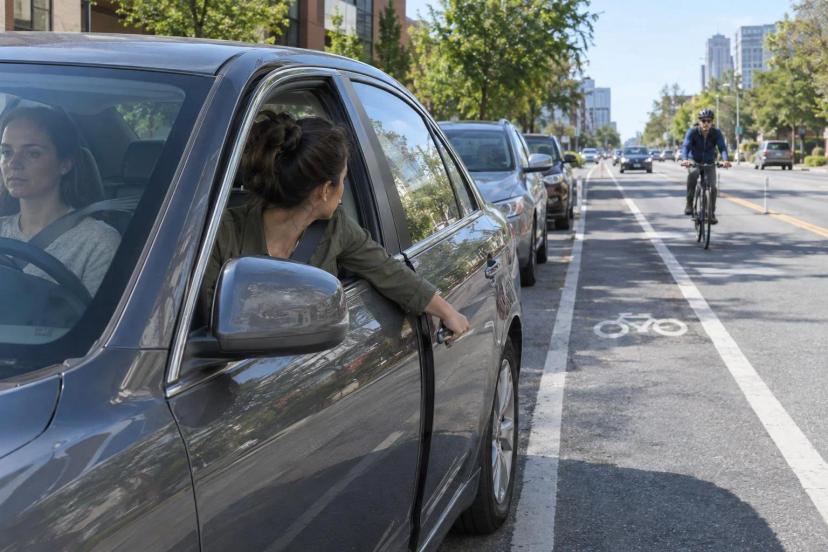
Residential streets on Halloween are typically packed with parked vehicles as residents host parties or families drive to neighborhoods considered “prime” for trick-or-treating. These parked cars create continuous visual blockades.
When a child stands on the curb between two parked vehicles, they are completely hidden from the line of sight of an oncoming driver. When that child suddenly darts out into the active traffic lane to cross the street, the driver’s available reaction time shrinks from seconds to fractions of a second. This line-of-sight obstruction is a major catalyst for close-range pedestrian impacts.
The Adult Factor: Impairment and Distraction
While Halloween starts as a children’s holiday in the early evening, it quickly transitions into an adult holiday, bringing a sharp and deadly increase in alcohol consumption. The NHTSA reports that drunk driving increases by an alarming 23% on Halloween night.
The statistics surrounding Halloween DUIs are tragic. Between 2019 and 2024, 176 people were killed in crashes on Halloween nights involving a drunk driver with a blood alcohol concentration (BAC) of 0.08 or higher. In 2023, nearly half of all crash deaths on Halloween night were alcohol-related. Even more devastating, 31 of the victims in these drunk-driving crashes were pedestrians.
Combine this impairment with the modern epidemic of distracted driving—motorists glancing at cell phones, adjusting GPS devices, or simply taking their eyes off the road to admire elaborate yard decorations—and you have a recipe for disaster. Broader distracted driving risks from in-car screens only add to the danger on a night when children are everywhere.
The Physics of Neighborhood Collisions: Speed Is the Ultimate Arbiter
As an automotive tech reviewer, I frequently test vehicle safety systems, from automatic emergency braking (AEB) to pedestrian detection sensors. However, no amount of technology can defy the laws of physics. To understand the lethal nature of neighborhood traffic on Halloween, we must look at the physical forces involved in a pedestrian-vehicle collision.
According to extensive research conducted by the AAA Foundation for Traffic Safety, the speed at which a vehicle is traveling at the exact moment of impact is the single greatest factor in a pedestrian’s chance of survival. The relationship between speed and fatality risk is not a gentle slope; it is a steep, exponential curve.
The kinetic energy transferred to a pedestrian’s body increases with the square of the vehicle’s speed. So what feels like a small increase in driving speed to the person behind the wheel creates a massive, disproportionate spike in the likelihood of death for the person on foot.
| Vehicle Impact Speed | Pedestrian Risk of Severe Injury | Pedestrian Risk of Death |
| 16 mph | 10% | < 5% |
| 23 mph | 25% | 10% |
| 32 mph | 50% | 25% |
| 42 mph | 75% | 50% |
| 50 mph | 90% | 75% |
| 58 mph | > 95% | 90% |
Data derived from the AAA Foundation for Traffic Safety.
Let’s put this into a real-world neighborhood context. According to the AAA Foundation, a pedestrian is more than twice as likely to be killed if they are hit by a car traveling at 35 mph compared to 25 mph. What seems like a trivial difference of ten miles per hour is literally the difference between life and death.
Speed also dictates stopping distance—a combination of the driver’s reaction time and the vehicle’s mechanical braking distance. At 25 mph, a vehicle is traveling at approximately 36.6 feet per second. Assuming a standard 1.5-second reaction time, the car travels 55 feet before the driver even touches the brake pedal, requiring a total of roughly 85 feet to come to a complete stop. At 35 mph, the car is moving over 51 feet per second, pushing the total stopping distance to over 135 feet.
When a child darts from behind a parked car just 40 feet ahead, a driver strictly adhering to a 15–20 mph speed limit can likely stop in time, or at least scrub enough speed to prevent a fatal impact. A driver cruising at 35 mph will strike the child with almost unchecked force. The same physics explain why tailgating a semi or any large vehicle is so dangerous: speed and distance leave almost no margin for error.
A Regional Focus: California and Orange County Under the Microscope
Traffic safety dynamics vary widely by region, influenced by local infrastructure, population density, municipal governance, and urban sprawl. In California, pedestrian safety is currently recognized as a critical public health crisis.
The California Office of Traffic Safety (OTS) reports that while overall traffic fatalities in the state decreased by nearly 11% in 2023, pedestrian fatalities remained alarmingly high, with 1,106 pedestrians killed. To put this into a national perspective, California’s pedestrian fatality rate is historically almost 25% higher than the national average. No state has more pedestrian deaths on its roadways than California.
Narrowing our focus to the local level reveals concentrated risks. Data from the Statewide Integrated Traffic Records System (SWITRS) and the Transportation Injury Mapping System (TIMS) indicates that in 2023, there were over 12,500 fatal and injurious car accidents in Orange County alone. Local legal and safety organizations tracking these trends note that pedestrian-involved collisions in Orange County have risen by approximately 18% over a recent five-year period. In one tracked year, 841 pedestrians in Orange County were injured or killed, representing 23.4% of all traffic fatalities occurring in the region for that year.
Why the Sprawl Is Dangerous
Orange County’s sprawling, picturesque suburban layout creates unique traffic challenges on Halloween. The area is characterized by wide, multi-lane arterial roads that border quiet, maze-like subdivisions. Because the county is highly vehicle-dependent, drivers often exit arterial roads traveling at 45–50 mph and struggle to properly re-calibrate their speed and attention when turning into 25 mph residential zones.
On Halloween, these subdivisions become jammed with parked cars from visitors and heavy foot traffic. The mix of wide, seemingly open residential roads with sudden, dense pedestrian activity creates a high-tension environment where drivers are frequently caught off guard. Similar patterns of risk appear in other situations where roads and human behavior clash, such as roadside breakdowns and road debris incidents.
| California / Orange County Safety Metrics (2023 Data) | Statistic / Trend |
| Total CA Pedestrian Fatalities | 1,106 deaths |
| Orange County Total Fatal/Injury Crashes | > 12,500 accidents |
| OC Pedestrian Collision Trend (5-Year) | 18% Increase |
| CA Pedestrian Fatality Rate vs. National Avg | ~25% Higher in CA |
Data aggregated from the California Office of Traffic Safety and SWITRS.
Tech to the Rescue: Rewiring Community Safety with Carszy
As a tech journalist, I am constantly evaluating how software and hardware can reduce human error. While traditional safety advice—carrying flashlights, walking on sidewalks, holding hands—remains the foundation of Halloween safety, we’ve entered an era where technology can provide proactive, community-wide safety nets. We no longer have to rely only on passive awareness; we can engage in active intervention.
This is where Carszy, a privacy-focused driver-to-driver communication and community safety platform, is fundamentally changing the landscape of neighborhood security. Carszy operates on a simple but powerful idea: by using vehicle license plates as unique identifiers, the platform bridges the dangerous communication gap between disconnected motorists and pedestrians.
For the Tech-Savvy Driver and the Neighborhood Watch Lead, Carszy offers a suite of tools that directly address the specific hazards of Halloween night.
License Plate Messaging: The Ultimate Real-Time Alert
Imagine you are walking with your children on Halloween and you notice a vehicle creeping through your subdivision with its headlights completely off. Or perhaps you are a driver who notices the car ahead of you swerving erratically, possibly impaired. Traditionally, your options are limited: honk your horn (which can startle children and trigger road rage) or call 911 (which is necessary for drunk drivers, but often comes with dispatch delays for minor but urgent issues).
With Carszy’s License Plate Messaging, you can securely text or call the other driver using just their plate number. A quick message reading, “Hey, your headlights are off, lots of kids on the street tonight,” or “Your brake lights are out,” provides immediate, actionable feedback. This direct line of communication can instantly correct a dangerous situation before a child steps off the curb. It is peer-to-peer accountability in real time.
VOIS™ (Vehicle of Interest Search): Mobilizing the Neighborhood
Halloween night is inherently chaotic. In the unfortunate event of a critical incident—such as a hit-and-run involving a pedestrian, a reckless driver speeding aggressively through a crowded cul-de-sac, or an abduction—time is the enemy. Law enforcement response times can lag behind the speed of a fleeing vehicle.
Carszy features a proprietary, community-driven alert system known as VOIS™. If a dangerous vehicle is spotted, community members can flag the license plate as a Vehicle of Interest. This immediately pushes a localized alert to other app users in the geolocation radius. It effectively turns the neighborhood into a crowdsourced safety net, reducing reliance on delayed official broadcasts and helping to track dangerous behavior right away.
Human Media™: Real-World Impact Over Vanity
We are living through social media fatigue, where many platforms are designed to divide, distract, and outrage. Carszy represents a philosophical shift to what they call “Human Media™.” This isn’t about posting photos of your Halloween costume for likes; it is about real-world impact.
By prioritizing privacy (using strictly US-based servers) and focusing on reporting dangerous driving, Carszy fosters a culture of accountability. When drivers understand that they are part of a connected community—and that reckless behavior can be instantly identified and reported by the parents walking the sidewalks—overall neighborhood driving behavior improves. It’s a powerful deterrent effect that is invaluable on the deadliest night of the year and on other high-risk nights involving impaired driving or heavy holiday traffic.
The Neighborhood Watch Playbook: Actionable Strategies
Protecting child pedestrians requires a synchronized, multi-layered effort. Different roles within the community must adopt tailored strategies to reduce the specific risks they pose or face. Here is a practical safety playbook for Halloween night.
🛡️ For the Protective Parent
Parents are the primary line of defense. Relying on the assumption that a driver will see your child or yield the right-of-way is a dangerous mistake. You need to engineer safety into your evening.
- Costume Engineering: Treat visibility as part of the costume design. Integrate reflective tape onto the front, back, and sides of your child’s clothing. Have them carry a high-lumen flashlight, and attach brightly colored glow sticks to their candy buckets.
- Opt for Face Paint: Skip masks entirely. Use non-toxic face paint so your child keeps full peripheral vision and can spot turning cars or backing vehicles.
- Enforce the Buddy System: Children under 12 should be physically accompanied by a responsible adult at all times. For older teens going out alone, insist on a strict buddy system so no one wanders into unlit areas alone.
- Master the Route: Plan a trick-or-treat route that uses only well-lit sidewalks. If a street has no sidewalks, walk facing oncoming traffic, as far to the edge of the road as possible.
- Ban Mid-Block Crossings: Make it a firm rule: zero mid-block crossings. Work one side of the street to the corner, use the crosswalk (looking left-right-left), and then come back up the other side.
🚗 For the Commuter and Everyday Driver
Drivers bear the ultimate legal, physical, and moral responsibility for avoiding collisions. Operating a vehicle in a residential area on October 31 requires absolute, uncompromising vigilance.
- Drastic Speed Reduction: Ignore the posted 25 mph limit. On Halloween night, speeds in residential zones should be voluntarily reduced to 10–15 mph. Remember the physics: slower speeds save lives and dramatically reduce stopping distance.
- Eliminate Inside-the-Cabin Distractions: Put mobile devices out of reach. Turn the radio off completely so you can hear the voices of children you might not be able to see. Keep your windshield clean to reduce glare and improve contrast.
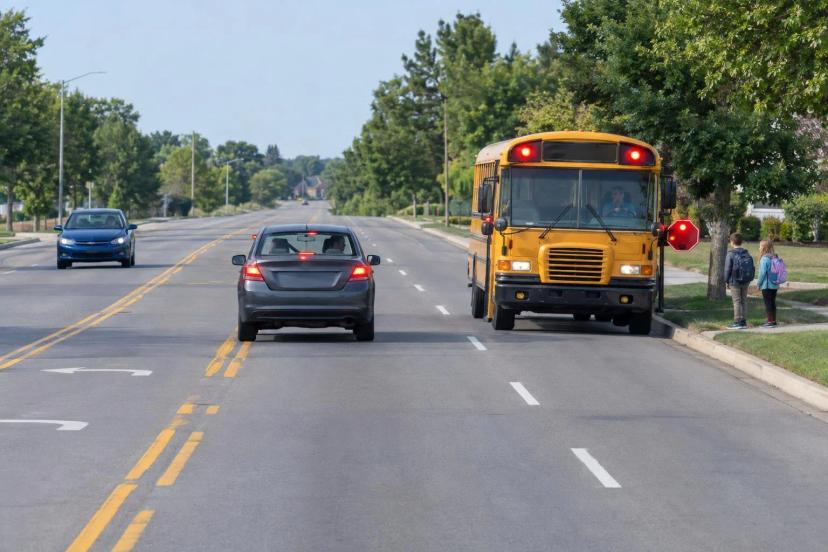
- Active Scanning: Constantly scan the gaps between parked cars, behind neighborhood shrubbery, and near dark driveways. Do not pass vehicles stopped in the roadway; they may be dropping off children.
- Driveway Defense: Reversing out of a driveway is extremely dangerous with small children nearby. If possible, back into your driveway earlier in the day so you can pull out forward in the evening.
🏘️ For the Neighborhood Watch Lead
Community leaders have the power to change the physical environment and coordinate group efforts to protect the neighborhood as a whole.
- Lighting Initiatives: Launch a neighborhood campaign encouraging all homeowners to turn on their porch lights, exterior floodlights, and decorative lighting from 5:00 p.m. to 10:00 p.m. to maximize street visibility.
- Deploy Crossing Guards: Organize adult volunteers wearing high-visibility ANSI vests to stand at busy neighborhood intersections, manage traffic flow, and help children cross safely.
- Establish a Digital Perimeter: Encourage the neighborhood to download Carszy. Set up a protocol where residents use the app to immediately flag and report aggressive drivers, suspected DUIs, or localized hazards to the rest of the community, similar to how communities can coordinate during wildfire evacuations and other emergencies.
- Advocate for Car-Free Zones: For the long term, work with your HOA or city council to implement temporary “car-free” hours, barricading subdivision entrances from 5:00 p.m. to 8:00 p.m. so children can trick-or-treat without vehicle traffic.
Conclusion: Turning Awareness Into Action
The data surrounding Halloween pedestrian fatalities is chilling. The fact that children ages 4 to 8 face a tenfold increase in mortality risk on a night meant for community joy is a tragic contradiction. But it is also a preventable one. The main triggers for these tragedies—dark costumes, impaired driving, excessive speed, and mid-block crossings—can all be reduced or eliminated through conscious effort.
By respecting the physics of road safety, lowering vehicle speeds, enforcing strict visibility standards, and rethinking our neighborhood infrastructure, we take the first critical steps. By also embracing the technological tools of the digital age, we can fundamentally upgrade our community defense systems.
Safety is not a passive state; it is an active choice. I encourage every safety-conscious driver, parent, and community advocate to download the Carszy app today. Stay closely connected to the pulse of your neighborhood’s traffic safety. Use License Plate Messaging to correct hazards in real time, tap into VOIS™ to protect your streets, and help usher in the era of Human Media. Together, we can keep Halloween a night of harmless frights instead of real tragedy.
Frequently Asked Questions
Why is Halloween the absolute most dangerous night for pedestrians?
Halloween creates a deadly, simultaneous convergence of multiple risk factors: massive numbers of child pedestrians on the streets, dark costumes with little or no retro-reflective material, reduced dusk visibility, frequent mid-block crossings by children darting between parked cars, and a significant 23% spike in alcohol-impaired driving among adults. Add in modern distractions like touchscreens and phones, and the danger multiplies.
What exact time is the most dangerous on Halloween night?
The risk of pedestrian fatality peaks sharply near dusk, specifically around 6:00 p.m., and stays high through about 8:00 p.m. This window is especially lethal because it combines the visual transition from daylight to darkness (which harms driver depth perception and contrast sensitivity) with the peak volume of young trick-or-treaters and the tail end of the adult evening commute.
How does vehicle speed physically affect pedestrian survival rates?
The risk of pedestrian death increases exponentially with vehicle speed because of the way kinetic energy scales. A pedestrian hit at 25 mph has an approximate 10% to 25% risk of severe injury or death. At just 35 mph, the risk of severe injury jumps to around 50%, and the pedestrian is more than twice as likely to be killed. This same principle underlies many other roadway dangers, from roundabout crashes to high-speed rear-end collisions.
How can drivers communicate hazards securely to other drivers?
Drivers can use the Carszy app, a privacy-focused driver-to-driver communication platform that uses license plates as unique identifiers. This allows users to securely text or call other drivers to report immediate hazards (like driving without headlights or erratic behavior) and mobilize community alerts via the VOIS™ system, providing real-time safety interventions without relying solely on slower traditional channels.